
7 Powers: The Foundations of Business Strategy
Hamilton Helmer
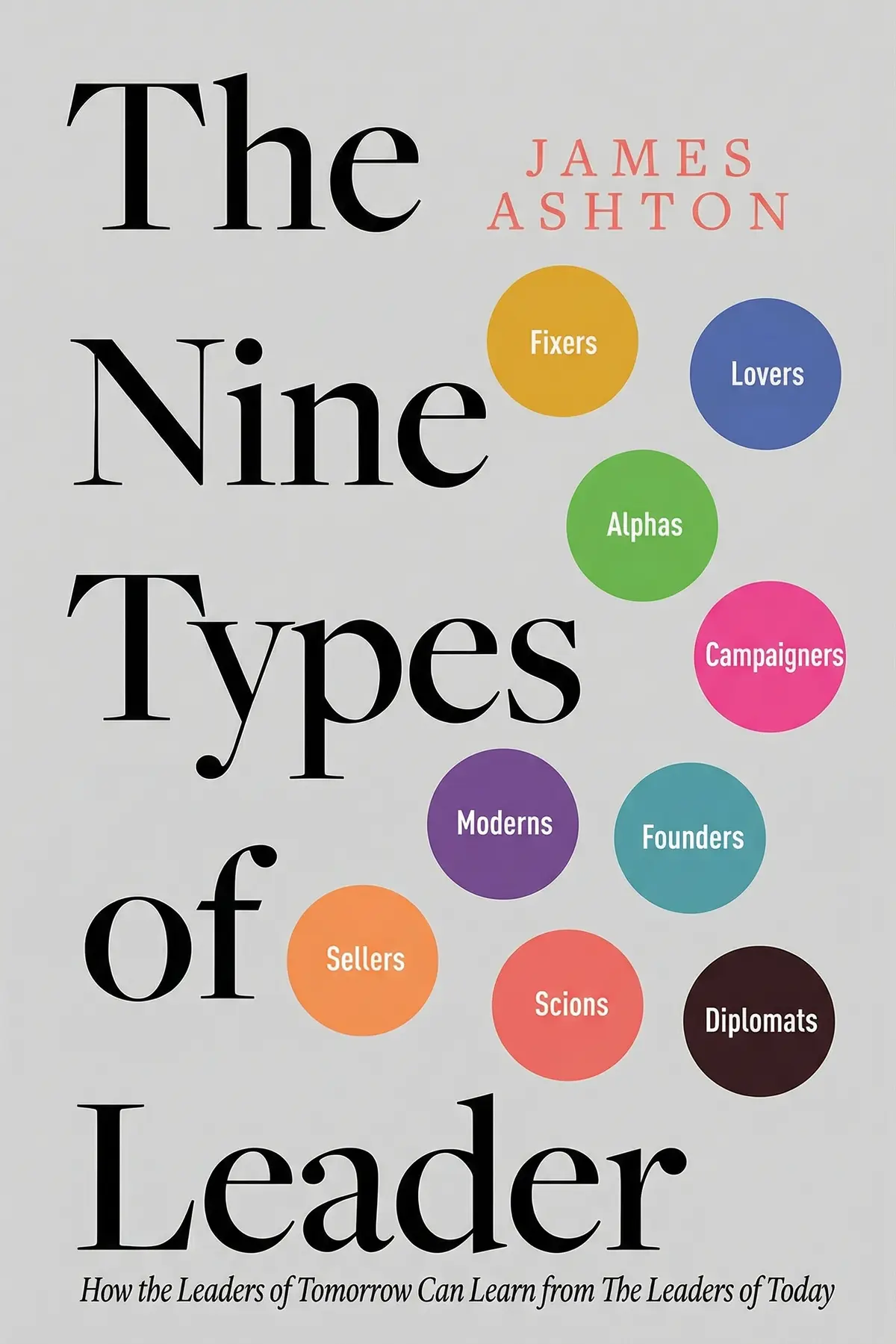
Explore the nine distinct archetypes of leadership in this comprehensive guide. Learn how to identify your personal style and match it to the right organizational needs for maximum career success and impact.
1 min 48 sec
Have you ever wondered why some leaders seem to thrive in the middle of a corporate storm while others excel only when things are calm and predictable? Or why a leader who was a hero at one company becomes a villain at another? The truth is that leadership isn’t a one-size-fits-all uniform that anyone can put on and achieve the same results. It’s more like a specialized tool—extremely effective in the right context, but potentially damaging if used in the wrong one. James Ashton’s work invites us to look past the generic labels of ‘good’ or ‘bad’ leadership and instead examine the specific DNA of how different people lead.
By categorizing leaders into distinct archetypes, we can start to see the patterns that govern success and failure in the modern business world. This isn’t just an academic exercise; it’s a practical guide for anyone looking to navigate their own career or understand the people at the top of their organization. In this exploration, we’re going to dive deep into the various styles that define the corporate landscape today. We’ll look at the monarchs of industry, the crisis-management superheroes, the visionary dreamers, and the mission-driven advocates.
Our journey will take us through the stories of real-world executives who have shaped the global economy, from the halls of Nestlé to the runways of Virgin Atlantic. We’ll see how their individual personalities, backgrounds, and motivations have dictated the fortunes of their companies. The goal here is to help you recognize these traits in yourself and others. Whether you’re an aspiring executive or a seasoned manager, understanding these nine types of leadership will provide you with a roadmap for playing to your strengths and knowing exactly where you fit in the grand puzzle of the modern workplace. Let’s begin by looking at the most traditional, and perhaps most intimidating, style: the Alpha.
2 min 20 sec
Discover why the traditional, command-and-control style of the Alpha leader is both a powerful force for long-term growth and a fading relic in an increasingly collaborative world.
2 min 03 sec
When a company is on the brink of collapse, you don’t need a visionary; you need a Fixer who can make the hard choices others fear.
1 min 52 sec
Learn how the skills of a salesman—resilience and persuasiveness—can be transformed into the ultimate tool for modern corporate leadership.
1 min 59 sec
Founders bring a unique blend of creativity and passion to their businesses, but their biggest challenge is knowing when to let go.
1 min 50 sec
Inheriting a business isn’t just about privilege; it’s about the heavy responsibility of evolving a legacy for a new generation.
1 min 54 sec
When your work is your life’s passion, leadership becomes an authentic extension of who you are—but it requires a clear head to stay on track.
1 min 47 sec
In the modern era, profit isn’t enough; Campaigner leaders use their platforms to solve global problems and ensure long-term sustainability.
1 min 58 sec
Learn how the Diplomat leader navigates the complex web of competing interests to build lasting, inclusive success through the power of listening.
1 min 42 sec
Explore the ninth type of leader—the Human Leader—who combines digital savvy with deep empathy to navigate the future of work.
1 min 49 sec
As we wrap up our look into these diverse leadership archetypes, the most important takeaway is the power of self-awareness. There is no ‘correct’ way to lead in every situation. A Fixer who tries to lead a thriving, creative startup might crush its spirit with too much discipline. An Alpha who refuses to listen in a collaborative environment might find themselves facing a mutiny. The key to successful leadership—and a successful career—is knowing which type you are and finding the environment where that style can truly shine.
We’ve seen that the landscape of leadership is evolving. While the monarchs and the crisis-managers will always have their place, we are moving toward an era that prizes the Campaigner’s mission, the Diplomat’s consensus, and the Human Leader’s empathy. The challenges of the 21st century—climate change, digital disruption, and the demand for social equity—require a more nuanced and multifaceted approach to power than the styles of the past.
So, as you move forward in your own professional journey, take a moment to reflect. Which of these stories resonated most with you? Are you the visionary who needs to build something from scratch? Are you the communicator who can bridge the gap between a company and its customers? Or are you the future-focused Human Leader, ready to balance profit with purpose?
Once you identify your core type, you can work on mitigating its inherent weaknesses and leaning into its strengths. You can seek out the organizations that desperately need exactly what you have to offer. Leadership isn’t just about reaching the top; it’s about making a meaningful impact while you’re there. By understanding the nine types of leader, you’re not just learning about business—you’re learning about the human heart of progress. Now, go out and find where you belong.
The Nine Types of Leader is a deep dive into the psychological and professional traits that define the world's most successful executives. Drawing on extensive case studies and interviews, James Ashton breaks down leadership into recognizable categories, from the autocratic 'Alpha' to the mission-driven 'Campaigner.' The book promises to help readers understand their own leadership DNA. By recognizing the strengths and pitfalls of each type, you can navigate your career more effectively, choosing roles and environments that align with your natural tendencies. It’s a roadmap for the next generation of leaders who want to move beyond generic management advice and find their unique path to influence.
James Ashton is a renowned journalist who specializes in finance, business, and the economy. He’s worked as City Editor at the Evening Standard and the Sunday Times, and hosts his own podcast, Leading with James Ashton.
Listeners find that views are mixed concerning the writer’s significant use of stories and high-profile mentions, with some listeners feeling that the concentration on prominent CEOs lacks appeal. Nevertheless, many value the thoroughly investigated depictions of different leadership methods and the actionable tips for handling a fast-paced commercial landscape. Additionally, they point out the benefit of the "Brief" portions at each chapter's conclusion, where one listener mentions these recaps deliver a transparent and effective evaluation of every category's assets and relevance. Listeners also suggest the text serves as a perceptive tool for future leaders wanting to explore more people-oriented and viable management styles.
Ashton has managed to distill years of high-level interviews into a very readable and surprisingly actionable guide. I loved the way he breaks down the 'Founder' mentality, highlighting the passion that drives people to build empires from scratch. The stories about Richard Branson and Peter Brabeck-Letmathe are genuinely inspiring if you look past the elitism and focus on the strategy. It’s rare to find a business book that is this well-researched while remaining so accessible to the average reader. Not gonna lie, I’ve already started categorizing my own managers using his framework, and it’s helped me tailor my communication style. This is essential reading for anyone who wants to understand the diverse personalities that sit at the top of the food chain.
Show moreFinally got around to reading this, and the timing couldn't be better for my own career transition. I’ve always struggled to define my own style, but reading about the 'Human' leader gave me a lot of confidence in my approach. Ashton’s ability to weave storytelling with practical 'Suitability' guides makes this one of the better business books I’ve picked up lately. The focus on inclusivity and social impact isn't just buzzwords here; he actually shows how it works in practice. It’s a big, ambitious book that covers a lot of ground without feeling rushed or superficial. Highly recommend it to anyone who thinks leadership is about more than just the bottom line.
Show moreThe chapter on the 'Human' leader really changed my perspective on where the corporate world is headed. While the 'Alpha' and 'Founder' archetypes felt a bit dated, the focus on sustainability and inclusivity was a breath of fresh air. Ashton writes with a punchy, journalistic style that keeps the pace moving, even when the British business references get a bit obscure. I appreciated the practical advice on how to foster profitability while still being a decent person to your employees. Some of the anecdotes are a bit long-winded, and I’ll admit I skipped part of the self-indulgent introduction. Still, it’s a solid resource for anyone looking to navigate the shifting sands of modern management without losing their soul.
Show morePicked this up because I wanted to understand why my current boss is such a nightmare, and it turns out he’s a classic Alpha. The book gave me some great insights into why certain leaders act the way they do and how to handle their inflexible nature. I particularly liked the 'Diplomat' section, as it showed a different way to lead that doesn’t involve shouting or ego. The writing is very polished, though I found the introduction a bit self-indulgent with all the references to high-profile meetings. It’s a bit heavy on British corporate examples which might lose some international readers. Overall, it’s a helpful tool for anyone trying to survive in a large organization where these archetypes are common.
Show moreIs there such a thing as too many anecdotes in a business book? Possibly, but Ashton makes it work by choosing truly fascinating subjects for his profiles. I found the 'Scion' and 'Fixer' types to be the most intriguing, especially since they don't get as much press as the typical Alphas. The book does a great job of explaining why different companies need different styles at different stages of their growth. My only gripe is that it can feel a bit repetitive if you read it all in one sitting. It’s much better to digest one 'type' at a time and really reflect on the strengths and weaknesses listed. A very solid 4-star read for anyone in the corporate world.
Show moreAfter hearing a lot about this title, I expected something more grounded in organizational psychology rather than anecdotal observations. It feels like Ashton chose the number 'nine' first and then tried to cram every leader he's ever interviewed into a category. Some of the types, like the 'Diplomat' or 'Campaigner,' feel distinct, but others overlap so much it’s hard to tell them apart. Truth is, the book works best as a directory of leadership styles rather than a guide on how to actually lead. The summaries at the end of each section are the real stars here, offering clear pros and cons for each personality type. It’s a decent read for a flight, but don’t expect any groundbreaking scientific breakthroughs.
Show moreLook, the writing is polished and professional, which isn't surprising given Ashton's background as a business journalist. He clearly knows his stuff, but the book often feels more like a collection of magazine profiles than a guidebook. I found myself gravitating toward the 'Brief' sections at the end of each chapter because the stories in between were just too long. There’s a lot of focus on the elite—CEOs of multi-billion dollar firms—which makes it hard to relate to if you’re a middle manager. It’s an interesting look at the 'top,' but I wish there was more for the 'rest of us.' It’s okay, just a bit narrow in its scope of who a 'leader' can actually be.
Show moreWhy did I waste my afternoon on this when I could have just read the Blinkist summaries? The author is clearly well-connected, but that leads to a relentless stream of name-dropping that feels more like bragging than teaching. I was hoping for some actual scientific reasoning or psychological backing for these nine categories. Instead, we get story after story about Nestlé or Virgin that we've all heard before. It’s light on data and heavy on the author's own subjective observations from his years in the press. To be fair, the 'Brief' sections at the end of the chapters are quite useful for a quick reference. However, the rest of the book feels like a collection of profile pieces rather than a cohesive leadership manual.
Show moreThis book is basically a love letter to the 0.1% of corporate assholes who thrive on ego. James Ashton spends way too much time praising CEOs who are clearly out of touch with the average worker's reality. I found the 'Alpha' descriptions particularly nauseating, as if being an intimidating monarch is something we should all aspire to in 2024. Most of these men just seem like bullies with a high net worth. The writing is technically fine, but the sentiment is purely about kissing the rings of the elite. I don’t know why I expected something different from a business journalist. If you enjoy hearing about how brilliant Richard Branson is for the thousandth time, you might like this. Personally, it just made me want to vomit.
Show moreFrankly, the constant name-dropping made me want to close the book immediately after the first twenty pages. It’s exhausting to read about every famous person the author has ever shared a room with while trying to find a kernel of actual advice. The whole premise feels like it was written for a boardroom full of 'Alphas' who want to feel good about their own flaws. There is a total lack of empathy for the people who actually have to work under these leadership types. It’s all about 'monarchs' and 'rock stars' and very little about the team members who actually get the work done. If you like worshipping CEOs, this is for you. For everyone else, it’s just a redundant exercise in corporate flattery.
Show moreHamilton Helmer

Margaret Heffernan
Joseph A. Maciariello


AUDIO SUMMARY AVAILABLE
Get the key ideas from The Nine Types of Leader by James Ashton, plus 5,000+ more titles in English and Thai.







