
18 min 53 sec
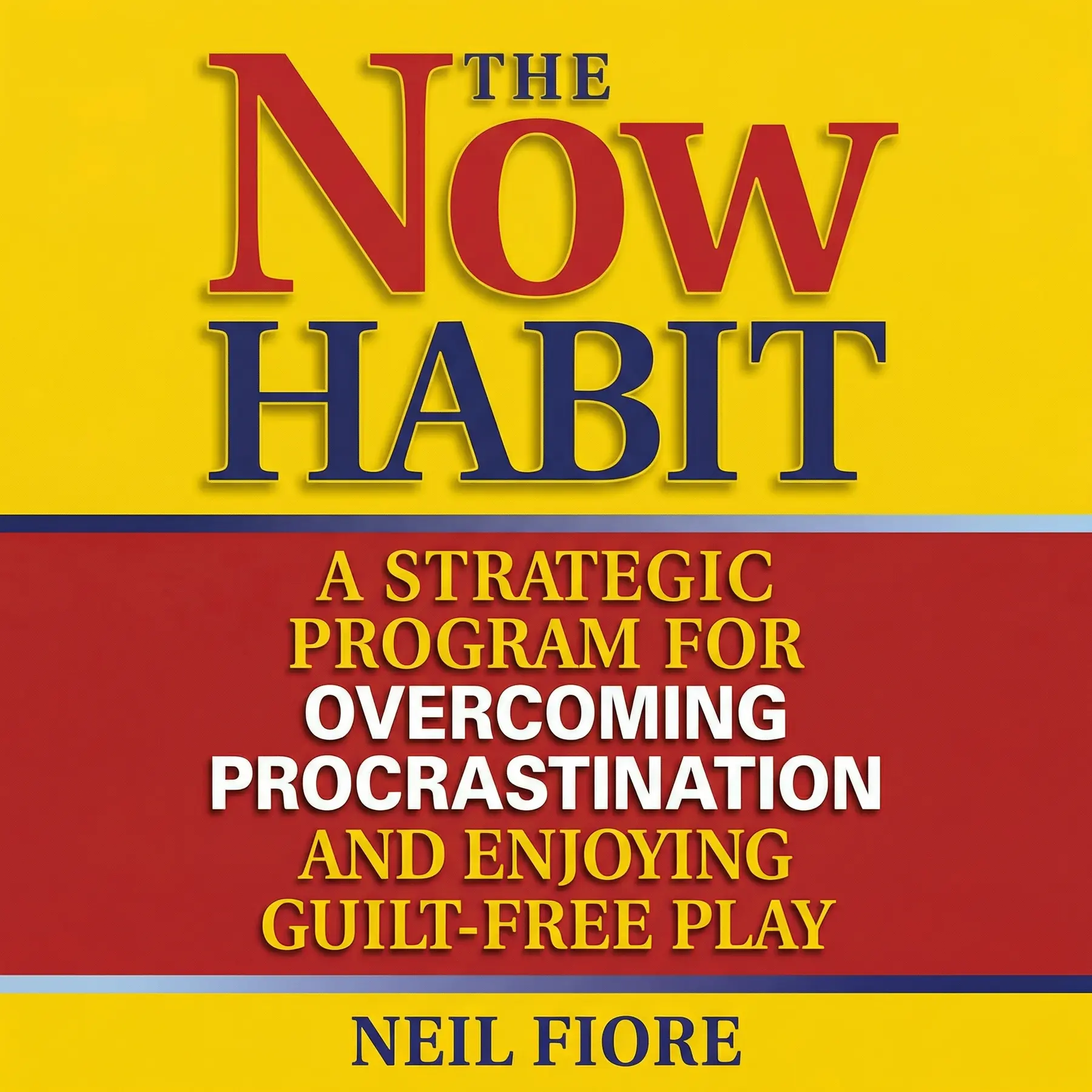
The Now Habit: A Strategic Program for Overcoming Procrastination and Enjoying Guilt-Free Play
By Neil Fiore
The Now Habit offers a transformative approach to productivity by viewing procrastination as a psychological defense. It provides practical tools like unscheduling and positive self-talk to overcome fear and reclaim time for play.
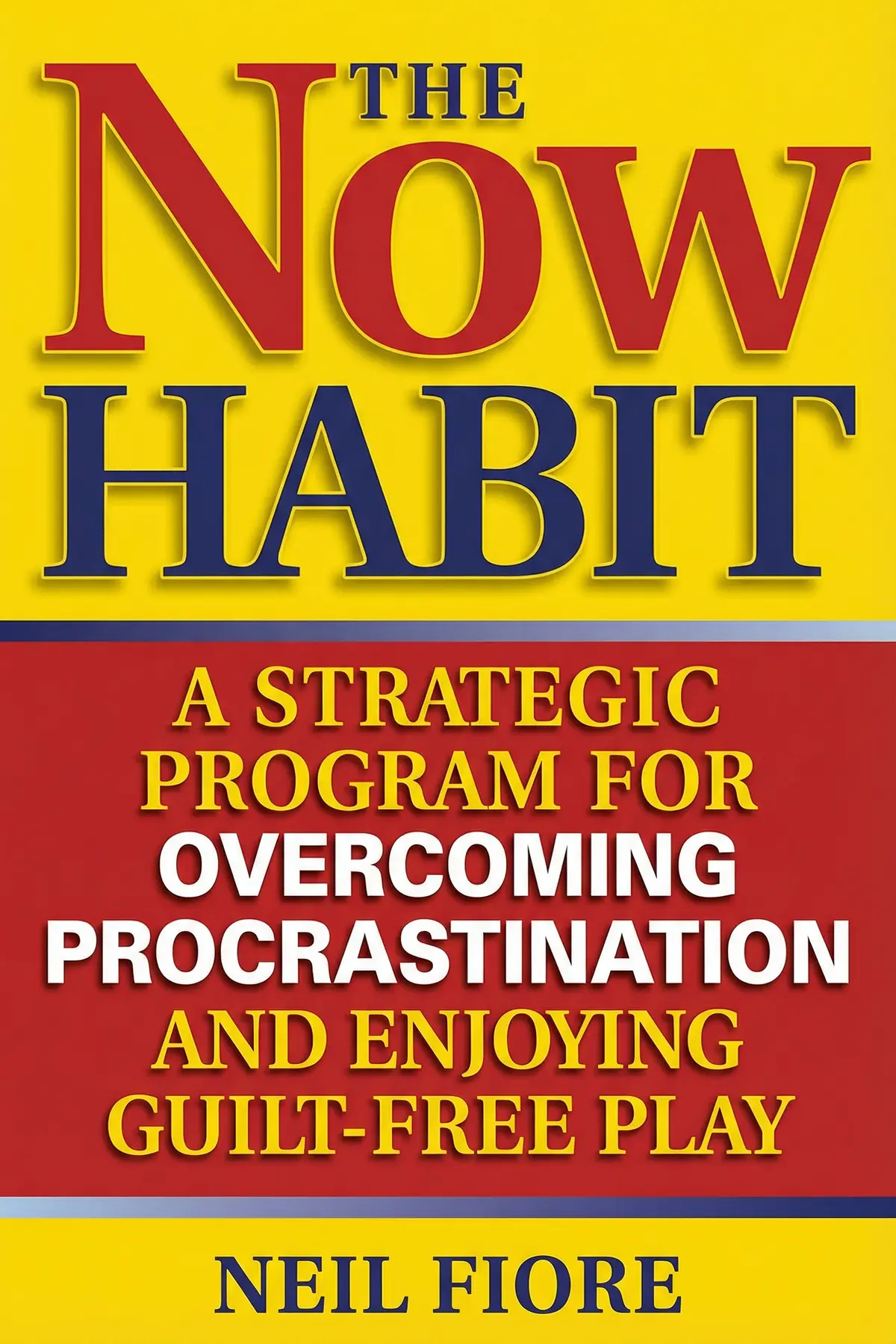
Table of Content
1. Introduction
2 min 42 sec
Have you ever found yourself facing a critical deadline, only to spend three hours reorganizing your kitchen or scrolling through social media? For many of us, procrastination feels like a mysterious, uncontrollable force that sabotages our best intentions. We sit down to work, promising ourselves that this time will be different, yet within minutes, we are pulled away by distractions that aren’t even particularly enjoyable. This cycle leads to a mountain of guilt and the persistent feeling that we are simply not disciplined enough. But what if the problem isn’t laziness at all? What if procrastination is actually a tool your brain uses to protect you?
In this exploration of Neil Fiore’s insights, we move away from the idea that some people are just born with a lack of drive. Think back to your childhood. Children don’t usually procrastinate when they are engaged in play or discovery. They dive into activities with total focus and enthusiasm. This suggests that procrastination is not an innate trait, but rather a habit we pick up along the way, often through our education and the demands of the modern workplace. Because it is a learned behavior, it can also be unlearned.
The throughline of this journey is a fundamental shift in perspective. Instead of viewing procrastination as a character flaw to be punished, we must see it as a coping mechanism for stress and fear. When we understand why we delay, we can begin to use specific, strategic tools to dismantle those fears. We will look at how the pressure to be perfect actually causes us to freeze, why our vocabulary about work might be sabotaging our progress, and how we can actually get more done by scheduling less work and more play.
This isn’t about working harder or applying more pressure. In fact, more pressure is often the very thing that drives us back to the couch. Instead, we are looking for a way to become producers—people who approach their tasks with a sense of choice and clarity. By the end of this summary, you will have a new framework for understanding your own habits and a set of practical techniques to help you move from a state of paralyzed anxiety into a rhythm of productive, guilt-free action.
2. The Fear of Failure and the Shield of Delay
2 min 48 sec
Explore why we avoid the very tasks that matter most. It turns out that procrastination is a sophisticated defense mechanism designed to protect us from judgment and boredom.
3. Unlinking Performance from Self-Worth
2 min 38 sec
The drive for perfection often backfires, creating a paralyzing pressure. Learn how shifting your mindset away from perfectionism can actually unlock your true productivity.
4. From Victim to Producer Through Language
2 min 34 sec
The way you talk to yourself about your tasks can either drain your energy or fuel it. Discover the simple linguistic shifts that turn ‘should’ into ‘choose.’
5. The Unschedule: Planning for Freedom First
2 min 51 sec
Traditional scheduling often ignores our need for life outside of work. Learn a radical time-management technique that puts your play and rest at the center of your calendar.
6. Managing the Sprint and Capturing Distractions
2 min 43 sec
Starting is the hardest part. Discover how to break through initial resistance using short bursts of focus and a simple tool to keep outside interruptions at bay.
7. Conclusion
2 min 37 sec
As we wrap up our look at the strategies found in The Now Habit, it’s worth reflecting on the core message: your relationship with time and work doesn’t have to be a battle. We have seen that procrastination isn’t a character flaw you were born with, but a protective shield you built to guard yourself against the pressures of perfectionism and the fear of failure. By recognizing the psychological roots of your delays, you can stop the cycle of self-blame and start implementing practical solutions.
The journey to becoming a producer begins with a change in language. By replacing the heavy weight of ‘I should’ with the empowering clarity of ‘I choose,’ you align your internal motivations and stop wasting energy on self-resistance. From there, the Unschedule provides a roadmap for a life where play isn’t a reward for finishing work, but a prerequisite for doing good work. By prioritizing your health, your social life, and your relaxation, you create a sustainable rhythm that actually increases your productivity by making the most of the limited hours you have available.
Remember the power of the small start. You don’t need to see the entire path to take the first step. By committing to short, focused sprints and using simple tools like a capture list to manage distractions, you build the momentum that leads to significant achievements. The goal is to move toward a life of guilt-free play, where you can fully enjoy your time off because you know you have been effectively engaged when you were ‘on.’
If you want to take immediate action, look at your calendar for the coming week. Before you write down a single work task, schedule your exercise, your social dinners, and your time for rest. See how much time is truly left, and then decide when you will choose to start your most important project in a thirty-minute window. By reclaiming your right to play, you might just find that work becomes a lot easier to handle. You have the tools to unlearn the habit of delay and replace it with a habit of productive, intentional living. It’s time to stop waiting for the perfect moment and start enjoying the ‘now.’
About this book
What is this book about?
The Now Habit addresses the heavy emotional toll of chronic procrastination, moving beyond the myth of innate laziness to uncover the true roots of delay. Neil Fiore explains that procrastination is actually a strategic, though often self-sabotaging, response to the fear of failure, the pressure of perfectionism, and the dread of dull tasks. By understanding these psychological triggers, readers can stop viewing work as a punishment and start seeing it as a choice. The book promises a path toward guilt-free productivity. It introduces the innovative concept of the Unschedule, a time-management system that prioritizes personal time and relaxation over labor. By integrating small, focused bursts of work with scheduled periods of recreation, the program helps individuals rebuild their self-esteem and find enjoyment in their daily lives. It is designed for anyone who feels overwhelmed by deadlines or stuck in a cycle of stress, offering a structured way to regain control and replace anxiety with a sense of accomplishment.
Book Information
About the Author
Neil Fiore
Neil Fiore is a respected American psychologist and a bestselling author with a wide range of published works, including The Road Back to Health. His professional expertise centers primarily on the fields of productivity, performance, and hypnosis. Throughout his career as a trainer and coach, he has provided guidance to thousands of individual clients and has served as a consultant for numerous high-profile companies, helping them optimize their workflows and mental well-being.
Ratings & Reviews
Ratings at a glance
What people think
Listeners view this title as a useful and pragmatic guide that offers actionable techniques for defeating procrastination. They value its inspiring perspective, with one listener mentioning how it encourages greater self-honesty, and its deep observations that exceed those found in standard productivity guides. The material is accessible and clear, with one listener emphasizing the priority placed on planning leisure time. Listeners deem it a valuable investment, with one portraying the work as being "worth its weight in gold."
Top reviews
Kavya
This book actually changed my perspective on why I stall on my most important projects. Instead of labeling myself as lazy, I now see procrastination as a defense mechanism against the fear of failure. Neil Fiore’s concept of 'guilt-free play' was a total revelation for my work-life balance. I used to feel terrible whenever I wasn't working, which just led to more burnout and less actual productivity. By scheduling fun first, I found that I actually worked harder during my designated blocks to 'earn' my relaxation time. The advice on focusing on starting rather than finishing is a simple but powerful psychological flip. It makes the mountain of a project look like a series of small, manageable hills. While the writing style is a bit academic at times, the strategies are worth their weight in gold for anyone stuck in a cycle of avoidance.
Show moreJackson
The chapter on managers was a total eye-opener for me as I navigate a new leadership role. It made me realize how my own management style might be inadvertently encouraging my subordinates to procrastinate out of fear. Neil Fiore provides a systematic way to look at time that isn't just about 'trying harder.' Truth is, most of us are already trying too hard and just spinning our wheels in a state of constant anxiety. By prioritizing enjoyment and rest, I’ve actually seen my team’s output increase over the last month. We are focusing on starting small tasks and letting go of the need for immediate perfection. It’s rare to find a productivity book that actually tells you to work less to achieve more, but this one proves it works. I highly recommend this for anyone who feels like they are drowning in obligations.
Show moreNoo
Wow, I never realized how much my perfectionism was actually a shield against getting things done until I read this. This book was mildly life-changing for me, especially the part about giving up ownership of problems that aren't mine to solve. Since reading, I’ve joined a gym, moved to a better apartment, and finally finished a draft of an article I’d been avoiding for months. The strategy of 'guilt-free play' allowed me to enjoy my life again without that constant, nagging feeling that I should be doing something else. It makes you become much more honest with yourself about how you spend your hours. I used to think I worked 8 hours a day, but the Unschedule showed me I was only doing about 2 hours of real, concentrated work. Now, those 2 hours are focused and effective. This is worth its weight in gold.
Show moreTun
Look, I’m a chronic procrastinator who hides it well, but inside, the stress of looming deadlines was eating me alive. This book helped me realize that my perfectionism was actually the primary culprit behind my constant delays. I’ve started implementing the 'thirty minutes of work' rule, where I only get to log time on my calendar after I’ve actually done the work. It’s like giving myself a tiny gold star every day. The shift from saying 'I have to' to 'I choose to' sounds cheesy, but it actually helps reduce the inner rebellion I feel toward my chores. My only gripe is that the author focuses heavily on business and sales professionals. I wish there were more examples for creative types or students. Still, the core message is incredibly encouraging and practical for anyone feeling overwhelmed by their own to-do list.
Show moreSiriporn
It’s a bit dated, having been written nearly thirty years ago, yet the core principles remain shockingly relevant to our distracted age. I picked this up during a particularly bad slump and found the 'guilt-free play' concept to be the most helpful part. It sounds counterintuitive, but actually scheduling my hobbies first made me more honest about the time I had left for work. I stopped faffing about on social media because I knew my 'fun' time was already blocked out. I did find the author's tone a bit clinical at times, and some of the exercises are more labor-intensive than they need to be. But the psychological shift is real. I’ve completed three projects this month that I’d been dodging since last year. It’s not a magic wand, but it’s a very sturdy shovel for digging yourself out of a productivity hole.
Show moreTitiluck
Finally got around to reading this—ironic, I know—and the psychological insights are gold for anyone who feels paralyzed by their workload. Fiore does a great job of explaining that we aren't procrastinating because we are 'bad' or 'lazy,' but because we are trying to protect ourselves. That realization alone lifted a huge weight of guilt off my shoulders. I’ve started using the 'starting' technique, and it has significantly reduced my anxiety about beginning new projects. Instead of worrying about the final product, I just commit to 15 minutes of work. Usually, once I start, I keep going. The book is easy to understand and provides a clear roadmap, even if the case studies are a little monotonous. It’s a very practical, helpful guide that focuses on the human element of productivity rather than just spreadsheets and clocks.
Show moreSomboon
Personally, I think the strongest part of Fiore's strategy is the shift from 'finishing' to 'starting.' Most productivity books focus on the end goal, which is exactly what triggers my flight-or-fight response and makes me want to nap. By focusing only on the first step, the resistance vanishes. I do have to mention that the book feels a bit repetitive in the later chapters, and the narrow focus on business case studies might turn some people off. It would have been great to see more variety in the professions mentioned. However, the systematic approach to overcoming the 'fear of failure' is better than anything else I’ve read on the subject. It’s an encouraging, insightful read that provides real-world strategies that you can implement immediately. If you can get past the slightly dated examples, there is a wealth of knowledge here.
Show morePensuda
After hearing so much about the 'Unschedule' technique, I finally decided to dive into this classic. To be fair, some of the psychological insights regarding why we avoid tasks are incredibly sound and align with modern cognitive behavioral therapy. However, the book definitely shows its age since it was written nearly thirty years ago. Some of the case studies feel very rooted in an old-school corporate world that doesn't quite match today’s freelance and remote landscapes. I found the 'Unschedule' itself to be a bit tedious to maintain. Do I really need to log every minute of sleep and commuting just to prove I only have three hours of real work time? It felt like another task to procrastinate on. It’s a solid read with some helpful nuggets, but it could probably be condensed into a long-form blog post without losing much substance.
Show moreTong
Does anyone else feel like these exercises take more time than the actual work we are supposed to be doing? I appreciate the sentiment behind the Unschedule, and I think tracking where your time actually goes is a valuable eye-opener. However, I struggled to stay motivated through the mid-section of the book. It felt like the same points were being hammered home over and over again with slightly different anecdotes. Personally, I found the advice on changing your self-talk—moving from 'I must' to 'I will'—to be a bit hit-or-miss. It feels a bit like lying to myself when I know I absolutely have to pay my taxes. That said, the sections on perfectionism as a barrier to entry were very insightful. It’s a decent resource, but you have to be willing to wade through some repetition to get to the good stuff.
Show moreBella
Maybe I just don't have the patience for self-help, but I found this book incredibly repetitive and quite dry. Many of the 'revelations' felt like common sense that any functioning adult would have figured out by age twenty-five. Break big tasks into smaller ones? Reward yourself for finishing things? No shit, Sherlock. I didn't need a 200-page book to tell me that my inner child is rebelling against doing the laundry. The Unschedule seems like a logistical nightmare that would take more time to manage than the actual tasks I'm avoiding. Also, the author’s delivery in the audiobook version was a bit shaky, which made it hard to stay engaged. Frankly, I think you could get the same information from a ten-minute YouTube summary. If you really struggle with deep psychological blocks, this might help, but for the average person, it’s a lot of fluff.
Show moreReaders also enjoyed
AUDIO SUMMARY AVAILABLE
Listen to The Now Habit in 15 minutes
Get the key ideas from The Now Habit by Neil Fiore, plus 5,000+ more titles in English and Thai.
- 5,000+ titles
- Listen as much as you want
- 7-day free trial
- Cancel anytime







