Legendary Service: The Key Is To Care
Ken Blanchard
Discover a timeless approach to leadership that balances high productivity with human empathy. This summary explores three simple techniques for setting clear goals and providing immediate feedback to empower every team member.
1 min 33 sec
Management is one of those roles that often feels more like an art than a science, yet it is plagued by a persistent dilemma. On one side of the spectrum, you find the ‘hard’ managers. These are the leaders who are obsessed with the bottom line, the quarterly reports, and the rigid metrics of success. They get results, certainly, but often at the cost of their team’s morale and long-term health. On the other side, you have the ‘nice’ managers. They prioritize harmony and employee happiness above all else, but they frequently find themselves missing deadlines or overseeing a team that lacks direction and drive.
What if the choice between people and results is actually a false one? What if the most effective way to get results is specifically by focusing on how people feel about their work? This is the central premise we are exploring today as we dive into a revolutionary approach to leadership. The philosophy here is straightforward: people who feel good about themselves produce good results. When an individual feels competent, respected, and clear about their direction, their productivity naturally rises.
Throughout this summary, we will look at a management style that isn’t about micro-managing or spending hours in meetings. Instead, it’s about a series of high-impact, sixty-second interactions that set the stage for autonomy and excellence. We will uncover how a few simple shifts in how you set expectations and provide feedback can transform a chaotic workplace into a streamlined, self-sufficient engine of success. By the end of this journey, you’ll understand how to lead with efficiency without losing your humanity.
1 min 44 sec
Explore why the most successful leaders reject the idea that they must choose between being a tough boss or a nice one, finding a middle path instead.
1 min 41 sec
Discover the power of radical clarity and how a single page of text can eliminate the confusion that plagues most professional projects.
1 min 37 sec
Learn why ‘catching people doing something right’ is a much more effective management strategy than waiting for things to go wrong.
1 min 34 sec
Master the art of correcting mistakes without damaging the relationship, ensuring that your feedback leads to growth rather than resentment.
1 min 33 sec
Understand the developmental stages of an employee and why your management style must adapt as they gain experience.
1 min 34 sec
Discover how investing just a few minutes of your day can lead to hours of reclaimed time and a more dedicated workforce.
1 min 06 sec
In a world that often prizes complexity, the philosophy of the One Minute Manager stands out for its elegant simplicity. It reminds us that at the heart of every successful business, project, or team, there are human beings with a fundamental need for direction, appreciation, and growth. By implementing the three secrets—goals, praisings, and reprimands—you aren’t just managing tasks; you are cultivating a culture of excellence and mutual respect.
As you move forward, remember that the goal is not to control your team, but to empower them to control themselves. Start by looking at your current projects. Are the goals written down simply? Are you actively looking for things to praise today? Are you addressing mistakes as they happen, or are you letting them fester? Transformation doesn’t require a complete overhaul of your personality or a massive change in your schedule. It begins with the decision to invest just sixty seconds into the people around you. By doing so, you will find that you not only achieve better results but also create a more fulfilling and sustainable professional life for everyone involved.
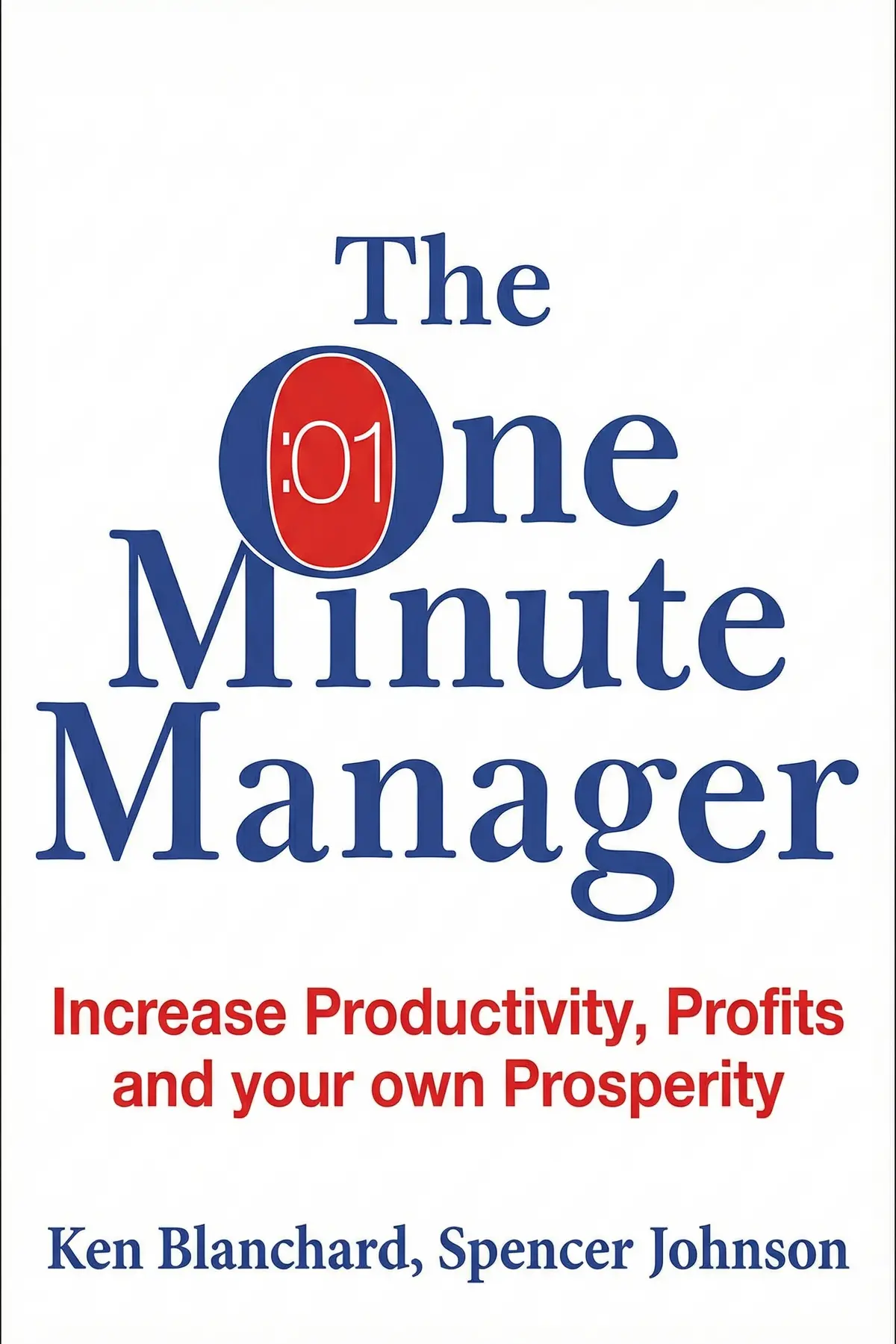
Management often feels like a tug-of-care between two extremes: being the tough, results-driven boss who hits targets but burns out staff, or being the nice, supportive leader whose team is happy but unproductive. The One Minute Manager offers a third way, providing a streamlined framework designed to maximize both organizational efficiency and individual job satisfaction. The promise of this approach lies in its simplicity. By mastering three fundamental 'secrets'—setting goals, offering praise, and delivering redirects—leaders can drastically reduce the time they spend hovering over their employees while actually increasing the quality of the work produced. It is about shifting from a culture of surveillance to a culture of empowerment, where people are encouraged to manage themselves and find meaning in their contributions. This summary breaks down the psychological principles behind these techniques and provides a roadmap for implementing them in any professional environment.
Ken Blanchard is a renowned business consultant, sought-after speaker, and prolific author. He serves as the Chief Spiritual Officer of The Ken Blanchard Companies, an organization that has provided leadership coaching to prominent global corporations including Shell and Merck. Spencer Johnson, MD, was a highly influential author known for the massive bestseller Who Moved My Cheese? and previously served as a Leadership Fellow at the Harvard Business School.
Ken Blanchard
Spencer Johnson
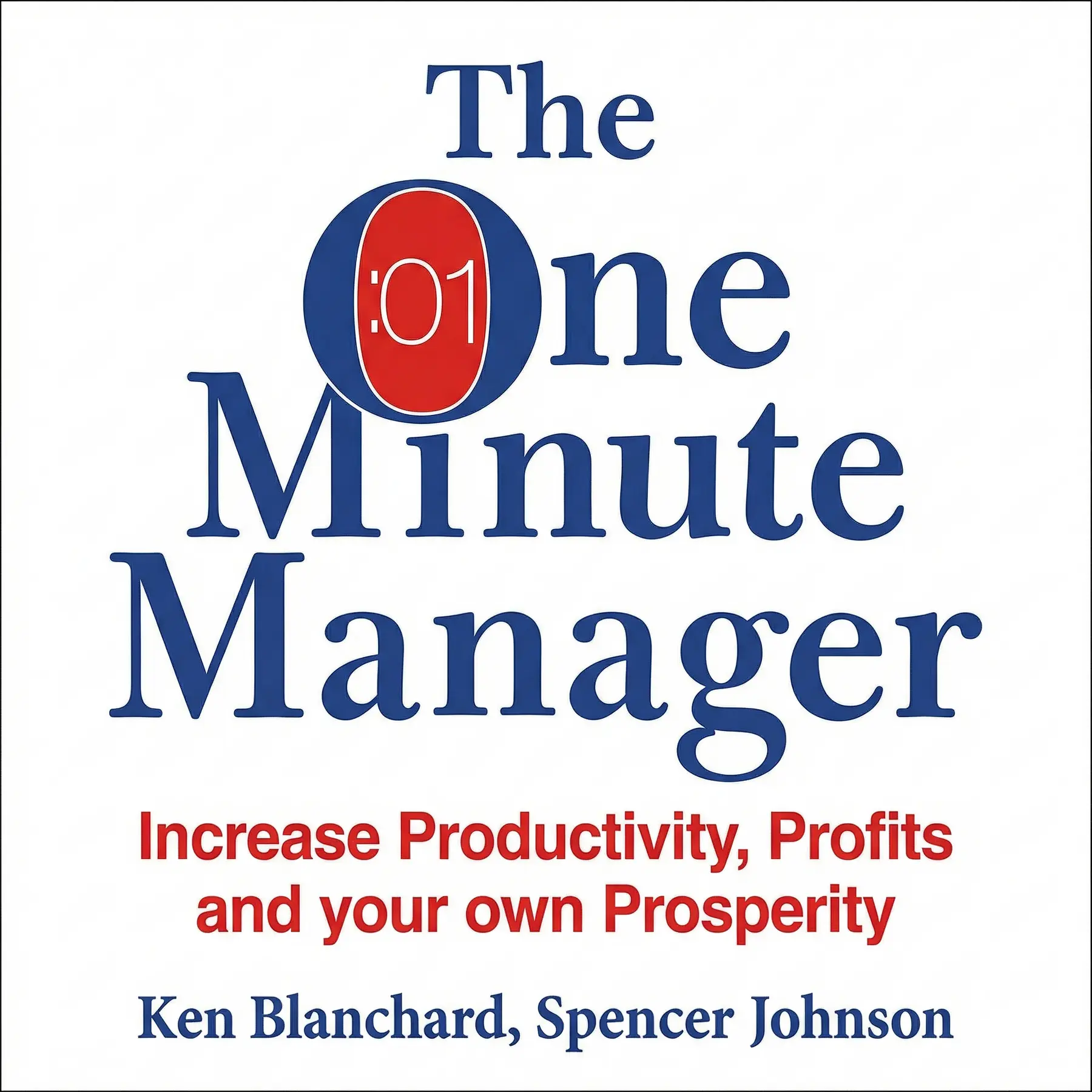
Listeners consider this management guide accessible and very informative, offering clear-cut concepts that assist in building strong team leaders. The content is practical across multiple management fields and focused on results, with one listener stating it takes about 2 hours to read. However, opinions on the storytelling are split; while some enjoy the included tales, others find the narrative style to be contrived.
Ever wonder why management feels so needlessly complicated in the modern corporate world? This book strips away the jargon and delivers a masterclass in simplicity through its parable of a young man seeking a great manager. I finished the entire thing in about two hours during a flight, and the three 'secrets'—goals, praisings, and reprimands—actually feel actionable rather than just theoretical. Truth be told, the idea of having employees write their goals in under 250 words is a game changer for clarity. It stops the endless back-and-forth and ensures everyone is on the same page from day one. While the storytelling is a bit dated, the core message about catching people doing something right is timeless. It’s a foundational text for anyone who wants to lead a team without micromanaging every single second of the day.
Show moreAfter hearing my boss quote this for years, I finally saw the light regarding its simple effectiveness. The concept of the 'One Minute Reprimand' is what really stuck with me because it teaches you to address the behavior without attacking the person. You tell them exactly what they did wrong, let the silence sink in, and then reaffirm their value to the company. It is a tough-but-fair approach that keeps morale high even when corrections are necessary. Some might call the writing style 'capitalistic garbage,' but in the trenches of a high-pressure office, these tools actually work. I love how the book emphasizes that people who feel good about themselves produce good results. It took me less than two hours to digest, and I’ve already started seeing improvements in my team’s output.
Show moreThe chapter on One Minute Praising really changed my perspective on how I interact with my staff daily. I used to be the type of manager who only spoke up when something went wrong, which created a culture of fear. By focusing on 'catching them doing something right,' I've noticed a massive shift in team energy and overall productivity. The book is incredibly easy to read and gets straight to the point without any unnecessary academic jargon. Some critics might hate the parable format, but I think it helps the lessons stick better than a standard textbook. It’s results-driven and emphasizes that the best minute you spend is the one you invest in people. Frankly, every new lead in our company should be required to read this within their first month.
Show moreGotta say, the simplicity is its greatest strength in a world of 500-page business tomes. You can read this on your lunch break and walk back into the office with a completely different mindset. The '250-word goal' rule has already helped me trim down my weekly check-ins because the objectives are finally clear. It’s about managing the behavior, not the person, which is a distinction many leaders fail to make. I know some people find the 'One Minute Manager' character to be a bit contrived, but the logic holds up under scrutiny. If you want a quick, informative guide to producing better leaders within your team, this is the one. It’s a short book that delivers more value than most semester-long management courses I've taken.
Show morePicked this up after my supervisor recommended it during my first week in a leadership role. The format is essentially business fiction, following a protagonist who interviews different managers to find the 'best' style. Personally, I found the One Minute Praise technique to be the most valuable takeaway because it emphasizes immediate, specific feedback. We often wait for annual reviews to tell people they are doing well, which is honestly a waste of potential. The book does show its age with some of the advice regarding physical contact, like putting a hand on an employee's shoulder, which definitely wouldn't fly in most HR departments today. However, if you can look past the 1980s corporate veneer, the logic regarding clear goal-setting is solid. It’s a quick read that provides a decent framework for results-driven leadership.
Show moreAs someone who hates fluff, I appreciated how fast this moves through its central thesis. The authors use a bowling pin analogy to explain feedback that I found particularly insightful for my department. If you didn't see the pins fall, you wouldn't know how to adjust your throw, and management is the same way. The book argues that feedback is the primary motivator for results, and I tend to agree with that sentiment. Look, the narrative is definitely cheesy and the 'One Minute Manager' himself comes off a bit like a cult leader at times. But the underlying mechanics of setting 250-word goals are undeniably practical for keeping a busy team focused. It’s a classic for a reason, even if the 'parable' style feels a bit like a children's book for executives.
Show moreFinally got around to reading this classic and it’s surprisingly relevant for today's fast-paced environment. The main takeaway for me was the structure of the One Minute Praise: be immediate, be specific, and tell them how it helps the organization. Most managers are too busy to give feedback, so the 'one minute' hook is actually very appealing. I did find the writing a bit repetitive, as they keep showing the same 'plaques' with slogans throughout the chapters. It feels very much like a product of the early 80s, especially with the 'touching' advice that I would highly recommend ignoring. Despite the cringe-worthy bits, the focus on self-management for employees is a powerful concept. It’s worth the short time investment just to grab those three core management tools.
Show moreThis book is basically a postcard expanded into a hundred pages of repetitive storytelling. I appreciate the core message—be clear about expectations and be quick with feedback—but the delivery is incredibly dry. It’s written at a very basic level, which makes it accessible, though it occasionally feels like it’s talking down to the reader. In my experience, real management involves a lot more nuance than just 'one minute' interactions. The characters in the story exist only to validate the author's points, lacking any real depth or soul. That said, the specific advice on 'catching people doing something right' is a great habit to build. It's a decent starting point for a brand-new manager, but seasoned leaders might find it a bit too simplistic for their needs.
Show moreLook, the advice is solid gold, but the storytelling is pretty cringeworthy and feels very dated. It’s part of that 'business fiction' genre where everything works out perfectly and the protagonist learns life-changing lessons from every conversation. I found the 'One Minute Reprimand' section a bit harsh in its description, particularly the part about making the employee 'feel' your displeasure. It sounds a bit like training a dog rather than collaborating with a professional adult. However, to be fair, the emphasis on immediate feedback is something most workplaces desperately lack. If you can ignore the weirdly didactic tone and the outdated 'pat on the back' stuff, there are three very useful tools here. It’s just a shame they couldn't have been delivered in a more realistic or modern way.
Show moreNot what I expected from such a famous bestseller, to be perfectly frank. It falls into that 'business parable' category where the characters are one-dimensional automatons designed only to spout the author’s slogans. The 'young man' in the story doesn't feel like a real person, and the dialogue is incredibly contrived and pedantic. I struggled with the suggestion that you can manage a person’s entire career in one-minute increments; it feels a bit dismissive of the complexity of human behavior. Also, the repetitive mention of touching employees to show 'care' made me very uncomfortable given modern workplace standards. While the 80/20 rule application is smart, the rest of the book feels like a series of motivational posters stitched together. I think you could probably get the same value from reading a one-page summary online.
Show more
Joseph A. Maciariello

Deborah Gruenfeld
Mike Michalowicz
Hamilton Helmer

Margaret Heffernan
AUDIO SUMMARY AVAILABLE
Get the key ideas from The One Minute Manager by Ken Blanchard, plus 5,000+ more titles in English and Thai.