Legendary Service: The Key Is To Care
Ken Blanchard
Trust Works! provides a comprehensive framework for building and maintaining trust through the ABCD model. Discover how competence, integrity, human connection, and reliability form the bedrock of successful personal and professional relationships.
1 min 48 sec
Have you ever wondered why some relationships feel effortless while others seem like an uphill battle of second-guessing and hesitation? At the heart of every successful collaboration, whether it’s a high-stakes business partnership or a simple friendship, lies a single, foundational element: trust. It is the invisible glue that holds our social world together. Yet, despite its importance, trust is notoriously fragile. It can take years of dedicated effort to build, but only a single moment of poor judgment to shatter completely.
Many of us struggle with trust because we view it as a vague feeling rather than a concrete set of actions. We might feel that someone is untrustworthy without being able to put our finger on exactly why. Conversely, we might be surprised to find that others don’t trust us, even when our intentions are good. This disconnect happens because we often lack a shared understanding of what trustworthiness actually looks like in practice.
The core philosophy we are exploring today suggests that trust is not just a personality trait, but a skill that can be developed through a specific framework known as the ABCD model. By breaking trust down into four distinct areas—being able, believable, connected, and dependable—we can transform an abstract concept into a practical toolkit for everyday life.
In the following sections, we will walk through each of these four pillars. We will explore how your technical skills and competence contribute to your credibility, why your integrity and honesty are non-negotiable, how emotional connection fosters safety, and why simple reliability is the ultimate proof of character. By the end of this journey, you’ll have a clear throughline to follow, allowing you to identify where your relationships might be leaking trust and how you can start plugging those holes today. Let’s dive into the mechanics of building bonds that truly last.
2 min 21 sec
Discover why being good at what you do is the first vital step in earning the confidence of those around you.
2 min 19 sec
Explore how acting with honesty and admitting your mistakes creates a culture of transparency and mutual respect.
2 min 25 sec
Learn why showing interest in others and practicing vulnerability are the keys to building emotional safety.
2 min 33 sec
See how consistent follow-through and simple habits like punctuality can solidify your reputation as a trustworthy partner.
1 min 32 sec
As we wrap up our look at the principles found in Trust Works!, it’s clear that trust is far more than a warm feeling or a lucky accident. It is a deliberate structure built from the ground up using the four pillars of the ABCD model. By focusing on your ability, your believability, your connection to others, and your overall dependability, you can take control of your reputation and the health of your relationships.
Building trust is a lifelong journey, not a destination. It requires constant self-reflection and the courage to ask for feedback. The authors suggest a practical path forward: start by assessing yourself in each of these four areas. Where are you strong, and where might you be falling short? Then, take the brave step of asking a trusted colleague or friend to give you their honest perspective. You might be surprised to find that while you think you are highly dependable, others see a lack of connection, or vice versa.
Use these insights to create a personal growth plan. Focus on one or two specific behaviors—perhaps it’s being more punctual or practicing more active listening—and commit to them daily. Trust is built in the small, quiet moments of consistency. It’s the throughline that connects our intentions to our impact. By intentionally applying these ABCDs, you don’t just make your work life more productive; you make your entire life more meaningful. Now, take a moment to consider: which of these four keys will you turn today to open a new door of trust in your life?
Trust is often viewed as an abstract or mysterious quality that either exists or doesn’t. However, this book demystifies the concept, presenting trust as a tangible set of behaviors that can be learned, practiced, and refined. By introducing the ABCD model—standing for Able, Believable, Connected, and Dependable—the authors provide a common language for individuals and organizations to assess their trustworthiness and address the gaps that lead to broken relationships. The promise of this work is that anyone can improve their interactions by focusing on these four core pillars. Whether you are a leader trying to foster a high-performing team, a coworker looking to improve collaboration, or an individual hoping to deepen personal bonds, these principles offer a clear roadmap. The book emphasizes that trust is not a static achievement but a continuous process of intentional action. By following the strategies outlined, you can move from a state of suspicion or misunderstanding to a place of mutual respect and long-lasting partnership.
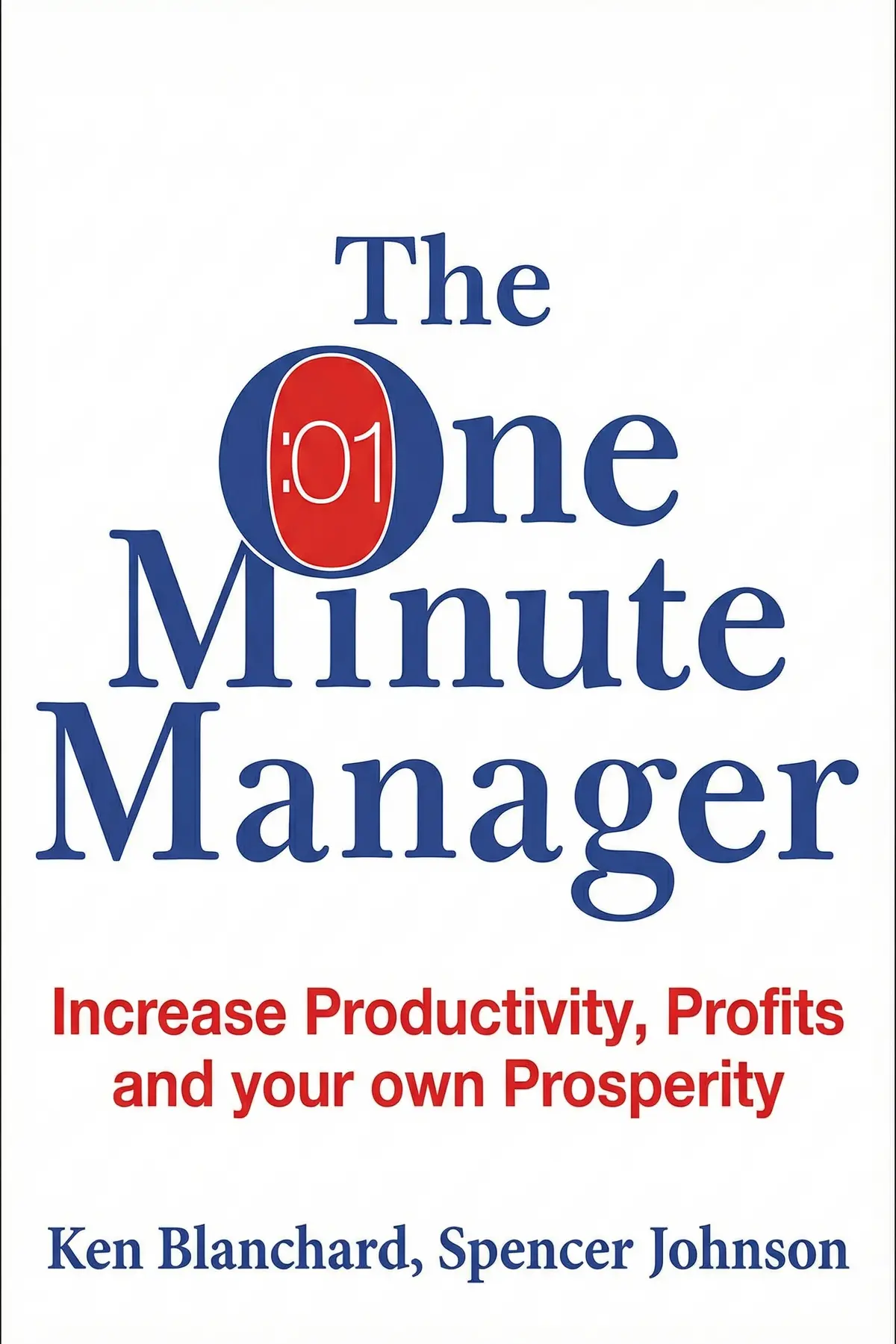
Ken Blanchard is a world-renowned leadership expert who has significantly influenced modern management practices. He serves as the Chief Spiritual Officer of Blanchard, a leading global consulting firm, and is the author of numerous best-sellers, most notably The One Minute Manager. Cynthia Olmstead is a respected organizational consultant with a specialty in leadership development and trust-building. She founded the TrustWorks Group, Inc., serving as its president for many years. Martha Lawrence is an executive book editor at Blanchard with extensive experience in the publishing industry, having previously edited for major houses like Harcourt and Simon & Schuster.
Listeners find the guide straightforward and accessible, with one noting it is an essential read for anyone in leadership. The high caliber of the content receives praise, as listeners value the way it clarifies interpersonal dynamics and offers actionable advice for both career and daily life. Additionally, the text underscores the vital role trust plays in achievement, and listeners view the purchase as a worthwhile investment.
Finally got around to reading this Blanchard classic, and it’s a total game-changer for my personal relationships. Most books on trust are either too academic or too vague, but the ABCD model is something I could implement the very next morning. I especially appreciated the focus on being 'Dependable'—it’s not just about showing up, but about the loyalty you show when things get difficult. Truth is, we all think we’re trustworthy, but this book shows how our actions might be sending a completely different signal to our partners and kids. It’s a small investment for such a significant shift in perspective. Even the story, which some find silly, helped illustrate the points in a way that stuck in my head. If you’re willing to take 100% responsibility for your life, this is the guide you need.
Show moreThis book is a must-read for anyone who feels like they’re constantly being misunderstood by their peers or family. It highlights the importance of trust as the foundation for every success, whether you're trying to land a promotion or just keep your household running smoothly. The 'Believable' section really hit home for me, especially the part about how even small omissions can erode your integrity over time. I loved the practical tips for life and work; they aren't just theoretical fluff but actual conversation starters you can use. Some people might find the fable hokey, but I thought it was a charming way to see the concepts in action. It’s great value for money because you’ll find yourself returning to the ABCD checklist every time you hit a wall in a relationship.
Show moreAs someone who manages a team of twenty, I found the simplicity of this book to be its greatest strength. The 'Able, Believable, Connected, Dependable' model gives us a shared language to address issues that used to feel too personal or vague to discuss openly. We often assume people don't trust us because of our character, but sometimes it’s just a lack of demonstrated competence or consistency. The authors do a great job of breaking down how perception governs our professional relationships. I’ll admit the fable at the beginning was a bit cheesy, but the second half’s diagnostic tools are where the real value lies. It helped me identify my own blindspots regarding 'Connectedness' and how I prioritize tasks over people. Definitely a must-read for any leader who feels their team culture is fracturing.
Show morePicked this up during a particularly rough patch at work where communication had completely broken down. What I appreciated most was the focus on 'Connectedness' and showing genuine care, which is often dismissed in corporate environments as 'too soft.' The authors argue that if people don't feel you care about them, they won't trust your competence or your word. It helped me realize I was so focused on being 'Able'—showing off my skills—that I neglected the human element of leadership. The book is short and has a lot of white space, which makes it an easy reference guide to keep on your desk. While the writing style is a bit simplistic, the practical application is undeniable. It’s about removing those subconscious blindspots that sabotage our reputations without us even knowing it.
Show moreNot what I expected, but exactly what I needed to hear. I used to think trust was an all-or-nothing thing—you either have it or you don’t—but the authors explain it as a set of behaviors that can be practiced and improved. The chapter on being 'Able' was particularly insightful for me, as it separated personal likability from professional competence. You can love someone as a friend but not trust them to handle a project, and the ABCD model makes that distinction clear without the guilt. The subplot about the father and his boss was a bit distracting, but it did a good job of showing how these dynamics play out in a high-stakes office environment. Overall, it’s a quick, easy-to-follow guide that provides a great framework for anyone willing to be honest about their own shortcomings.
Show moreEver wonder why you click with some people instantly while others keep you at arm’s length despite your best efforts? This book attempts to answer that through a two-part structure: a story about household pets and a technical breakdown of trust components. To be fair, the parable was a bit noisy with too many subplots—the dog/cat stuff, the parents, the boss—it just didn't quite mesh well. However, the second section is pure gold for anyone wanting to do some self-reflection. It forces you to look at whether you are truly 'Believable' or if you’re just telling white lies to avoid conflict. It’s an easy afternoon read that offers some practical tips, but it stays very much on the surface-level self-help plane without diving into the messier nuances of human betrayal.
Show moreLook, this is a classic Blanchard production. It's short. It's punchy. It's built around a mnemonic device that you’ll remember long after you close the cover. The ABCD model is genuinely useful for diagnosing where a relationship has gone off the rails, particularly the distinction between being 'Believable' and being 'Dependable.' That said, I found the layout a bit frustrating. There are so many pages that are only half-full, making the price point feel like a bit of a stretch for the amount of actual content provided. The parable is fine if you like that sort of thing, but it feels a bit dated at times. It’s a solid 3-star read—helpful for a quick refresher, but don't expect it to change your entire worldview or provide deep psychological breakthroughs.
Show moreWhile the ABCD framework provides a clear vocabulary for a complex emotion, the delivery left a lot to be desired. I found the central parable about a dog and cat trying to coexist incredibly hokey. It made it difficult to take the underlying message seriously. Frankly, the book feels padded. Much of the 100-plus pages are half-empty, and the core message could have been summarized in a five-minute blog post. The subplots involving the family and the office felt cluttered and lacked the flow necessary to keep me engaged. If you are looking for deep psychological insights, you might want to look elsewhere. It’s a very quick read. I struggled to find enough substance to justify the price tag for what is essentially a basic primer on being a decent human being.
Show moreAfter hearing so many good things about this, I was actually quite disappointed by the lack of depth. The authors spend a lot of time on a story about a dog and a cat, which felt more like a children’s book than a professional development tool. If you’ve read any other management parables, you’ve seen this exact formula before. The advice is basically 'be honest and do what you say you'll do,' which isn't exactly groundbreaking. I wanted more on how to rebuild trust once it’s truly shattered, but the book mostly stays in the realm of minor misunderstandings. It’s a very fast read, but ultimately, the information quality didn't justify the length. A short article would have been just as effective as this entire hardcover book.
Show moreThe core premise here—that trust is a formula you can simply 'work' through intentional behavior—is dangerously optimistic. Reading through the chapters on ability and believability, I couldn't help but feel that the authors are teaching us how to perform trustworthiness rather than how to actually be it. One mistake can define you forever in a colleague's eyes. No amount of 'ABCD' checklists can magically erase the bias or baggage others carry. Connection is often used as a tool for manipulation, and the book doesn't spend nearly enough time on the darker side of these dynamics. It feels like a 'feel-good' manual for a world that is much more cynical and complex than a fable about household pets. Trust isn't a badge. It is a gamble. This book treats it like a simple math problem. I found very little of value here.
Show more
Margaret Heffernan
Joseph A. Maciariello
Deborah Gruenfeld
Mike Michalowicz
AUDIO SUMMARY AVAILABLE
Get the key ideas from Trust Works! by Ken Blanchard, plus 5,000+ more titles in English and Thai.