
14 min 16 sec
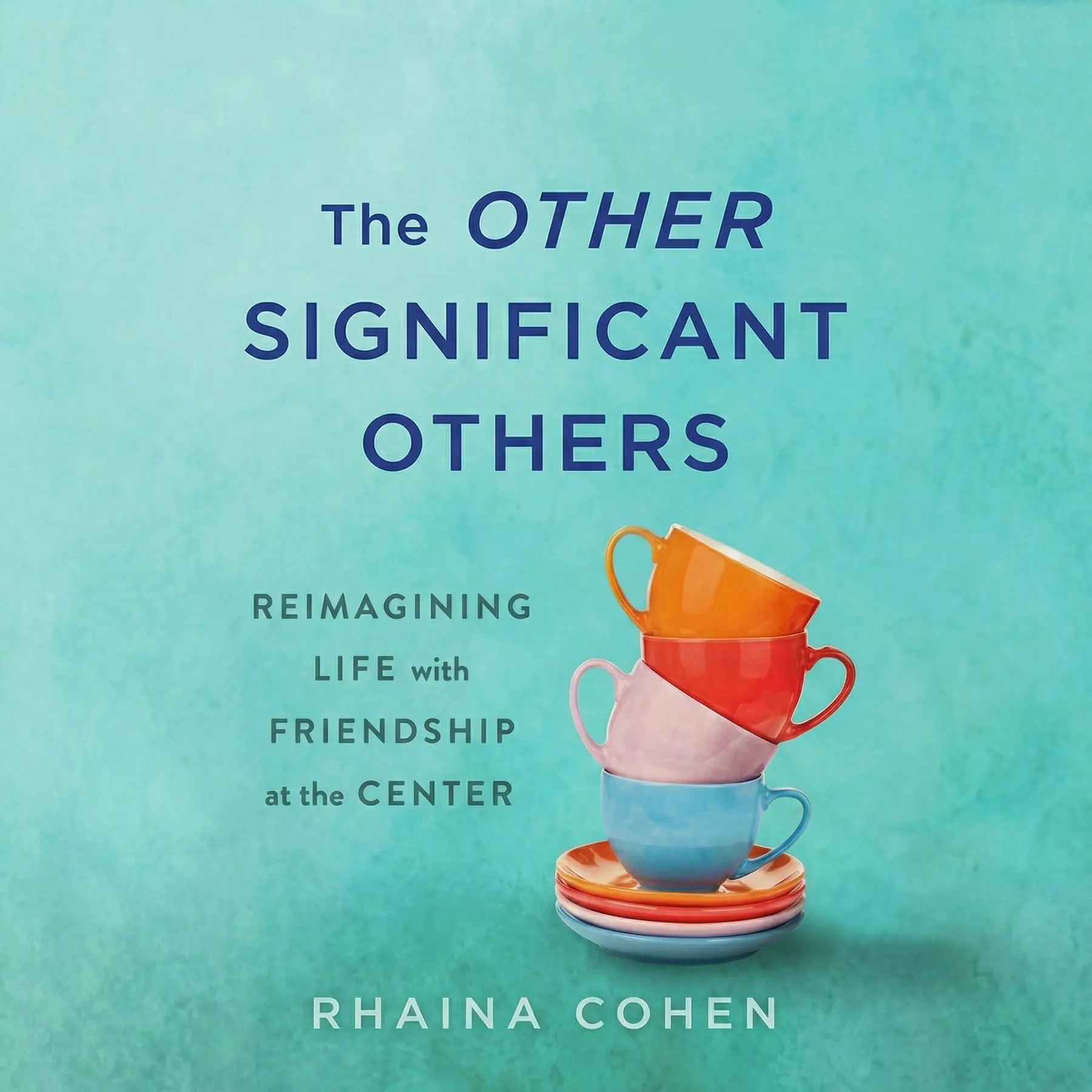
The Other Significant Others: Reimagining Life with Friendship at the Center
By Rhaina Cohen
Discover why the traditional hierarchy of relationships is changing. This exploration of deep platonic bonds reveals how non-romantic partnerships can provide the same commitment, care, and fulfillment typically reserved for marriage.
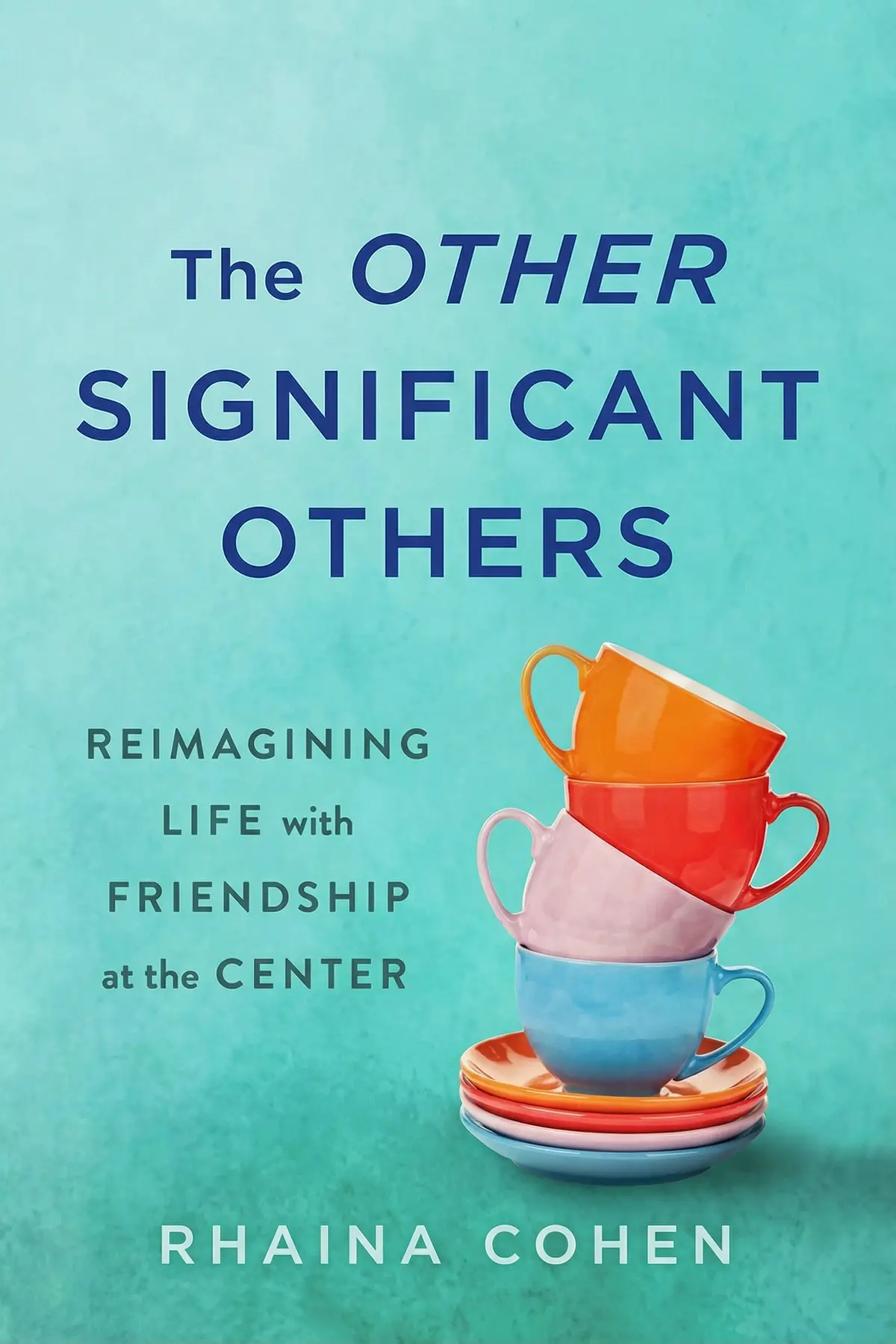
Table of Content
1. Introduction
1 min 32 sec
Think about the person you would call first in an emergency, the person you want to grow old with, or the person you rely on for daily emotional support. For most people, the immediate answer is a spouse or a romantic partner. We live in a world that places romantic love at the very top of a relationship hierarchy, treating it as the only bond capable of sustaining a life-long commitment. But what if that wasn’t the only way to build a meaningful life? What if your most significant relationship wasn’t romantic at all?
This is the central question of our exploration today. We are looking at a shift in how we understand intimacy and partnership. For a growing number of people, the traditional script—finding “the one” to fulfill every emotional, social, and practical need—is being replaced by something more diverse and flexible. They are choosing to build their lives around friends, creating what are known as platonic life partnerships.
In the following minutes, we’re going to look at the stories of people who have defied societal expectations to prioritize these “other” significant others. We’ll see how these bonds are not just “friendships plus,” but are deep, life-defining commitments that challenge our laws, our social norms, and our definitions of family. We will explore how history once celebrated these bonds, why sex isn’t a requirement for lifelong devotion, and how we might all benefit from a more expansive view of love. By the end, you may find yourself looking at your own social circle in an entirely new light, recognizing the untapped potential for connection that already exists in your life.
2. The Historical Precedent for Intense Friendship
1 min 52 sec
Explore how the past viewed deep friendships differently, showing that our modern obsession with the nuclear romantic couple is a relatively recent social development.
3. Decoupling Commitment from Sexual Desire
1 min 51 sec
Challenge the assumption that physical intimacy is the necessary ingredient for a lifelong partnership through the lens of asexuality and emotional attunement.
4. Overcoming the Fear of Social Judgment
1 min 32 sec
See how questioning traditional gender and relationship norms can lead to a more authentic and self-determined life for everyone involved.
5. Reimagining the Nuclear Family Structure
1 min 37 sec
Discover how platonic co-parenting can provide a stable, loving environment for children, proving that romance isn’t the only foundation for a family.
6. Finding Security and Connection in Old Age
1 min 30 sec
Learn how long-term friendships can evolve into essential support systems for seniors, offering an alternative to the loneliness often associated with aging.
7. The Weight of Disenfranchised Grief
1 min 32 sec
Understand the unique pain of losing a platonic soulmate and why society’s failure to recognize this loss makes the mourning process even harder.
8. The Need for Legal and Cultural Reform
1 min 30 sec
Examine the practical barriers that make it difficult for friends to care for each other and the shifts needed to grant these bonds the respect they deserve.
9. Conclusion
1 min 20 sec
As we wrap up this exploration of platonic life partnerships, the overarching theme is one of possibility. We’ve seen through history, psychology, and deeply personal stories that the traditional hierarchy of relationships—with romance at the top and friendship somewhere below—is not the only way to find happiness and stability.
What this means for you is that the ‘blueprint’ for a successful life is more flexible than you might have been led to believe. You have the power to decide who your ‘significant others’ are. Whether it’s a co-parenting friend, a roommate for your senior years, or a platonic soulmate you share every secret with, these bonds are worthy of your time, your intention, and your deepest commitment.
The takeaway is not that romantic love is unimportant, but rather that it is not the *only* source of the things we all crave: security, intimacy, and the feeling of being truly known. By elevating the status of friendship in our own lives, we don’t just help ourselves; we help build a culture that is more connected and more resilient. Take a moment to look at the people in your life who show up for you. Perhaps it’s time to start treating those ‘other’ significant others with the same weight and wonder we usually reserve for romance. After all, love is too big a concept to be confined to just one category.
About this book
What is this book about?
For a long time, society has operated on a specific blueprint: we find a romantic partner, get married, and expect that one person to be our primary emotional anchor, co-parent, and life companion. But what happens when that mold doesn't fit? This summary explores the growing movement of people who are putting friendship at the center of their lives, creating deep, committed, and legally recognized bonds that exist entirely outside the realm of sex and romance. Through various stories of platonic life partners, we see how these connections challenge our assumptions about family and love. You will learn about the history of intense friendships, the possibilities of platonic co-parenting, and the unique challenges faced by those whose most significant other isn't a spouse. It is a guide to reimagining what a fulfilling life can look like when we value all forms of intimacy and commitment.
Book Information
About the Author
Rhaina Cohen
Rhaina Cohen is a distinguished journalist, editor, and producer for NPR, where her contributions to the documentary podcast Embedded have earned her critical acclaim. Her insightful writing on human connection and social structures has been featured in major publications like The Atlantic and The Washington Post. Cohen’s work often bridges the gap between personal narrative and social analysis. She lives a life that reflects her research, sharing a home with her husband, her close friends, and her friends’ children.
Ratings & Reviews
Ratings at a glance
What people think
Listeners find the material both eye-opening and validating, with one individual highlighting its thorough investigation and clever concepts. The quality of the prose, however, yields varying responses among listeners.
Top reviews
Lena
Finally, a book that validates the deep, platonic bonds many of us hold dearer than traditional romance. Cohen provides an enlightening look at "platonic life partners," moving beyond the standard nuclear family model to show how "framily" can be just as stabilizing. To be fair, some of the social science sections felt a bit dense, but the personal stories of people raising children together or acting as medical proxies were deeply moving. It’s high time our legal systems recognized these commitments, especially for those of us who don’t fit the man-woman-kids mold. The research is insightful and serves as a powerful call to action for more inclusive societal structures. I found myself nodding along to every page, feeling seen in a way most relationship books never manage.
Show moreMattanee
As a single person who prioritizes friendship above all else, reading this felt like coming home. Cohen’s exploration of how we can center our lives around "other significant others" is both affirming and deeply necessary for our lonely modern age. Personally, the chapter on caregiving and being a medical power of attorney resonated most because it’s a reality many of us face without legal protection. The stories of people navigating life transitions together, from child-rearing to grieving, are told with such tenderness and care. Look, some might find the author’s personal interludes a bit much, but I thought they added a relatable, human touch to the research. It’s an essential text for anyone looking to reimagine what a "successful" life looks like outside of marriage.
Show moreAndrei
Picking this up was the best decision I've made all month. Cohen’s work is a vital contribution to the conversation about loneliness and the limitations of the nuclear family. The way she weaves together history, law, and personal stories creates a rich tapestry of what’s possible when we stop prioritizing one type of love over all others. I especially loved the sections on co-parenting with friends—it’s a model that makes so much sense but is so rarely discussed in mainstream media. The writing is engaging and the research feels robust and well-vetted. If you’ve ever felt like your life was incomplete because you weren't "coupled up," this book will give you a whole new perspective. Absolutely recommended.
Show moreLook
Rhaina Cohen explores a fascinating niche of human connection that is far too often ignored in our romance-obsessed culture. The writing quality is generally high, though it fluctuates between warm storytelling and a somewhat dry, academic tone that might lose some readers. I particularly appreciated the focus on "compulsory coupledom" and how it limits our ability to seek support from a wider social circle. However, it’s worth noting that the book focuses heavily on singular partner-like friendships rather than broad community networks. While the anecdotes are insightful, I wish there had been more discussion on how to actually find and build these relationships from scratch. It’s a thought-provoking read that will definitely change how you view your closest friends.
Show moreApichat
The chapter on grief hit me the hardest because it perfectly captured the inequity of how society views friend loss versus the death of a spouse. Cohen correctly points out that work bereavement policies are rarely designed for "just friends," which is a glaring oversight in our support systems. I found the discussion on masculinity and emotional intimacy particularly insightful, as it highlighted the barriers men face when trying to form deep bonds. My only minor quibble is that some of the relationships profiled seemed to tip into codependency without the author addressing those potential pitfalls. Despite that, the book is a timely and thought-provoking exploration of how we can build more resilient, loving communities. It’s a solid 4-star read that sparked many long conversations with my own "person."
Show morePun
This read felt like a long-overdue permission slip to take my friendships as seriously as my romantic partners. Cohen does a masterful job of blending social science with poignant anecdotes that challenge the "compulsory coupledom" of Western society. I was especially struck by the historical examples of romantic friendships, even if some interpretations are up for debate among scholars. The book is incredibly enlightening for anyone who has ever felt like their "found family" was treated as second-rate by the government or the law. It’s a beautiful, affirming look at the variety of ways humans can love and support one another. Frankly, I think everyone should read this to better understand the emotional infrastructure that keeps us all afloat.
Show moreAva
The concept here is undeniably important, yet the actual reading experience left me wanting much more. While the core tenet of elevating friendship is one I support, the presentation felt like a repetitive series of case studies without enough synthesis. Truth is, a lot of the insights felt quite obvious to anyone who has already spent time in queer or polyamorous circles. It was disappointing that the author didn’t delve deeper into the framework of Queerplatonic Relationships (QPRs), which have been discussing these exact dynamics for years. The lack of a clear "how-to" or a deeper look at friend breakups made the book feel incomplete. It’s a decent introduction to the topic for someone totally new to the idea, but it lacks the depth for a truly transformative experience.
Show moreMai
Ever wonder why we are taught that one person—a spouse—should be our everything? This book tries to tackle that question by profiling people who have chosen a different path. While I appreciate the effort, the writing can be quite clinical and cold at times, making it hard to connect with the subjects. To be fair, the research is extensive, but the stories often felt like they were being kept at arm's length. I also struggled with the author’s own position; having a husband seems to somewhat undermine the radical thesis of centering a friend. It felt less like a reimagining of life and more like an "and also" addition to a traditional lifestyle. It’s an okay read, but it lacks the analytical bite I was hoping for.
Show moreRosa
I really wanted to like this, but the execution was frankly baffling. The author’s comparison of "couple privilege" to white privilege felt incredibly tone-deaf and lacked the necessary nuance to land correctly. Furthermore, as a queer reader, I couldn’t help but notice how many historical "friendships" described here were likely just gay couples forced into hiding. It felt like blatant queer erasure under the guise of "platonic love." Cohen’s own relationship with her friend M also raised some red flags for me; it bordered on emotional infidelity rather than healthy partnership. The book oscillates between being a clinical data dump and a self-indulgent memoir without ever finding a solid middle ground.
Show moreWilliam
To be fair, the premise is gold, but the actual book is quite frustrating. It purports to be about placing friends at the center of life, yet it mostly focuses on replicating the marriage model with a singular friend. This just replaces one "everything" person with another, which doesn't actually solve the fragility of our social expectations. I also found the author's own narrative a bit self-indulgent, especially since she eventually drifted away from the intense partnership she describes. Also, her failure to properly distinguish between sex and romance makes some of the "platonic" labels feel like a stretch. It honestly felt like a missed opportunity to discuss broader community care and the actual work of maintaining a social circle.
Show moreReaders also enjoyed

A Biography of Loneliness: The History of an Emotion
Fay Bound Alberti
A Force for Good: The Dalai Lama's Vision for Our World
Daniel Goleman

A Room of One’s Own
Virginia Woolf
Abolish Rent: How Tenants Can End the Housing Crisis
Tracy Rosenthal
AUDIO SUMMARY AVAILABLE
Listen to The Other Significant Others in 15 minutes
Get the key ideas from The Other Significant Others by Rhaina Cohen, plus 5,000+ more titles in English and Thai.
- 5,000+ titles
- Listen as much as you want
- 7-day free trial
- Cancel anytime







