
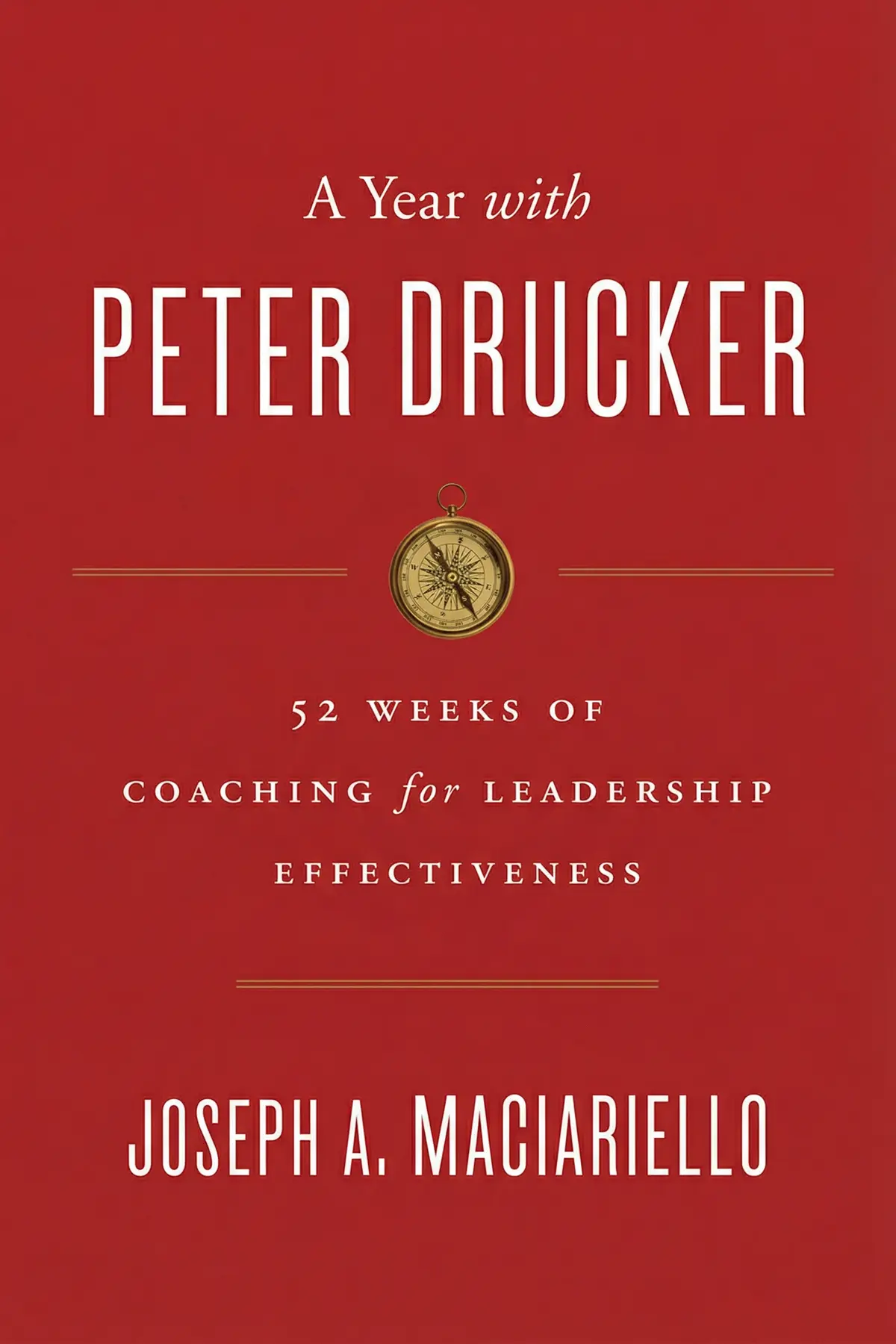
A Year with Peter Drucker: 52 Weeks of Coaching for Leadership Effectiveness
Joseph A. Maciariello
Discover why the most successful CEOs in history are often the ones you’ve never heard of. This study explores the unconventional strategies of leaders who prioritized rational capital allocation over corporate celebrity.
1 min 25 sec
When we think about the titans of industry, our minds usually drift toward the most famous faces on magazine covers. We think of the CEOs who are constantly in the spotlight, the ones who give charismatic speeches and oversee massive, world-spanning operations with an iron grip. For a long time, the gold standard for this kind of leadership was Jack Welch. During his tenure at General Electric, Welch became the quintessential celebrity executive. He was everywhere—managing every detail, communicating tirelessly with investors, and keeping the stock price at the center of his universe. By many measures, he was incredibly successful.
But if we change the lens through which we view success, a different picture emerges. If we stop looking at fame and start looking at the actual compound returns delivered to shareholders compared to the broader market, the celebrity CEOs often start to fade into the background. In their place, a group of quiet, unconventional, and highly rational leaders appears. These are the Outsiders. While Welch outperformed the market by a respectable margin, other less-heralded leaders were quietly crushing those numbers by massive factors. The goal here is to understand the common thread among these high performers. We aren’t just looking for good managers; we are looking for the blueprint used by those who radically redefined what it means to succeed in business. We will explore how a willingness to be different, a focus on cash over earnings, and a unique perspective on the CEO’s true job can lead to extraordinary wealth creation.
1 min 53 sec
Explore how the founder of Teledyne ignored the standard rules of management to create one of the most profitable conglomerates in American history.
1 min 47 sec
Discover why the most successful leaders often choose to step back, giving their teams autonomy while keeping the corporate center incredibly lean.
2 min 02 sec
Learn how an unexpected leader at the Washington Post used her lack of traditional experience to make bold, rational decisions that her peers missed.
1 min 13 sec
The stories of these outsider CEOs offer a powerful refutation of the standard corporate playbook. We are often told that the best leaders are the ones who are most visible, the ones who follow the latest management fads, and the ones who focus on satisfying the immediate demands of the stock market. But the data shows that the greatest returns are generated by those who do the exact opposite. These leaders were rational, independent, and focused on the long game. They didn’t care about being famous; they cared about being effective.
The throughline of their success is simple but difficult to execute: think like an investor, not just an operator. Focus on the value of each individual share rather than the total size of the empire. Don’t be afraid to keep your corporate center small and give your managers true autonomy. Most importantly, have the courage to wait for the right opportunity and the discipline to act aggressively when that opportunity finally appears. By adopting the mindset of the outsider, you can move past the noise of the crowd and build a foundation for truly extraordinary success. It is a reminder that in business, as in life, the most rational path is often the one that most people are too afraid to take.
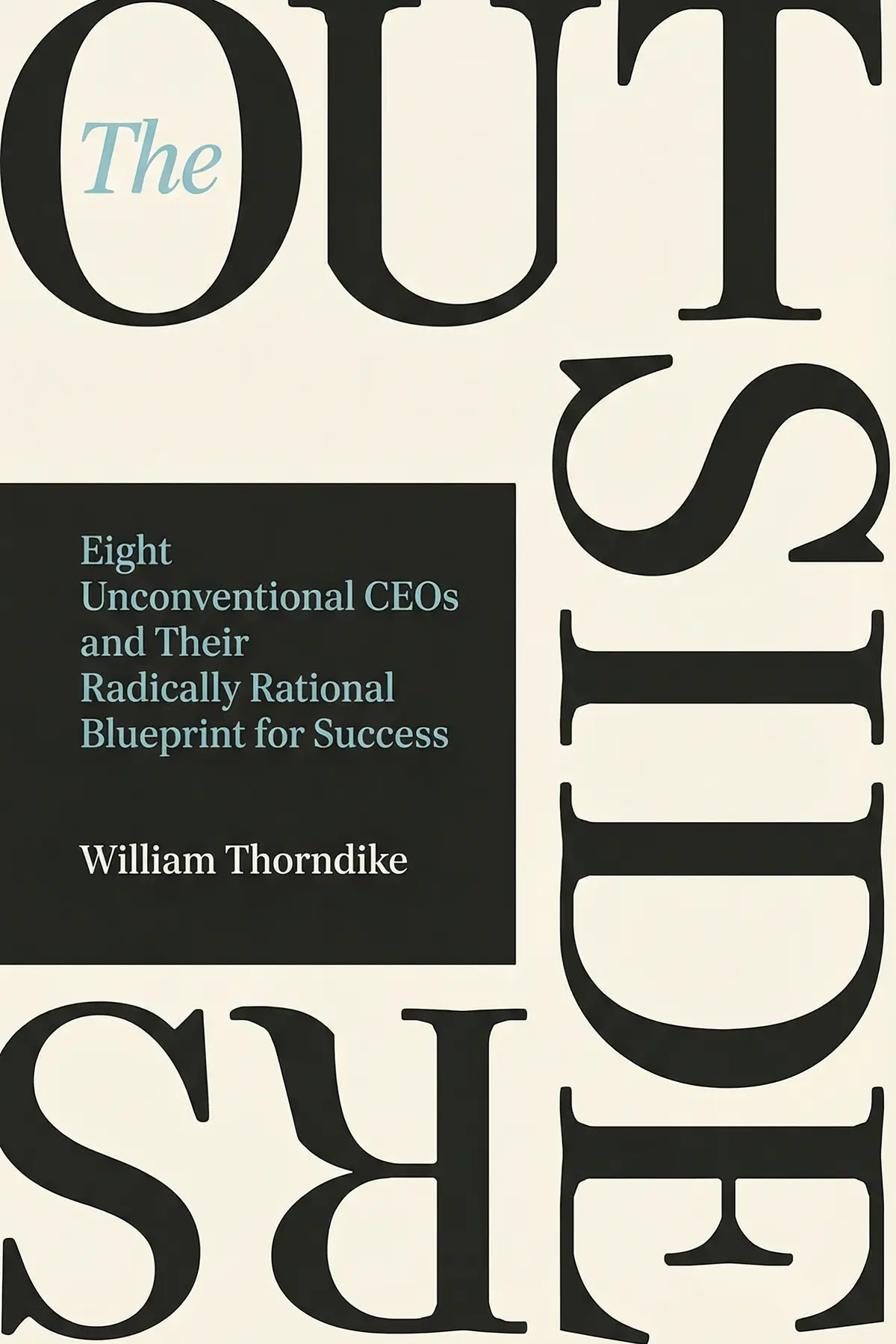
What truly makes a leader great? While the media often celebrates charismatic CEOs who dominate headlines and expand their empires at any cost, the data tells a different story. This exploration dives into the careers of eight iconoclastic leaders who took a radically different approach to management. These individuals weren’t interested in following the latest management trends or catering to the whims of Wall Street. Instead, they focused on a singular, powerful metric: the long-term increase in their company’s per-share value. The promise of this analysis is a fundamental blueprint for success that can be applied to any industry. By examining the lives of leaders like Henry Singleton and Katharine Graham, we uncover the shared traits of the “Outsiders.” You will learn why ignoring the crowd, embracing a lean corporate center, and mastering the art of capital allocation are the real keys to outperforming the market. It is a lesson in the power of rationality and the courage to remain independent in a world of corporate conformity.
William Thorndike is a seasoned professional in the world of finance and investment. He serves as the founder and managing partner of Housatonic Partners, a private equity firm. Beyond his work in the financial sector, Thorndike is a celebrated author and shares his expertise as an occasional lecturer at Stanford Business School.
Listeners view this as an exceptional guide for business and investing, lauding the thoroughly researched subject matter and evocative ideas. The text is expertly composed with straightforward phrasing, and listeners appreciate its worth in building long-term shareholder value. They draw attention to the emphasis on leadership characteristics and capital allocation, with one listener mentioning how effectively it displays vital fundamental policies.
Thorndike manages to turn what could have been a dry spreadsheet of a book into a compelling narrative about the power of capital allocation. Most CEOs focus on operations, but the "outsiders" profiled here understood that their real job was moving chips around the board to maximize value. I was particularly struck by the simple wording; there is no unnecessary jargon cluttering up the insights. Each chapter meticulously researches how these leaders ignored Wall Street's obsession with quarterly earnings to focus on per-share growth instead. It’s a refreshing take that prioritizes long-term logic over corporate theater.
Show moreThe chapter on Katharine Graham was a revelation for me, especially seeing her transition from an inexperienced widow to a powerhouse of capital allocation. I loved how Thorndike highlighted her poise and her willingness to trust her gut when the experts were telling her to do the opposite. It’s rare to find a business book that gives introverts their due credit for being effective leaders through listening and analysis rather than bravado. The research is deep, and the lessons on dividend policy and divestitures are things you just don't learn in a standard MBA program. Essential reading for any serious leader.
Show moreFinally, a book that treats the CEO role like a portfolio manager instead of a celebrity or a cheerleader. The stories of Tom Murphy and Henry Singleton show how powerful a decentralized organization can be when you have the right operators in place. By pushing decision-making down the chain, these CEOs freed themselves up to focus on the big-picture financial moves that actually move the needle. Frankly, it’s a masterclass in delegation. The writing style is crisp and the data-driven approach makes the success of these companies feel like an inevitable result of good logic rather than luck.
Show morePicked this up after a recommendation from a mentor and it didn't disappoint. The book is meticulously researched, providing a clear-eyed look at how eight very different people achieved the same extraordinary result: massive outperformance of the market. I appreciated the simple wording because it allows the brilliance of the strategies to shine through without getting bogged down in academic theory. It’s a refreshing change from the typical hero CEO narrative, focusing instead on the quiet, rational decisions that build true wealth. If you want to understand how the best in the business actually think about money, read this.
Show moreWhy aren't more business books written like this? Instead of the usual leadership platitudes about synergy and vision, we get a gritty look at unconventional math and brutal discipline. To be fair, the book can feel a bit repetitive because the formula—decentralize operations, cut costs, buy back shares—is applied by almost everyone featured. However, seeing those principles play out across different industries like media and manufacturing is eye-opening. The profiles are brief but punchy, providing enough historical context to make the financial moves feel earned. It’s definitely changed how I look at corporate governance.
Show moreAs an investor, I found the focus on share buybacks and tax-efficient reinvestment incredibly enlightening compared to the usual fluff. Most CEOs come up through sales or marketing, so they often treat the company’s capital like a secondary concern rather than their primary tool. This book proves that the real winners are the ones who act like owners, not just managers. My only gripe is that the formula presented here relies heavily on a specific type of market environment that might not always exist today. Still, the math behind the hurdle rates and the concentration of investments is solid.
Show moreNot every strategy here will work for a small startup, yet the core principles of disciplined capital allocation remain incredibly solid for any scale. In my experience, most business leaders get too caught up in the weeds of daily operations to ever think about the long-term value of their equity. Thorndike does an excellent job of showing why that’s a mistake. While I wish there was more discussion on how to attract those talented operators mentioned in the text, the focus on buybacks and debt is well-argued. It's a thought-provoking read that challenges the conventional wisdom of modern corporate management.
Show moreEver wonder why some companies crush the S&P 500 for decades while others just coast through cycles of mediocrity? This book provides a compelling answer by looking at the outsider CEOs who marched to the beat of their own drum. The focus on capital allocation as the primary job of a leader is a perspective I haven't seen explored this deeply elsewhere. I did find the repetitive nature of the success stories a bit draining toward the end, but the overall message is too important to ignore. It’s a well-crafted guide for anyone looking to create long-term value in a world obsessed with the short term.
Show moreLook, the case studies are fascinating from a historical perspective, but I found the book’s singular focus on shareholder returns a bit narrow. It almost glorifies the idea of slashing worker pay and internal budgets just to fuel share buybacks whenever the price multiple makes sense. While the outsider CEOs were clearly geniuses at capital allocation, the book ignores the human cost of some of these strategies. Truth is, business is way more complex than just managing cash flow and debt offerings. It’s a well-written biography of eight titans, but take the advice with a grain of salt if you care about culture.
Show moreGotta say, I expected more variety in the tactical advice given how diverse the industries were. Every single chapter eventually circles back to the same few levers: slash costs, use debt for acquisitions, and buy back stock whenever the price dips. It’s a bit of a one-trick pony in that sense, even if it’s a very effective trick. While I enjoyed the corporate histories, I’m not convinced that these strategies are a universal roadmap for success in today’s more stakeholder-focused economy. It's a great historical document, but perhaps a bit dated in its philosophy of maximizing shareholder value above all else.
Show moreJoseph A. Maciariello

Deborah Gruenfeld
Mike Michalowicz
Hamilton Helmer

Margaret Heffernan
AUDIO SUMMARY AVAILABLE
Get the key ideas from The Outsiders by William Thorndike, plus 5,000+ more titles in English and Thai.







