
Age of Propaganda: The Everyday Use and Abuse of Persuasion
Anthony Pratkanis
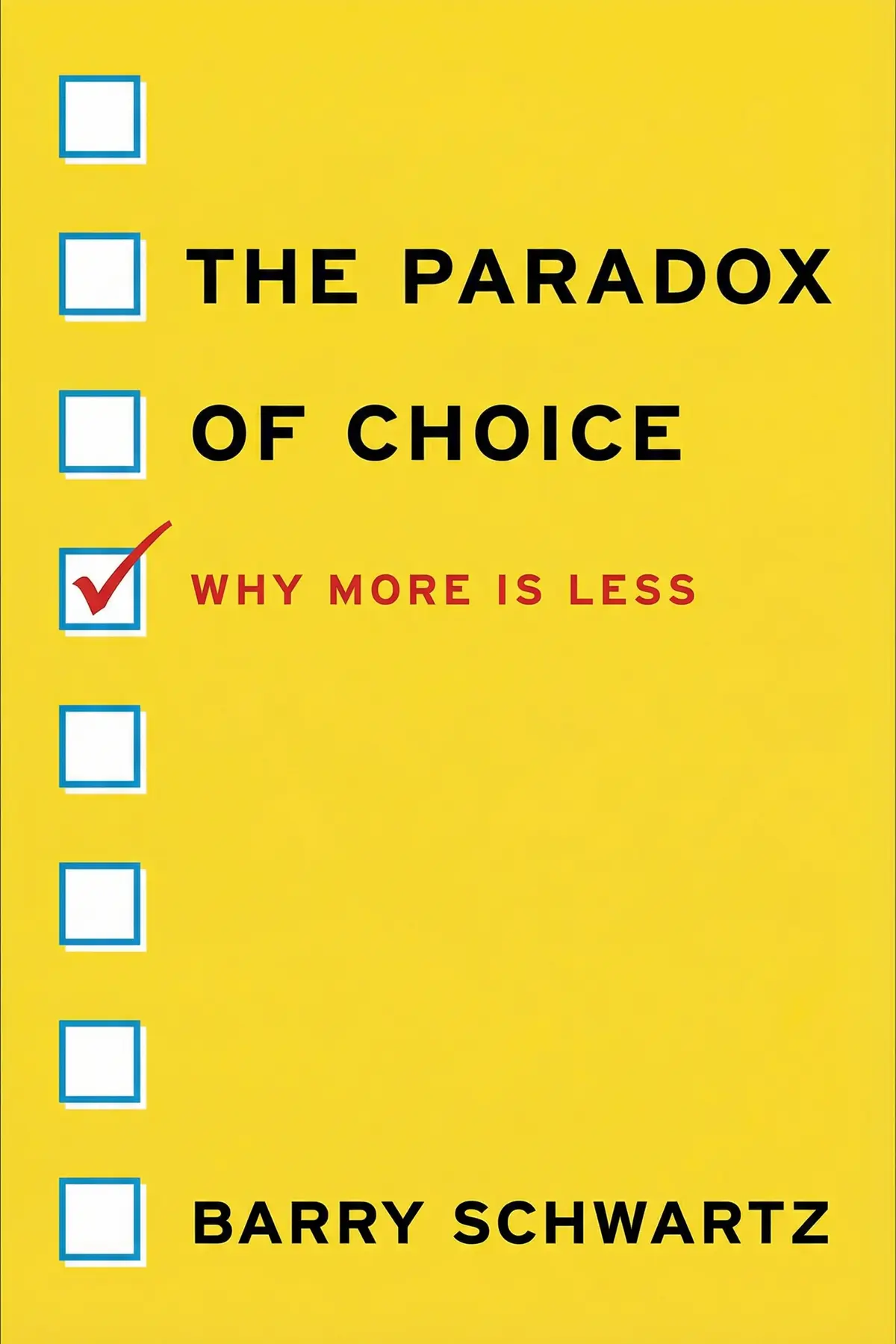
Explore how the modern explosion of options leads to decision paralysis and anxiety. This summary reveals why limiting our choices and settling for good enough can lead to a more fulfilling life.
1 min 42 sec
Imagine you are standing in the middle of a modern supermarket. In front of you is an entire aisle dedicated to nothing but salad dressing. There are hundreds of bottles, each promising a slightly different flavor profile, a specific health benefit, or a unique origin. On the surface, this feels like the pinnacle of human freedom. We have reached a point in history where we can customize every tiny detail of our existence. We are the masters of our domain, free to select exactly what we want, when we want it.
But if you have ever stood in that aisle feeling a strange sense of exhaustion or a creeping fear that you might pick the ‘wrong’ bottle, then you have experienced the core tension of our modern era. We have been taught that more choice is always better. We believe that an increase in options leads to an increase in freedom, and an increase in freedom leads to an increase in happiness. However, the reality of the human psyche tells a very different story.
In this exploration of The Paradox of Choice, we are going to look at why this abundance of options has become a source of psychological distress rather than a source of joy. We will see how the sheer weight of deciding can paralyze us, and how even when we do make a choice, the existence of all those other alternatives haunts us, stealing the satisfaction we expected to feel. The throughline of this journey is simple but profound: to find true contentment in a world of infinite possibilities, we must learn the art of appropriate constraint. We need to understand the mechanics of how we choose, the biases that lead us astray, and most importantly, how to stop chasing the ‘best’ so we can finally enjoy what is ‘good enough.’
2 min 24 sec
How did we move from a world of simple, regulated options to the current era of overwhelming variety in every sector of our lives?
2 min 03 sec
Explore why the move toward free markets and personal autonomy has turned our freedom into a heavy psychological burden.
2 min 09 sec
Discover why we are often our own worst enemies when it comes to guessing what will actually make us happy in the future.
2 min 03 sec
Learn why the very presence of other great options can make the choice you eventually make feel like a disappointment.
2 min 11 sec
Why does the thrill of a new purchase or a major life win fade so quickly, and what does it mean for our decision-making?
2 min 01 sec
Explore the disturbing correlation between the rise of modern prosperity and the decline of our collective mental health.
1 min 53 sec
Are you someone who refuses to settle for anything less than the absolute best? Learn the hidden costs of being a ‘maximizer.’
2 min 04 sec
Discover the ‘good enough’ strategy that can save you time and significantly boost your overall happiness.
2 min 06 sec
Why limiting your own freedom of choice might be the most liberating thing you can do for your social and mental well-being.
1 min 50 sec
As we wrap up our journey through the paradoxes of modern choice, the central lesson is clear: more is not always better. While we prize our autonomy, the explosion of options in every facet of life has created a psychological landscape of anxiety, regret, and diminished satisfaction. We have seen how the pressure to maximize every decision leads us down a path of self-blame and even depression, and how our own cognitive biases make it nearly impossible to predict what will truly make us happy.
However, we are not helpless in the face of this choice overload. The first step toward a more contented life is a simple review of how you spend your mental energy. Take a moment to look at your recent decisions, both the major life changes and the minor daily purchases. Notice the time, the research, and the anxiety you poured into them. Ask yourself: was the marginal benefit of that ‘perfect’ choice really worth the psychological cost?
The path forward is to practice the art of ‘satisficing.’ Start cultivating a ‘good enough’ mindset in areas where perfection isn’t necessary. Set clear standards for what you need, and when you find an option that meets those standards, give yourself permission to stop looking. Celebrate the choice you made rather than mourning the ones you didn’t.
Finally, remember that true well-being is often found within boundaries. Embrace the rules and commitments that tie you to others. By voluntarily limiting your options and focusing your energy on what truly matters—your health, your relationships, and your values—you can escape the treadmill of perpetual dissatisfaction. In a world that tells you that you can have everything, the most powerful thing you can do is choose to be happy with enough. By choosing less, you will find that you are finally free to enjoy more.
In a world where we can choose everything from our cereal to our career paths, we often assume that more freedom equals more happiness. However, The Paradox of Choice argues the opposite: that having too many options actually makes us more miserable. This psychological deep-dive explores how an abundance of choice creates a heavy burden of responsibility, leading to regret, self-blame, and even clinical depression. Through various studies and psychological theories, the book explains why we struggle to make decisions and why our choices rarely satisfy us for long. It introduces the concepts of maximizers and satisficers, showing how our personal decision-making styles impact our well-being. By the end, listeners will understand how to embrace voluntary constraints to simplify their lives, reduce anxiety, and finally find contentment in the decisions they make.
Barry Schwartz is a prominent American psychologist and a professor focused on Social Theory and Social Action at Swarthmore College. Beyond his well-known work on choice, he has authored The Costs of Living, which examines how market freedom can negatively impact social values. His insights frequently appear in major publications like The New York Times, USA Today, and Scientific American.
Listeners find this work absorbing and articulately presented, packed with various observations and case studies that explain the mechanics of choosing. Furthermore, it provides useful tactics for decluttering life and enhancing decision-making, with listeners highlighting the fascinating ideas and academic research included. On the other hand, the prose draws divided opinions, as some listeners feel the content can be a bit repetitive.
Ever wonder why you feel exhausted after a simple trip to the mall? This book explains that mental fatigue perfectly through the lens of behavioral economics and psychology. I loved the deep dive into the 'Peak-End Rule' and how our memories of pleasure or pain are shaped by specific moments. It’s rare to find a book that offers both high-level academic theory and actual, usable strategies for daily life. Since finishing it, I’ve been consciously trying to 'satisfice' more, and my stress levels have noticeably dropped. It makes you realize that the quest for the absolute best is often a recipe for clinical depression. Highly recommended for anyone feeling overwhelmed by modern life’s constant demands.
Show moreWow, I feel seen. I’ve always been a 'maximizer,' obsessively researching every single purchase until I’m too tired to actually enjoy what I bought. Schwartz explains the 'sunk cost' fallacy and 'regret aversion' in a way that finally made sense to my irrational brain. The advice to embrace constraints and make decisions irreversible has been a game-changer for my mental health and general satisfaction. I appreciated the mix of hard data and philosophical reflection, even if the tone is a little academic at times. It’s a must-read for anyone who feels like they’re constantly running on a treadmill of dissatisfaction. This book actually gave me permission to be 'good enough,' and that is a huge relief.
Show moreThis book fundamentally changed how I approach my grocery shopping and, more importantly, my major life goals. Schwartz presents a compelling argument that having too many options leads to paralysis rather than freedom. I found the distinction between 'maximizers' and 'satisficers' to be a total lightbulb moment for my own anxiety. While some of the academic studies on jam and jeans felt a bit dated, the core psychological principles remain incredibly relevant today. The truth is, I’ve spent way too much time trying to find the 'best' of everything while only making myself miserable. It’s a bit dry in the middle sections, but the practical advice on how to limit your own choices is pure gold.
Show moreThe chapter on regret and how it ties into our 'maximizer' tendencies was worth the price of the book for me. Schwartz explains that when we have endless choices, we feel personally responsible for any suboptimal outcome, which is a heavy burden to carry. I never realized how much my 'buyer’s remorse' was actually a result of the environment rather than my own character flaws. The prose is clear and engaging, though it does get a bit bogged down in economic jargon in the second half. Not gonna lie, I skipped a few of the more technical charts, but the overall message stayed with me. It’s a sobering look at how our culture of abundance might actually be robbing us of true happiness.
Show moreFinally got around to reading this classic, and I’m surprised by how much of it still rings true in the age of endless streaming and dating apps. The central premise—that more choice actually makes us less free—is more relevant now than it was when it was first published. I particularly enjoyed the section on 'learned helplessness' and how it relates to our inability to navigate a world of infinite possibilities. While the author can be a bit repetitive, his observations on social comparison and the 'curse of discernment' are brilliant. It’s the kind of book that makes you want to delete your social media and just buy the first pair of pants that fits. A very insightful read for the modern consumer.
Show moreAfter hearing about the 'jam study' for years, I decided to dive into the source material to see if it lived up to the hype. Schwartz does an excellent job of weaving together complex economic theories with relatable everyday scenarios like picking a health insurance plan. The way he links our abundance of choice to rising rates of depression is both alarming and deeply convincing. My only real gripe is that some of the examples feel a bit dated, given how much technology has changed since the early 2000s. Still, the underlying psychology of how we evaluate our experiences through comparison is timeless. It’s an engaging read that will definitely make you second-guess your next trip to the grocery store.
Show moreBarry Schwartz has written a book that is essentially a manual for surviving the modern world without losing your mind. The paradox he describes is real: we want freedom, but the sheer volume of choices we have today feels more like a prison. I found the practical tips at the end—like practicing gratitude and limiting social comparison—to be a helpful way to wrap up the theoretical discussions. Although the middle chapters dragged a bit with too many similar anecdotes, the overall impact of the book is profound. It challenges the fundamental Western belief that more is always better. Truthfully, it’s a bit of a downer at points, but the insights are too valuable to ignore.
Show moreAs someone who struggles with decision paralysis, I found the early chapters of this book to be incredibly validating and eye-opening. The discussion on 'opportunity costs' helped me understand why I always feel like I'm missing out on something better. However, the writing style is quite dense and occasionally veers into a tone that feels a bit pessimistic about modern progress. To be fair, the research on how we adapt to new purchases—the hedonic treadmill—is fascinating and worth the read alone. I just wish the author spent more time on the solutions and less time ruminating on the same few examples. It’s a solid three-star read that offers good insights if you're willing to skim the repetitive parts.
Show moreGood ideas, but the execution is a bit hit-or-miss for my taste. The first half is a fascinating exploration of why we struggle to make simple decisions when faced with too many jams or travel destinations. But by the time I got to the third section, I felt like the author was just circling the same drain. Look, the distinction between a chooser and a picker is useful, but did we really need fifty pages to explain it? It’s a decent introductory text for anyone interested in psychology or behavioral economics. If you’ve already read Gladwell or 'Freakonomics,' you might find some of this a little bit redundant and slow-paced.
Show moreNot what I expected, and frankly, it could have been a long-form article instead of a 200-plus page book. Schwartz makes a great point in the first twenty pages about how choice overload ruins satisfaction, but then he just repeats the same idea over and over. I felt like I was being lectured by a grandfather who is annoyed that there are twenty different types of beans at the store. The jeans example was particularly frustrating—why not just use a dressing room instead of buying them all and complaining? If you're looking for a quick psychological insight, just watch his TED talk and save yourself the slog through these repetitive chapters. It’s not that the research is bad, it’s just stretched far too thin.
Show moreAnthony Pratkanis
Richard Wiseman
Steven C. Hayes
AUDIO SUMMARY AVAILABLE
Get the key ideas from The Paradox of Choice by Barry Schwartz, plus 5,000+ more titles in English and Thai.







