
15 min 09 sec
The Patient Will See You Now: The Future of Medicine is in Your Hands
By Eric Topol
Explore how the digital revolution is dismantling medical paternalism. This summary examines how smartphones, genomic sequencing, and big data are handing the reins of healthcare back to the individual patient.
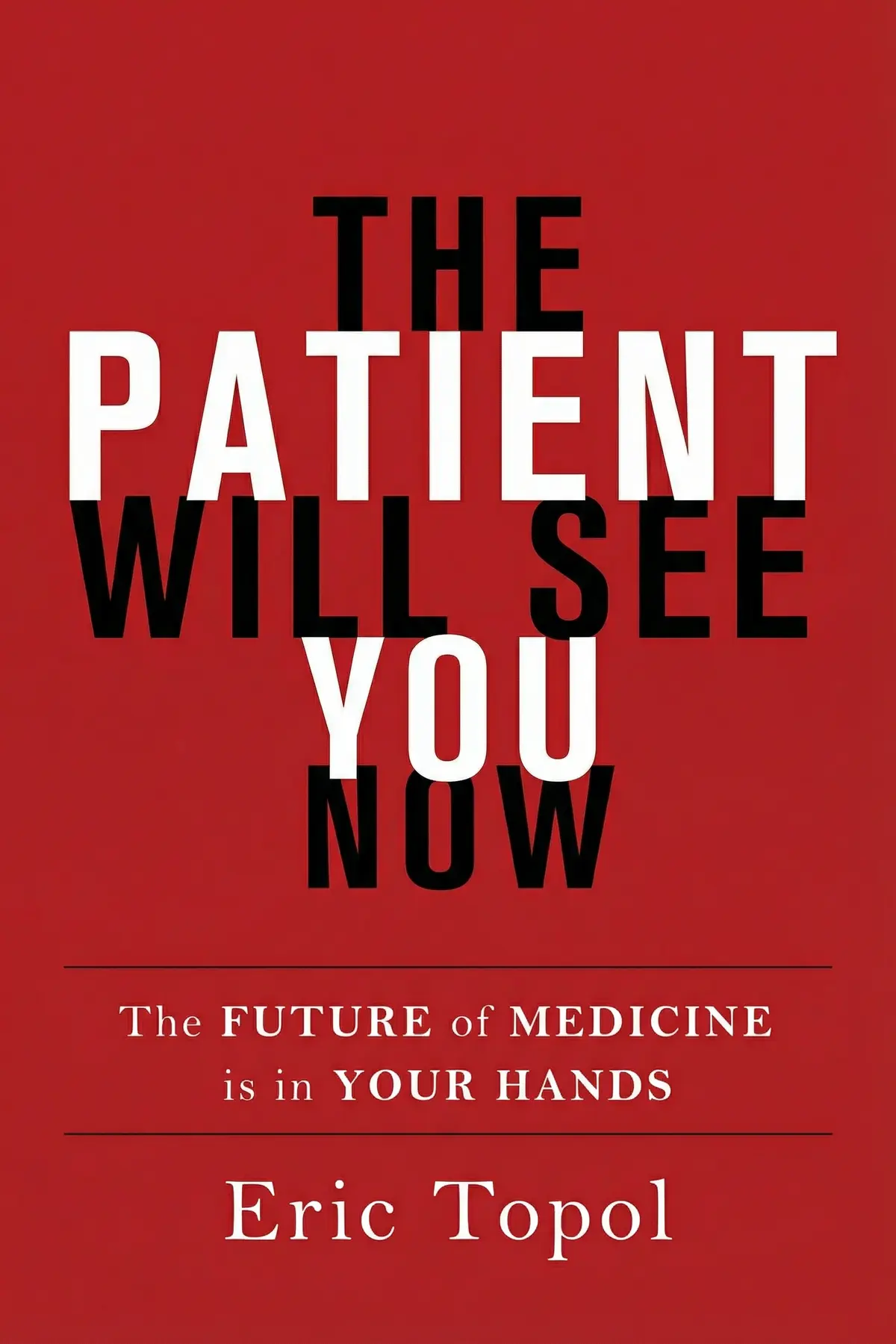
Table of Content
1. Introduction
1 min 39 sec
Think about the last time you visited a doctor’s office. You likely spent a significant amount of time sitting in a sterile waiting room, perhaps surrounded by other people who were coughing or sniffling, which only served to increase your own risk of falling ill. When you finally made it past the inner door, you probably received only a few minutes of the doctor’s undivided attention. You left with a prescription or a set of instructions, often without a full understanding of the underlying data driving those decisions. This has been the standard of care for generations: a system where the patient is a passive participant, waiting for the expert to grant them a sliver of their time.
But we are standing at the precipice of a monumental shift. In The Patient Will See You Now, Dr. Eric Topol outlines a future where this power dynamic is completely inverted. The subtitle of the book, The Future of Medicine is in Your Hands, is more than just a catchy phrase; it is a literal description of how technology—specifically the device you likely carry in your pocket every day—is transforming the landscape of human health.
We are moving away from a world of medical paternalism, where the doctor’s word is law, toward a world of medical democratization. This transition is fueled by the digital revolution, the mapping of the human genome, and the rise of big data. Throughout this summary, we will explore how smartphones are becoming sophisticated diagnostic labs, how the very infrastructure of hospitals is being redesigned, and how the ability to map our own biology is creating a more personalized and predictive form of care. This is a journey into the era of autonomous medicine, where the patient is no longer just a subject, but the central architect of their own well-being.
2. The Smartphone as a Diagnostic Hub
1 min 58 sec
Your mobile device is evolving from a communication tool into a powerful medical laboratory capable of diagnosing diseases from the comfort of your home.
3. The End of Medical Paternalism
1 min 49 sec
A long history of doctor-controlled information is being challenged as genetic testing gives patients the power to make their own life-altering health decisions.
4. Reimagining the Medical Infrastructure
1 min 43 sec
The traditional hospital model is shrinking as virtual care and cost-transparency tools move treatment from the clinic to the living room.
5. The Concept of the Human GIS
1 min 40 sec
By layering physiological, anatomical, and genetic data, we are creating a digital map of the human body that allows for hyper-personalized care.
6. Big Data and Precision Medicine
1 min 42 sec
The combination of personal biological maps and massive datasets is enabling doctors to target diseases with unprecedented accuracy.
7. Predicting the Onset of Disease
1 min 39 sec
Advanced algorithms are beginning to forecast medical crises, from infectious outbreaks to the onset of chronic conditions.
8. Navigating the Risks of a Data-Driven World
1 min 42 sec
As our most personal biological information moves online, we must address the growing threats of identity theft and corporate exploitation.
9. Conclusion
1 min 17 sec
The future of medicine is not something that will happen to us; it is something we are actively building. As we have explored, the convergence of the smartphone, genomic sequencing, and big data is dismantling the traditional, centralized model of healthcare. We are witnessing the end of an era defined by waiting rooms and paternalistic ‘doctor’s orders’ and the birth of an era defined by individual agency and personalized insights.
The transition to autonomous medicine means that you will soon have the tools to be your own first responder and your own diagnostic lab. By mapping your own biology through a Human GIS and leveraging the predictive power of global datasets, you can take a proactive stance toward your health. You can move from being a patient who merely receives care to being a participant who directs it.
However, as Dr. Topol emphasizes, this new world requires us to be vigilant. We must demand ownership of our data and ensure that our genetic information is used to help us, not to discriminate against us. The revolution is already underway. Every time you track your steps, check a skin spot with an app, or research a genetic trait, you are participating in this shift. The table has been turned, the waiting room is emptying out, and for the first time in history, the patient truly will see you now. The responsibility—and the power—is finally in your hands.
About this book
What is this book about?
The traditional healthcare model is built on a foundation of information asymmetry, where the physician holds all the power and the patient is a passive recipient of care. The Patient Will See You Now argues that this era is coming to an end. Driven by the ubiquity of smartphones and the plummeting costs of genomic sequencing, medicine is undergoing a radical democratization. This book promises a look into a future where individuals can diagnose themselves, monitor their chronic conditions in real-time, and own their own biological data. From the rise of virtual clinics that eliminate the need for waiting rooms to the development of a human Graphic Information System that maps our internal biology like a digital landscape, the promise is clear: a more efficient, personalized, and transparent medical industry. However, this transition is not without its hurdles. As we move toward a world of big data and predictive algorithms, we must confront significant challenges regarding privacy, data security, and the potential for new forms of discrimination. This is a comprehensive guide to the technological and cultural shifts that are placing the future of health directly into your hands.
Book Information
About the Author
Eric Topol
Eric J. Topol M.D. is a highly regarded cardiologist, a professor of genomics, and the director of the Scripps Translational Science Institute. His distinguished career includes serving as the chairman of cardiovascular medicine at the Cleveland Clinic, where he also founded the Cleveland Clinic Lerner College of Medicine. Recognized as a leading voice in digital medicine, he is also the author of the best-selling book The Creative Destruction of Medicine.
Ratings & Reviews
Ratings at a glance
What people think
Listeners find this medical work highly educational and thoroughly investigated, highlighting emerging shifts in healthcare and the rise of patient agency. The writing is accessible to non-experts and offers an intriguing look at what lies ahead for medicine. Listeners appreciate the caliber of the prose and view it as essential reading for doctors, with one listener noting its balanced mix of truisms and truths.
Top reviews
Jin
As a practicing physician, I found this book both inspiring and a necessary wake-up call for my colleagues. Topol expertly dismantles the idea that doctors should be the sole gatekeepers of medical information. He highlights how the digitalization of records and personal health monitoring is creating a more human, albeit different, connection with our patients. Many in my field will likely find his criticisms of the 'elite' status of doctors stinging, but the truth is often uncomfortable. The writing quality is superb, successfully translating complex bio-informatics into something a layperson can grasp. It is a must-read for any provider who wants to stay relevant in the age of Big Data. This book isn't just about gadgetry; it is about a fundamental shift in the power dynamics of healthcare.
Show moreAlice
Finally, a book that treats patients like capable adults rather than helpless children! The 'Patient Will See You Now' is a groundbreaking work that changed how I view my own health data. Topol uses the term 'emancipation' to describe what is happening right now, and I couldn't agree more. The way he references the Angelina Jolie op-ed to explain self-determination in medicine was particularly insightful. Truth is, we are moving toward a world where the engaged patient is the most powerful drug in the cabinet. While some might find his optimism a bit Quixotic, I found it refreshing. It is a bold, visionary piece of writing that challenges the status quo in the best way possible. Five stars for the sheer breadth of research.
Show moreViolet
Topol presents a vision of medicine that is both breathtaking and slightly intimidating for the traditional establishment. He argues that we are currently living through a 'Gutenberg moment' where smartphones will do for health what the printing press did for literacy. By putting diagnostic power directly into the hands of the individual, we shift the focus from the clinic to the living room. The research is dense and incredibly well-supported, though I did find some of the technical descriptions a bit long-winded for a casual reader. Despite the occasionally dry prose, it provides a fascinating glimpse into a future where patients are truly emancipated from the old-school medical hierarchy. This is essential reading for anyone interested in how digital health will eventually bridge the gap between doctor and patient.
Show moreJack
The central premise here is brilliant, yet the execution left me with a few significant questions regarding the broader healthcare workforce. Topol is a fantastic cheerleader for the digitalization of medicine, but he seems to have some curious blind spots when it comes to the social determinants of health. He focuses so much on the doctor-patient binary that he almost entirely ignores the vital roles of nurses, technicians, and pharmacists. Frankly, a smartphone and a 3D-printed device won't solve the systemic issues of poverty or housing instability that often dictate health outcomes. Still, the technical insights into the 'Angelina effect' and self-determination are worth the price of admission. It’s an optimistic, albeit slightly narrow, look at what’s coming next for American medicine.
Show moreBrooklyn
Ever wonder how your iPhone might eventually replace your local clinic? Dr. Topol provides a well-researched answer that emphasizes new trends in medical practice, particularly the move toward individualized, data-driven care. The book is easy to understand for laypersons despite the heavy scientific subject matter. I appreciated the mix of truisms and hard truths regarding how outdated our current paternalistic system has become. My only minor criticism is that the author can be a bit too rapturous about the tech, sometimes glossing over the very real concerns about data privacy and the digital divide. Nevertheless, it remains a compelling and informative guide to the ongoing transformation of the healthcare industry. Definitely worth your time if you want to be an empowered patient.
Show moreNoah
Dr. Topol is clearly a cheerleader for the Big Data movement, and he makes a compelling case for 'n-of-1' studies and Bayesian analysis. However, it is worth noting that he is less forthright about his own various conflicts of interest with major tech companies, which are tucked away in the back of the book. Putting that aside, the content is fascinating. He argues that the democratization of medicine is inevitable, and his predictions about labs-on-a-chip are truly eye-opening. The book is well-written and generally does a great job of explaining how medical innovation isn't just a straight line. It’s an interesting window into the minds of those who have fully embraced the digital revolution. I’ll definitely be sharing the chapters on cost controls with my colleagues.
Show morePongpan
After hearing a lecture on medical innovation, I grabbed this to see where we're headed. It’s an incredible tour of the modern medical landscape, focusing on how personal devices and genomics are colliding to change everything. Topol is very readable and credible, though the book is quite long and sometimes feels more like a set of perspectives than a focused reference guide. Personally, I was most interested in the discussion on how digital health serves as an equalizer for minority communities. He does soft-pedal the actual inequalities in healthcare, but his point about technology being a tool for access is valid. It's a solid, thought-provoking read that will make you rethink your next visit to the doctor's office. It really is a fascinating glimpse into what is possible.
Show morePornthip
Look, the research here is top-notch, even if the tone is a bit aggressive at times. Topol frames the future as a battle against 'paternalist elites,' which feels a bit forced and unnecessary. I think the book would have been more effective if it focused purely on the optimism of the technology rather than trying to manufacture a conflict. He makes some unsubstantiated claims about how quickly digital natives will jump on the bandwagon, ignoring the fact that many people still want a human touch in their care. It’s an informative read for sure, but the author's bias is palpable on every page. I liked the technical parts, but the polemic against doctors felt a bit misguided. A decent, though polarizing, overview of med-tech.
Show moreTak
I really wanted to like this book, but the author's relentless attack on 'doctor paternalism' felt exhausting after the first few chapters. While his points about patient empowerment are valid, his perspective is so intense that it becomes a distraction from the actual technology being discussed. I managed to get through about half before the tone just pushed me away. It felt more like a manifesto against the medical elite than a balanced look at innovation. To be fair, the section on genomic sequencing was interesting, but the constant undercurrent of hostility toward physicians made it a struggle to finish. If you want a neutral look at medical tech, you might want to look elsewhere.
Show moreKung
This was a total slog. I reached page 170 and simply could not continue because the author made such a massive effort to pack the text with meaningless details. Every few pages felt like a repeat of the last, just dressed up in different jargon about sensors and individualized algorithms. It is very boring and moves at a snail's pace. I expected a visionary look at the future, but what I got was a repetitive list of technical predictions that felt more like a series of blog posts than a cohesive book. The writing style is just not for me. If you’re looking for a fast-paced or engaging read about science, this isn't it.
Show moreReaders also enjoyed
AUDIO SUMMARY AVAILABLE
Listen to The Patient Will See You Now in 15 minutes
Get the key ideas from The Patient Will See You Now by Eric Topol, plus 5,000+ more titles in English and Thai.
- 5,000+ titles
- Listen as much as you want
- 7-day free trial
- Cancel anytime







