
13 min 41 sec
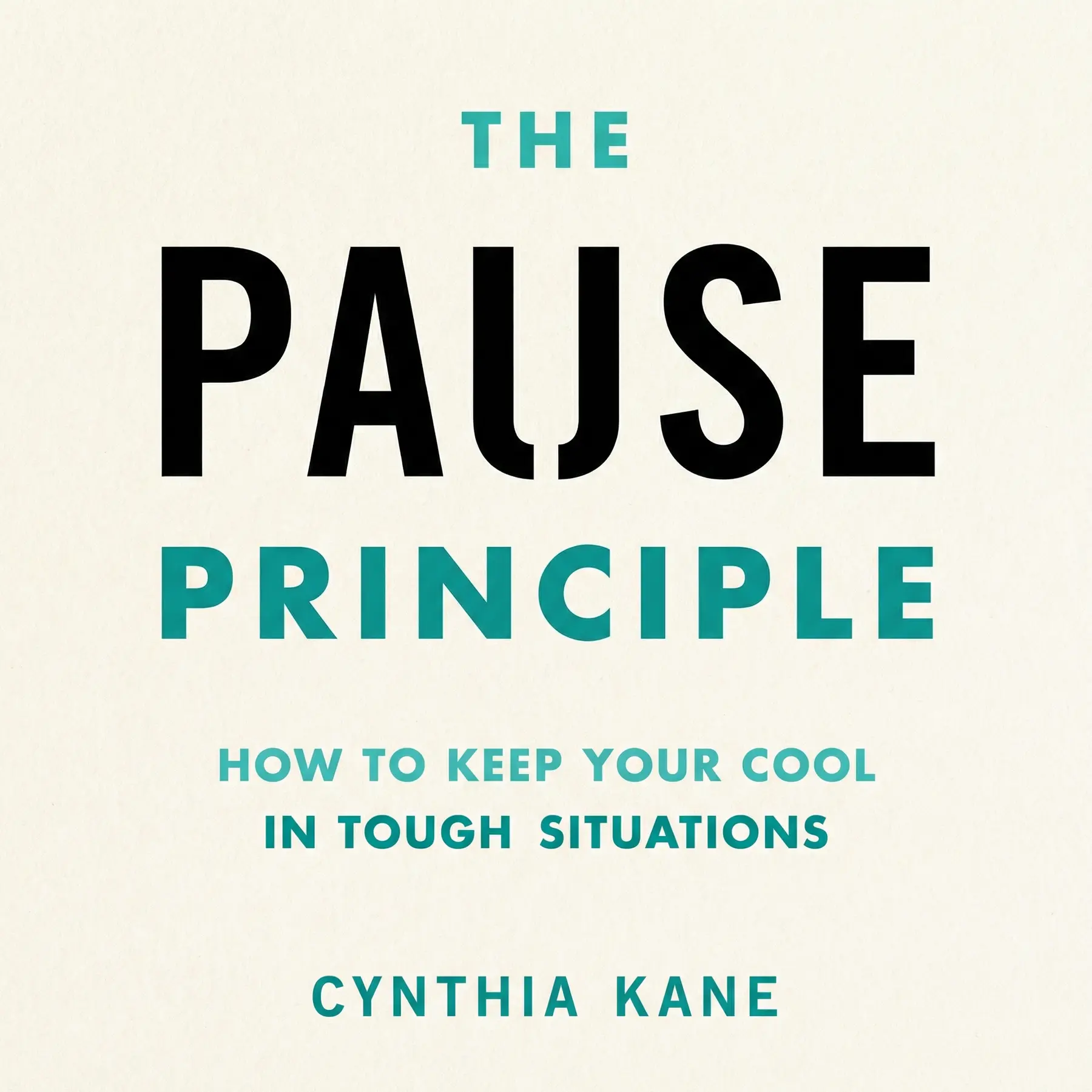
The Pause Principle: How to Keep Your Cool in Tough Situations
By Cynthia Kane
The Pause Principle explores the power of intentional reflection in high-pressure moments. It provides practical strategies to move from instinctive reactivity to conscious, effective decision-making in personal and professional life.
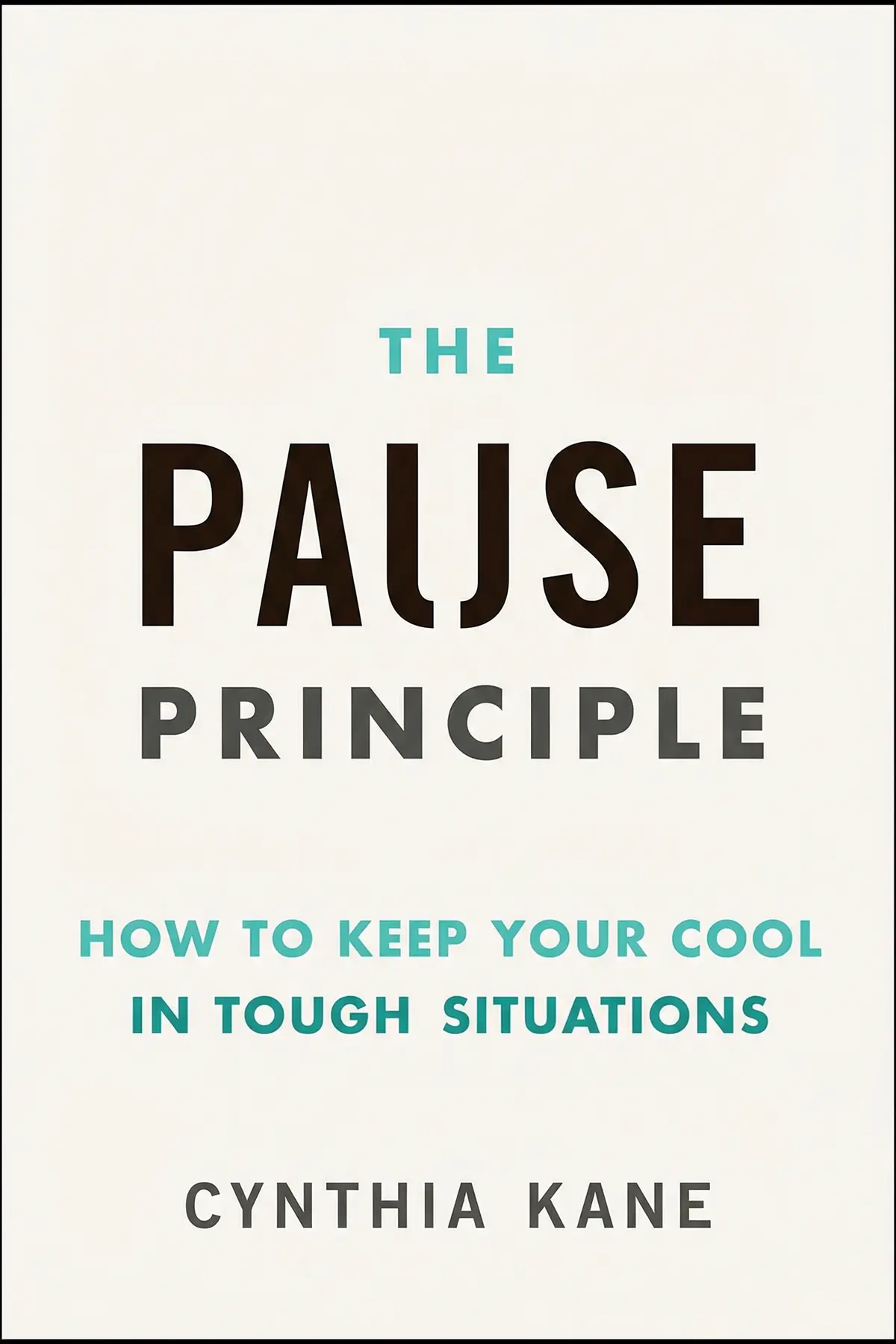
Table of Content
1. Introduction
1 min 45 sec
In the modern, high-speed professional world, we often wear our quick thinking and rapid responses as badges of honor. We live in an era where the immediate reply is expected and the fast decision is praised. However, there is a hidden danger in this constant acceleration. When we operate at the speed of our impulses, we often find ourselves trapped in a cycle of reactivity. We snap at a colleague, get defensive during a review, or make snap judgments that we later have to walk back. These moments might seem small in isolation, but they act like a slow-acting poison on our relationships and our organizational culture.
Every leader has been there—that sudden surge of heat in the chest, the tightening of the jaw, and the words that escape before we have a chance to evaluate them. This is the cost of living without a gap between what happens to us and how we act. It’s a way of leading that is driven by stress rather than strategy. But what if there was a way to reclaim that missing space? What if the most powerful tool in your leadership arsenal wasn’t a faster processor or a more aggressive strategy, but a simple, deliberate pause?
This exploration into the heart of communication and self-regulation offers a path toward a different kind of power. It’s about understanding the biological wires that get crossed in our brains and learning how to untangle them in real-time. By the end of this journey, you will see that the ability to stop is actually what allows you to move forward most effectively. We are going to look at how the body reacts to stress, how to soften those physical responses, and how to build a practice of presence that transforms not just how you speak, but how you lead and live. The throughline here is simple: by slowing down, you actually gain the clarity and connection necessary to truly excel.
2. The Biological Trap of Reactivity
2 min 09 sec
Discover why your brain treats a difficult email like a physical threat and how this ancient survival mechanism sabotages your professional success.
3. The Art of Softening
2 min 14 sec
Learn to use your body’s physical warning signs as a compass for calm instead of a trigger for conflict.
4. Mapping Your Reaction Patterns
1 min 56 sec
Explore the unique landscape of your personal triggers and build a strategic plan to navigate them before they arise.
5. The Power of the Three-Second Gap
1 min 59 sec
Understand how a brief moment of silence can re-engage your brain’s executive functions and save your professional reputation.
6. Training the Mind for Presence
2 min 08 sec
Discover how daily mindfulness exercises build the ‘mental muscle’ required to stay calm during high-stakes leadership challenges.
7. Conclusion
1 min 30 sec
The journey from a reactive leader to a responsive one is not about achieving a state of permanent perfection. It is about the ongoing commitment to the space between stimulus and response. As we have explored, the biology of stress is a powerful force, but it is not an insurmountable one. By understanding the ‘amygdala hijack,’ learning to soften our physical tension, mapping our personal triggers, and embracing the power of the pause, we can radically change the trajectory of our professional lives.
Mastering the pause principle is, at its core, an act of leadership. It signals to your team that you are a safe harbor in a storm. It proves that you value truth and connection over being ‘right’ or being fast. When you choose to pause, you give others the permission to do the same, creating a culture where people think before they speak and care before they criticize. This shift doesn’t just improve your bottom line; it improves the quality of every human interaction within your organization.
As you move forward from this summary, start small. Don’t wait for the biggest crisis of your career to test these tools. Instead, find the pause in the small moments—the annoying email, the slow elevator, the minor disagreement. Build the muscle of presence one breath at a time. The power to transform your environment and your leadership is already within you; it’s just waiting in the quiet space of the next three seconds. Take a breath, find the gap, and choose your best response.
About this book
What is this book about?
Have you ever said something in a heated moment that you immediately regretted? The Pause Principle addresses this universal struggle by examining the space between a stimulus and our response. It argues that most of our professional and personal friction stems from a biological survival mechanism that is poorly suited for the modern workplace. When we feel challenged, our bodies enter a state of fight-or-flight, leading to defensive, aggressive, or withdrawn behaviors that erode trust. This summary provides a comprehensive roadmap for reclaiming control over these involuntary reactions. It introduces the concept of the 'pause' as a transformative leadership tool that allows the rational mind to catch up with emotional impulses. By mastering the physical signs of stress and implementing specific mindfulness practices, you can shift from a reactive state to one of calm, deliberate action. The promise of this book is not just better communication, but a complete shift in organizational culture toward openness, innovation, and psychological safety.
Book Information
About the Author
Cynthia Kane
Cynthia Kane is the CEO and founder of the Kane Intentional Communication Institute and a recognized expert in mindful communication. She has authored several books, including How to Communicate Like a Buddhist, Talk to Yourself Like a Buddhist, and How to Meditate Like a Buddhist. Her work has appeared in major outlets such as The Washington Post, Self Magazine, and BBC Travel. In 2021, Yahoo named her one of the top communication coaches to watch, and she has trained organizations including KPMG and The Council on Foreign Relations.
Ratings & Reviews
Ratings at a glance
What people think
Listeners describe this work as remarkably useful, with one individual mentioning that the insights and advice are truly life-altering. They value the stimulating material, and one listener specifically highlights the effective structure it provides for leading with intention. The content is elegantly composed and enjoyable, and one person points out the helpful examples focused on professional communication. Listeners also appreciate the pacing, particularly its effectiveness in teaching emotional regulation.
Top reviews
Elan
The Pause Principle offers a refreshingly direct approach to communication. Kane’s conversational tone makes the heavy topic of mindfulness feel surprisingly light and accessible. I found her personal anecdotes about professional disagreements particularly grounded, showing that these tools aren't just for 'zen' people but for real workers. While some of the exercises felt a bit repetitive, the core framework for creating space before reacting is genuinely transformative. It’s a book you’ll want to revisit whenever your inbox starts feeling overwhelming or a meeting goes sideways. Frankly, this should be required reading for anyone managing a team in a high-pressure environment where tempers often flare.
Show moreOm
After hearing so many good things about Cynthia Kane, I finally dove into this one and I'm glad I did. The way she describes the shift from being "stressed" to "centered" through simple pauses is nothing short of brilliant. Her writing is concise and she doesn't mince words, which I deeply appreciate in a world of 400-page business books that say nothing. I’ve already started using her framework during my morning meetings, and the difference in my stress levels is noticeable. My only gripe is that the physical book format could have used more bulleted summaries for quick reference. Still, it’s an incredible resource that I’ll be recommending to my entire department.
Show moreTun
Ever wonder why you always say the wrong thing when you're stressed? Kane breaks down the physiological reactions that cloud our judgment during conflict with impressive clarity. I appreciated the specific workplace examples, as they made the concepts feel immediately applicable rather than just theoretical fluff. To be fair, I felt the transition from professional to personal application could have been smoother in the middle chapters. However, the pacing is excellent, and I finished the whole thing in two sittings without feeling bogged down by jargon. It’s a solid resource for anyone looking to reclaim control over their emotional responses in the heat of the moment.
Show moreChaiwat
As someone who tends to blurt things out in the heat of the moment, I found this guide extremely helpful. Kane provides a roadmap for slowing down our mental reactions, which has been a game-changer for my relationship with my coworkers. The anecdotes are relatable, and I felt like she was right there in the room coaching me through the steps. Gotta say, I wish there was a bit more focus on long-distance or digital communication, as that’s where most of my stress happens. That minor omission aside, the core philosophy is sound and very easy to implement immediately. It’s a thoughtful, compassionate book for the modern worker.
Show moreYaowaluk
Look, communication is hard, and this book makes it feel a little less like a minefield. Cynthia Kane has a way of making you feel understood while simultaneously challenging you to be better. The framework she presents for smarter leadership is grounded in reality, highlighting how quick decisions often lead to avoidable mistakes. I appreciated the chapter on the physiological side of stress—it helped me realize that my reactions weren't just personality flaws. While I think the personal life examples weren't quite as strong as the corporate ones, the overall message is still very potent. It’s a solid 4-star read that offers immediate, memorable advice for anyone in management.
Show moreBook
Picked this up because I’ve been struggling with office politics lately. There are some gems here regarding the 'aha' moments of why we react defensively, but much of it felt like common sense repackaged. Kane is an eloquent writer, no doubt, but if you’ve read any decent leadership or mindfulness books before, you might find yourself skimming through the first half. Truth is, the actionable steps are buried a bit deep within the personal stories for my liking. It's a decent primer for beginners, but more seasoned leaders might find it lacking in fresh, high-level strategy. It's okay, just not the revolutionary guide I was expecting based on the hype.
Show morePita
This book definitely has its heart in the right place, but I struggled with the tone. While the author tries to be intimate and encouraging, it sometimes leaned a bit too far into being "preachy" for my taste. I did like the focus on intentionality and the idea of a strategic pause, but I found the exercises a bit simplistic for complex corporate environments. In my experience, real-world conflict rarely resolves as neatly as the anecdotes provided in the text. It's a quick read with some decent takeaways, but don't expect it to solve every communication hurdle in your life. It’s better as a supplementary text rather than a primary manual.
Show morePlernpiriya
Finally got around to finishing this, and I have mixed feelings. On one hand, the "Pause Principle" itself is a powerful concept that Kane explains with great empathy and skill. On the other hand, the middle section of the book dragged significantly, and I lost interest several times. Personally, I think the book shines when she talks about professional resilience, but loses steam when she drifts into more abstract mindfulness territory. It’s well-written, but the balance between practical tools and personal storytelling felt a little off to me. It is worth a read for the core concepts, but you might find yourself wanting to skip some of the fluff in the middle.
Show moreMint
Not what I expected at all, unfortunately. While the premise of pausing before reacting is solid, the book felt incredibly repetitive and could have easily been a long-form blog post. I was hoping for more deep-dive psychological insights into communication, but instead, I got a lot of surface-level advice about breathing. Not gonna lie, I found the writing style a bit too informal for a professional development book. If you are new to the concept of mindfulness, this might be a goldmine for you. However, for anyone already familiar with basic emotional intelligence concepts, it might feel like a waste of time. I finished it, but I didn't feel like I learned anything new.
Show moreElise
The chapter on "creating space" was the only part I found even remotely useful, but even that was stretched thin. To be blunt, this book feels like a collection of platitudes that most people should have learned in grade school. I found the author’s tone to be a bit condescending, as if she was talking down to the reader about basic human decency. There was very little "principle" and a whole lot of filler in these pages. I kept waiting for a deep strategic framework, but it never materialized beyond "just stop and think for a second." It definitely didn't live up to the high-stakes leadership promises on the back cover. Total disappointment for me.
Show moreReaders also enjoyed
AUDIO SUMMARY AVAILABLE
Listen to The Pause Principle in 15 minutes
Get the key ideas from The Pause Principle by Cynthia Kane, plus 5,000+ more titles in English and Thai.
- 5,000+ titles
- Listen as much as you want
- 7-day free trial
- Cancel anytime







