
21 min 11 sec
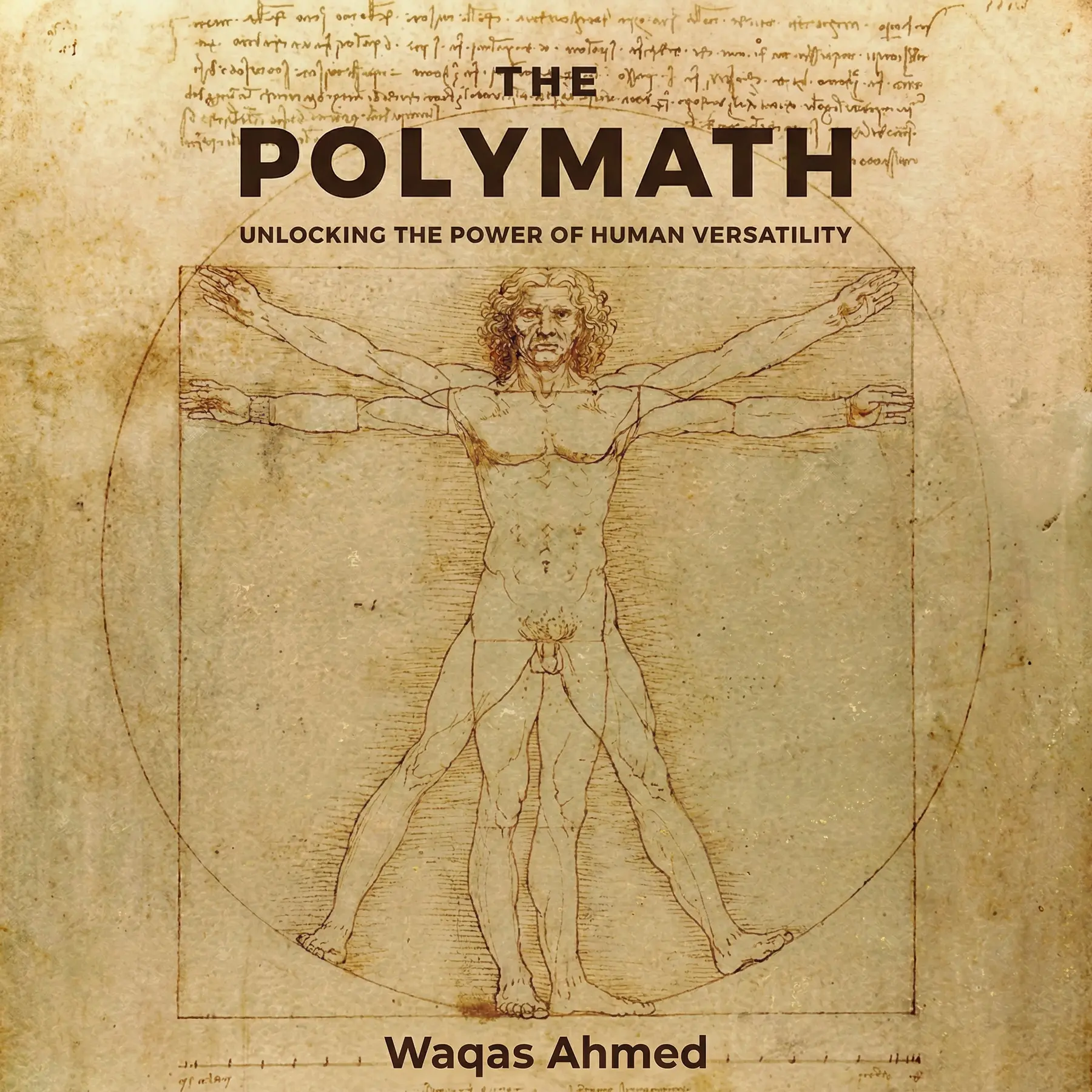
The Polymath: Unlocking the Power of Human Versatility
By Waqas Ahmed
Discover why human versatility is the key to thriving in a changing world. This summary explores how polymathy enhances creativity, career security, and personal fulfillment by moving beyond narrow specialization.
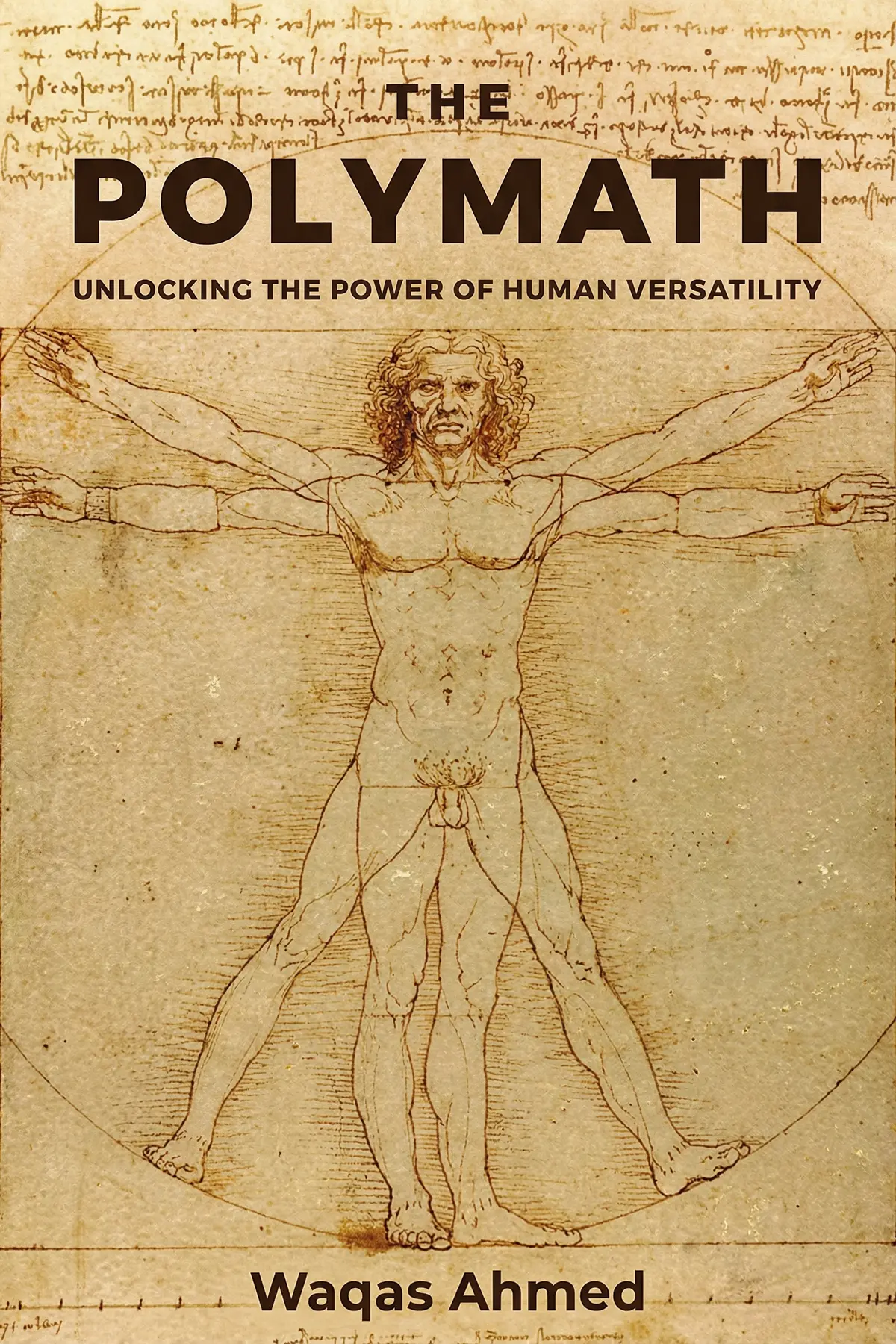
Table of Content
1. Introduction
1 min 50 sec
Have you ever felt that the modern world is trying to squeeze you into a very small box? From the moment we enter the education system, we are nudged toward a single path. We are told to pick a major, find a niche, and climb a specific ladder. This culture of specialization suggests that to be successful, you must narrow your focus until you are an expert in one tiny sliver of human knowledge. But as we look around, many of us find that this path leads to a sense of being stuck, bored, or even physically drained. We sense that there is more to us than a job title or a single degree.
What if the secret to a truly flourishing life isn’t narrowing your focus, but expanding it? What if our brains were never actually designed to do just one thing? The Polymath by Waqas Ahmed offers a refreshing and necessary counter-narrative to the cult of specialization. It suggests that our greatest strength as human beings is our versatility. By looking back at our evolutionary history and examining the lives of the most influential people in history, we can see that being a generalist—a polymath—is not just a hobby; it is our natural state.
In this exploration, we are going to look at why breaking free from the chains of specialization is the most practical move you can make in the twenty-first century. We will see how a diverse range of interests doesn’t just make life more interesting; it makes you more employable, more creative, and more resilient in the face of a changing world. We will look at how the greats of the past synthesized different fields to change the world and how you can apply those same principles to your own life and career. It is time to stop apologizing for your wide-ranging curiosity and start seeing it as your greatest asset.
2. The Evolutionary Basis of Versatility
2 min 11 sec
Humans survived the harsh conditions of the ancient world because they were forced to be generalists. Modern life might be safer, but our biological drive for multifaceted skill remains.
3. The Stagnation of Specialization
2 min 01 sec
The modern workplace often demands narrow focus, but this leads to widespread dissatisfaction and physical ailments. Specialization may be a cage for the human spirit.
4. Polymathy as a Tool for Global Problem-Solving
2 min 18 sec
The biggest challenges of our time cannot be solved by a single field of study. True innovation happens when we connect the dots between disparate disciplines.
5. Adapting to a Volatile Future
2 min 12 sec
The ‘job for life’ is dead. In an era of AI and automation, those who can adapt and learn new skills will be the only ones left standing.
6. The Biological Benefits of Curiosity and Intelligence
2 min 15 sec
Polymathy isn’t just a lifestyle; it’s a brain-booster. Diversifying your interests can actually increase your IQ and keep your mind sharp as you age.
7. Synthesis: The Secret Language of Creativity
2 min 12 sec
Innovation doesn’t happen in a vacuum. It is the result of merging ideas from different worlds to create something entirely new.
8. The Failure of Modern Education
2 min 05 sec
Our current schools are designed to create specialists, but we can learn a lot from indigenous cultures that value holistic, play-based learning.
9. Building a Polymathic Career
2 min 04 sec
You don’t have to choose just one path. Whether through sequential careers or a portfolio of roles, you can design a professional life that fits your diverse talents.
10. Conclusion
2 min 03 sec
The message of this journey is simple but profound: the walls we have built between different fields of study and different types of work are artificial. We were born as multifaceted, curious, and versatile beings. Somewhere along the way, society convinced us that we had to choose one thing and stick to it, but that specialization is often a recipe for boredom and stagnation. By reclaiming our inner polymath, we aren’t just making ourselves more interesting; we are making ourselves more resilient, more creative, and better equipped to handle the challenges of the future.
We have seen how polymathy is rooted in our evolutionary history, how it benefits our physical and mental health, and how it is the key to solving the world’s most complex problems. We’ve learned that the most influential figures in history were those who refused to be put in a box. Now, the question is: how will you apply this to your own life?
You don’t have to quit your job and start five new businesses tomorrow. The path to polymathy starts with a single step of curiosity. Today, I want to challenge you to spend just thirty minutes on something that has nothing to do with your regular work. If you’ve always been curious about how to code, watch a basic tutorial. If you’ve wanted to try painting, grab a pencil and sketch for a while. If there’s a period of history you know nothing about, read an article or listen to a podcast about it.
Do not view this as a ‘distraction.’ View it as an investment. Your brain thrives on variety. Your creativity depends on your ability to connect different ideas. By indulging your wide-ranging interests, you are training your mind to be more flexible and your life to be more fulfilling. Break free of the chains of specialization and embrace the full power of your human versatility. The world doesn’t need more people who can only do one thing; it needs people who can see the connections between everything.
About this book
What is this book about?
The Polymath argues that our modern obsession with specialization is a deviation from our natural state. Historically, humans survived by being generalists, and today, that versatility is more important than ever. The book promises to reveal how we can unlock our full potential by integrating diverse skills and interests, moving beyond the desk-job culture that stifles our growth. It explores how cognitive flexibility and a holistic worldview are the keys to solving global crises and surviving the rise of artificial intelligence. By looking at legendary figures and modern examples, the text provides a blueprint for a life of continuous learning and professional agility. You will learn how to structure a portfolio career and why cultivating curiosity is a biological necessity for long-term intelligence and mental health.
Book Information
About the Author
Waqas Ahmed
Waqas Ahmed is Artistic Director at The Khalili Collections, and is pursuing graduate studies in neuroscience at King’s College London. In addition, he has worked as a journalist and editor, and has traveled extensively.
Ratings & Reviews
Ratings at a glance
What people think
Listeners find the work both intriguing and stimulating, specifically valuing the segments focused on reconditioning the mind. They prize the educational depth, as one listener points out the thorough coverage of alternative education systems, while another mentions how it motivates listeners to experiment with new topics and skills.
Top reviews
Seksan
Ever wonder why we're forced to choose just one path by age eighteen? This book provides a much-needed antidote to the hyper-specialized world we live in. Ahmed’s multicultural approach is what really sets this apart from other self-help or history books. He doesn't just stick to the usual Western 'Greats' like Da Vinci; he introduces a vast array of thinkers from Islamic, Chinese, and Indian history. It’s incredibly dense and requires some patience, but the insights into alternative education systems are brilliant. I found myself highlighting entire sections on how to recondition my thought processes to be more holistic. It’s inspired me to start experimenting with subjects I previously thought were 'off-limits' to someone in my profession. This is a must-read for anyone who feels that the modern school system is just a factory for producing cogs in a machine.
Show moreBella
Finally got around to reading this and it’s basically a manifesto for anyone who refuses to be pigeonholed. As someone who has always felt pressured to 'pick a lane,' Ahmed’s defense of the versatile mind was incredibly validating. I especially loved the sections on how polymathy can help solve global crises like climate change by connecting disparate fields of study. The book is a bit of a marathon, but the sheer volume of examples from different cultures is mind-blowing. It really makes you realize that hyper-specialization is a relatively recent, and perhaps temporary, historical fluke. I’ve already started applying the 'reconditioning' techniques to my daily routine, trying to bridge the gap between my creative and analytical projects. It’s not a perfect book—it definitely could have used another pass from an editor—but the ideas are powerful enough to overcome the technical flaws. A truly rich addition to my library.
Show moreYanin
Wow. Ahmed presents a vision for education and personal development that makes our current system look like a factory for boredom. I was particularly struck by the discussion on 'modern censorship' through information flooding. It’s so true that we have more access to knowledge than ever, yet we are more specialized than ever. This book provides a roadmap for breaking out of that trap. The sections on building an alternative education system are visionary, even if they feel a bit like wishful thinking in the current political climate. I’ve recommended this to several friends who feel stuck in their careers. It’s a dense read, and yes, it rambles, but that almost feels like part of the polymathic experience itself. You have to be willing to wander through the 'litany of achievements' to find the real gems. This book is a life-changer if you’re ready to hear its message.
Show moreNitaya
The chapter on reconditioning the mind changed how I view my own career path entirely. Ahmed makes a compelling case against the 'cult of specialization' that dominates our current labor market. I’ve spent years feeling like a dabbler, but this book gave me the vocabulary to see my varied interests as a strength rather than a lack of focus. To be fair, the prose is a bit repetitive and there are more typos than I’d expect from a major publisher like Wiley. However, the core message is vital for anyone feeling suffocated by a narrow job description. The discussion on how we can use polymathy to remain 'inimitable' in an age of automation is especially timely. It isn't just a history lesson; it's a call to arms for the multi-faceted individual. If you can overlook the occasional rambling, the intellectual payoff is worth the effort.
Show moreNim
After hearing so much about the death of the generalist, finding a book that defends the 'human' element in an automated world felt refreshing. Ahmed’s vision for an alternative education system is particularly provocative. He argues that schools should stop being mere purveyors of facts and start teaching how to organize and synthesize knowledge. I don't agree with every point—especially his dismissal of domain-specific expertise—but the book definitely got me thinking. The writing style is a bit academic at times, yet it’s shot through with an evangelical passion that keeps you turning pages. It encourages you to experiment with new topics and skills, pushing against the fear of being called a 'dilettante.' I do wish the editing was tighter, as the repetition of certain buzzwords like 'inimitable' became a bit grating by the end. Overall, a very thought-provoking read that challenges the status quo.
Show moreViolet
To be fair, the multicultural scope of the historical figures mentioned is actually quite impressive and rare for this genre. Usually, these books are very Eurocentric, so seeing figures like Ahmed Baba and Alexander Bogdanov treated with the same weight as Aristotle was great. The book is at its best when it talks about the future of human labor. Ahmed argues that our 'inimitability' comes from our ability to cross-pollinate ideas, something AI still struggles with. This perspective is a shot of courage for anyone worried about their job security in the next decade. There are some annoying typos and the formatting is a bit weird, but the intellectual curiosity on display is infectious. It’s a book that demands you take notes and look up names as you go. If you’re looking for a quick, easy summer read, this isn't it. But if you want a challenge, pick it up.
Show moreRose
This book is a strange beast that somehow manages to be both incredibly dense and frustratingly superficial. On one hand, the central argument is fascinating: our society is structured to suppress the natural human tendency toward multifaceted learning. On the other hand, the structure is totally haphazard. I felt like I was being buried under a mountain of names in the middle chapters without any clear takeaway. The author relies heavily on McGilchrist’s 'The Master and His Emissary' but doesn't really engage with any of the critiques of that work. It’s also hard to ignore the sloppy citations; quoting famous authors without providing a proper bibliography is a major red flag for a book claiming intellectual depth. I enjoyed the interviews with modern-day polymaths, though. They provide a nice bridge between the theory and the reality of living this way in 2021. Worth a look, but keep your critical thinking cap on.
Show moreKan
Look, the premise is gold, but the execution feels like a very long, slightly disorganized lecture. I’m in total agreement that our present systems are unjustly putting polymaths down. However, the author doesn't really give specialization its due. We can’t all be 'dabbling' surgeons or engineers; some things require deep, narrow focus for a reason. Ahmed tries to address this, but his arguments aren't quite strong enough to convince a skeptic. I also found the biographical sketches to be a bit too brief to be useful. I would have preferred five deep dives into specific lives rather than fifty snippets that feel like Wikipedia entries. That said, I did get some great book recommendations from the text. It’s an interesting read for those of us who already identify with the values of polymathy, but I don't think it will convert anyone who is firmly committed to the specialist path.
Show moreSaranya
Frankly, I’m shocked a major press published this without a more rigorous editorial eye. The book is riddled with grammatical errors and repetitions that make the 300-plus pages feel much longer than they should be. While I agree with the premise that specialization is overemphasized, the execution is frustratingly shallow. Chapter 3 is a prime example—it’s essentially a 'polymath porn' list of names and dates with almost no contextual analysis. Why list every achievement of Leonardo da Vinci or Ibn Sina without explaining the 'how' behind their versatility? The historical analysis is also quite hand-wavy, specifically the parts attributing the rise of the specialist to simple left-brain dominance. It’s a nice manifesto for an aspiring generalist, but anyone looking for a scholarly, well-cited defense of polymathy will be disappointed by the lack of footnotes and reliance on pop-science figures like Malcolm Gladwell.
Show moreChon
I wanted to love this, but the historical analysis is just too perfunctory for me. The author tries to cover so much ground that everything feels like a thin veneer of research. For instance, the way he uses the brain’s hemispheres to explain the entire history of labor specialization is massive oversimplification. I felt like I was reading a collection of blog posts that had been stitched together without a clear thread. Also, the lack of a notes section is unacceptable for a work that cites so many different philosophers and scientists. It makes the whole project feel more like 'polymath porn' for the Instagram generation rather than a serious study. If you want to feel inspired to start a new hobby, it might work, but it doesn't offer the deep economic or social analysis promised on the back cover. It's more of a long, enthusiastic list than a coherent argument.
Show moreReaders also enjoyed
Abundance: The Inner Path to Wealth
Deepak Chopra
60 Seconds & You’re Hired!
Robin Ryan
59 Seconds: Change Your Life in Under a Minute
Richard Wiseman
AUDIO SUMMARY AVAILABLE
Listen to The Polymath in 15 minutes
Get the key ideas from The Polymath by Waqas Ahmed, plus 5,000+ more titles in English and Thai.
- 5,000+ titles
- Listen as much as you want
- 7-day free trial
- Cancel anytime







