
15 min 30 sec
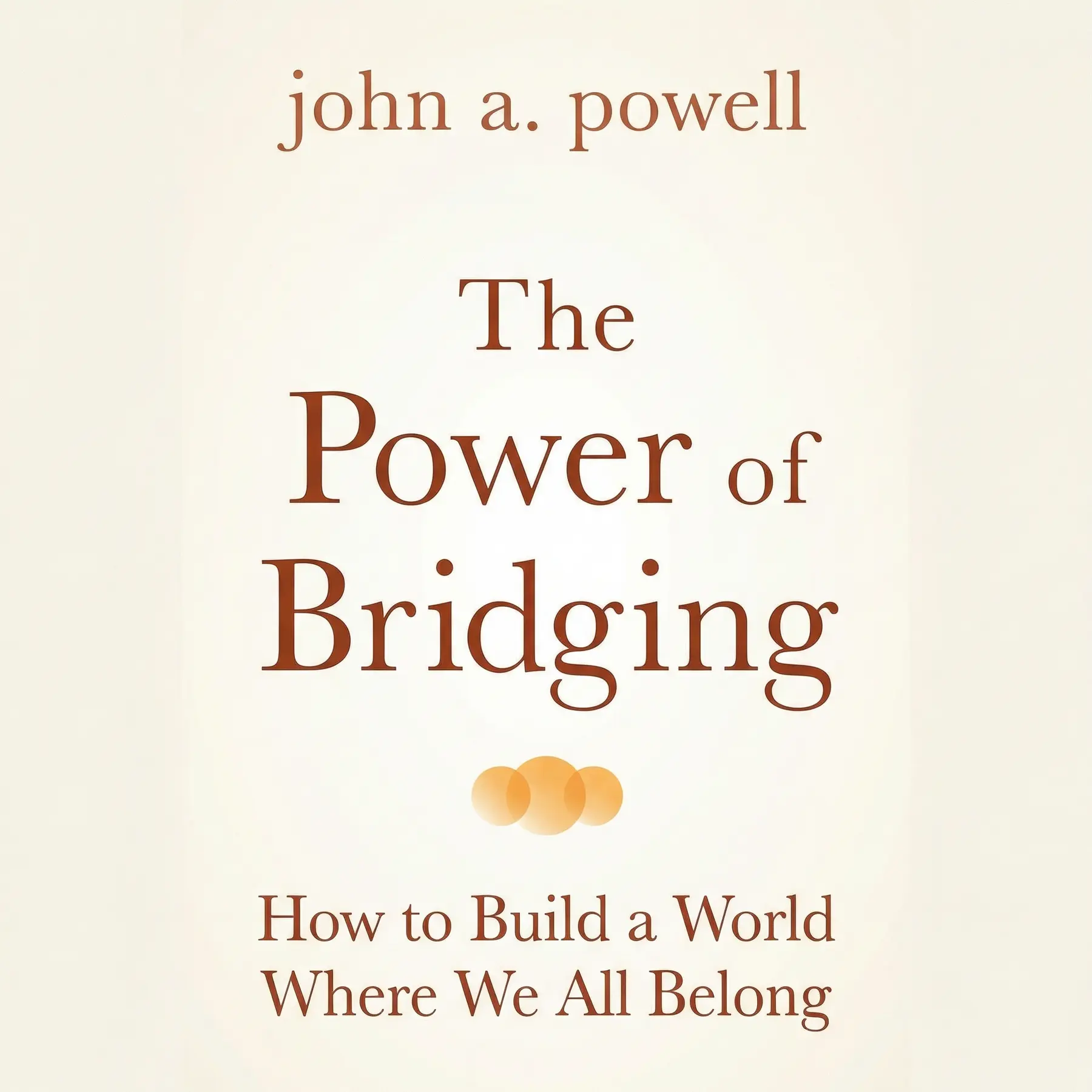
The Power of Bridging: How to Build a World Where We All Belong
Explore a transformative framework for healing social divides through bridging. Learn how to move beyond othering and exclusion to create a society where every individual possesses the power to shape our shared future.
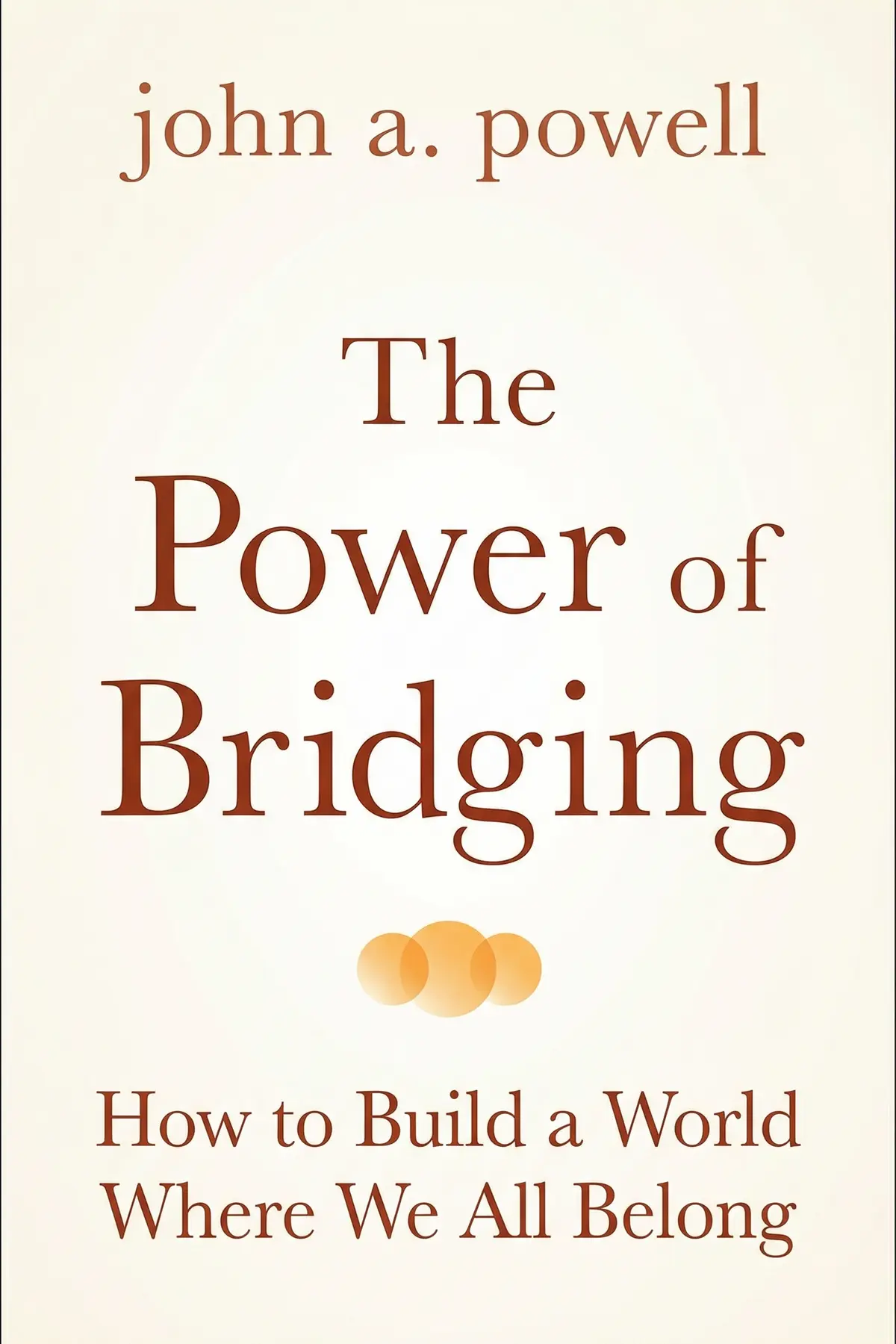
Table of Content
1. Introduction
1 min 23 sec
In our current era, it often feels as though the world is pulling apart at the seams. We see it in our politics, our social media feeds, and even in our local communities. There is a palpable sense of friction, a feeling that we are increasingly divided into warring camps that speak different languages and inhabit different realities. But what if these divisions aren’t just random occurrences? What if they are the result of specific social processes that we can identify, understand, and ultimately reverse?
This exploration into the mechanics of human connection offers a powerful new vocabulary for navigating these fractured times. It centers on four core concepts: othering, breaking, belonging, and bridging. Together, these terms form a throughline that explains why we push people away and, more importantly, how we can bring them back. We often view our societal problems as a series of disconnected crises—racism, economic inequality, political polarization—but they are actually deeply intertwined through the way we treat human difference.
Throughout this discussion, we will move beyond the superficial goal of just ‘getting along.’ We will look at how we can transition from a culture of exclusion to one of genuine belonging, where everyone has a seat at the table and the power to help build the house. By the end, you’ll see that the path forward isn’t about erasing our differences, but about building sturdy bridges across them. Let’s begin by looking at the forces that keep us apart.
2. The Mechanics of Othering and the Myth of Fixed Identity
2 min 08 sec
Discover how the process of othering creates artificial barriers between groups and why these social divisions are far less permanent than they appear.
3. The Psychological Lens of Perception and Bias
2 min 19 sec
Unpack the hidden ways our brains filter reality based on preconceived beliefs and how these mental shortcuts reinforce social hierarchies.
4. Distinguishing Between Soft and Hard Breaking
2 min 02 sec
Examine the two distinct ways society pushes people to the margins, from the blatant hostility of hard breaking to the subtle, patronizing nature of soft breaking.
5. Redefining Belonging as Shared Power
1 min 56 sec
Learn why true belonging is more than just being included—it is the transformative power to help co-create the community you inhabit.
6. The Strategic Practice of Bridging
2 min 07 sec
Explore how bridging acts as the essential vehicle for reaching true belonging, utilizing the power of story and the reality of our overlapping identities.
7. Navigating the Five Architectures of Connection
2 min 08 sec
Identify the different types of bridges we can build, ranging from simple practical cooperation to profound spiritual transformation.
8. Conclusion
1 min 27 sec
As we conclude this exploration of the path from division to connection, it’s important to remember the throughline that connects all these ideas. Our society is currently caught in a cycle of othering and breaking, processes that diminish our collective humanity and keep us locked in conflict. But these are not permanent states. They are patterns that we can interrupt by choosing a different way of relating to one another.
True belonging is the destination—a world where every person has the agency to help co-create the society they live in. It is a vision of a future where diversity is not just tolerated, but is the very foundation of our shared power. To reach that destination, we must become bridge-builders. Bridging is the active, sometimes difficult, but always rewarding work of seeing the ‘other’ as a fellow human being with a story just as complex as our own. It requires us to move past the binary of ‘us vs. them’ and embrace the reality of our overlapping identities.
The challenge before us is to look at our own lives and communities and ask: Where can I build a bridge today? Whether it is a short bridge to a neighbor or a long bridge to a political opponent, every connection we make weakens the structures of exclusion and strengthens the fabric of belonging. The power to build a world where we all belong is already in our hands. It starts with the stories we tell, the biases we challenge, and the bridges we choose to build. Let’s start building.
About this book
What is this book about?
In an era defined by deep fragmentation and social hostility, this guide offers a profound roadmap for reconnection. It introduces a four-part conceptual framework: othering, breaking, belonging, and bridging. Othering occurs when we label groups as fundamentally different or less worthy, which inevitably leads to breaking—the active process of isolating or dehumanizing those outside our circle. The book argues that the antidote is not merely 'inclusion,' which often requires people to conform to existing norms, but true belonging. Belonging means every person has the agency to help design the structures of society. To achieve this, we must practice bridging: the intentional act of reaching across divides to find common humanity. By understanding psychological biases, structural racism, and the various forms of connection—from short-term cooperation to spiritual transformation—this work provides the tools necessary to build a world where everyone truly belongs.
Book Information
About the Author
John A. Powell
john a. powell is a globally recognized civil rights scholar and an expert on race, structural racism, and democracy. He intentionally styles his name in lowercase to reflect his belief that human beings are part of the universe, rather than positioned over it, as capitalized names might signify. Currently, he serves as the director of the Othering & Belonging Institute at UC Berkeley, where he continues his work on creating inclusive social structures.
Ratings & Reviews
Ratings at a glance
What people think
Listeners find that while perspectives differ on the text's theoretical, abstract style and lack of specific instructions, most value its insightful framework for addressing social splits via concepts such as "othering" and "bridging." They emphasize the writer’s knack for merging academic depth with touching personal tales, with one listener commenting that the priority placed on storytelling serves as an influential method for creating unity across significant divides. Additionally, they prize how the book examines the core human requirements for dignity and belonging, presenting a promising guide for broad transformation. They also find the material to be both current and approachable, ensuring that sophisticated social theories are useful for navigating contemporary problems.
Top reviews
Jirapat
As someone who works in community organizing, I found this to be an incredibly profound framework for understanding why our society feels so fractured. Powell’s exploration of 'othering' and 'breaking' provides a much-needed vocabulary for the subtle ways we push people out. It is not just about hate; sometimes it is about the 'soft breaking' that happens when we treat people with warmth but zero agency. The truth is, we often settle for inclusion on the dominant group's terms, but powell argues for a deeper belonging where everyone co-creates the future. This isn't a simple toolkit. It’s a paradigm shift that requires us to see ourselves as fundamentally relational beings. I especially loved the concept of 'bridging entrepreneurs' who calm fears while pushing for radical transformation. Truly, this is the roadmap we need to move past dehumanizing narratives and toward a world of genuine dignity.
Show moreMason
Wow, this was exactly the perspective shift I needed. Powell’s vision is one of immense hope without being naive. He understands that 'breaking' is a systemic process, but he offers 'bridging' as a courageous counter-act. I was deeply moved by the idea that our stories are not fixed. We can choose to tell better ones that leave room for others. For instance, seeing how a working-class woman might bridge with a woman of color through shared struggle while acknowledging their different paths was eye-opening. Not gonna lie, some parts are heavy on the academic side, but the warmth of powell’s voice keeps you engaged. This book argues that true belonging means we all have a seat at the table to decide what the table looks like. It is a beautiful, necessary call to move toward the 'long bridge' of radical empathy.
Show moreSupatra
The chapter on 'breaking' changed the way I look at social systems entirely. I never really thought about how 'hard breaking' (like segregation) and 'soft breaking' (like patronizing treatment of the disabled) serve the same purpose of keeping people in their 'proper place.' Powell’s writing is accessible yet incredibly profound. He manages to blend scholarly research on confirmation bias with heartfelt anecdotes about human connection. Bridging isn't just a soft skill; it’s a radical way of living that honors the dignity of every person. I folded down so many corners in this book. It’s one of those rare works that makes you feel both convicted and inspired. We are meaning-making animals, and powell reminds us that we have the power to make better meanings together. Essential reading.
Show moreWanphen
Finally, a book that addresses polarization without falling into cynicism. John a. powell offers a beacon of hope in 'The Power of Bridging.' He moves beyond the surface-level talk of 'tolerance' and gets into the hard work of building real relationships across deep divides. I loved the distinction between short and long bridges—it’s a helpful way to categorize the different levels of effort required in our interactions. The book is both timely and timeless. It doesn’t just ask us to be nice; it asks us to transform the systems that keep us apart. Powell’s vision of a world where everyone truly belongs is exactly the kind of 'meaning-making' we need right now. I will be recommending this to everyone I know who is feeling exhausted by the current state of the world.
Show moreKaen
This book offers a powerful lens for looking at our current political moment, though it occasionally feels a bit too abstract. Powell is clearly a brilliant scholar, and he weaves together philosophy, psychology, and civil rights history with remarkable grace. I was particularly struck by the distinction between transactional and spiritual bridging. We spend so much time on the former, but it is the latter that actually changes hearts. To be fair, readers looking for a step-by-step instruction manual on how to talk to their 'other' neighbor might be disappointed. It is more about an orientation toward the world than a list of techniques. Still, the anecdotes—like the discussion of the 'bamboo ceiling' or how we treat our elderly parents—bring the heavy theories down to earth. It’s a dense read but worth the effort for anyone serious about social change.
Show moreRoo
Picked this up for a faculty reading group, and it sparked some of the most challenging conversations we’ve had this year. Powell challenges the idea of 'inclusion' as simply letting people into an existing, rigid structure. Instead, he pushes for a world where everyone participates in shaping the environment. The discussion on 'soft breaking'—where people are cared for but not respected as competent—really hit home for our group. While the text can be a bit 'spiritual' in a way that feels hard to pin down, the overarching message about dignity is undeniable. Look, it’s not an easy weekend read. You have to sit with these chapters. Some of my colleagues found the lack of practical 'how-to' steps frustrating, but I think the value lies in the conceptual shift powell demands from his readers.
Show moreRatthapong
Ever wonder why we’re so divided despite having so much in common? Powell breaks it down into four key concepts: othering, breaking, belonging, and bridging. He explains how we naturally favor 'us' but shows that these lines are completely made up. Personally, I found the analysis of how people vote against their own interests because of the stories they’ve been told to be the most fascinating part. The book is timely and deeply relevant to the 2024 political landscape. My only minor gripe is that it can be repetitive in its philosophical assertions. However, the core message—that bridging starts with sharing stories that acknowledge both our unique challenges and our shared humanity—is something everyone should hear. It’s a thoughtful, compassionate guide for a world that feels increasingly cold.
Show moreGabriel
I really wanted to love this, but the prose is often quite dense and philosophical for my taste. Frankly, many chapters felt full of sentences that were so high-level they became vague. I kept waiting for more concrete examples of how bridging actually looks in a neighborhood setting. Powell quotes some fantastic scholars, and his core ideas about 'othering' are solid, but the execution felt a bit detached from reality at times. I did appreciate the sections on how we judge groups based on warmth versus competence, which explained a lot about systemic bias. However, by the end, it felt like the author lost a bit of momentum. It’s a good intellectual exercise, but I wish it had been more grounded in the practical applications of his decades of experience.
Show moreApichat
To be fair, John a. powell is clearly a titan in the field of civil rights, but I struggled with the structure of this book. The first half is incredibly strong, detailing the mechanics of 'othering' and how institutions reinforce bias. But toward the end, specifically when discussing 'spiritual bridging,' it became a bit too opaque for me. I felt like the wind went out of the sails right when I wanted more specific stories of success. The stories included were great, but they were often brief. I wanted more 'meat' on the bones of his 'transactional' vs 'transformational' models. It’s a 5-star concept with a 3-star execution. If you enjoy deep, academic dives into sociology, you’ll love it. If you want a handbook for community building, you might find yourself skimming.
Show moreCee
Honestly, I found this way too academic for the average reader. I was expecting a guide on how to foster connection in my community, but instead, I got 200+ pages of high-level social theory. The author spends so much time quoting other scholars that his own practical voice gets lost. There were a few good metaphors, but they were buried under layers of philosophical jargon. If you don't have a background in sociology or theology, you’re going to find this a slog. I understand that 'bridging' is a mindset, but some concrete steps would have been nice. It felt more like a series of lectures for a graduate seminar than a book for the general public. It just didn't click for me.
Show moreReaders also enjoyed

A Room of One’s Own
Virginia Woolf
Abolish Rent: How Tenants Can End the Housing Crisis
Tracy Rosenthal
Abortion: Our Bodies, Their Lies, and the Truths We Use to
Jessica Valenti


Afropean: Notes From Black Europe
Johny Pitts
All About Love: New Visions
bell hooks
AUDIO SUMMARY AVAILABLE
Listen to The Power of Bridging in 15 minutes
Get the key ideas from The Power of Bridging by John A. Powell, plus 5,000+ more titles in English and Thai.
- 5,000+ titles
- Listen as much as you want
- 7-day free trial
- Cancel anytime







