
18 min 38 sec
The Power of Nunchi: The Korean Secret to Happiness and Success
By Euny Hong
Discover the ancient Korean art of social intelligence known as nunchi. This guide reveals how reading the room and sensing others' intentions can transform your personal relationships and professional success.
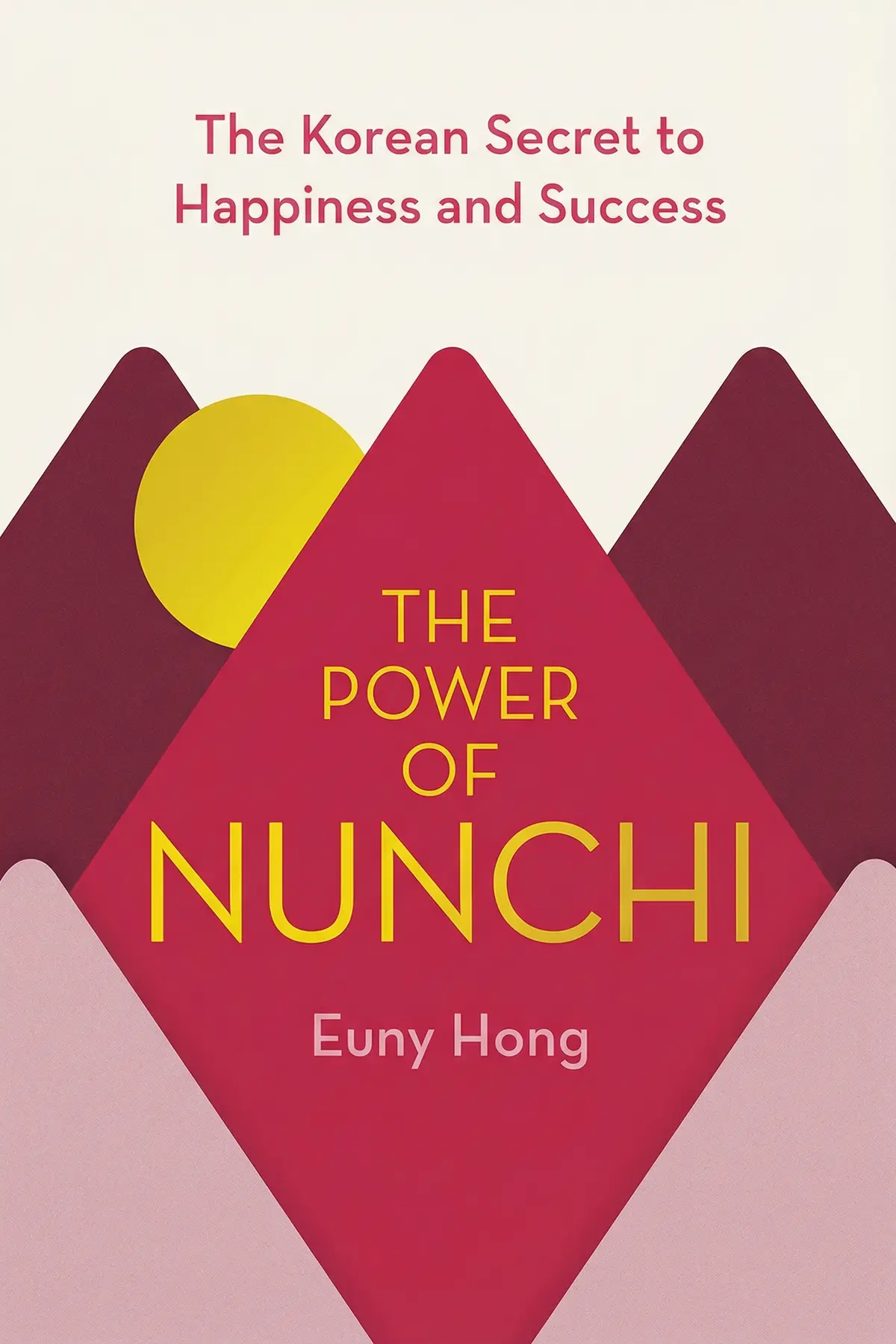
Table of Content
1. Introduction
1 min 42 sec
Imagine walking into a social gathering where you don’t know a soul. You scan the room and, within seconds, you can tell who holds the most influence, who is feeling defensive, and which conversations are welcoming or closed off. This isn’t a supernatural talent or a lucky guess; in Korean culture, it is a highly refined skill known as nunchi. Often described as the secret sauce of Korean success, nunchi is a form of social intuition that allows you to gauge the thoughts and feelings of others with remarkable accuracy.
In our modern world, we are often taught to be the loudest person in the room to get ahead. We are encouraged to project our personalities and assert our needs. However, the philosophy behind nunchi suggests that the real power lies in the opposite approach. It’s about the art of the ‘eye-measure’—the ability to be still, to observe, and to calibrate your behavior to the environment around you. It is about understanding that we are never acting in a vacuum, but are always part of a larger, shifting social ecosystem.
As we explore the insights of Euny Hong, we will see how this practice is more than just a social etiquette rule; it is a survival mechanism that has sustained a nation through centuries of turmoil. We will look at how moving from ‘sharp edges’ to ’roundness’ can make you more resilient, and why silence is often your most effective tool for gathering information. Whether you are looking to improve your romantic prospects, climb the corporate ladder, or simply find a deeper sense of belonging, the principles of nunchi offer a path to connecting with others on a level you may have never thought possible. By the end of this journey, you’ll understand how to stop just hearing what people say and start seeing what they actually mean.
2. The Essence of Social Intuition
2 min 01 sec
Uncover how a concept born from national survival became a personal tool for navigating the complexities of human connection and achieving success through subtle observation.
3. The Power of the Collective Environment
1 min 53 sec
Explore why focusing on the overall atmosphere of a space is more important than analyzing any single individual when trying to understand social dynamics.
4. Cultivating Roundness and Connection
1 min 59 sec
Discover why being mild and easygoing creates a social shield that protects you from conflict while fostering deeper ties with those around you.
5. The Strategic Use of Stillness
1 min 53 sec
Learn how the deliberate practice of silence and mental clarity can become your greatest advantage in gathering information and navigating social hurdles.
6. Mastering First Impressions and Mirroring
1 min 52 sec
Understand the mechanics of social detection and how subtly mimicking others can build instant rapport and demonstrate deep respect.
7. The Art of Reading Between the Lines
1 min 54 sec
Unveil the complexities of indirect communication and how sensing the unsaid can prevent misunderstandings and strengthen your closest bonds.
8. Navigating the Hidden Power of the Office
1 min 48 sec
Learn to see through the official titles and hierarchies of the workplace to identify where the real influence lies and how to align yourself with it.
9. Strategic Influence and Problem Solving
1 min 45 sec
Master the Socratic method and other tactical approaches to guide others toward your goals without ever having to be confrontational.
10. Conclusion
1 min 51 sec
As we wrap up our look at the power of nunchi, it’s worth reflecting on how this ancient practice can be applied to our modern, often chaotic lives. The core lesson here is that our success and happiness are deeply intertwined with our ability to perceive and respect the social world around us. By shifting our focus from ‘me’ to ‘we,’ and from ‘talking’ to ‘listening,’ we open up a new realm of influence and connection. Nunchi isn’t about being a wallflower; it’s about being a highly attuned participant in the dance of human interaction. It’s about knowing that sometimes, the most powerful thing you can do is simply be still and pay attention.
If you want to start practicing this today, there is a very simple way to begin fostering community and flow in your own environment. Next time you are leading a meeting or hosting a small gathering, bring something to share—something simple like a box of chocolates or a plate of fruit. When you introduce it, use inclusive language by saying, ‘I brought this for everyone.’ As you pass the item to the person next to you and ask them to pass it on, you are creating a literal and figurative circle of connection. That simple, circular motion fosters a sense of belonging and sets a positive boonwigi for the rest of your time together.
Remember, nunchi is a muscle that gets stronger with use. Start small by trying to read the atmosphere of the next room you walk into. Notice who is leaning in and who is pulling away. Pay attention to the silence between the words. Over time, you’ll find that you no longer need to struggle to be heard or understood. Instead, you will find yourself naturally aligned with the people and opportunities that lead to a truly fulfilled life. The secret to your success has been right in front of your eyes all along; you just need to start measuring the world with them.
About this book
What is this book about?
The Power of Nunchi introduces readers to a transformative Korean concept that functions as a high-level form of emotional intelligence. Translated literally as eye-measure, nunchi is the ability to instantly assess the moods, desires, and dynamics within any social environment. By mastering this subtle art, individuals can learn to navigate complex human interactions with grace, avoiding social pitfalls and building stronger connections. The book promises a roadmap to greater happiness and effectiveness by shifting focus away from individual ego toward collective harmony. Through historical context and practical modern applications, it demonstrates how observing silence, mirroring body language, and understanding indirect communication can provide a competitive edge in everything from first dates to high-stakes business negotiations. It is essentially a masterclass in the quiet power of observation.
Book Information
About the Author
Euny Hong
Euny Hong is a celebrated journalist and the author of The Birth of Korean Cool. Her work has been featured in prominent publications including the New York Times, the Washington Post, and the Wall Street Journal. Her unique perspective on social intelligence stems from a pivotal life event: at the age of 12, she moved from suburban Chicago to South Korea without any knowledge of the Korean language. Despite this barrier, she rose to the top of her class within a single year, a success she attributes entirely to her mastery of nunchi.
Ratings & Reviews
Ratings at a glance
What people think
Listeners find the idea of nunchi to be a fascinating "sixth sense" for assessing social environments and strengthening bonds. While perspectives on how the author interprets Korean cultural traditions are mixed, many are drawn to the clever narrative voice and compelling stories. They also point to the practical utility of the included life lessons and self-assessments designed to sharpen social intuition in both private and career contexts. Additionally, the book is considered a valuable resource for handling social situations, with one listener highlighting the concept as an "extraordinary trait" that promotes balance and mutual understanding.
Top reviews
Pacharapol
As someone who struggles with social anxiety, the concept of 'eye measure' provided a much-needed framework for understanding the world around me. This book argues for the power of quiet observation and deep empathy in an era where everyone is shouting to be heard. I loved how Euny Hong blended her personal experiences of moving between different countries to illustrate how nunchi works in various contexts. It felt like I was gaining an unfair advantage in social situations just by learning to look at the 'room' as a living organism. The insights on building trust and connection through subtle cues are invaluable. Truly, this is an extraordinary trait that more people should cultivate to find genuine happiness. It’s practical, witty, and deeply insightful. I've already seen an improvement in my interpersonal relationships since finishing it.
Show moreUdom
This book is a delightful surprise for anyone who feels perpetually awkward in social settings. Hong takes a complex cultural concept and breaks it down into actionable advice that feels very relevant to the modern world. I particularly enjoyed the section on 'nunchi-ninja' status—the idea that you can navigate a room without leaving a footprint is fascinating. Some critics say it’s just common sense, but clearly, common sense isn't that common given the state of social media today. My only gripe is that it leans a bit too heavily on anecdotes rather than peer-reviewed studies. Still, the witty tone and the quizzes make it an accessible tool for improving your social awareness. It’s a refreshing take on emotional intelligence that doesn't feel overly clinical or dry. Definitely worth a read for the perspective shift alone.
Show moreWipada
Ever wonder why some people just seem to 'get it' while others are constantly putting their foot in their mouths? The Power of Nunchi explains that invisible thread of social connection better than most Western psychology books I’ve encountered. It’s not just about body language; it’s about the 'noon-chee' or the energy of a room. Hong writes with a sharp, journalistic edge that makes the cultural history feel alive. I found the practical tips on how to listen more and speak less to be incredibly grounding in my daily life. While I agree that some of the links to corporate success felt a bit tenuously connected, the core philosophy is sound and helpful for anyone looking to build better harmony. It’s a great tool for social awareness in the workplace.
Show moreRohan
Frankly, I went into this expecting a lot of mystical fluff, but it’s actually quite pragmatic and even a little bit cynical in a refreshing way. Hong doesn't sugarcoat the fact that nunchi is a survival skill born out of a history of necessity. She shows how being observant can be a legitimate superpower in competitive environments. The quizzes throughout the book were surprisingly fun and helped me realize where my own social blind spots are. It’s a quick read, but the lessons on 'speed-nunchi' have stayed with me during my morning meetings. A solid four stars for the writing style alone. It's not a perfect cultural analysis, but it's a very useful social manual for the modern professional.
Show moreLeila
The chapter on workplace dynamics really hit home for me, especially the parts about how to handle a difficult boss using subtle social cues. Personally, I found the distinction between nunchi and western empathy to be one of the most thought-provoking parts of the book. Hong’s voice is lively and kaleidoscopic, jumping from ancient history to modern K-pop examples with ease. While some of the sections on romantic relationships felt a bit like a magazine advice column, the overall message of awareness and adaptability is one that I’ll be taking to heart. It’s a very clever look at how to move through the world with more grace and less friction. If you want to stop being the 'clueless' one in your friend group, buy this.
Show moreAnawin
Wow. I haven't highlighted a book this much in years. As someone who always felt like I was missing some invisible social manual, this was the guide I needed. Hong defines nunchi as a 'sixth sense' for reading people, and she’s absolutely right. The way she describes 'reading the room' makes it feel like a skill you can actually practice and master, rather than just a personality trait you're born with. Her anecdotes about her childhood in Korea were both heartbreaking and hilarious, providing a perfect backdrop for the lessons. This isn't just a book about Korea; it's a book about being a more attentive, successful human being in any culture. The practical value here is immense if you're willing to practice.
Show moreSupranee
Not gonna lie, as someone from a high-context culture, most of these 'revelations' felt like things my parents taught me when I was five years old. 'Don't be the loudest person in the room' isn't exactly a groundbreaking secret; it’s just basic manners in my community. However, I will say that Hong’s writing style is punchy and she has a great sense of humor that kept me reading until the very end. The chapter on workplace nunchi had a few good nuggets, even if the overall premise felt a bit stretched for an entire book. It’s a decent enough read for a flight, but it lacks the scientific depth I was hoping for. It feels more like a long-form essay than a definitive guide to success. It's interesting, but far from life-changing.
Show moreSatit
After hearing so much about this 'sixth sense,' I decided to give it a go, and my feelings are definitely mixed. The truth is, I enjoyed the witty prose and the 'quick-start' guides, but I couldn't get past the lack of scientific data. Hong makes bold claims about South Korea’s economic success being tied solely to this one social principle without providing much empirical backing. It’s an entertaining read, but it feels more like a collection of personal opinions than a rigorous self-help book. I gave it three stars because the writing is undeniably engaging, and the quizzes helped me reflect on my own habits. However, if you're looking for deep cultural history or psychological research, you might want to look elsewhere. It's a bit too 'self-help lite' for my taste.
Show moreArnav
Picked this up because I’ve been fascinated by the concept of 'reading the room,' but I quickly found the narrative to be repetitive and quite thin on substance. Frankly, the quizzes were the only part I found remotely engaging. While Hong is a clever writer, she treats nunchi like a superpower that can solve every problem from a bad date to a corporate merger. To me, it just felt like basic social awareness rebranded with an exotic label to appeal to Western readers looking for the next 'Wabi-Sabi.' I also found her constant comparisons between Korea and the West to be heavily biased and occasionally unfair to both cultures. It’s an okay intro if you’ve never thought about body language before, but don’t expect a profound psychological study. The evidence just isn't there to back up her grand claims about success.
Show moreKet
Euny Hong attempts to sell 'nunchi' as some mystical, life-changing Eastern secret, but for anyone actually raised in Korea, this is a painful read. To be fair, she writes with a certain wit that makes the pages turn, yet her superficial understanding of the heritage she's profiting from is cringeworthy. She frames it as emotional intelligence, while in reality, nunchi is often a tool of social pressure used to force conformity and silence dissent in the face of injustice. The fact that she dismissed actual Koreans criticizing her on Twitter for exoticizing the culture tells you everything you need to know about the 'authenticity' here. Claiming Western tech giants like Steve Jobs or Jeff Bezos succeeded because of a Korean concept they never knew is a massive stretch. It feels like a shallow attempt to capitalize on the K-wave without respecting the complex reality of the culture. I was deeply disappointed by the lack of actual research.
Show moreFeatured in
Readers also enjoyed
AUDIO SUMMARY AVAILABLE
Listen to The Power of Nunchi in 15 minutes
Get the key ideas from The Power of Nunchi by Euny Hong, plus 5,000+ more titles in English and Thai.
- 5,000+ titles
- Listen as much as you want
- 7-day free trial
- Cancel anytime







