
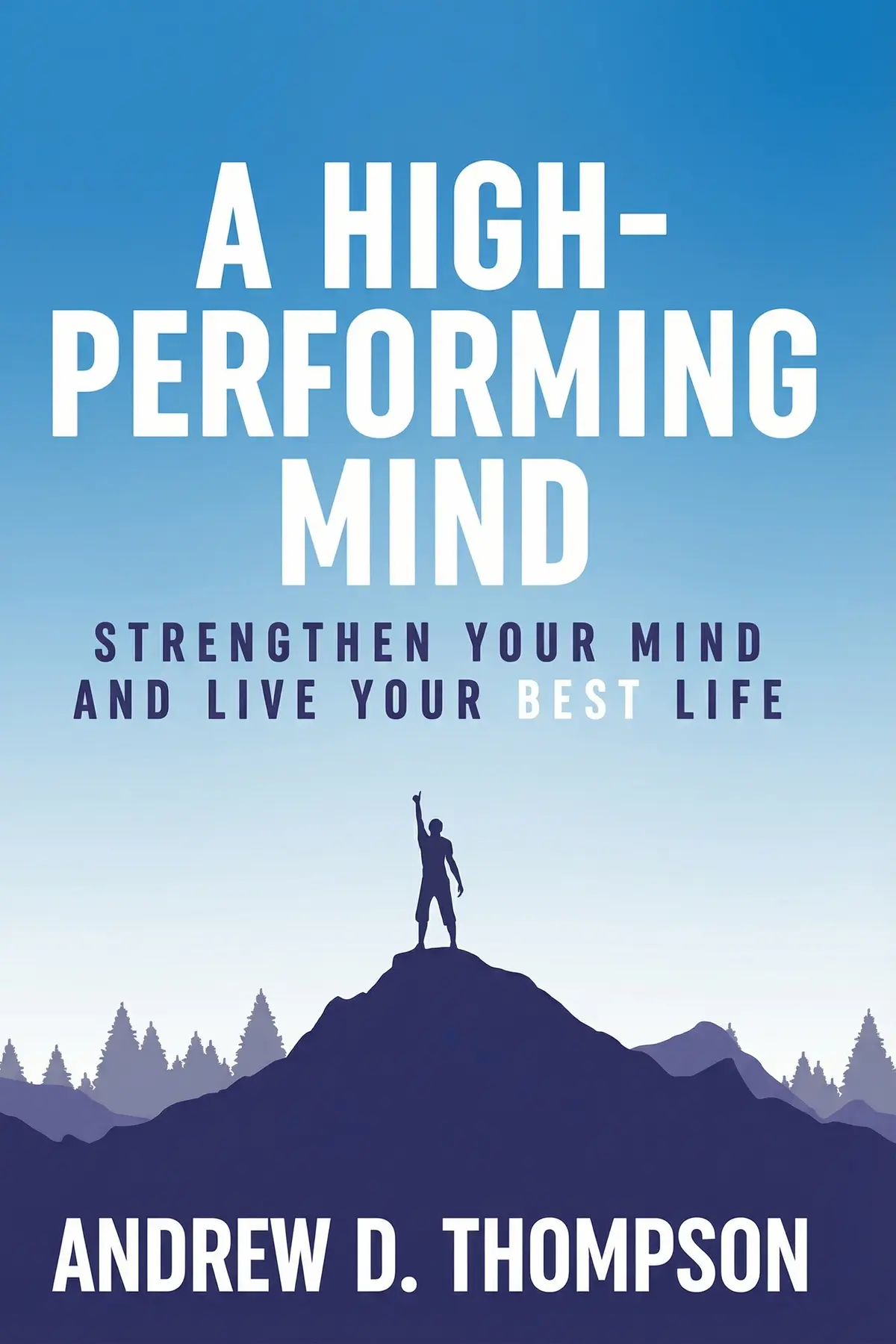
A High-Performing Mind: Strengthen Your Mind and Live Your Best Life
Andrew D. Thompson
Discover how to reclaim focus and find fulfillment by shifting your perspective from the finish line to the process, using the principles of a practicing mind to achieve discipline without the burden of anxiety.
1 min 29 sec
We live in an age characterized by high-speed achievement and the relentless pursuit of the next big thing. Whether we are trying to master a new skill, get fit, or advance in our careers, most of us carry a heavy weight of performance anxiety. We feel as though we are constantly racing against a clock or an invisible competitor, and that no matter how much we accomplish, it’s never quite enough to satisfy our inner critic. This sense of being perpetually ‘behind’ leads to burnout, procrastination, and a loss of joy in the activities we once loved.
But what if the problem isn’t our lack of talent or effort, but the way we view the act of practicing itself? In the following pages, we will explore the core philosophy of a practicing mind. This approach isn’t just about how to work harder; it’s about how to work with more presence and intention. We will look at why our culture’s obsession with the end result actually sabotages our progress and how we can retrain our brains to value the journey over the destination.
By the end of this journey, you will see how shifting your focus to the present moment can eliminate the stress of perfectionism. You’ll learn techniques to manage your internal dialogue and discover why slowing down is often the fastest way to get where you want to go. The throughline here is simple but profound: true fulfillment doesn’t wait for us at the end of the road—it is found in the very act of walking the path. Let’s dive in and see how a few fundamental shifts in your perspective can transform your productivity and your peace of mind.
2 min 10 sec
Uncover why achieving your goals often feels hollow and how the constant pursuit of an ever-changing ideal creates a cycle of perpetual dissatisfaction and high anxiety.
2 min 05 sec
Learn to conquer procrastination and stress by detaching from the pressure of the outcome and anchoring your full attention in the immediate task at hand.
2 min 08 sec
Discover the practical benefits of breaking large projects into tiny, manageable pieces and why slowing down your pace actually leads to faster and higher-quality results.
2 min 04 sec
Explore the three-step ‘Do, Observe, Correct’ technique that allows you to manage your habits and emotions with the objectivity of an impartial spectator.
1 min 30 sec
As we wrap up our look at the philosophy of the practicing mind, the central theme remains clear: the quality of our lives is determined not by our ultimate achievements, but by how we engage with our current reality. We have seen how the relentless pursuit of perfection and the habit of constantly moving our goalposts only serves to fuel anxiety. We’ve discovered that by anchoring ourselves in the present and breaking our largest challenges into tiny, manageable steps, we can move through life with much more ease and efficiency.
The true power of this approach lies in its simplicity. It doesn’t require a special talent or a complete lifestyle overhaul. It only requires a shift in where you place your attention. When you stop worrying about whether you are ‘there yet’ and start focusing on the specific movement of your hands, the rhythm of your breath, or the clarity of your thought, you find a kind of peace that no external success can match.
As you move forward into your day, try to carry this mindset with you. When you find yourself feeling overwhelmed by a project or frustrated by your lack of progress, remember to slow down. Shrink the task until it feels easy. Step back and observe your frustration without letting it define you. Use your goals to point the way, but allow yourself to find satisfaction in the work itself. Mastery is not a destination you reach; it is a way of being in the world. By embracing the process and becoming a lifelong practitioner, you’ll find that the success you’ve been chasing has been right here, in the present moment, all along.
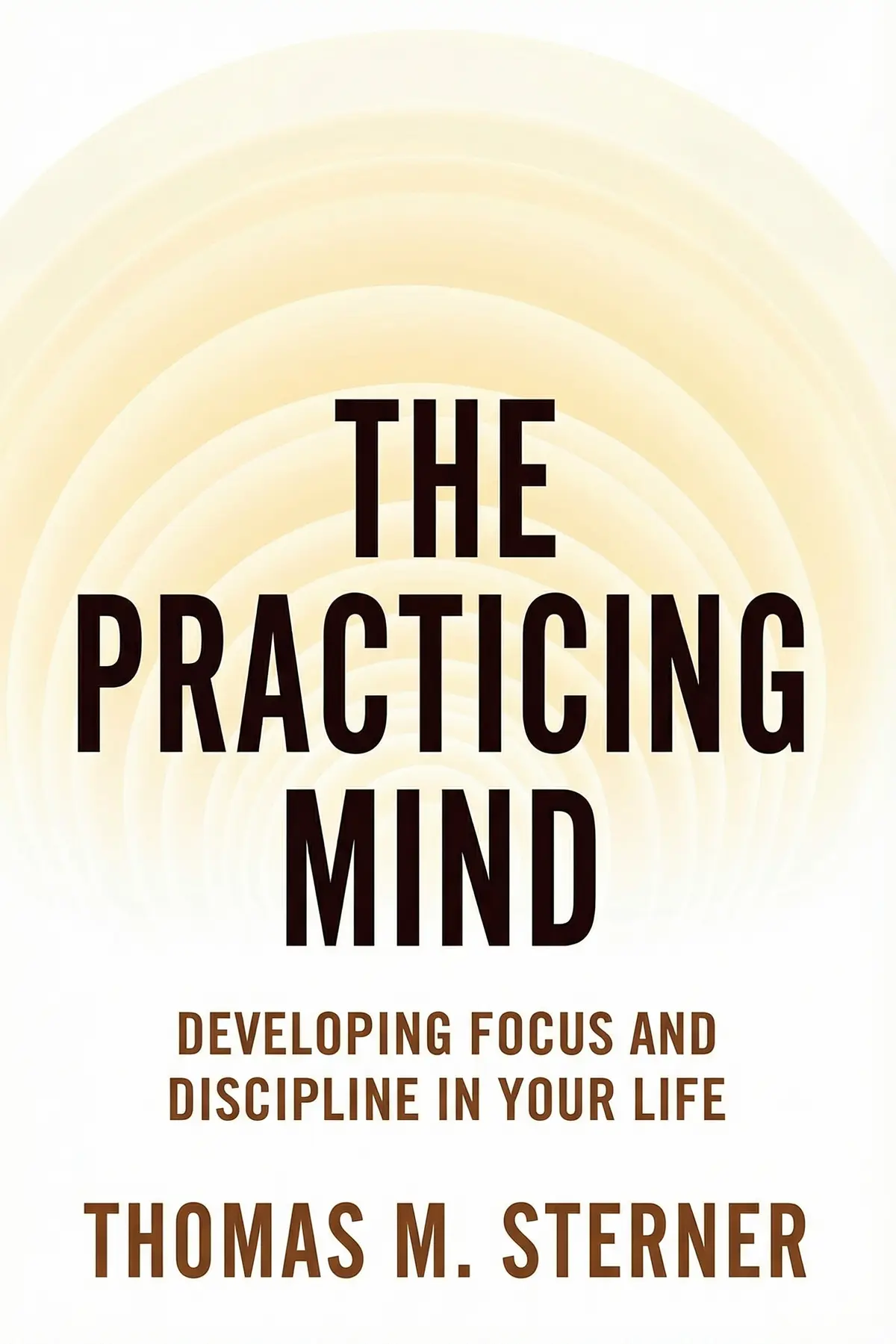
The Practicing Mind explores the psychology of mastery and why so many of us struggle to maintain consistency in our goals. It challenges the conventional obsession with outcomes, arguing that our focus on results is the primary source of our stress and procrastination. By examining how we interact with our daily tasks, the book offers a new philosophy centered on the 'process' rather than the 'product.' Through practical techniques like the Do, Observe, Correct method and a shift toward intentional, slower pacing, the book promises a path to high-level performance that feels calm rather than frantic. It provides a blueprint for breaking down overwhelming projects into manageable steps and explains how to use our long-term goals as a compass rather than a weapon of self-criticism. Ultimately, it is a guide for anyone looking to build patience, discipline, and a sense of mastery in every area of their life.
Thomas M. Sterner is an expert in focus and discipline who has combined his studies of Eastern and Western philosophy with modern sports psychology. He previously served as the chief concert technician for a prominent performing arts center, where he was responsible for the maintenance of concert grand pianos used by world-class musicians. Beyond his technical work, Sterner has produced a radio program focused on the practicing mind and regularly shares his methods through teaching at sports clinics and for corporate professionals.
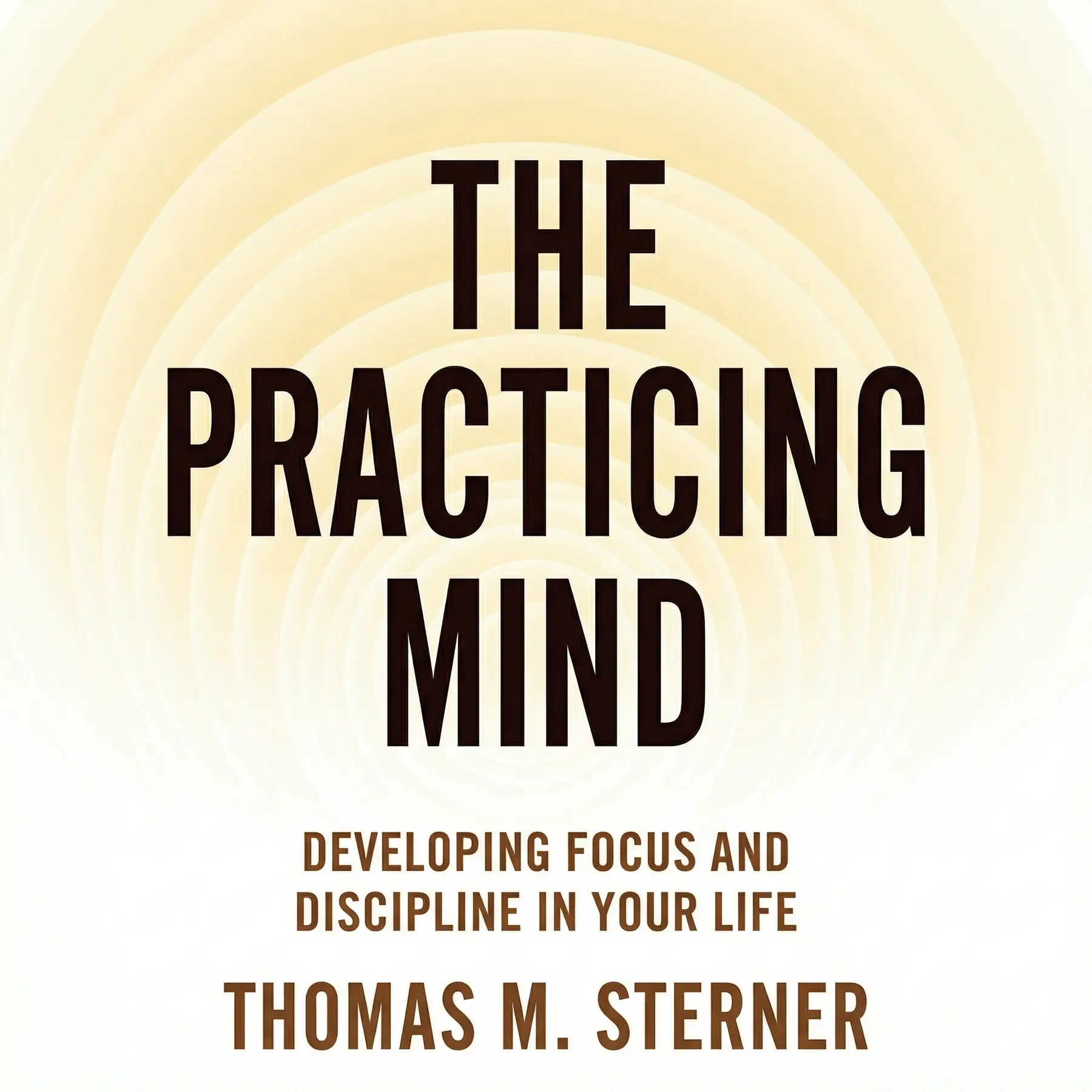
Listeners find this book accessible and clear, offering useful guidance and concrete methods for improving skills. Furthermore, the prose is expertly written, and listeners value the way it fosters tranquility while lowering anxiety and stress levels. The content also promotes finding joy in the present moment; listeners call it transformative, with one listener highlighting how it facilitates a mental paradigm shift.
The concept of the 'practicing mind' completely shifted how I approach my daily work as a designer. Instead of obsessing over the final render, I’ve started focusing on the brushstrokes and the immediate decisions, which has oddly made the work faster and less stressful. Sterner’s writing style is well-crafted and encouraging, offering a way to achieve inner peace by simply letting go of the horizon. He uses this great analogy about a sailor never reaching the horizon, which perfectly describes the futility of only being happy once a goal is reached. Not gonna lie, I was skeptical of the Eastern philosophy bits at first, but the way he blends it with performance psychology makes it very relatable. This book is a life-changing resource for anyone looking to reduce anxiety and actually enjoy their life as it is right now. It is truly a masterclass in discipline.
Show moreWow, this was exactly the mental reset I needed during a particularly stressful month of career transitions. Sterner manages to take complex ideas from Zen practice and turn them into a clear-cut strategy for everyday discipline. I’ve always been someone who looks at a giant pile of pending work and freezes, but his advice to simplify and shorten the duration of effort has been a total game-changer. The writing is clean and devoid of the usual self-help fluff, focusing instead on how to quiet the mind through deliberate practice. It really helps you realize that the anxiety we feel isn't from the work itself, but from our judgment of it. After finishing this, I felt a sense of tranquility I haven't had in years. If you want to acquire new skills without the usual frustration, read this book.
Show moreAfter hearing about this book on a productivity podcast, I decided to give it a shot, and it’s easily one of the most impactful things I’ve read this year. It isn't just about getting things done; it’s a deeply spiritual look at how we relate to ourselves and our time. Sterner shows us that all of life is practice, whether we are washing dishes or performing a concert. This perspective shift helps eliminate the 'I'll be happy when...' mentality that keeps so many of us miserable. The advice on using goals as a rudder rather than a destination is a brilliant way to maintain focus without becoming attached to the outcome. It’s a short, easy read that packs a punch. Truly a life-changing book for the modern age.
Show moreThis book provides a masterclass in staying in the present moment without the typical fluff found in modern mindfulness guides. Sterner’s background in music and technical work gives him a unique perspective on the 'mechanics' of practice that many spiritual authors lack. By shifting the goal from the final product to the practice itself, he offers a way to find joy in even the most mundane tasks. I noticed a significant reduction in my daily stress levels almost immediately after implementing his suggestions. The writing is straightforward and the tone is incredibly supportive throughout the entire journey. It's the kind of book you'll want to keep on your shelf and revisit whenever you feel your focus starting to fracture. Highly recommended for entrepreneurs and athletes alike.
Show moreFinally got around to reading Sterner’s take on mindfulness, and I’m glad I did despite the repetitive nature of the middle chapters. The author, who draws a lot from his time as a piano technician, argues that we should treat every activity as a practice session rather than a means to an end. This shift from product to process sounds simple, but it’s actually quite difficult to implement when you're used to chasing goals. I particularly liked the 'Four S Words'—simplify, small, short, and slow—as they offer a concrete way to break down overwhelming projects. To be fair, he does wander into some stream-of-consciousness tangents about golf and music that don’t always land. However, the core message about staying in the present moment is incredibly valuable for anyone feeling burnt out by their own expectations. It's a solid, practical guide that helps reduce the frustration of learning something new.
Show moreAs someone who has struggled with perfectionism for years, I found this book incredibly grounding and surprisingly accessible. Look, the idea of focusing on the journey isn't new, but Sterner frames it in a way that feels actionable for a modern, busy person. He explains how our attachment to the 'product' creates a cycle of impatience and boredom that eventually leads us to quit. By breaking tasks into subtasks and focusing only on the current movement, I’ve found I can work longer without feeling that heavy mental fatigue. I did feel the book was a bit longer than it needed to be, and some anecdotes felt like filler. Regardless, the paradigm shift it offers regarding how we view 'work' versus 'play' is worth the price of admission. It's a straightforward read that delivers real techniques for skill development.
Show moreEver wonder why you lose interest in a hobby the moment it gets difficult or the initial 'honeymoon' phase wears off? This book answers that question by highlighting our cultural obsession with end results rather than the act of doing. I've been applying the 'process-oriented' mindset to my fitness routine, and it has completely removed the dread I used to feel before a workout. Personally, I think the chapter on the 'Four S Words' is the most practical part of the whole book. My only gripe is that the author sometimes comes off as a bit of a 'know-it-all' when discussing his personal habits. If you can ignore that slight intellectual elitism, the actual advice is top-tier. It provides a helpful framework for anyone dedicated to becoming good at their craft.
Show moreTo be fair, the core message here is solid, but the execution feels a bit like a padded-out blog post. The author has a warm, encouraging tone, but he tends to repeat his main points until they lose their impact. I listened to the audiobook version, and I have to agree with other reviewers that the narration was somewhat preachy and over-enunciated. It made a three-hour listen feel much longer. The autobiography elements regarding his career as a piano tuner were interesting, yet they often felt disconnected from the 'performance psychology' he was trying to teach. Is it helpful? Yes, especially the parts about staying present to reduce stress. Is it the best book on the subject? Probably not, as there are deeper dives into Eastern philosophy that cover this more elegantly. It’s a decent starting point for beginners.
Show moreIn my experience, books that try to blend autobiography with philosophy often struggle with organization, and this one is no exception. While the central theme of 'no mind' and focusing on the present is powerful, the book meanders through topics like golf and piano tuning without a clear roadmap. I often found myself skimming pages because the points were being rehashed for the third or fourth time in a row. To be fair, the advice on breaking down huge tasks into small, manageable subtasks is great for people with focus issues. However, I didn't feel like I was learning much new after the first three chapters. It’s a nice, light read if you need a reminder to slow down, but don't expect a deep academic study on the mechanics of discipline.
Show moreNot what I expected after seeing all the glowing recommendations online, especially given the author’s occasionally elitist tone. Frankly, the book feels like a disorganized collection of random thoughts about piano tuning and golf rather than a structured self-help guide. He makes contradictory claims about his own academic history and television habits that made it hard for me to take his 'discipline' advice seriously. While the central idea of focusing on the process is okay, it’s nothing you won't find in 'Zen in the Art of Archery' or any basic yoga class. The writing is very stream-of-consciousness, and I found the repetition of basic concepts to be quite grating after the first fifty pages. If you want a book that describes a problem with supporting evidence and a clear hypothesis, look elsewhere. This felt more like a biography of his own narrow interests than a universal manual for focus.
Show moreAndrew D. Thompson

Deepak Chopra

Richard Wiseman
William B. Irvine
AUDIO SUMMARY AVAILABLE
Get the key ideas from The Practicing Mind by Thomas M. Sterner, plus 5,000+ more titles in English and Thai.







