
18 min 57 sec
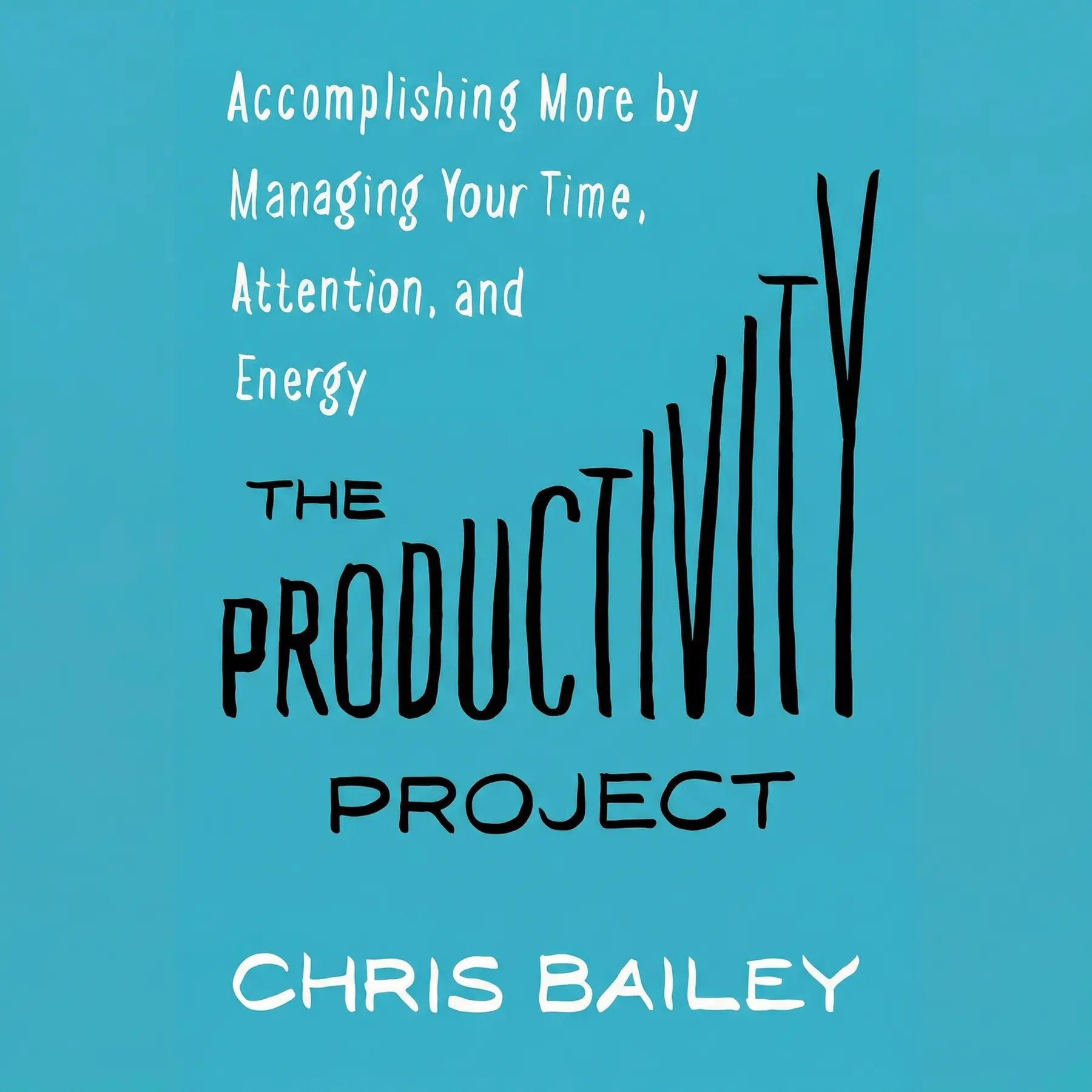
The Productivity Project: Accomplishing More by Managing Your Time, Attention, and Energy
By Chris Bailey
Discover how to transform your daily output by mastering the three pillars of productivity: time, energy, and attention. This guide offers experimental insights into working smarter rather than just harder.
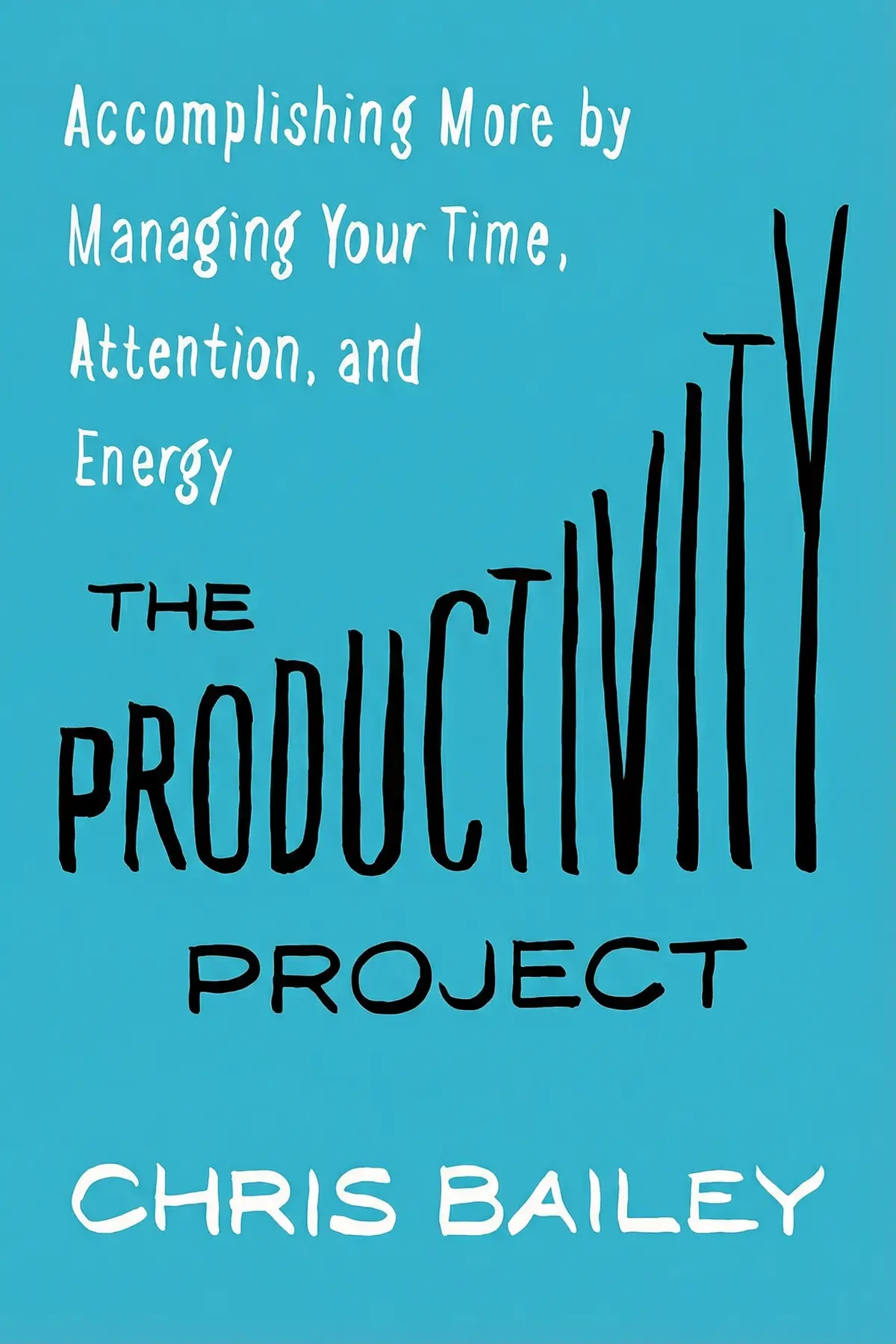
Table of Content
1. Introduction
1 min 52 sec
We often find ourselves trapped in a cycle of constant motion, yet at the end of the day, we feel like we haven’t actually accomplished anything of substance. We check emails, attend meetings, and cross minor items off a list, but the big, meaningful projects remain untouched. This common frustration stems from a misunderstanding of what it actually means to be productive. Most of us have been taught that being productive means doing more—squeezing every possible drop of activity out of our waking hours. But what if the secret to achieving more is actually doing less?
This journey into the mechanics of efficiency is based on a year of intensive self-experimentation. Imagine someone who dedicated an entire year to testing every productivity hack imaginable, from living in total isolation to working ninety hours a week, all to see what actually works. The result is a shift in perspective. Instead of viewing productivity as a measure of speed, we should see it as a measure of impact. It is about how much you accomplish, not how busy you appear to be.
Throughout this discussion, we will explore a throughline that connects our daily actions to our deeper motivations. We will look at how the interplay of time, energy, and focus determines our success. By the end, you’ll see that becoming more awesome isn’t about running faster on the treadmill of work; it’s about knowing when to step off, how to direct your gaze, and how to fuel your journey. Let’s dive into the strategies that bridge the gap between being frantic and being truly effective.
2. The Three Pillars of True Efficiency
2 min 26 sec
Productivity isn’t just about the clock; it requires a delicate harmony between your schedule, your physical vitality, and your mental focus to be effective.
3. Connecting Productivity to Personal Purpose
2 min 30 sec
Before adopting new habits, you must understand the underlying values that drive you, or your new routines will eventually feel hollow and unsustainable.
4. Simplifying Focus with the Rule of Three
2 min 22 sec
Overwhelming to-do lists often lead to paralysis; discover a minimalist framework that forces you to prioritize what actually matters every single day.
5. Overcoming the Resistance of Procrastination
2 min 33 sec
Delaying work is often a reaction to specific unappealing traits of a task; learn how to identify these triggers and give your work a ‘makeover.’
6. The Diminishing Returns of the Long Workweek
2 min 27 sec
Working more hours doesn’t always lead to more results; discover why staying at the office too long can actually double the time it takes to finish a task.
7. Clearing the Mental Workspace
2 min 40 sec
Your brain is designed for generating ideas, not storing them; learn how ‘externalizing’ your thoughts can unlock significant cognitive power.
8. Conclusion
2 min 07 sec
As we wrap up this exploration of productivity, the most important takeaway is that being ‘awesome’ isn’t about the sheer volume of tasks you complete. It is about the intentionality you bring to your work. We have seen that productivity is a delicate balance of time, energy, and attention. By managing these three resources, rather than just watching the clock, you can achieve far more than you ever thought possible.
Remember the Rule of 3: keep your goals simple and achievable to maintain your focus. Don’t be afraid to limit your work hours; the research shows that rest is not a luxury, but a requirement for high-level performance. When you feel resistance, look for those six triggers of procrastination and give your tasks a makeover to make them more attractive. And perhaps most importantly, keep your mind clear by externalizing your thoughts through regular brain dumps.
One immediate action you can take to see a boost in your focus is to audit your environment for distractions. Our attention is our most precious resource, yet we often let it be stolen by pings, buzzes, and notifications. Try turning off non-essential alerts on your phone and computer. Every time you are interrupted, it takes significant energy to get back into the flow of your work. By protecting your attention, you are protecting your productivity.
Ultimately, the goal of any productivity project is to create more space for the things that truly matter. Whether that’s spending time with family, pursuing a creative passion, or simply enjoying a moment of peace, being more productive at work gives you the freedom to be more present in your life. Start small, experiment with these techniques, and find the rhythm that works for you. You have the tools; now it’s time to put them into practice.
About this book
What is this book about?
Many people equate productivity with simply doing more things and working longer hours. However, this approach often leads to burnout and diminishing returns. The core promise of this exploration is that true efficiency comes from a deliberate balance of managing your internal resources. By treating productivity as a science and an experiment, you can identify which habits actually move the needle and which are just busywork. This summary breaks down the essential strategies for finding your purpose, setting realistic goals, and overcoming the psychological hurdles of procrastination. It challenges the glorification of overwork, providing evidence that a shorter, more focused workweek can actually result in higher quality output. You will learn practical frameworks to clear your mental clutter and align your daily tasks with your long-term values.
Book Information
About the Author
Chris Bailey
Chris Bailey is an expert in productivity who has been hard at work discovering the secrets to living an efficient life since he was a preteen. He’s collected the results of his experiments on his website, A Life of Productivity. He’s also a popular public speaker with his own TED Talk: A More Human Approach to Productivity.
Ratings & Reviews
Ratings at a glance
What people think
Listeners find this productivity guide to be a top-tier, accessible manual that offers actionable techniques for boosting output in creative fields. The content features valuable insights and tools, with one listener highlighting the integration of scientific studies, and listeners characterize the material as direct and fun. Feedback on the prose is varied: some listeners appreciate how well it is written, whereas others feel the book could be more succinct.
Top reviews
Supatra
Finally finished this massive dive into productivity, and I have to say the 'Rule of 3' is a total game-changer for my daily workflow. Chris Bailey spent a year as a human guinea pig, and while some experiments seem wild, the core lessons about energy management are spot on. I used to think productivity was just about grinding more hours, but his research into Biological Prime Time helped me realize I was wasting my best brainpower on emails. The writing is conversational and light, making it feel less like a dry textbook and more like a chat with a very intense friend. Not every tip will work for a parent or someone in a rigid 9-to-5, but the overall framework is incredibly flexible. I really appreciated how he cites actual scientific studies to back up his claims instead of just relying on 'vibes.' It’s a refreshing take on a genre that often feels stale and repetitive.
Show moreAim
Picked this up on a whim during a period of massive burnout, and it genuinely helped me reshape how I view my workday. The experiment comparing a 90-hour week to a 20-hour week was eye-opening and confirmed my suspicion that more time doesn't equal more results. Bailey’s tone is humble and honest, especially when he talks about the experiments that failed or made him feel miserable. I’ve started implementing the 'Maintenance Day' for all my boring errands, and it has freed up so much mental energy during the actual week. It’s rare to find a productivity book that actually encourages you to watch more movies or take more naps as a way to fuel your work. This is an excellent resource for anyone who feels like they are constantly running on a treadmill and getting nowhere. I would highly recommend it to anyone who does creative or knowledge work.
Show moreNan
This book actually surprised me with how much scientific data was woven into the narrative without making it feel like a chore to read. I loved the section on how caffeine affects our focus and why drinking water first thing in the morning can actually jumpstart your brain. Chris Bailey has a way of making complex cognitive concepts feel easy to understand and, more importantly, easy to apply to your own life. Some might find his personality a bit much, but I found his honesty about his own procrastination and struggles to be very relatable. The '20-second rule' for distractions has already helped me stop checking my phone every five minutes while I’m trying to write. It’s an entertaining and straightforward guide that actually delivers on its promise to help you accomplish more.
Show morePor
Why do we keep treating our time like it’s an infinite resource when our energy is clearly the thing that runs out first? This is the central question of Bailey’s project, and his answers are both practical and backed by interesting research. I’ve read a lot of self-help, but this is the first book that actually made me feel okay about taking a break to let my mind wander. The 'Rule of 3' is such a simple concept, yet it has completely transformed how I plan my weeks and lowered my daily anxiety levels significantly. I love how he breaks down the triggers of procrastination, making it easier to identify why I’m avoiding a specific project. It’s an easy, engaging read that offers a lot of value for anyone willing to actually do the exercises included in the text.
Show morePensri
Ever wonder what happens when someone treats their life like a laboratory for an entire year? Bailey’s approach to testing focus and energy is fascinating, even if the book feels a little bit longer than it probably needed to be. I particularly enjoyed the section on 'attentional space' and how our brains need room to wander to actually be creative. It’s a practical guide that moves beyond simple time management into the much more important realm of managing your attention. While I agree with other reviewers that some suggestions are a bit 'out there,' the underlying science is sound and well-explained. The chapters are broken down into manageable chunks with estimated reading times, which is a meta-touch that I actually found quite helpful. It’s not a perfect manifesto, but it’s a solid resource for anyone looking to optimize their output without burning out.
Show moreKofi
After hearing so much hype about this title, I was prepared to be disappointed, but the focus on 'intention' really resonated with me. The book asks you to define why you want to be productive in the first place, which is a step most other guides completely skip over. I’ve been using the 'Rule of 3' for two weeks now, and it’s surprisingly effective at cutting through the noise of a long to-do list. The author’s writing is very accessible, though I do think he overuses certain metaphors and could have been a bit more concise. I appreciated the specific tips on how to handle 'aversive' tasks—you know, the ones that are boring or unstructured. It isn't a revolutionary text, but it’s a very practical toolkit that focuses on energy rather than just grinding out minutes. A solid four stars for the actionable advice.
Show moreChatri
Not gonna lie, the idea of a guy spending a year just 'being productive' sounded a bit pretentious at first. However, once I got past the premise, I found the 'Biological Prime Time' tracking to be one of the most useful exercises I’ve ever done for my career. It turns out I was doing my hardest tasks when my energy was at its lowest, which explained why I was always so stressed. The book is well-written and moves at a fast pace, though some of the advice definitely assumes you have a high level of control over your environment. I wish there was a bit more focus on how to apply these techniques in a high-pressure corporate setting where you can't just ignore emails. Still, the core message about working smarter instead of longer is a lesson that everyone needs to hear at least once.
Show moreEvelyn
As a creative professional, I was hoping for more revolutionary insights, but what I got was mostly a well-organized collection of existing productivity tropes. To be fair, having all these techniques in one place is useful, and the author’s enthusiasm is definitely infectious throughout the chapters. I struggled with some of the more extreme suggestions, like checking email only three times a day, which would get me fired in about forty-eight hours. However, the concept of the 'Biological Prime Time' gave me a new vocabulary for something I had felt but never acted on. The writing style is a bit wordy, and you could probably get the same value from a long-form article, but the challenges at the end of each section are a nice touch. It’s a decent entry-level book for someone new to the self-help world, but veterans won’t find much new material here.
Show moreOwen
Look, most of this book could have been a series of tweets or a very short PDF instead of a full-length hardcover. While the author seems like a nice enough guy, his 'experiments' often feel like a young man playing at life rather than dealing with actual adult problems. I found the redundancy to be a major hurdle; he repeats the same three or four core ideas in every single chapter with slightly different wording. The advice to 'just say no' to meetings is laughable for anyone who isn't the CEO or a freelance blogger with no clients. It’s frustrating because there are a few decent nuggets of wisdom buried under mountains of fluff and unnecessary anecdotes about his year-long project. If you’ve read any other productivity book in the last decade, you can safely skip this one and not miss anything important.
Show morePakinee
The truth is, I found this book incredibly difficult to stomach because of the author’s obvious lack of real-world experience. It is easy to be 'productive' when you have zero responsibilities, no kids, and a massive safety net to support a year of meditation and blogging. He suggests things like ignoring your boss or hiring an assistant for $30 an hour as if that’s a viable option for the average person. Most of the 'insights' are just recycled common sense that you could find in a five-minute Google search or a better book like Getting Things Done. Frankly, the tone feels condescending and totally disconnected from the reality of modern office culture where you can't just turn your phone off for a week. I felt like I was being lectured by a privileged kid who has never had a 'real' job with consequences. Save your money and your time—ironically, this book is a total productivity killer.
Show more
Readers also enjoyed
AUDIO SUMMARY AVAILABLE
Listen to The Productivity Project in 15 minutes
Get the key ideas from The Productivity Project by Chris Bailey, plus 5,000+ more titles in English and Thai.
- 5,000+ titles
- Listen as much as you want
- 7-day free trial
- Cancel anytime







