
20 min 10 sec
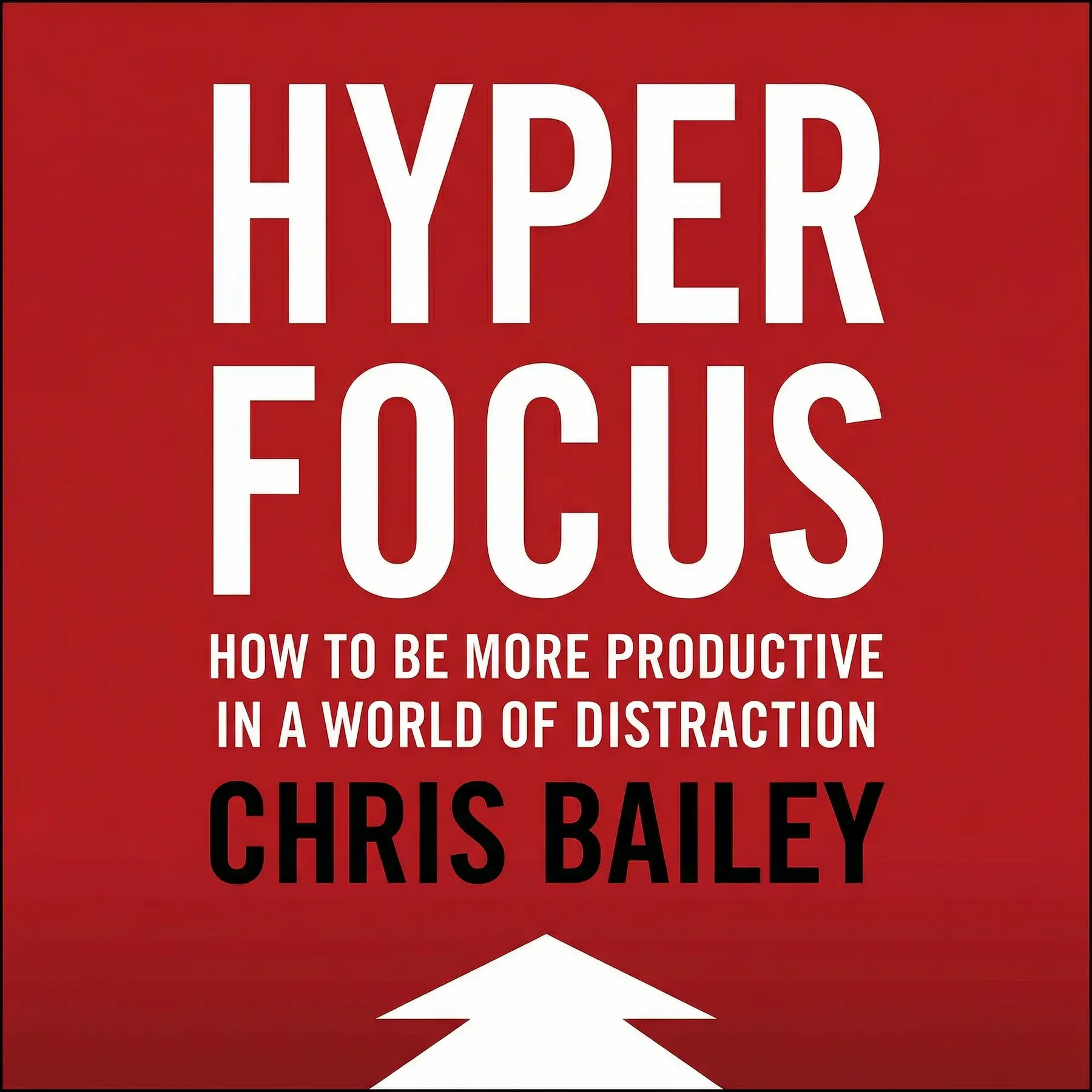
Hyperfocus: How to Be More Productive in a World of Distraction
By Chris Bailey
Hyperfocus provides a practical framework for reclaiming your attention in a world of constant distraction. Chris Bailey reveals how to enter deep concentration and use strategic mind-wandering to boost both productivity and creativity.
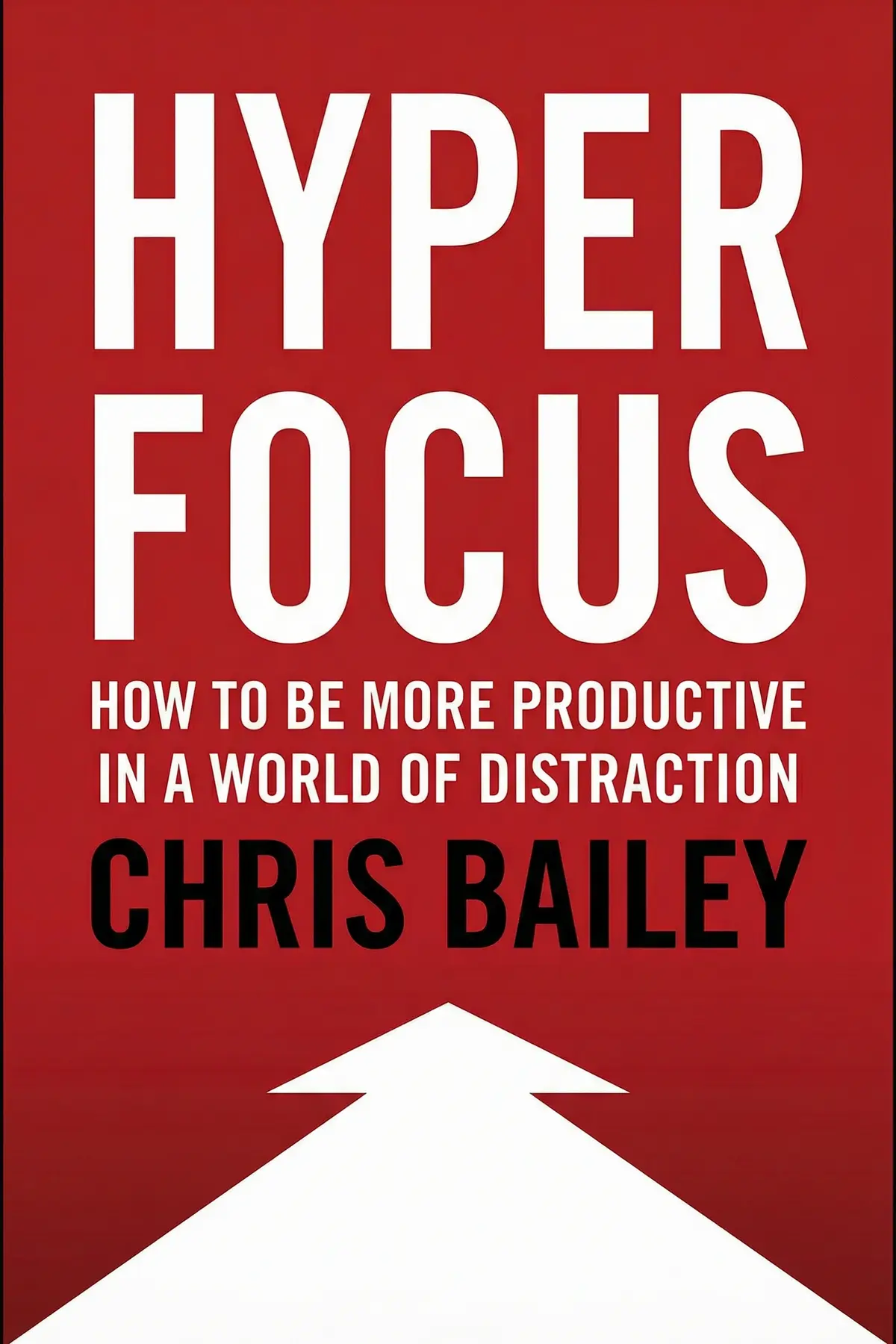
Table of Content
1. Introduction
1 min 51 sec
Think back to the last time you were so engrossed in a project that the rest of the world simply faded away. You weren’t checking your phone, you weren’t wondering what was for dinner, and you certainly weren’t scrolling through social media. You were in a state of flow, where every mental gear was turning in perfect synchronization. For many of us, these moments feel like rare accidents—brief flashes of brilliance that happen once in a blue moon. But what if this level of concentration wasn’t a matter of luck? What if it was a skill you could summon at will?
In our modern, hyper-connected world, our attention has become our most precious—and most exploited—resource. We live in an environment designed to fracture our focus, with every app and device vying for a slice of our awareness. This constant fragmentation doesn’t just make us less productive; it leaves us feeling exhausted and uninspired.
This is where the insights of Chris Bailey come into play. In this exploration of his work, we’re going to look at the mechanics of attention. We will discover how to transition from a state of constant distraction into a powerful mode called hyperfocus. But focus is only half the story. We will also learn about its counterpart, scatterfocus, which is the secret engine of creativity and long-term planning. By the end of this journey, you’ll understand how to manage your mental space, cultivate high-quality insights, and ultimately work less while achieving significantly more. The goal isn’t just to do more work; it’s to do the right work with more of yourself present in every moment.
2. The Mechanics of Deep Concentration
2 min 47 sec
Discover how to transform unpredictable bursts of productivity into a reliable, daily habit by mastering the four essential stages of entering a state of hyperfocus.
3. Managing Your Attentional Space
2 min 38 sec
Explore the biological limits of the human brain and learn why meta-awareness is the ultimate tool for guarding your mental capacity against digital clutter.
4. Creating an Environment for Focus
2 min 47 sec
Learn how to proactively defend your concentration by restructuring your physical and digital surroundings to remove the friction of constant temptation.
5. The Strategic Value of Scatterfocus
2 min 43 sec
Discover why letting your mind wander is not a waste of time, but a powerful cognitive mode for solving complex problems and planning for the future.
6. Connecting Dots and the Zeigarnik Effect
2 min 29 sec
Learn how your brain continues to work on unsolved problems in the background and how to harness this hidden power to spark moments of genius.
7. Nourishing Your Mind with High-Quality Inputs
2 min 59 sec
Maximize the effectiveness of your creativity by becoming a selective consumer of information, ensuring your mental library is filled with valuable dots.
8. Conclusion
1 min 56 sec
Mastering your attention in the modern world isn’t about working harder or becoming a robot; it’s about understanding the natural rhythms of your brain and creating an environment where those rhythms can thrive. We have explored the two essential pillars of this mastery: hyperfocus and scatterfocus. By intentionally narrowing your focus, you can tackle complex tasks with unprecedented efficiency and depth. By strategically allowing your focus to expand, you can unlock the creative potential and planning capabilities that are often buried under the noise of daily life.
The throughline of these concepts is intentionality. Whether you are clearing your desk of distractions to dive into a project or taking a long walk to let your mind wander, the key is that you are making a conscious choice. You are moving from a reactive state—where the world dictates what you think about—to a proactive state, where you are the architect of your own attentional space.
As an immediate step toward this more intentional life, consider your relationship with caffeine. While we often use it just to stay awake, caffeine can be a powerful ally for hyperfocus. It increases your alertness and helps you maintain your performance on cognitive tasks, especially when the work gets repetitive. The next time you sit down for a dedicated session of deep work, treat yourself to a cup of coffee as a ritual to signal to your brain that it’s time to focus. Combined with a clear environment and a single meaningful goal, you’ll find that the state of hyperfocus is not a rare accident, but a skill you can master to transform your productivity and your life.
About this book
What is this book about?
In an era where digital pings and notifications constantly fragment our thoughts, Hyperfocus explores the mechanics of human attention. The book distinguishes between two vital modes of thinking: the intense, concentrated state of hyperfocus and the creative, expansive state of scatterfocus. Chris Bailey offers a roadmap for moving beyond the reactive state of modern work. He provides actionable strategies to minimize distractions, expand your mental capacity, and curate the information you consume to foster better ideas. By learning when to narrow your focus and when to let it drift, you can work more effectively while spending less total time at your desk, ultimately leading to a more intentional and creative life.
Book Information
About the Author
Chris Bailey
Chris Bailey is a writer and productivity consultant based in Ontario, Canada. His work focuses on the intersection of deep work and efficiency. He has contributed to prestigious publications such as the New York Times, the National Post, and Harvard Business Review. In addition to this work, he is the author of The Productivity Project.
Ratings & Reviews
Ratings at a glance
What people think
Listeners find the book exceptionally easy to read and knowledgeable, offering excellent actionable tips for enhancing concentration and mindfulness. They value its impact on boosting efficiency, as one listener pointed out how it enabled them to reduce their working hours while actually accomplishing more. The work earns praise for its inventive nature, with one listener emphasizing the unique method for encouraging creative thinking, and for its logical layout, with one review calling out the useful 2x2 grid tool. Listeners appreciate the way it is written, with one characterizing the prose as dynamic.
Top reviews
Vipawan
If you're tired of feeling like your brain is a browser with fifty tabs open, this is your manual. Bailey breaks down productivity not as a matter of time management, but as attention management. I particularly loved the 2x2 grid for categorizing tasks; it sounds simple, but seeing it on paper changed how I prioritize my morning. The writing is incredibly dynamic and keeps you engaged even through the more research-heavy sections. While some tips are standard—like turning off notifications—the way he connects them to 'hyperfocus' vs. 'scatterfocus' feels fresh. It’s helped me cut down my working hours while actually getting more done. Definitely a must-read for any modern professional.
Show moreKamol
Finally got around to reading Bailey’s work, and the scientific approach really set it apart from typical 'hustle' culture fluff. He doesn't just tell you to 'work harder'; he explains how the brain’s attentional space actually functions. I ended up with pages of notes, specifically regarding how to enter a state of hyperfocus more reliably. The book is structured logically, making it easy to jump back in and reference specific techniques. It’s less about motivational quotes and more about hacking your biology for better output. Even if you think you know everything about focus, the way he frames 'attentional space' provides a new lens to view your workday. It’s easily one of the most actionable guides I’ve encountered recently.
Show moreKai
Chris Bailey has a knack for making complex cognitive concepts feel accessible and, more importantly, actionable. Unlike other authors who rely on grandiose quotations, Bailey stays grounded in research and personal experimentation. The concept of 'attentional space' is something I now think about every time I pick up my phone. The book is structured beautifully, moving from the mechanics of focus to the creative benefits of letting go. Not gonna lie, I was skeptical about the 'scatterfocus' idea, but it has genuinely improved my problem-solving skills at work. It’s a well-organized guide that doesn't just tell you what to do, but why your brain reacts the way it does. Highly recommended for anyone in a creative field.
Show moreNoi
Picked this up thinking it would be another generic productivity manual, but I was pleasantly surprised by how much I actually implemented. Bailey’s writing is dynamic and moves at a clip that makes the pages fly by. The most valuable part for me was the exploration of 'scatterfocus'—the idea that our brains need structured downtime to be truly creative. I’ve started scheduling boredom into my day, and the impact on my problem-solving has been immediate. It's well-organized and the 2x2 grid application is a tool I’ll keep on my desk for years. While some tips, like unplugging LAN cables, are a bit specific, the overall framework is transformative if you actually do the work.
Show moreChon
As someone who struggles with a wandering mind, I found the section on 'Scatterfocus' surprisingly refreshing. Most productivity books treat any form of distraction as a sin, but Bailey argues for the importance of letting your mind drift to foster creativity. Frankly, the idea of walking without music or podcasts sounded boring at first, but it really does help the brain make new connections. The book is well-organized and doesn’t feel like a lecture. I did find some of the personal anecdotes about his coffee habits and Ed Sheeran a little repetitive after a while, though. Still, the practical advice on how to recover from mental fatigue is worth the price of admission alone. It’s a very human approach to a technical problem.
Show moreHarper
Ever wonder why you're exhausted after a day of doing nothing? This book explains that exact phenomenon through the lens of mental fatigue and how we mismanage our focus. The 2x2 grid application mentioned in the summary is a standout feature that helps visualize where your energy is going. Bailey’s tone is friendly and approachable, making the more academic parts of the book fly by. Truth is, I’ve started working fewer hours but I’m significantly more productive because I’m being intentional about my 'hyperfocus' blocks. It’s not a perfect book—some chapters feel like they repeat the same point three times—but the core message is incredibly effective. It’s a great tool for anyone feeling overwhelmed by digital distractions.
Show moreSara
The chapter on intentionality was a game-changer for my morning routine. As a student with ADHD, I usually find productivity books to be patronizing or impossible to follow, but Bailey’s style is more about understanding the brain than forcing it into a box. He acknowledges that focus is a finite resource. The tips on minimizing distractions and setting up a dedicated environment were simple but helped immediately. I appreciate that he doesn't just focus on work; he also talks about the importance of rest and 'mind-wandering.' My only gripe is that the book can be a bit wordy in the middle sections. However, the overall structure is so well-informed that I’ve already recommended it to several classmates.
Show moreSomsri
To be fair, much of the advice here feels like common sense wrapped in a very shiny package. Do we really need a whole chapter telling us that phones are distracting or that we should unplug our internet cables? The author relies heavily on academic studies that aren't always explained with the depth I was hoping for. It feels a bit like he read ten other books and summarized them for us. That said, his perspective on 'intentionality' is a solid takeaway. If you are new to the world of self-help, this is a great starting point because it’s so readable. But for those of us who have already read Allen or Newport, there isn't much here that will blow your mind.
Show moreChatchai
Look, I really wanted to like this, but the author spends way too much time talking about his own coffee habits and favorite cafes. The book feels like a collection of random research papers patched together with very personal, sometimes privileged, perspectives. Telling someone to 'hit the gym' or use a 'sleeping room' at work just isn't realistic for most people working 9-to-5 jobs in the real world. I found the writing style to be quite showy, with the author constantly reminding us how fast he can write because of these methods. Quantity doesn't always mean quality, and this book desperately needed a tighter edit. Many of the 'stunning insights' are just basic tips you can find for free online.
Show moreNaomi
This book could have easily been a blog post or a single magazine article. While the writing is dynamic, the actual 'meat' of the book is buried under mountains of filler and repetitive anecdotes. Did you know that turning off your phone helps you concentrate? Riveting. If you've never read a single book on productivity, you might find this ground-breaking, but for everyone else, it’s just a remix of ideas that other authors have explained much better. I felt like I was wasting my time—the very thing the book tells you not to do. It’s a lot of talk with very little substance, despite the scientific-sounding labels.
Show more
Readers also enjoyed
AUDIO SUMMARY AVAILABLE
Listen to Hyperfocus in 15 minutes
Get the key ideas from Hyperfocus by Chris Bailey, plus 5,000+ more titles in English and Thai.
- 5,000+ titles
- Listen as much as you want
- 7-day free trial
- Cancel anytime







