
20 min 20 sec
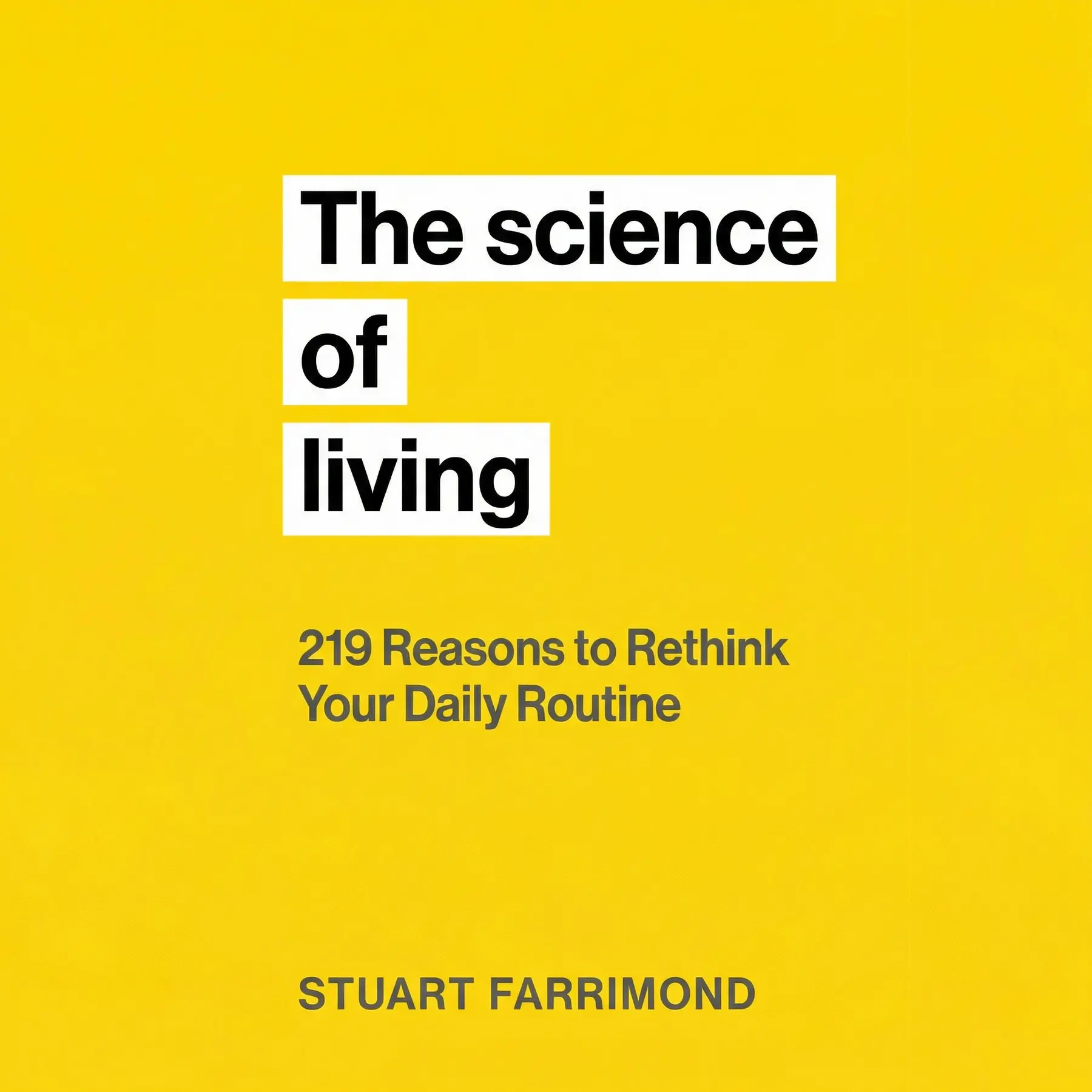
The Science of Living: 219 Reasons to Rethink Your Daily Routine
Explore the biological blueprints of your daily life. Dr. Stuart Farrimond uses scientific research to optimize everything from your morning coffee and work productivity to your social interactions and sleep hygiene.
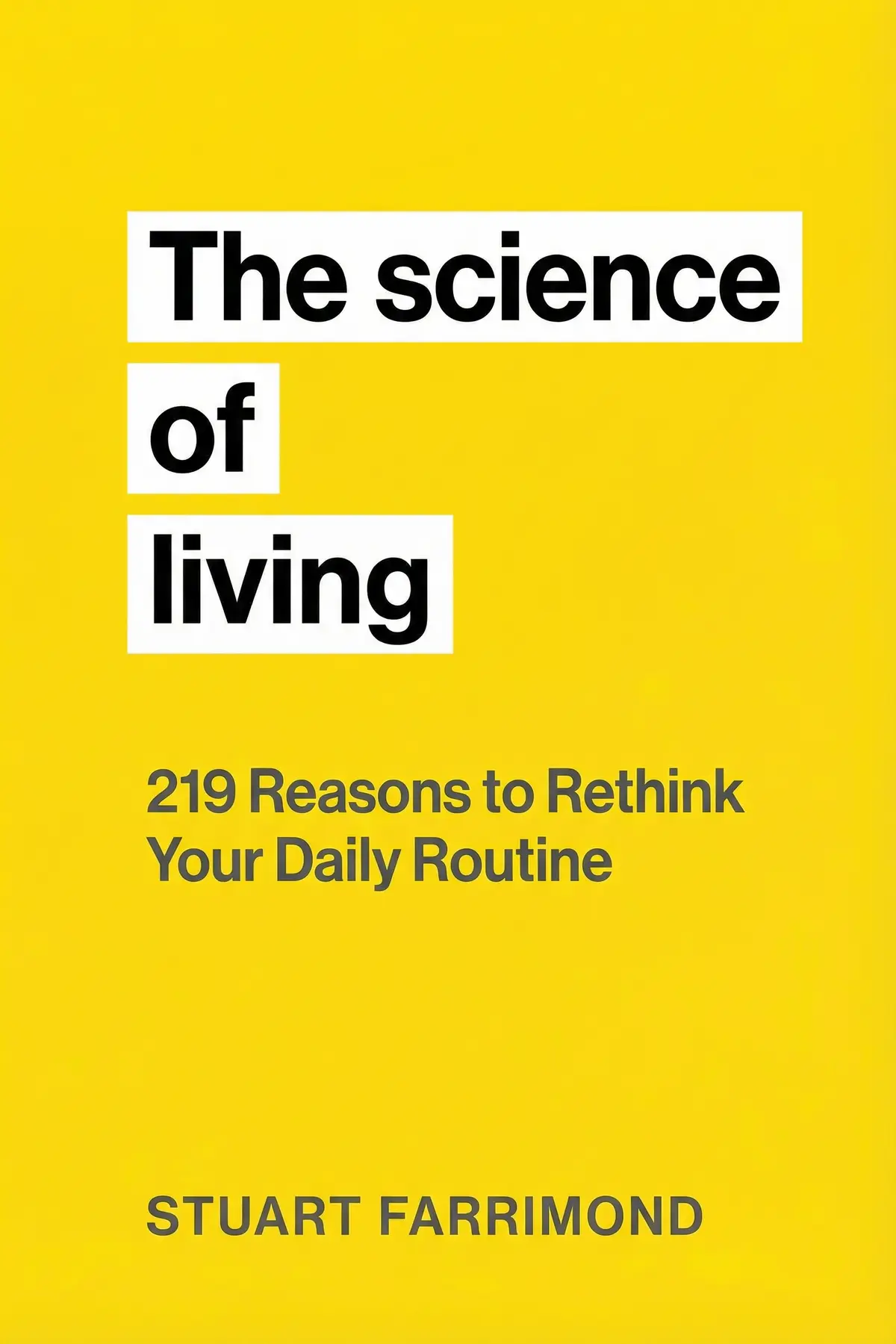
Table of Content
1. Introduction
1 min 49 sec
Every single day, we make hundreds of tiny decisions. We decide when to get out of bed, what to eat for our first meal, how to dress for the walk to the office, and how to tackle our to-do lists. To most of us, these feel like matters of personal preference or simple habit. However, beneath the surface of these mundane choices lies a complex web of biological systems, hormonal triggers, and evolutionary adaptations. When we ignore these underlying mechanics, we often find ourselves feeling exhausted, stressed, and perpetually out of sync with our own bodies.
In this exploration of The Science of Living, we are moving away from the world of hearsay and productivity hacks. Instead, we are looking at what the data actually says about the optimal way to navigate a twenty-four-hour cycle. The goal here is to establish a throughline between your biology and your behavior. By understanding the chemical and physical laws that govern your energy, your appetite, and your rest, you can stop fighting against your nature and start working with it.
Over the course of this summary, we will dive into the specific ways you can fine-tune your morning, maximize your mental output during the workday, and ensure that your evening hours truly help you recover. We will challenge long-held assumptions about the necessity of breakfast, the best time to hit the gym, and why a post-lunch nap might be the most productive thing you do all day. This is about turning objective scientific facts into a practical roadmap for a healthier, more intentional life. Let’s begin by looking at the very first challenge most of us face: the moment the alarm clock rings.
2. The Biological Reality of Morning Grogginess
2 min 24 sec
Discover why waking up feels like an uphill battle and how your internal biological clock dictates your ideal start time.
3. Debunking the Mandatory Breakfast Myth
2 min 22 sec
Explore the surprising history of the morning meal and learn how to choose fuel that actually sustains your energy.
4. The Physics of Keeping Your Body at the Right Temperature
2 min 25 sec
Learn why layers are superior to heavy coats and how biological differences affect our perception of cold.
5. Aligning Your Workday with Your Brain's Golden Hours
2 min 19 sec
Maximize your output by matching your most difficult tasks to your natural windows of high mental focus.
6. The Physiology of the Post-Lunch Slump
2 min 10 sec
Discover why your body craves a siesta after eating and why fighting this urge might be counterproductive.
7. Social Interaction as a Biological Necessity
2 min 29 sec
Uncover how our evolutionary history shaped our need for connection and why socializing is vital for physical health.
8. The Three Pillars of Restorative Sleep
2 min 30 sec
Master the environmental and behavioral cues that signal to your brain it’s time to shut down for the night.
9. Conclusion
1 min 52 sec
As we have seen, the rhythm of a truly healthy life is not dictated by the latest trends or the demands of a relentless work culture, but by the quiet requirements of our own biology. Dr. Stuart Farrimond’s insights remind us that we are biological entities first and foremost. From the way we wake up to the way we wind down at night, every phase of our day is governed by systems that have been refined over millions of years of evolution.
We’ve explored how understanding your chronotype can remove the guilt of not being a ‘morning person’ and how your productivity can skyrocket if you simply align your hardest tasks with your brain’s natural energy peaks. We have debunked the marketing behind ‘the most important meal of the day’ and looked at the physics of how to dress for the elements. We’ve also seen that our need for others and our need for a cool, dark place to rest are not luxuries, but fundamental requirements for our physical and mental health.
The throughline of all these ideas is simple: awareness leads to optimization. When you understand the ‘why’—the science behind the slump, the chill, or the insomnia—you gain the power to change the ‘what.’ You can stop guessing and start living in a way that supports your body’s natural functions.
As you move forward into your next twenty-four-hour cycle, try picking just one or two of these scientific principles to implement. Perhaps you’ll dim the lights an hour earlier tonight, or maybe you’ll save your most complex project for tomorrow morning’s golden window. By making these small, evidence-based adjustments, you are not just changing your routine; you are honoring the science of living. The result is a life that feels less like a struggle and more like a well-tuned machine, capable of greater focus, deeper connection, and more profound rest.
About this book
What is this book about?
Have you ever wondered why you feel like a zombie for the first hour of the day, or why your energy seems to evaporate right after lunch? The Science of Living offers a meticulous breakdown of the biological rhythms and chemical processes that govern our every waking and sleeping moment. Rather than relying on cultural trends or marketing myths, this guide looks at the hard data behind our routines. It provides a comprehensive manual for restructuring your day in a way that aligns with your body’s natural requirements. From the way your chronotype dictates your ideal work schedule to the physics of why layering clothes keeps you warmer than a single heavy coat, the book covers over two hundred common daily dilemmas. You will discover the evolutionary reasons behind our need for social connection and the physiological triggers that help us fall into a restorative sleep. By the end, you will have a clear, evidence-based toolkit for improving your health, increasing your focus, and understanding the complex machine that is the human body. The promise of the book is simple: by understanding the 'why' behind your body’s signals, you can master the 'how' of your daily life.
Book Information
About the Author
Stuart Farrimond
Dr. Stuart Farrimond is a science and medical writer, presenter, and educator. He’s the author of the best sellers The Science of Cooking and The Science of Spice. Since 2017 he’s been the food scientist for the BBC show Inside the Factory.
Ratings & Reviews
Ratings at a glance
What people think
Listeners appreciate the easy-to-follow, evidence-based method for disproving health misconceptions and improving everyday habits using a "pop-quiz" structure. Although views differ regarding the level of detail—as some listeners feel the concise descriptions are a bit too short for those well-versed in pop-science—the majority consider the stunning visuals and organized presentation to be outstanding. Additionally, they like the abundance of interesting tidbits and functional information presented in simple, snackable portions. They also highlight the utility of the particular guidance given, as one listener points out the intriguing data on the ideal moments for caffeine intake and afternoon naps.
Top reviews
Charles
As someone who is always trying to optimize my morning routine, this book was a total game-changer for my productivity! I had no idea that we were technically built for two sleeps a day instead of one. The explanation about the Protestant work ethic ruining our natural nap cycle was absolutely eye-opening. I’ve started waiting two hours for my caffeine hit and honestly feel much better for it. Every page is packed with gold. The research feels top-notch without ever being 'dumbed down' for a general audience. It’s the kind of book you keep on your nightstand to flip through before bed. I’ve been quoting facts about tooth enamel and fluoride levels to my family for weeks now!
Show moreOmar
Wow, what a fascinating dive into the mundane parts of our lives that we usually take for granted! Farrimond has a way of making even the most basic questions feel important. I was particularly gripped by the trivia regarding how fast people walk in large cities versus small towns. The book is a beautiful physical object, which makes the reading experience even more tactile and enjoyable. I loved learning about 'leisure sickness' and why the doorway effect happens when we enter a new room. It’s a refreshing take on the self-help genre because it relies on hard data rather than just 'vibes' or trends. Highly recommend this for anyone curious about the 'why' behind their daily habits.
Show moreChee
Pick this up if you want to debunk every health myth your grandmother ever told you. This book is gold, pure gold. I loved every single page, from the discussion on REM sleep to the statistics on how many words men and women speak daily. The presentation is clean, bright, and modern, which makes it a joy to flip through. It’s rare to find a book that is this informative while remaining so incredibly easy to read. It challenges your beliefs in the best way possible. I’ve already bought two more copies to give as gifts to friends. If you have any interest in how your body works on a daily basis, you need this.
Show moreBua
Finally got around to reading this one after seeing it on several 'best of' lists. It is essentially a massive collection of over 200 questions about your daily habits, ranging from when you should drink your coffee to the science of napping. I found the visual presentation to be the strongest selling point here. The DK-style graphics are crisp, clean, and incredibly helpful for visualizing data. Truth is, some of the answers felt a bit thin, only covering a page or two at most. It’s perfect for casual reading while you’re waiting for an appointment in a quiet office. You won't walk away a biologist, but you’ll certainly have some fun facts for your next dinner party. It makes science feel accessible and less like a textbook.
Show moreSuwit
Ever wonder why you feel so groggy even after a full eight hours of sleep? This book answers that and about 200 other things you didn't know you were curious about. I really appreciated the debunking of the 'breakfast is the most important meal' myth. The section on how clothing traps air to keep us warm was also quite a revelation for me. The author’s tone is friendly and accessible, making complex biological processes easy to grasp for the average person. My only complaint is that some of the more controversial topics were glossed over too quickly. Still, it’s a brilliant resource for anyone looking to tweak their daily routine for the better.
Show moreGoy
Dr. Farrimond does a great job of breaking down complex biological concepts into digestible nuggets. I particularly liked the logical organization of the book, which follows a 24-hour cycle. It makes it very easy to find specific advice for different parts of your day. The information about the optimal fluoride PPM in toothpaste was surprisingly practical for a book like this. I also found the section on 'telescoping' and memory to be quite insightful. While some of the chapters are a bit brief, the sheer breadth of topics covered is impressive. It’s a great way to start the year with some science-backed goals for a better lifestyle. I'll be keeping this one handy.
Show moreSoontorn
The layout is absolutely stunning, with vibrant colors and clear diagrams that make the information pop. I appreciated the logical flow through a typical day, starting from waking up to going back to sleep. However, I’m torn on the 'pop-quiz' format. On one hand, it’s great for quick reading sessions while having coffee. On the other hand, it feels like a collection of magazine articles bound together. Some sections, like the ones on diet and exercise, felt a bit repetitive if you follow health news at all. It’s a great gift for someone who doesn't read much non-fiction, but it left me wanting more depth. A solid 'middle of the road' experience for me.
Show moreLaddawan
To be fair, I think this book is better suited for a coffee table than a library shelf. The information is presented in very small, digestible nuggets that are perfect for people with short attention spans. I enjoyed the bits about brown fat and how sitting affects the spine, but I found myself wanting to see the actual studies mentioned. It feels a bit like a highlight reel of science. The presentation is 5 stars, but the depth is more like a 2. I’d recommend it for a quick hit of trivia, but don't expect to become an expert on human biology. It's a fun, light read that challenges some common misconceptions without getting too heavy.
Show moreYaowaluk
Not what I expected from a book claiming to be about science. While the author critiques the 'Buzzfeed' style of shallow listicles at the start, the book unfortunately falls into that exact same trap. Most questions are answered in half a page with very little room for nuance or deep data. If you are already a fan of popular science, you will find most of this to be common knowledge. I felt semi-clueless after reading the section on sleep cycles because it just touched the surface. The graphics are nice, but I need more substance than just pretty colors and brief summaries. It’s okay for a total beginner, but for me, it was a bit of a disappointment.
Show moreNarumon
Look, if you enjoy reading listicles on your phone while waiting for the bus, you might like this book. For me, it felt far too superficial. It covers so many topics—from toothpaste to city walking speeds—that it never stays on one thing long enough to provide real insight. The author claims to offer substance that magazines lack, yet the answers are often just a few paragraphs long. I found myself googling the topics afterward to get the actual details. The graphics are beautiful, but they can't hide the lack of a cohesive narrative. It’s more of a trivia book than a 'science' book in my opinion. Not really something to read cover-to-cover.
Show moreReaders also enjoyed
A Life Decoded: My Genome: My Life
J. Craig Venter
A Planet of Viruses
Carl Zimmer
A Short History of Nearly Everything
Bill Bryson
A Thousand Brains: A New Theory of Intelligence
Jeff Hawkins
AUDIO SUMMARY AVAILABLE
Listen to The Science of Living in 15 minutes
Get the key ideas from The Science of Living by Stuart Farrimond, plus 5,000+ more titles in English and Thai.
- 5,000+ titles
- Listen as much as you want
- 7-day free trial
- Cancel anytime







