
17 min 52 sec
The Self-Made Billionaire Effect: How Extreme Producers Create Massive Value
Discover the distinctive mental habits and strategic dualities that separate self-made billionaires from typical entrepreneurs. This guide explores the unique 'Producer' mindset required to generate massive value and lasting business empires.
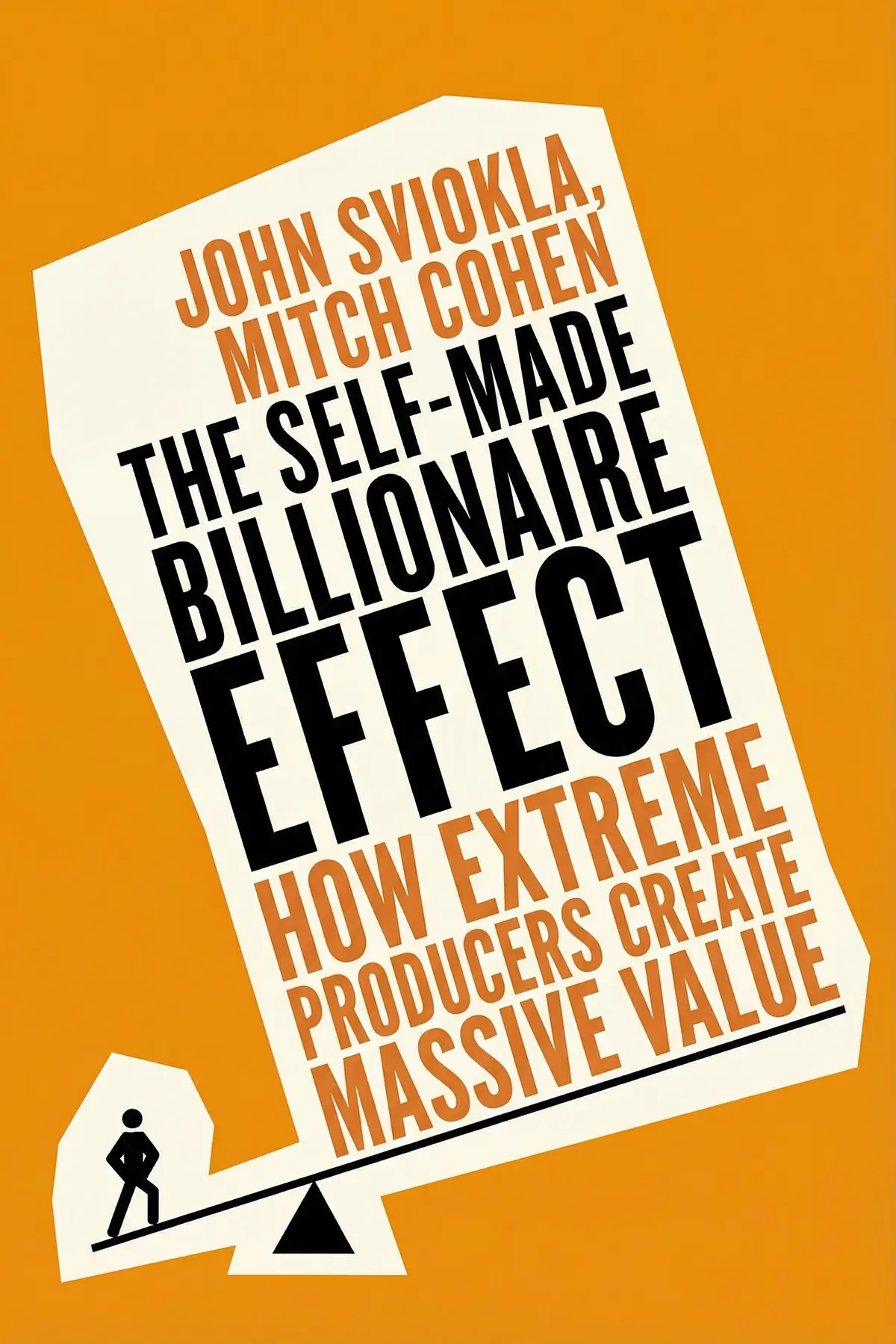
Table of Content
1. Introduction
1 min 45 sec
Why do some entrepreneurs hit a ceiling while others seem to transcend every limit, building empires that change the world? We often attribute the success of people like Oprah Winfrey, Bill Gates, or Elon Musk to luck, timing, or some innate genius that the rest of us simply weren’t born with. However, when we look closer at the trajectories of self-made billionaires, a different story emerges. It isn’t about a single lucky break; it’s about a specific way of processing the world—a mental framework that allows them to see and create massive value where others see nothing.
In this exploration of the ‘Self-Made Billionaire Effect,’ we are going to dive into the core dualities that define these high-impact individuals. We often think of success as a linear path of focus: pick one thing and do it well. But the elite producers of the business world don’t think linearly. They think in dualities. They are capable of holding two seemingly contradictory ideas in their heads at once and finding the spark between them. They are both dreamers and doers, patient observers and aggressive actors.
Over the course of this summary, we will break down the habits that separate the ‘Producers’—those who invent new ways of creating value—from the ‘Performers’—those who excel at executing existing models. We’ll look at how these individuals use empathy to predict market shifts, how they master the clock to wait for the perfect opportunity, and how they redefine risk so they can make moves that would terrify the average person. By the end, you’ll see that the path to a billion-dollar business isn’t just about working harder; it’s about thinking differently. Let’s begin by looking at how these titans manage the complex mental juggling act that fuels their greatest innovations.
2. The Power of Duality and the Producer Mindset
2 min 35 sec
Uncover why the most successful entrepreneurs don’t just focus on one goal, but instead master the art of balancing multiple competing perspectives simultaneously.
3. Cultivating Empathic Imagination and Divergent Thinking
2 min 29 sec
Learn how combining deep human empathy with unconventional thinking allows visionary leaders to identify massive market gaps that others completely overlook.
4. The Strategic Rhythm of Patient Urgency
2 min 24 sec
Explore the counterintuitive timing habits of billionaires who know exactly when to wait for years and when to strike with overwhelming speed.
5. Redesigning the Market through Inventive Execution
2 min 18 sec
Discover how billionaires take existing, saturated markets and flip them on their heads by re-imagining the entire delivery and design of a product.
6. A Relative View of Risk and Persistent Resilience
2 min 15 sec
Learn why the world’s wealthiest individuals aren’t actually ‘risk-takers’ in the traditional sense, but rather experts at calculating potential against loss.
7. The Essential Synergy of the Producer-Performer Partnership
2 min 19 sec
Find out why even the greatest visionaries fail without a grounded partner, and how to find the right person to turn your big ideas into reality.
8. Conclusion
1 min 47 sec
In the end, the ‘Self-Made Billionaire Effect’ is not a matter of magic, but a matter of mindset. We have seen that the individuals who create the most value in our economy are those who can master the art of dual thinking. They are the ‘Producers’ who bridge the gap between imagination and execution. They don’t see the world in black and white; they see it in terms of potential and design. They use empathy to find the world’s hidden needs, they use patient urgency to time their moves perfectly, and they use inventive execution to bring their visions to the masses.
Perhaps the most encouraging takeaway is that these mental habits—juggling multiple perspectives, cultivating divergent thinking, and redefining risk—are not fixed traits. They are skills that can be practiced and refined. You can start by expanding your own ‘working memory’ for complex ideas and by seeking out partnerships that balance your natural weaknesses. Success at this scale isn’t about being the smartest person in the room; it’s about being the person who can see the most connections and has the courage to act on them.
As an actionable first step, consider the concept of ‘think time.’ Many self-made billionaires carve out dedicated space in their schedules—and the schedules of their key employees—specifically for divergent thinking. This is time where there are no immediate tasks, no emails to answer, and no fires to put out. It is time reserved solely for imagining new projects and questioning current assumptions. If you want to move from being a Performer to a Producer, you must give yourself the mental room to grow. Start by carving out even just two hours a week for pure, unadulterated visioning. You might find that the next billion-dollar idea is already sitting in the back of your mind, just waiting for the space to breathe.
About this book
What is this book about?
What distinguishes a billionaire from a successful millionaire? It isn’t just luck or even raw intelligence; it’s a specific cognitive framework that authors John Sviokla and Mitch Cohen call the 'Self-Made Billionaire Effect.' Based on extensive research of over 120 self-made giants, the book identifies the core characteristics of what the authors define as 'Producers.' These individuals don't just optimize existing systems; they create entirely new ones by merging disparate ideas and viewing the world through a lens of duality. The promise of this summary is to pull back the curtain on the mental habits of figures like Bill Gates, Oprah Winfrey, and Steve Jobs. You will learn about the concept of 'empathic imagination,' which allows visionaries to see customer needs before the customers do, and 'patient urgency,' the ability to wait for the perfect moment while moving with lightning speed when it arrives. Whether you are an aspiring entrepreneur or a corporate leader, these insights provide a roadmap for fostering massive innovation and building organizations that create extraordinary wealth and impact.
Book Information
About the Author
John Sviokla
Dr. John J. Sviokla is the head of Global Thought Leadership at PricewaterhouseCoopers. His distinguished career includes twelve years as a faculty member at Harvard Business School, and he is a frequent contributor to major publications such as the Harvard Business Review, Strategy + Business, and The Wall Street Journal. Mitch Cohen serves as a vice-chairman at PricewaterhouseCoopers. Throughout his professional life, he has consulted for numerous Fortune 500 companies. Beyond his corporate role, Cohen is a member of the Advisory Board for the Smeal College of Business at Penn State University.
Ratings & Reviews
Ratings at a glance
What people think
Listeners find the work captivating and simple to digest, valuing its thorough investigation and useful perspectives from prominent industry figures. This title examines imaginative cognition and the billionaire mindset, with one listener emphasizing its functional utility for corporate leadership. Feedback regarding the authors' material is varied among listeners.
Top reviews
Uraiwan
Ever wonder why some people just seem to 'see' the future of a market while others are stuck executing a playbook? This book dives deep into that question with some of the best research I've seen on the topic. The authors don't just give you platitudes; they break down the 'Five Habits of Mind' that allow these individuals to scale value so effectively. I found the section on 'reversing the risk equation' to be particularly enlightening. Billionaires aren't necessarily reckless; they just view risk differently than the rest of us. They worry more about missing out on a massive future than failing in the present. It’s a subtle but powerful shift in perspective. If you are an executive or an aspiring founder, the Producer/Performer pair concept will change how you hire and partner. Highly recommended for anyone serious about growth.
Show moreLena
The chapter on 'patient urgency' alone makes this book worth your time. It perfectly describes that weird paradox of moving fast when the opportunity is right but having the discipline to wait for the market to mature. Most business books tell you to 'fail fast' or 'grind 24/7,' but Sviokla and Cohen provide a much more nuanced view of timing. The writing is straightforward and accessible. I really appreciated that they didn't just focus on the usual Silicon Valley suspects but looked at leaders across dozens of different industries. It gives the research a lot more weight. The idea that you can create massive value by being a 'Producer' within a larger organization is also a very helpful take for those of us not ready to quit our day jobs yet.
Show moreBond
Wow, I’m genuinely impressed by the depth of research that went into this study. It’s not just another collection of motivational quotes; it’s a systematic look at what actually differentiates the billionaire mindset from the millionaire one. The concept of the 'Producer-Performer duality' is a total game-changer for organizational design. It explains why so many innovative people leave big companies—they are Producers being treated like Performers. This book gives a language to that frustration. I also loved the emphasis on 'inventive execution.' It’s not just about the idea; it’s about how you integrate that idea into a working business model. It’s easy to read, packed with data, and provides a very practical framework for anyone looking to understand the mechanics of massive success. A must-read for business leaders.
Show moreMason
As someone who spends a lot of time mentoring new entrepreneurs, I found the data on 'Producers' versus 'Performers' to be incredibly insightful for long-term growth. Most corporate cultures are built to reward the high-performing worker who follows the script, but Sviokla and Cohen argue that the true billionaire-level value comes from those who can bridge the gap between imagination and judgment. It’s a compelling argument. The authors use their access to 120 self-made billionaires to dispel the myth that you have to be a nineteen-year-old tech wiz to make a massive impact. In reality, most of these individuals are over thirty and working in crowded, mature markets. While the prose is a bit dry—typical for management consultants—the core concepts like 'patient urgency' provide a fresh lens for looking at business strategy. It’s not a perfect manual, but it’s a strong addition to any executive's library.
Show moreSamart
After hearing about the 'Self-Made Billionaire Effect' on a podcast, I decided to see if the research lived up to the hype. The most striking takeaway for me was the concept of 'inventive execution' and how billionaires manage to solve problems in fresh ways within traditional industries. It’s a great counter-narrative to the idea that you need a brand-new invention to succeed. The authors show that many of these titans actually thrived in 'red oceans' where competition was fierce. They simply did things differently. The writing is clear and the case studies are varied enough to keep things interesting. I would have liked more focus on the financial mavericks like Icahn, as the book leans heavily on innovators, but the 'Producer' framework is still a valuable tool for identifying talent in your own company.
Show moreMats
Finally got around to this one and I'm glad I did, primarily for the myths it busts about age and industry. It was incredibly heartening to see that 70% of the billionaires studied didn't even land on their billion-dollar idea until after they turned thirty. It proves that experience and maturity are actually assets rather than hurdles in the entrepreneurial world. The authors do a great job of explaining why 'Performers' often get stuck in middle management while 'Producers' are the ones who actually build the ships. The dual habit of mind—the ability to hold clashing ideas simultaneously—is a concept I’ll be thinking about for a long time. It’s a solid piece of research that offers a much-needed reality check on what success actually looks like in the real world.
Show moreIff
Picked this up because I wanted to understand the mindset of the ultra-successful, and while I learned a few things, it wasn't the revelation I was hoping for. If you’re new to the world of business literature, you will probably find the 'Producer-Performer' dichotomy quite fascinating and useful for your career path. However, for those of us who have read widely in this genre, a lot of this feels like old wine in a new bottle. I did appreciate the anecdote about Sara Blakely’s father encouraging failure at the dinner table; it’s a great reminder that mindset starts early. The book is well-organized and easy to skim, but it lacks the deep, visceral 'how-to' that some other biographies offer. It’s an okay read, just don't expect it to change your life overnight.
Show moreSau
In my experience, books written by major consulting firms usually lack the personal touch that makes a business book truly memorable. This one is no exception. While the distinction between Producers and Performers is a clever framework, the rest of the book feels like a list of traits we already knew were important. The authors focus on things like 'empathetic imagination' and 'relative risk,' but they don't provide a roadmap for how a normal person can cultivate these habits. It’s all very high-level and corporate. I also found the lack of attention to the financial sector quite glaring. Most self-made billionaires in the US come from hedge funds and financial markets, yet this book ignores that segment almost entirely. It feels like a narrow view of a very broad subject.
Show moreWanphen
Frankly, this feels like a glorified marketing brochure for a consulting firm rather than a rigorous piece of business research. The authors are very open about their roles at PwC, and it shows in the overly polished, slightly detached writing style that often prioritizes corporate buzzwords over actionable depth. I kept waiting for the 'Five Habits of Mind' to go beyond the surface level, but they mostly just recap common traits like empathy and persistence without offering a real methodology for development. They claim to have interviewed dozens of billionaires, yet most of the stories feel like recycled press releases or brief coffee chats with no real grit. It’s not that the information is wrong; it’s just that it’s been said better by Peter Drucker and Napoleon Hill decades ago. For a book about extreme value creation, the value for the reader is surprisingly thin.
Show moreSirichai
This book is a total waste of time and brings absolutely nothing new to the conversation regarding innovation or wealth. If you have to choose between reading this and comparing the different flavors of toothpaste at the supermarket, go with the toothpaste. Seriously. It’s a boring collection of observations from management consultants who seem to have missed the actual nuance of what makes a billionaire tick. They mention 'multidisciplinary topics' and 'curiosity' as if these are revolutionary concepts rather than basic human traits. There is no real model provided, just a series of surface-level anecdotes that don't go past what you could find in a five-minute Google search. It’s dry, it’s unoriginal, and it’s a chore to get through. Avoid this one.
Show moreReaders also enjoyed
A Year with Peter Drucker: 52 Weeks of Coaching for Leadership Effectiveness
Joseph A. Maciariello

Acting with Power: Why We Are More Powerful Than We Believe
Deborah Gruenfeld
All In: How Great Leaders Build Unstoppable Teams
Mike Michalowicz
AUDIO SUMMARY AVAILABLE
Listen to The Self-Made Billionaire Effect in 15 minutes
Get the key ideas from The Self-Made Billionaire Effect by John Sviokla, plus 5,000+ more titles in English and Thai.
- 5,000+ titles
- Listen as much as you want
- 7-day free trial
- Cancel anytime







