
16 min 05 sec
The Simple Path to Wealth: Your Road Map to Financial Independence and a Rich, Free Life
By J L Collins
This summary explores a streamlined approach to financial independence by focusing on low-cost index funds. It reveals how to build lasting wealth, manage market volatility, and simplify your investments to gain ultimate personal freedom.
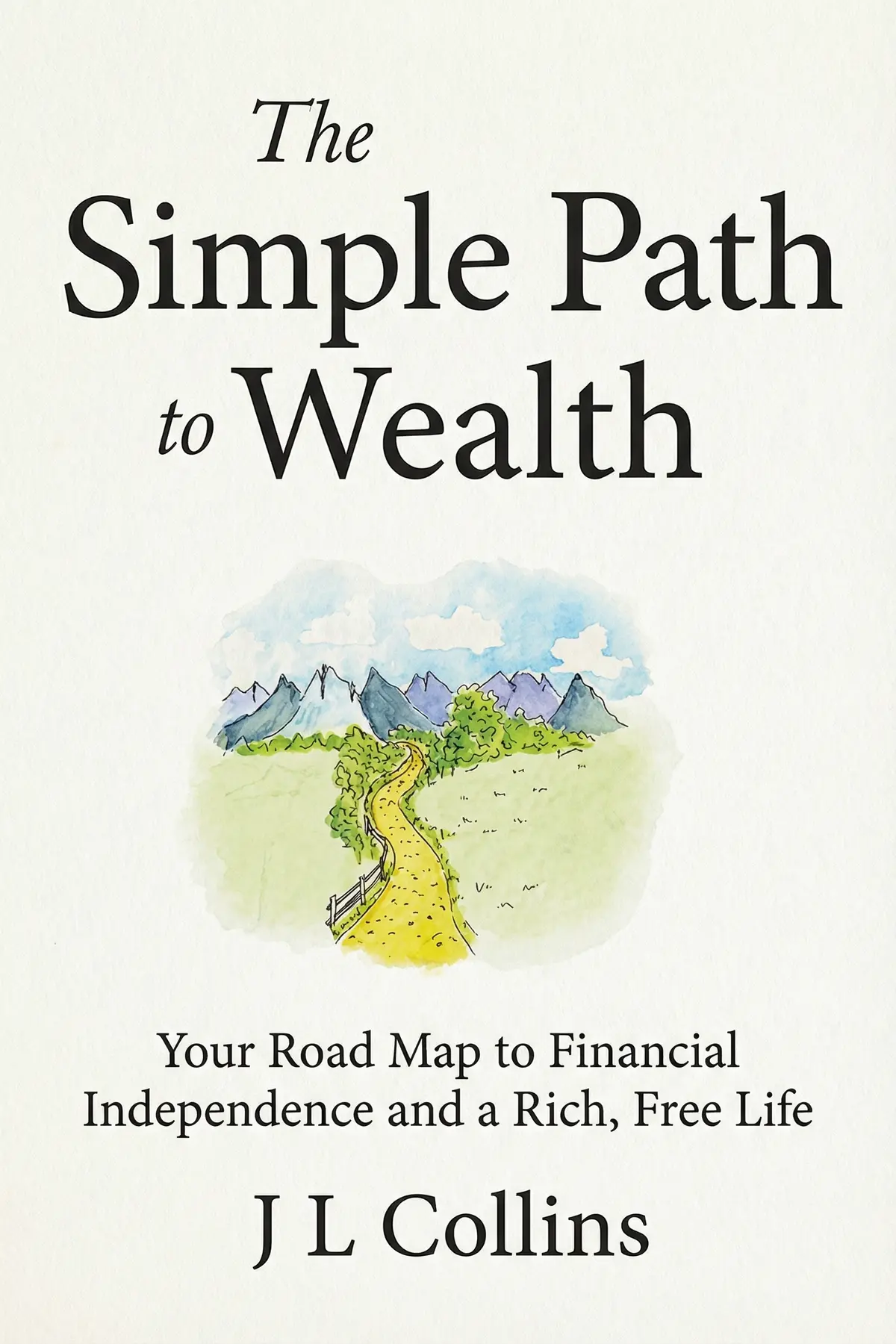
Table of Content
1. Introduction
1 min 29 sec
In a world that seems to thrive on complexity, the landscape of personal finance is no exception. We are constantly bombarded with news about the latest high-growth stocks, the newest cryptocurrency trends, and the supposedly indispensable advice of professional money managers. It’s easy to feel that if you aren’t constantly tweaking your portfolio or scouring the market for the next big thing, you’re falling behind. But what if the secret to building incredible wealth wasn’t hidden in a complex algorithm or a secret stock tip? What if the most effective way to grow your money was actually the simplest?
This is the core premise we are exploring today. We’re moving away from the noise and the frantic energy of Wall Street to look at a time-tested, straightforward approach to financial independence. This isn’t a get-rich-quick scheme; it’s a fundamental shift in how you view money, debt, and your own future. We are going to look at why a single, broad index fund can outperform a team of experts and how your mindset during a market crash determines your ultimate success.
Over the course of this summary, we will walk through a complete road map for your financial life. We’ll start with the philosophical foundation of what money is actually for, then move into the mechanics of the stock market, the specific funds that simplify your strategy, and finally, how to manage your wealth once you’ve achieved independence. The goal is to provide you with a sense of clarity and conviction, allowing you to stop worrying about the market and start living a life defined by freedom rather than financial stress. Let’s begin by defining what we’re really working toward.
2. The Philosophy of Freedom and Opportunity Cost
1 min 49 sec
Financial freedom isn’t just about a number; it’s about the autonomy to walk away from what doesn’t serve you. Discover how changing your view of money can unlock a life of total control.
3. Embracing Market Volatility as a Natural Cycle
2 min 00 sec
The stock market can feel like a roller coaster, but what if the drops were just as important as the climbs? Learn why market crashes are inevitable and how to survive them.
4. The Superiority of Broad Index Funds
1 min 44 sec
Trying to pick the next big winner is a losing game for most. Explore why a single, low-cost index fund is often the most powerful tool for building long-term wealth.
5. Building and Preserving Your Portfolio
1 min 59 sec
Your strategy should evolve as you move from working to retirement. Learn how to balance growth and stability by adjusting your asset allocation over time.
6. Identifying and Avoiding Financial Traps
2 min 01 sec
Intelligence is no shield against a bad investment or a convincing scam. Uncover the common pitfalls that can derail even the most dedicated investors.
7. The Strategic Use of Social Security
1 min 56 sec
Social Security is a cornerstone of retirement for many, but when you claim it makes a massive difference. Here is how to think about your benefits.
8. The Fulfillment of Purposeful Giving
1 min 48 sec
Wealth is a tool for impact, not just accumulation. Discover how to approach philanthropy with the same clarity and efficiency as your investments.
9. Conclusion
1 min 19 sec
As we reach the end of this journey, the throughline should be clear: complexity is your enemy, and simplicity is your greatest ally. Building wealth doesn’t require a high-frequency trading desk or a degree in advanced economics. It requires the discipline to live on less than you earn, the wisdom to invest the difference in broad index funds, and the iron will to stay the course when the rest of the world is panicking. By viewing your money as a tool for freedom rather than a vehicle for status, you unlock a level of autonomy that most people only dream of.
Remember that the market will fluctuate, the ‘experts’ will offer conflicting advice, and the world will always feel a bit uncertain. But the historical resilience of the market and the power of compounding are forces that work in your favor if you simply get out of their way. Whether you are just starting to pay off debt or you are looking at how to manage your legacy in retirement, the principles remain the same. Keep your costs low, keep your strategy simple, and keep your eyes on the ultimate prize: a rich, free life where your time is truly your own. The path is paved and the map is in your hands; all that’s left is for you to take the first step and remain consistent in your walk toward independence. Your future self will thank you for the simplicity you embrace today.
About this book
What is this book about?
The financial world often presents itself as a labyrinth of complex jargon and high-stakes gambling, but this guide strips away the confusion to reveal a remarkably simple truth: wealth is built through patience and basic index funds. It promises to lead readers toward financial independence by avoiding the pitfalls of active trading, high-fee advisors, and the emotional roller coaster of market cycles. By focusing on the power of compounding and the efficiency of total market investment vehicles, the book provides a clear road map for both the wealth-accumulation phase and the preservation phase of life. It also addresses practical retirement concerns like Social Security timing and the fulfillment found in strategic philanthropy. Ultimately, the promise is not just about having more money in the bank, but about using that wealth to buy the most precious commodity of all: your own time and freedom.
Book Information
About the Author
J L Collins
The author, J L Collins, has earned a reputation as a highly regarded writer and financial blogger. Known for a direct and clear philosophy regarding wealth creation, he provides guidance through his website, jlcollinsnh.com. His work is dedicated to assisting individuals as they manage the complexities of money management and achieve a life of freedom through straightforward investment principles.
Ratings & Reviews
Ratings at a glance
What people think
Listeners find the material exceptionally easy to grasp due to its clear, plain English style, and they value the actionable tips and direct strategy for growing wealth. The information is organized effectively, with one listener highlighting the author's ability to simplify intricate subjects. Furthermore, listeners appreciate the investment recommendations, especially the emphasis on low-fee broad-based ETFs, and view the content as a rewarding use of their time and money.
Top reviews
Sukit
Finally got around to reading this after hearing about the 'VTSAX and chill' mantra for years. Collins manages to take the absolute terror out of the stock market by explaining that crashes are just a normal part of the ride. To be fair, the book is essentially a collection of blog posts, so you’ll notice a fair amount of repetition throughout the chapters. However, that redundancy actually helps the core message stick: buy index funds and never sell. The concept of 'F-You Money' is life-changing because it shifts the focus from greed to pure freedom. I loved the plain English explanations of complex topics like the 4% withdrawal rule. It is a straightforward, no-nonsense guide that cuts through the garbage sold by high-fee financial advisors.
Show moreNim
Wow, Collins manages to turn a topic that usually bores me to tears into something actually digestible and even exciting. This isn't just about spreadsheets; it's about the psychological discipline required to build a life of independence. I've always been intimidated by the stock market, but he explains how it always recovers over the long haul in a way that actually calmed my nerves. The 'Simple Path' really is simple: ignore the noise, avoid the 'experts,' and just keep buying. I loved the directness of his writing style. It feels like he’s talking to his daughter, which makes the complex parts feel much more personal. This book is a worthwhile investment of both time and money for any young professional.
Show moreSudarat
Ever wonder why people make investing seem like rocket science when the math is actually quite basic? Collins breaks it down into a simple path: avoid debt, live on less than you make, and dump the rest into a total stock market index fund. I found his section on the 'behavioral' side of money to be just as important as the 'technical' stuff. If you can’t handle a market dip without panicking, no amount of math will save your portfolio. Not gonna lie, his tone can be a bit condescending when discussing lifestyle choices, but the results speak for themselves. This is a practical, straightforward approach to wealth building that doesn't require you to pick winning stocks. It’s about buying your freedom one share at a time.
Show moreEnd
This book should be mandatory reading for every college graduate before they sign their first employment contract. It provides a clear, plain English roadmap for achieving financial independence that anyone can follow regardless of their starting point. The author doesn't promise you'll get rich overnight, but he does promise that the stock market is the greatest wealth-building tool in history if you use it correctly. I appreciated the specific guidance on things like the withdrawal rate and the role of bonds as you age. It’s refreshing to read financial advice that isn't trying to sell you a specific product or service. Collins just wants you to have 'F-You Money' so you can live life on your own terms. Truly a life-changing perspective.
Show moreJan
Direct and unvarnished advice is hard to come by in the financial world, but that is exactly what you get here. Collins doesn't sugarcoat the fact that building wealth requires sacrifice and a high savings rate, but he makes the end goal feel incredibly attainable. I loved the simplicity of the VTSAX approach because it removes the stress of trying to pick winners or time the market. The book covers everything from insurance to taxes in a way that actually makes sense. Even if you don't agree with his 'no debt' hardline stance, the technical chapters on asset allocation are worth the price of the book alone. It’s a straightforward, practical guide that I will be recommending to all my friends and family.
Show moreElena
The chapter on debt really hit home, even if the author's tone feels a bit like a lecture from a stern grandfather at times. He has a very specific worldview—basically, if you aren't saving 50% of your income, you're doing it wrong. While that might not be realistic for everyone, the underlying math he presents is hard to argue with. I especially appreciated the focus on low-fee broad-based ETFs as the primary vehicle for wealth. My only criticism is that the book feels very self-published, with some chapters being only two pages long while others drag on. Still, the advice is practical and remarkably easy to understand compared to most dense finance books. It’s a solid roadmap for anyone who wants to stop being a slave to their paycheck.
Show morePot
Look, you don't need a PhD in finance to grasp the core concepts here, which is exactly why this book succeeds where others fail. The author emphasizes that the stock market is a powerful tool, provided you have the stomach to ignore the daily headlines. My only real gripe is that he sets up some pretty obvious strawmen, like the idea that everyone is laughing at index funds, which just isn't true anymore. Still, the technical advice on low-fee broad-based ETFs is solid and actionable for any beginner. He makes a compelling argument for a high savings rate, even suggesting 50%, which might be a stretch for some but is definitely worth aiming for. It's a quick, punchy read that removes the paralysis often caused by over-analysis.
Show moreHazel
Truth is, I was skeptical about the whole 'one-fund' approach, but Collins builds a very compelling case for total market indexing. He cuts through the jargon and explains why trying to beat the market is a fool's errand for most people. I particularly liked his advice on avoiding financial advisors who are often just salesmen in expensive suits. The book does repeat itself quite a bit, likely because it was adapted from a blog series, but that helps reinforce the most important points. One minor annoyance was the dismissal of Roth accounts for younger people, which seemed to ignore how marginal tax rates actually work. Despite that, the general strategy is probably the safest and most effective way for the average person to build long-term wealth.
Show morePaiboon
After hearing several FIRE podcasts mention J L Collins, I decided to see if the hype was justified. The book is written in a very conversational, accessible style that makes you feel like you’re getting advice from a wealthy uncle. Personally, I appreciated how he explains the mechanics of the market without drowning the reader in jargon or unnecessary spreadsheets. There is a bit of an American bias, particularly with the retirement account specifics, but the underlying principles remain robust. The focus on low fees and long-term thinking is a breath of fresh air compared to the 'get rich quick' schemes usually found in the finance section. It’s a worthwhile investment of time, though it could have been edited down since it clearly started as a blog.
Show moreIvan
As someone living in the UK, I found a massive chunk of this book completely irrelevant to my financial situation. While the core philosophy of 'spend less than you earn' is universal, the technical sections are buried in 401k and HSA talk that doesn't translate across the pond. Frankly, the dismissal of leverage also seems short-sighted if you are trying to build wealth in the near future rather than waiting until you are 70. He has a massive obsession with Vanguard and VTSAX, which isn't even accessible to many European investors. I appreciate the 'F-You Money' concept, but the delivery feels like it's coming from a very narrow perspective. It is a decent primer for Americans, but for everyone else, it’s mostly just noise with a few nuggets of wisdom buried inside.
Show moreReaders also enjoyed
Charlie Munger: The Complete Investor
Tren Griffin
Big Mistakes: The Best Investors and Their Worst Investments
Michael Batnick
AUDIO SUMMARY AVAILABLE
Listen to The Simple Path to Wealth in 15 minutes
Get the key ideas from The Simple Path to Wealth by J L Collins, plus 5,000+ more titles in English and Thai.
- 5,000+ titles
- Listen as much as you want
- 7-day free trial
- Cancel anytime







