
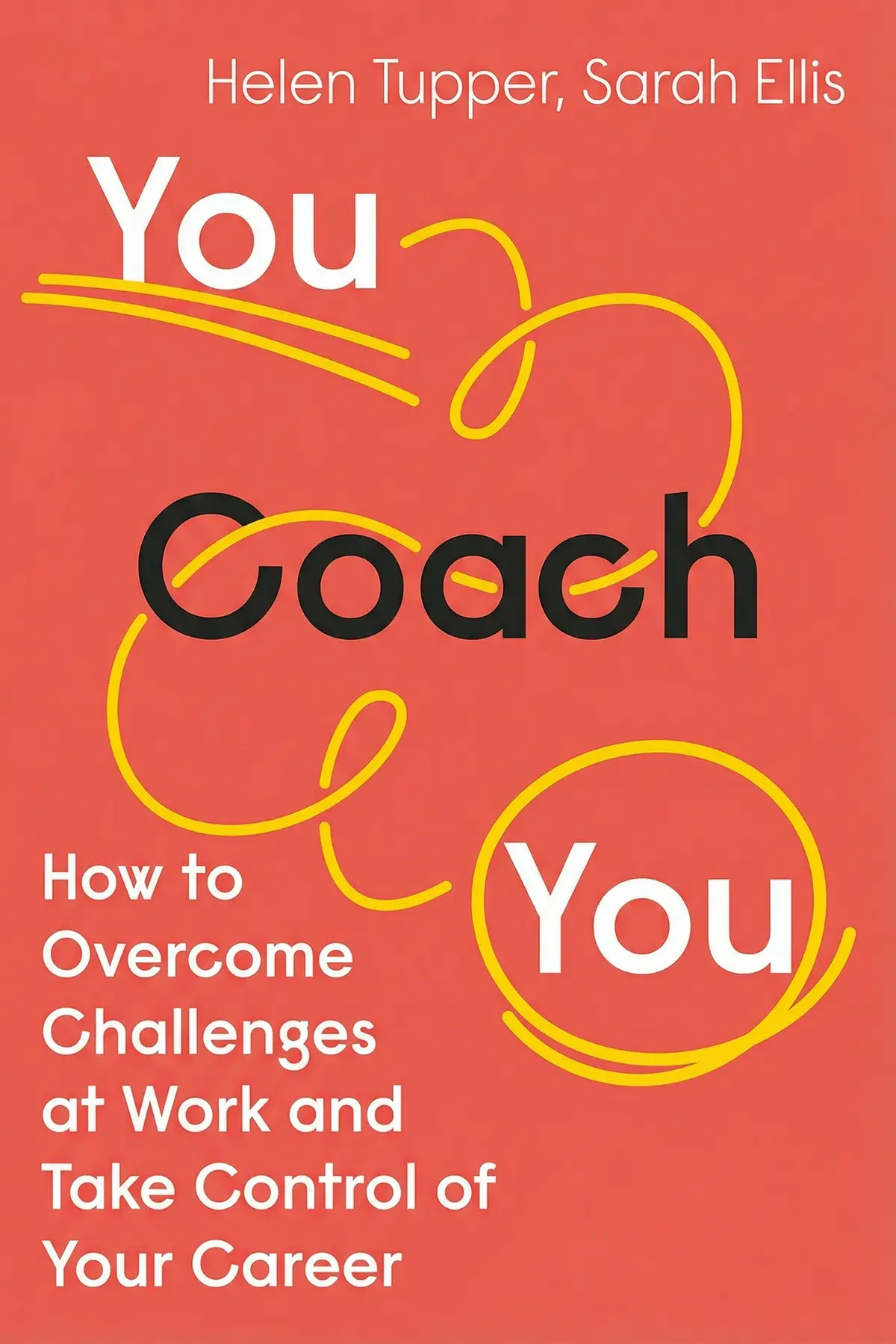
18 min 57 sec
The Squiggly Career: The No.1 Sunday Times Business Bestseller - Ditch the Ladder, Discover Opportunity, Design Your Career
Discover how to thrive in a modern professional landscape that no longer follows a straight line. This guide helps you embrace the twists and turns of a dynamic, squiggly career path.
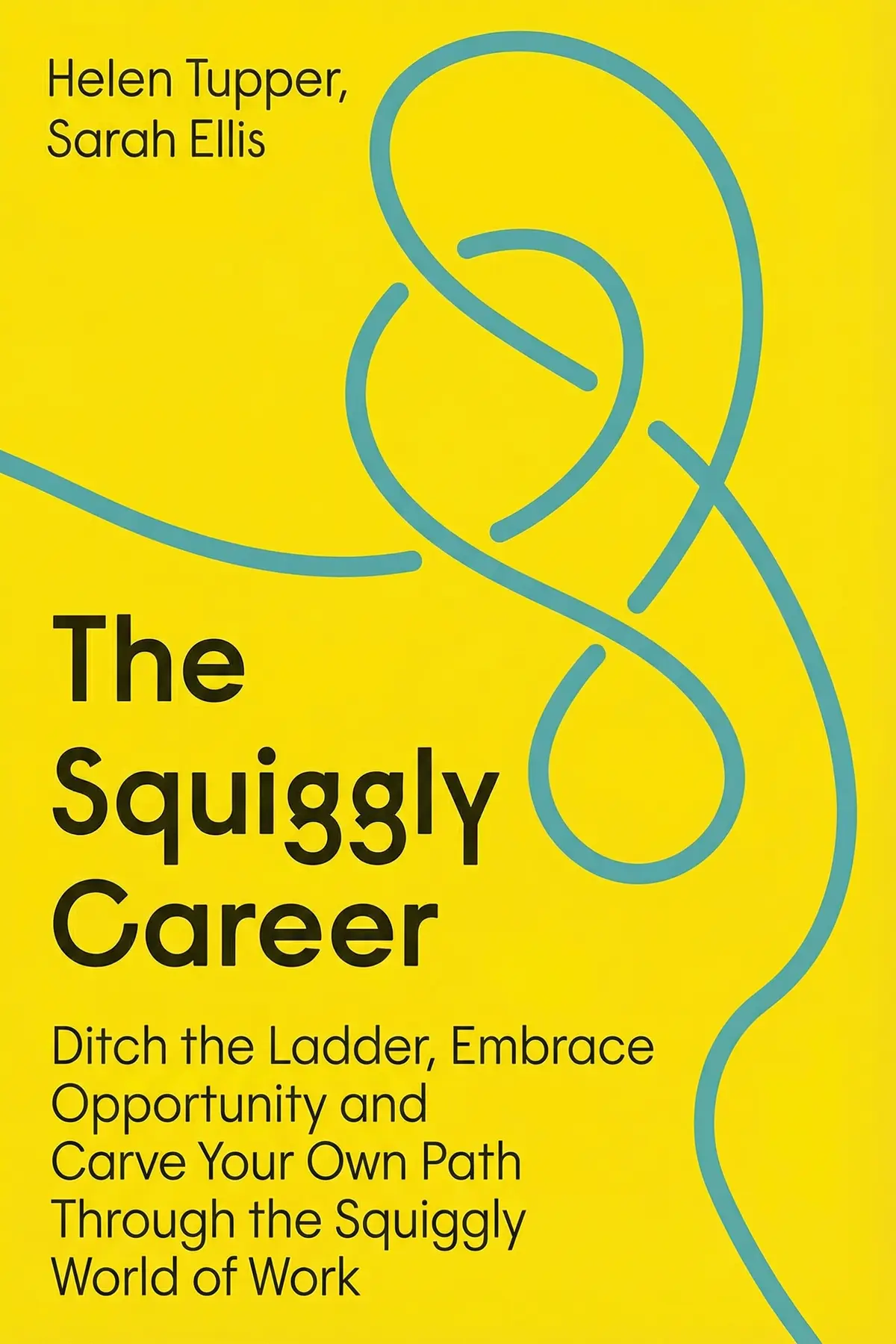
Table of Content
1. Introduction
1 min 48 sec
Think back to the career advice of previous generations. It usually involved finding a stable company, putting in the years, and slowly climbing a predictable ladder toward retirement. But if you look around today, that ladder seems to have been replaced by something much more complex and, frankly, a lot more interesting. We are living in the era of the squiggle. Our professional lives are no longer defined by a straight line, but by a series of twists, turns, and loops that can take us in directions we never anticipated.
While this lack of a clear path might feel destabilizing at first, it actually represents a massive opportunity. The rigid boundaries of the past are dissolving, allowing for more creativity, personal growth, and alignment with our individual values. However, to thrive in this environment, we need a new set of tools. We can’t rely on the old rules of corporate hierarchy to guide us anymore. Instead, we have to become the architects of our own progress. This means developing a deep understanding of what we bring to the table, what truly motivates us, and how to build a community of support that moves with us, regardless of our job title.
In the following sections, we are going to explore the five fundamental pillars that make a squiggly career successful. We will look at how to identify the unique talents that give you energy and how to root your decisions in a personal value system that acts as a compass. We will also address the internal barriers that hold us back—those pesky voices of self-doubt—and learn how to build a network that is based on meaningful exchange rather than transaction. Finally, we will talk about how to stop chasing a single, distant goal and start embracing the many different versions of your future self. By the end of this journey, you’ll see that the squiggle isn’t something to be feared; it’s a path to a more meaningful and resilient professional life.
2. The Shift from Ladders to Squiggles
2 min 43 sec
The old rules of professional growth are changing as the traditional career ladder disappears. Explore why this shift is happening and why embracing the squiggle leads to more freedom.
3. Harnessing Your Superstrengths
2 min 31 sec
Moving beyond basic competence involves identifying the unique talents that truly energize you. Learn how to spot your superstrengths and make them visible to the world.
4. Defining Your Core Values
2 min 35 sec
Discover how your personal values act as a compass in the midst of professional uncertainty. Learn to distinguish between what you think you should want and what truly matters.
5. Taming Your Confidence Gremlins
2 min 37 sec
Self-doubt can be the biggest obstacle to a fulfilling career. Explore practical techniques for identifying your inner critics and preventing them from holding you back.
6. Building a Support Network through Giving
2 min 39 sec
Forget the transactional nature of traditional networking. Discover how a community-focused approach based on mutual help can accelerate your career growth.
7. Exploring Future Possibilities
2 min 33 sec
Stop searching for the one ‘perfect’ job and start exploring multiple potential futures. Learn how to use curiosity to prototype different versions of your career.
8. Conclusion
1 min 31 sec
As we wrap up our journey through the world of the squiggly career, the most important takeaway is that you are in control. The old ladder may have been dismantled, but in its place, you have the freedom to build something much more personal and meaningful. By focusing on the five pillars we’ve discussed—your superstrengths, your values, your confidence, your network, and your future possibilities—you can turn the uncertainty of modern work into a source of strength.
Remember that finding your superstrengths is about identifying where your energy meets your impact. Once you know what these are, make them the centerpiece of your professional identity. Let your values be your non-negotiable guide, ensuring that every move you make brings you closer to a sense of integrity and purpose. When the confidence gremlins start to whisper, meet them with the facts of your own success and the courage of small actions. Build a network that is a true community, rooted in the spirit of helping others and seeking out diverse perspectives. And finally, stay curious. Don’t let the pressure of a single career goal blind you to the many wonderful possibilities that await you around the next bend in the squiggle.
The path ahead won’t always be easy, and it certainly won’t be straight. There will be setbacks, lateral moves, and moments of doubt. But those are the very things that make a career rich and rewarding. Embrace the squiggle not just as a reality to be managed, but as an adventure to be lived. You have the tools, the talent, and the agency to design a professional life that is as dynamic and resilient as you are. Now, go out there and start squiggling.
About this book
What is this book about?
The traditional concept of a career ladder—a predictable, upward climb within a single industry or organization—is becoming a relic of the past. Today, our professional lives are more accurately described as a squiggle. They are full of unexpected shifts, lateral moves, and constant learning. This shift can feel overwhelming, but it also opens up a world of possibilities for those who know how to navigate it. The Squiggly Career provides a roadmap for this new reality. It moves away from the rigid five-year plan and instead focuses on building the personal foundations necessary for long-term fulfillment and adaptability. By focusing on five core pillars—superstrengths, values, confidence, networking, and future possibilities—the book offers a practical framework for anyone looking to take control of their professional journey. Rather than waiting for a promotion to land in your lap, you will learn how to actively design a career that aligns with who you are and what you care about, regardless of how the market changes around you.
Book Information
About the Author
Helen Tupper
Helen Tupper and Sarah Ellis are the creators of Amazing If, a company dedicated to making career development accessible to everyone. Helen Tupper has a background in leadership roles at major organizations like Microsoft, Virgin, and BP, and currently serves as the CEO of Amazing If. Sarah Ellis, the company’s Chief Learning Officer, previously led marketing and corporate responsibility initiatives at Barclay’s and Sainsbury’s. Their combined experience in corporate environments and career coaching led them to co-author The Squiggly Career, their first book, which addresses the need for a more flexible approach to modern work.
Ratings & Reviews
Ratings at a glance
What people think
Listeners value the book’s uplifting take on non-traditional career progression, although views are mixed regarding the level of detail provided about future professional paths. They find the organized frameworks for discovering "super strengths" and personal values to be extremely beneficial for self-evaluation. Additionally, listeners point out that the integration of external tools like apps and podcasts enhances the experience, with one listener highlighting that the activities are particularly advantageous when getting ready for interviews or pivoting to a new position. They also feel the "confidence gremlins" concept provides a grounded and useful method for tackling insecurities on the job.
Top reviews
Jin
The concept of the 'career ladder' has always felt suffocating to me, so this was a breath of fresh air. Tupper and Ellis argue that the traditional path is dead, and in its place is a vibrant, non-linear journey that they call the 'squiggly career.' I found the exercises on identifying 'super strengths' to be incredibly illuminating because they force you to look at natural talents rather than just a list of job duties. Truth is, we spend about 90,000 hours of our lives working, so why settle for a linear path that doesn't fit? The authors provide a brilliant framework for navigating this messiness. My favorite part was the personal manifesto section, which helped me define my career DNA beyond just a job title. This book is an essential toolkit for anyone feeling stuck in the old way of thinking. It is practical, encouraging, and deeply relevant for today’s fast-moving job market.
Show moreSiraporn
Finally got around to finishing this after listening to their podcast for months, and it did not disappoint. The way Tupper and Ellis break down 'super strengths' versus 'learnt strengths' is a game-changer for how you present yourself on a CV. I used their SRI (Situation, Result, Impact) feedback framework during a recent performance review and the results were immediate. The book is packed with external resources, referencing everything from HBR articles to TED talks, which makes it feel like a curated masterclass. I especially loved the section on 'meaningful mentors' versus 'mentors of the moment.' It took the pressure off finding one single person to guide my entire life. The truth is, our careers are messy, and this book gives you the permission to embrace that chaos. It's an empowering read that shifts the power back to the employee. I’ll be buying copies for my entire team this Christmas.
Show morePetch
Wow, I wish I had read this five years ago when I was feeling guilty about my 'job-hopping' history. This book validates the idea that trying different routes actually builds a more robust and adaptable skill set. The '90,000 hours' statistic really put things into perspective for me—life is too short to be in a role that doesn't align with your values. I spent a whole weekend working through the 'values' discovery steps, and it was a revelation. It turns out that my frustration wasn't about the work itself, but about the lack of autonomy in my previous organization. The authors provide a compass, not a map, and that is exactly what a modern career requires. It’s an interactive experience, not just a passive read. If you actually do the exercises, you will get so much more out of it. It’s the most practical career book I’ve read in years.
Show moreLillian
The 'what went well & even better if' framework is something I’ve already started using with my team, and the culture shift is palpable. This isn't just a book for individuals navigating their own paths; it’s a great resource for managers who want to support their employees' growth. We are working across five generations now, and the 'squiggly' approach is the only one that makes sense for everyone from Gen Z to Baby Boomers. The authors have a gift for taking complex career theories and turning them into actionable steps. Whether it's building 'career karma' through networking or taming your confidence gremlins, the advice is always grounded in real-world application. I particularly appreciated the 'random person rule' for building curiosity. It’s such a simple way to expand your horizons. This book is a must-read for anyone who wants to stay relevant in an era of automation and constant change.
Show moreManop
Picked this up during a particularly messy transition between roles and it really helped calm my nerves. The authors do a great job of explaining why job-hopping isn't the red flag it used to be. In fact, they celebrate the adaptability that comes with a non-linear path. I spent a lot of time on the 'support solar system' exercise. It made me realize that my professional network was way too insular and needed more diversity to truly thrive. To be fair, the writing style can be a bit repetitive at times, and some of the alliteration feels forced. But the core message about taking ownership of your own development is vital. I’ve already recommended the 'what went well & even better if' feedback loop to my manager. It’s a practical, no-nonsense guide that focuses on action over theory. Definitely worth having on your shelf for interview prep or annual reviews.
Show moreMadison
As someone who has struggled with workplace anxiety, the section on 'confidence gremlins' was a total game-changer for me. Identifying the specific thoughts that hold me back allowed me to challenge them with logic rather than just feeling overwhelmed. The 3 Ds of networking—discerning, deliberate, and diverse—offered a much more manageable way to think about building relationships. I used to hate the idea of networking, but viewing it as an exchange of help makes it feel much more authentic. The writing is accessible and the tone is incredibly supportive throughout. I do wish there were more case studies from industries outside of marketing and tech, as some of the advice felt a bit specific to those worlds. Still, the core principles of self-reflection and proactive growth are universal. It helped me prepare for a recent pivot into the charity sector with much more confidence.
Show moreTakeshi
After hearing Adam Grant recommend this, I had high expectations, and for the most part, they were met. The focus on being a 'learn-it-all' rather than a 'know-it-all' is a philosophy I’ve tried to adopt, and this book provides the roadmap to do it. The distinction between 'what' and 'how' strengths was particularly useful for my latest interview prep. It allowed me to talk about my project management skills in a way that highlighted my stakeholder management and risk-spotting abilities. My only gripe is that some of the 'future skills' sections felt like they were added as an afterthought. I would have loved to see more on 'grit' and how to build it over time. Nevertheless, the 'personal manifesto' idea is something I’ll be using to keep myself focused this year. It’s a very modern take on professional development that feels grounded in reality.
Show moreNathan
Ever wonder if career advice has actually kept up with the 21st century? This book certainly tries, and while the early chapters on 'confidence gremlins' are fantastic, the later sections felt a bit thin. Personally, I found the activities for mapping out values to be the most useful part of the entire experience. It helped me realize why I was feeling so frustrated in my current role—it just didn't align with my core drivers. However, I was disappointed by the 'Future Possibilities' chapter. It promised a lot of depth but felt more like a list of prompts I could have found on a blog. Look, it's a solid read if you are early in your career or looking for a pivot. But if you’ve already read a lot of Adam Grant or Arianna Huffington, some of this might feel like familiar territory. It’s a good starting point, but perhaps not the deep dive I expected.
Show moreKai
Frankly, it’s a bit of a mixed bag for those of us further along in our careers. While the 'career ladder is gone' premise is spot on, the exercises felt geared toward people just starting out. I did enjoy the section on 'Future Possibilities,' though I agree with other reviewers that it could have used more meat. The authors suggest exploring four types of possibilities—obvious, ambitious, dream, and pivot—which is a helpful mental model. However, the execution of these ideas felt a bit rushed compared to the lengthy chapters on values. To be fair, the focus on 'curiosity, feedback, and grit' as future-proof skills is a great takeaway. It’s a quick read, and the layout is very user-friendly with plenty of space for notes. If you want a structured way to reflect on your path, it’s worth a look. Just don't expect it to provide all the answers to your mid-life career crisis.
Show moreAnna
Maybe I’m just not the target audience, but this felt like a collection of LinkedIn posts stretched into a book. While I appreciate the attempt to modernize career advice, the constant 'squiggly' terminology became grating after the third chapter. Frankly, the 'confidence gremlins' idea is cute, but it lacks the psychological depth I was hoping for in a professional development text. I found myself skimming the networking section because it felt like common sense repackaged with catchy alliteration. If you've never read a career book, this might be a goldmine, but for anyone else, it’s a bit repetitive. Not gonna lie, the tone was a bit too 'corporate cheerleader' for my taste. It kind of made me want to self-yeet rather than embrace my supposed super strengths. I was looking for grit and data, but I found mostly fluff and colored charts.
Show more
Readers also enjoyed
60 Seconds & You’re Hired!
Robin Ryan
Be A Free Range Human: Escape the 9 to 5, Create a Life You Love,
Marianne Cantwell
Be the Unicorn: 12 Data-Driven Habits That Separate the Best Leaders from the
William Vanderbloemen
AUDIO SUMMARY AVAILABLE
Listen to The Squiggly Career in 15 minutes
Get the key ideas from The Squiggly Career by Helen Tupper, plus 5,000+ more titles in English and Thai.
- 5,000+ titles
- Listen as much as you want
- 7-day free trial
- Cancel anytime







