
16 min 45 sec
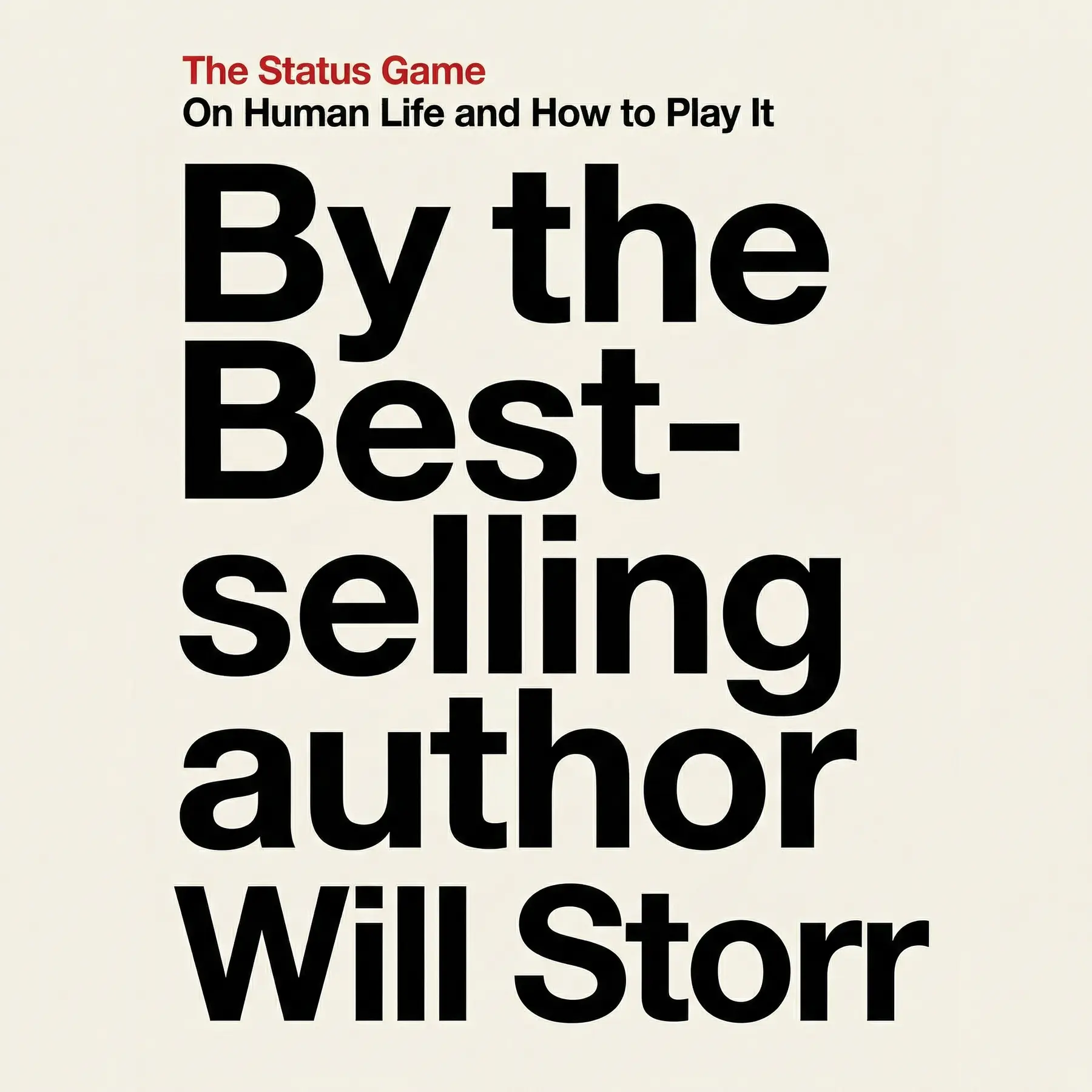
The Status Game: On Human Life and How to Play It
By Will Storr
Explore the hidden psychological mechanics that drive human behavior. This summary reveals how the universal pursuit of status shapes our identities, fuels our conflicts, and dictates the hidden rules of social success.
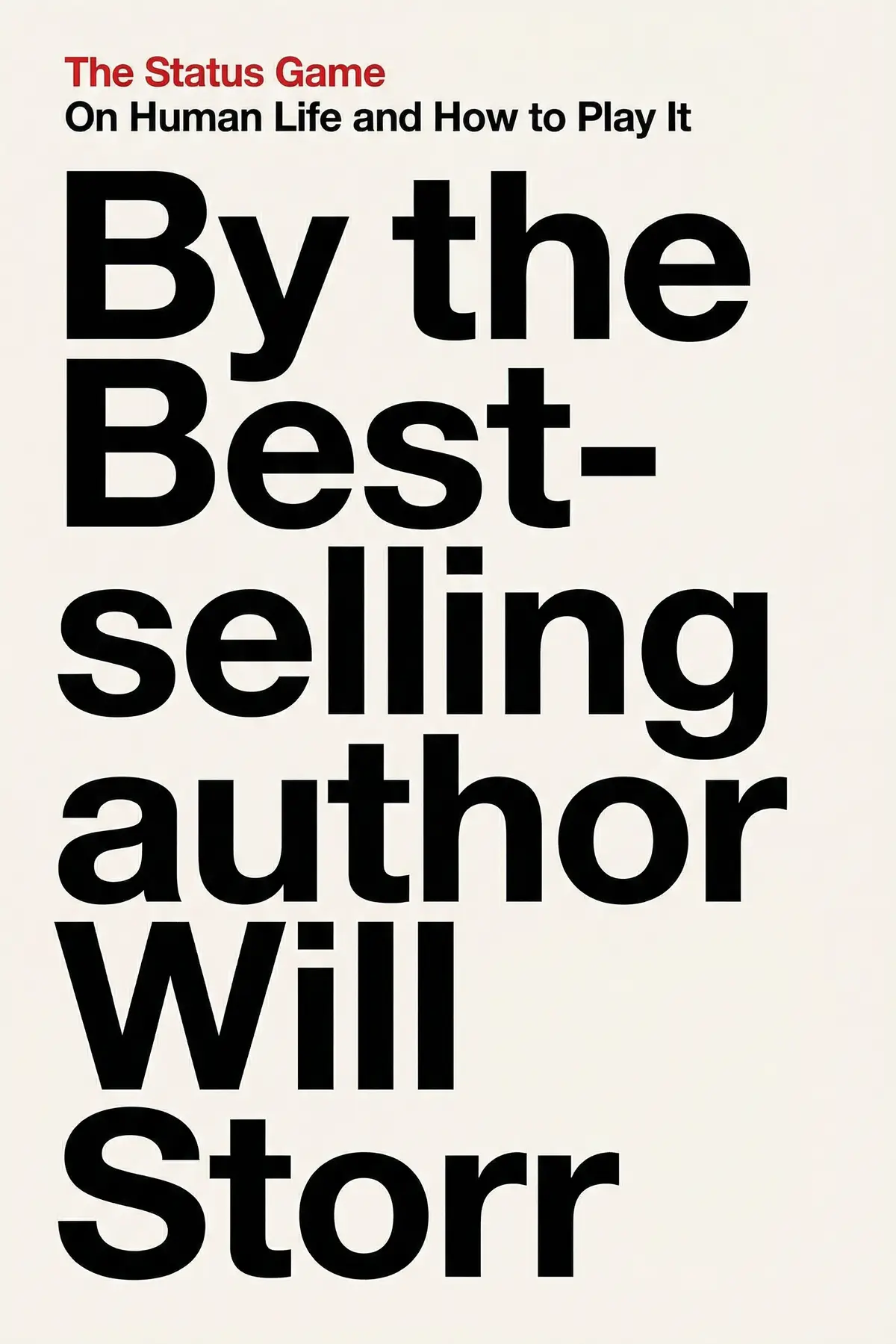
Table of Content
1. Introduction
1 min 44 sec
Imagine a room containing a stuntwoman from Eritrea, a grandmaster of chess from Slovakia, and a shaman from the Inuit community. Though they come from vastly different backgrounds, it won’t take long for a social structure to emerge. Without saying a word, they will begin to evaluate one another, subconsciously deciding who holds the most influence and who sits at the bottom of their temporary hierarchy. This isn’t just a thought experiment; it is the fundamental reality of being human. We are biological machines designed to play what we might call the status game.
From the moment we are born to the moment we die, we are deeply concerned with where we stand in the eyes of our peers. This drive is woven into our DNA, influencing everything from our career choices and the charities we support to the way we stand and the tone of our voices. We often like to think of ourselves as independent actors, free from the petty concerns of social ranking, but the truth is that our brains are constantly scanning for cues of respect, admiration, and belonging.
In this exploration of the human social drive, we will uncover the unspoken rules that govern our interactions. We will see how status functions as a kind of currency for our psychological health, and how the fear of losing it can drive individuals and entire nations toward extreme behavior. The goal isn’t necessarily to stop playing the game—because that is nearly impossible—but to learn how to play it with greater self-awareness, compassion, and skill. By understanding the mechanics of how we value one another, we can move toward a more fulfilling and less anxious way of existing in the world.
2. The Biological Imperative of Social Rank
2 min 00 sec
Discover why our brains treat social standing like a matter of life and death, and how our identities are forged in the heat of social competition.
3. The Language of Status Symbols and Rules
1 min 58 sec
Learn how everyday objects and subtle behaviors act as a secret code that signals our position to the world around us.
4. The Dynamics of Prestige and Dominance
1 min 59 sec
Explore the two distinct paths to social power: the voluntary respect of prestige and the forced compliance of dominance.
5. The Destructive Power of Humiliation
1 min 52 sec
Understand why the public loss of status is one of the most dangerous emotions in the human experience.
6. Social Media as a Status Slot Machine
1 min 54 sec
Discover how technology companies have hijacked our biological drive for rank to keep us addicted to digital approval.
7. The Path to Group Conflict and Collective Madness
1 min 56 sec
Examine how status games can escalate from personal rivalries into mass movements and international warfare.
8. How to Master the Game of Life
2 min 00 sec
Uncover practical strategies for playing the status game in a way that brings success without sacrificing your peace of mind.
9. Conclusion
1 min 22 sec
The status game is the invisible architecture of our lives. It influences our choices, our emotions, and the very way we perceive reality. We are wired to care about what others think of us because, for most of human history, our very lives depended on it. However, in the modern world, this drive can often be hijacked by technology, consumerism, and tribal politics, leading us into a cycle of constant anxiety and conflict.
By pulling back the curtain on these psychological mechanics, we gain the power to choose our path. We can recognize when we are being driven by the fear of humiliation or the lure of empty dominance. We can choose to invest our energy in prestige games—those that rely on real skill, genuine character, and the desire to help others. Most importantly, we can learn to treat others with the dignity they deserve, knowing that every person we meet is playing their own version of the same high-stakes game.
In the end, the most successful players are not necessarily those with the most wealth or the highest titles. They are the ones who use their status to build others up, who stay grounded in their own values, and who have the wisdom to know when to stop competing and start connecting. As you move forward, remember that while you are always in the game, you have the agency to decide which rules you will follow and what kind of legacy you will leave behind in the minds of your fellow players.
About this book
What is this book about?
The Status Game explores the fundamental human drive to climb social hierarchies and gain the approval of others. It argues that almost every action we take—from the clothes we wear to the careers we pursue—is an unconscious move in a never-ending quest for rank. By examining the biological and evolutionary roots of this behavior, the book explains why status is as essential to our well-being as food or shelter. Readers will learn about the three primary ways we play these games: through dominance, prestige, and virtue. The book also delves into the darker side of status, showing how humiliation and the threat of losing one's standing can lead to societal breakdown, radicalization, and even war. Ultimately, it offers a guide for navigating these social pressures with greater awareness and integrity, promising a more grounded perspective on what it means to lead a meaningful life.
Book Information
About the Author
Will Storr
Will Storr is a highly acclaimed journalist and novelist whose work often bridges the gap between psychology and storytelling. He has authored several best-selling books, including The Science of Storytelling, Selfie, and The Hunger and the Howling of Killian Lone. Throughout his distinguished career as a journalist, Storr has reported from diverse locations such as South Sudan, Uganda, Australia, and El Salvador for prestigious publications like the New York Times, the New Yorker, and the Guardian. His excellence in reporting has earned him numerous accolades, including an Amnesty International Award and an AIB Award for his documentary work with the BBC.
Ratings & Reviews
Ratings at a glance
What people think
Listeners find the work deeply perceptive and skillfully composed, with one review mentioning how it intertwines anthropology to construct history. They also characterize it as an entertaining experience that shifts one's worldview, while one listener remarks on its ability to clarify social dynamics. Listeners further value the author’s unique style, and one review notes that the closing chapter provides useful instructions for improving one's quality of life.
Top reviews
Chee
Ever wonder why people are so obsessed with keeping up with the Joneses? Storr’s deep dive into the hidden social dynamics of our lives is a complete revelation that makes you rethink every interaction you've ever had. He masterfully weaves together anthropology and history to show how we’re all playing these unconscious games of dominance, virtue, and success. The book is incredibly well-written and serves as a fun read while providing a startlingly fresh perspective on human behavior. I especially appreciated the final chapter, which offers some much-needed practical guidance for living a more grounded life in a world obsessed with rank. It is one of those rare books that actually explains why the world is the way it is.
Show moreOmar
As someone who has struggled with anxiety and feelings of inadequacy, reading this felt like someone finally handed me the rulebook for life. Storr explains that we aren't just fighting for money or power; we are fighting for the feeling of being valued by our tribe. The breakdown of the three types of games—dominance, virtue, and success—is a brilliant framework for understanding everyone from corporate CEOs to social media influencers. I found the section on 'status drunkenness' particularly insightful because it explains the bizarre, 'prima donna' behaviors we see in celebrities and politicians. This isn't just another psychology book; it’s a necessary tool for understanding yourself and your own motivations. I honestly cannot recommend it enough for anyone who feels exhausted by the constant social competition.
Show moreFatou
The chapter on the Satanic Panic alone is worth the price of admission. Storr argues that the therapists involved weren't just caught in a moral panic; they were actually gaining massive status through their public heroism. This book is a fascinating look at how our brains manufacture stories to make us feel morally superior to others. I loved how the author blended historical references with modern social media culture to show that the game hasn't changed, only the platform. It provides a new perspective on life that is both depressing and empowering at the same time. You’ll walk away from this with a much better understanding of why people act so inexplicably in groups.
Show moreCharlotte
Will Storr has a gift for taking dense academic research and turning it into a compelling narrative that reads like a thriller. I’ve read a lot of sociology books, but few manage to bridge the gap between ancient evolutionary history and the New Left/New Right divide so seamlessly. The idea that our brains are essentially hallucinatory story-machines playing games is a powerful metaphor. Not gonna lie, some of the data feels a bit aged, but the psychological truths he uncovers feel timeless. It’s well-written, punchy, and provides a much-needed lens for viewing the current state of political polarization. This is a must-read for anyone trying to navigate the complexities of modern social dynamics without losing their mind.
Show moreGun
Finally got around to reading this after hearing so much buzz, and I appreciate the author's nuanced approach to such a messy subject. Storr avoids the trap of saying status is purely 'bad' and instead shows how it can be used for prosocial behavior through success games. Truth is, the book does drag a bit in the middle sections, and I found the 'cutesy' descriptors like 'the cousins' for violent impulses a bit distracting. However, the insights into Ted Kaczynski and the unethical Harvard experiments were genuinely gripping and offered a new way to view radicalization. It’s a solid 4-star read that offers enough gems to justify the length. It definitely helped me identify some of my own instinctive behaviors that I don't fully control.
Show morePrae
What a fascinating, if slightly cynical, look at the stories we tell ourselves to feel important. The author’s contention is that we are all 'moral enforcers' in our own little worlds, using symbols to prove our worth. I listened to the audiobook, and while some chapters felt weaker than others, the overall message really stuck with me. He makes a compelling case for how humiliation can lead to a literal 'annihilation of the self,' which explains so much about modern outrage culture. My only gripe is that the distinction between status, wealth, and power felt a bit blurry at times. Still, it’s a very good book that I’ll likely return to for reference in the future.
Show moreTanyaporn
After hearing several people recommend this for months, I'm glad I finally picked it up. The concept of 'status drunkenness' alone explained so many of the 'prima donna' behaviors I see in my corporate job. It’s a very specific book that requires some patience, but the payoff in the final chapters is quite high. Storr’s advice on being an individual and questioning your own sense of moral superiority is incredibly practical for better living. Some of the chapters on the rise of the Nazis and communists felt a bit detached from the main thread, yet they were still thought-provoking. Overall, it’s an insightful look at the evolutionary reasons behind our constant need for validation. It has definitely given me plenty of food for thought regarding my own motivations.
Show moreYuwadee
This book is basically a 400-page expansion of what could have been a very punchy long-form magazine article. While I agree with the core premise that humans are status-hungry animals, the author provides way too many examples that feel like info-dumps. By the time I reached the halfway mark, I was skimming through the sixty different case studies just to find the actual point. To be fair, the research is interesting, but the informal tone and repetitive sentences made it feel a bit rushed and unpolished. I was really hoping for a deeper, more academic dive into the psychology rather than endless anecdotes about cults and killers. It is an okay read, but it definitely could have benefited from a much heavier hand in editing.
Show moreWichai
My feelings on this one are mixed because I really wanted to love it more than I did. Storr is definitely talented, but this book felt like it was struggling between being a serious academic work and a pop-psychology bestseller. The discussion on mass killers was interesting, but the author ignored the fact that Kaczynski himself denied the Harvard experiments shaped him. Frankly, it felt like the author was forcing certain historical events to fit his status-game narrative even when they didn't quite line up. I would have preferred more philosophy and fewer repetitive examples of people behaving badly. It’s interesting enough to finish, but I wouldn't call it life-changing. It’s a decent overview of human nature, but it feels a bit one-dimensional.
Show moreWatcharee
I found it incredibly hard to actually finish this one. The author spends hundreds of pages trying to prove a point that most of us already intuitively understand. Whether you call it status, money, or sex, the underlying drive for power is nothing new, and the 'master of storytelling' title feels a bit unearned here. The examples provided—like the deep dive into the Nazis—felt detached and didn't really support his specific hypothesis as strongly as he seemed to think. Look, if you’ve never read a book on behavioral psychology, you might find some gems here, but for most people, it’s a lot of fluff. It’s a very specific book that overcomplicates a very simple human instinct.
Show moreReaders also enjoyed
59 Seconds: Change Your Life in Under a Minute
Richard Wiseman
A Liberated Mind: How to Pivot Toward What Matters
Steven C. Hayes
Acting with Power: Why We Are More Powerful Than We Believe
Deborah Gruenfeld
Age of Propaganda: The Everyday Use and Abuse of Persuasion
Anthony Pratkanis
AUDIO SUMMARY AVAILABLE
Listen to The Status Game in 15 minutes
Get the key ideas from The Status Game by Will Storr, plus 5,000+ more titles in English and Thai.
- 5,000+ titles
- Listen as much as you want
- 7-day free trial
- Cancel anytime







