

17 min 33 sec
The Strength Switch: How The New Science of Strength-Based Parenting Can Help Your Child and Your Teen to Flourish
By Lea Waters
Learn how to shift your parenting focus from fixing flaws to fostering strengths, helping children develop the resilience and confidence needed to navigate the challenges of modern life effectively.
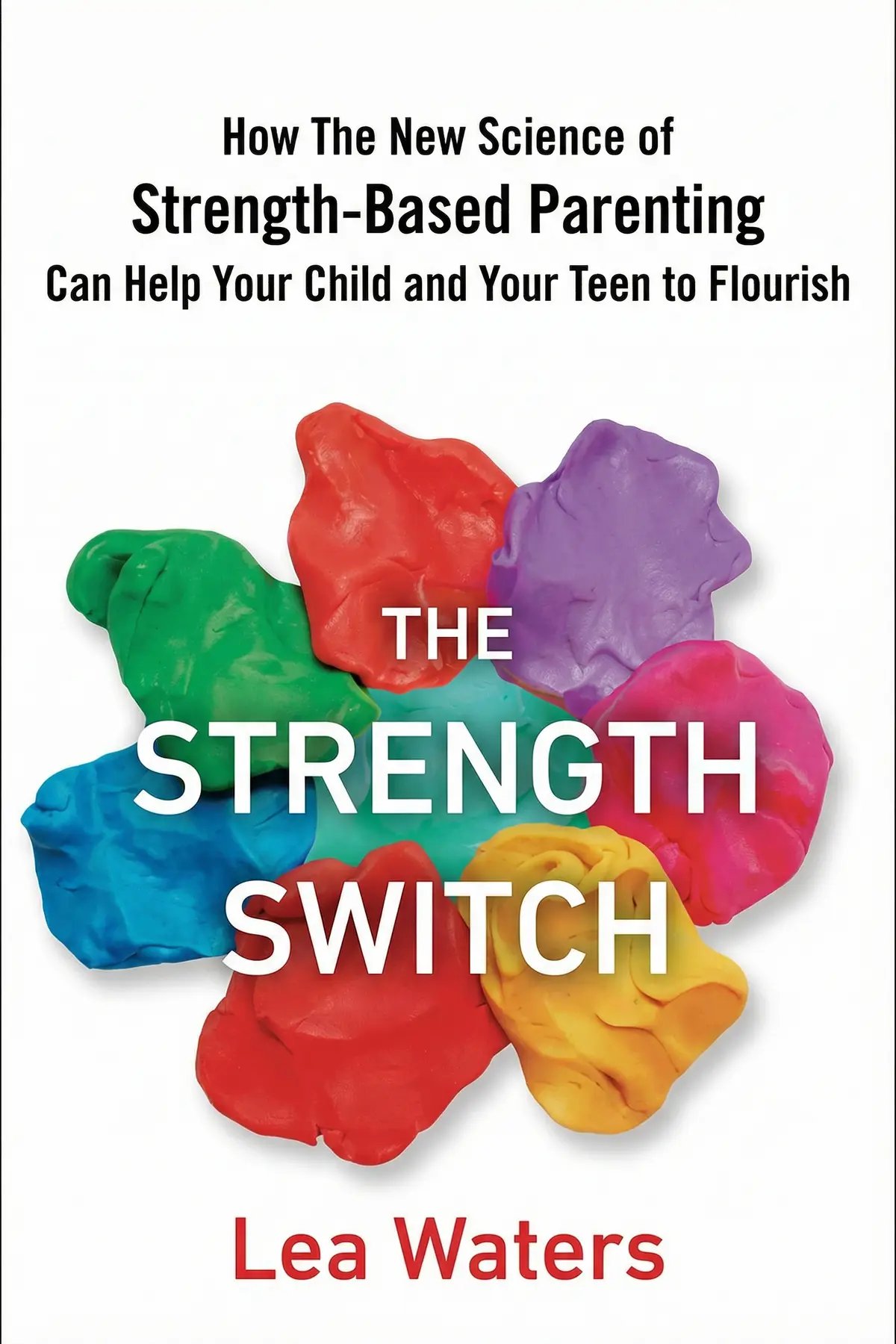
Table of Content
1. Introduction
1 min 31 sec
Every parent knows the feeling of walking into their child’s bedroom and immediately spotting the one dirty sock left on the floor, rather than the neatly made bed or the organized bookshelf. We are almost hardwired to notice the gaps, the mistakes, and the areas where our children fall short. We think that by pointing out these flaws, we are helping them improve. But what if this constant focus on fixing what’s broken is actually holding our children back from their true potential?
In our time together, we are going to explore a different way of looking at development. We’re talking about a concept called strength-based parenting. It’s a shift in perspective that allows us to see our children not as a collection of problems to be solved, but as a unique bundle of strengths waiting to be cultivated. This isn’t about ignoring reality or pretending that children don’t have weaknesses. Rather, it’s about changing the primary lens through which we view them.
When we flip the strength switch, we start to see that a child’s best qualities are actually their most powerful tools for overcoming their worst habits. We begin to understand that resilience isn’t built by hammering away at a child’s insecurities, but by fortifying the things they are already good at. Throughout this summary, we will break down how to identify these hidden strengths, how to speak about them in a way that actually resonates, and how to use this approach to handle the difficult moments of parenting with more grace and less conflict. By the end, you’ll see that parenting doesn’t have to be a constant battle against deficits; it can be a collaborative journey of discovery.
2. The Biological Root of the Negativity Bias
2 min 02 sec
Explore why our brains are naturally tuned to find faults and how this ancient survival mechanism often misleads modern parenting efforts.
3. Identifying the Three Markers of a Strength
2 min 08 sec
Learn the specific signs that reveal a child’s true strengths, distinguishing between simple skills and deep-seated natural abilities.
4. The Distinction Between Talents and Character
1 min 43 sec
Broaden your perspective by recognizing that strengths aren’t just about what a child does, but who they are as a person.
5. Moving Toward Strength-Based Praise
1 min 47 sec
Discover why generic compliments often fail and how to use specific, strength-focused feedback to truly motivate your child.
6. Using the Strength Switch During Conflict
1 min 51 sec
Learn a powerful technique for de-escalating tension and solving behavioral problems by redirecting toward a child’s positive traits.
7. Building Resilience for Life's Challenges
1 min 37 sec
Understand how focusing on strengths provides children with an internal toolkit to handle stress, failure, and the pressures of the world.
8. Transforming the Family Ecosystem
1 min 46 sec
See how a shift in focus can reduce household tension and foster deeper connections between parents and children.
9. The Importance of the Parent’s Own Strength Switch
1 min 33 sec
Recognize that to effectively nurture your child’s strengths, you must also learn to identify and value your own.
10. Conclusion
1 min 35 sec
As we wrap up our look at the principles behind the strength switch, it’s worth reflecting on how much our perspective shapes our reality. Parenting is one of the most demanding roles a person can take on, and it’s natural to fall into the trap of focusing on the problems. However, the shift toward a strength-based approach isn’t just a feel-good exercise; it’s a scientifically grounded method for fostering genuine growth and emotional health.
We’ve learned that the brain’s negativity bias is a relic of the past that we can consciously choose to override. By looking for the markers of performance, energy, and use, we can pinpoint the real engines of our children’s development. We’ve seen that character strengths like kindness and grit are just as important as technical skills, and that the way we praise can either limit a child or set them free. Perhaps most importantly, we’ve explored how the ‘switch’ can be used even in the heat of conflict to turn discipline into a moment of connection rather than a battle of wills.
The journey of a strength-based parent is one of continuous discovery. It requires patience and a willingness to look twice—to see the ‘creativity’ in the mess and the ‘leadership’ in the bossiness. It’s about building a home where strengths are the primary currency. When we focus on what is right with our children, we don’t just make them feel better in the moment; we give them the tools to build a meaningful, resilient, and successful life. So, the next time you feel that familiar urge to point out a flaw, take a breath and look for the strength instead. Flip the switch and see how the room lights up.
About this book
What is this book about?
The Strength Switch explores a transformative approach to parenting that moves away from the traditional model of correcting deficits. Instead of constantly scanning for what is wrong with a child, this methodology encourages parents to identify and nurture the inherent talents and character traits that allow a child to thrive. By understanding the psychology behind the negativity bias and learning the specific markers of a true strength, parents can change the way they communicate and discipline. The book promises a more harmonious family life and a path toward building genuine self-esteem and resilience in children, ensuring they are equipped for long-term success and emotional well-being.
Book Information
About the Author
Lea Waters
Lea Waters is a psychologist who earned her PhD at Deakin University in Australia. She has been researching for over 20 years in the field of child education. In her work as a psychologist, she has seen what effect focusing on a child’s strengths can have on child development and the well-being of the whole family. She has published a wide range of scientific articles on this subject.
Ratings & Reviews
Ratings at a glance
What people think
Listeners find this parenting book both productive and eye-opening, with one listener emphasizing the scientific foundation of positive psychology. Furthermore, the text assists in refining caregiving skills and delivers an instant effect by utilizing pragmatic strategies and concrete exercises. Additionally, listeners value how it fosters a more delightful parenting experience for both the guardian and the child.
Top reviews
Prae
The chapter on mindfulness alone changed the way I handle my toddler’s afternoon meltdowns. I never realized how much my own 'negative bias' was clouding my perception of her personality. By using the Strength Switch, I’ve started noticing her natural curiosity before I notice the mess she made on the floor. Frankly, parenting has become significantly more enjoyable for both of us since I stopped focusing solely on her weaknesses. The science behind positive psychology is explained clearly without being too academic or dry for a tired parent. I especially appreciated the VIA survey tool for identifying character strengths in older children. It feels like I finally have a roadmap for encouraging her to thrive rather than just survive the school year. This is a gem of a book and a must-read for anyone feeling overwhelmed by modern parenting pressures.
Show moreChon
Wow, it turns out that looking for what's right with my son actually makes him want to fix what's wrong on his own! Lea Waters provides a host of great strategies that go beyond the typical 'be positive' fluff found in most blogs. I loved the section on 'savoring' and how it differs from traditional mindfulness practices. The book is grounded in solid work on strengths and makes the science come alive through relatable examples. I’ve already seen a shift in how my kids interact with each other after we started sharing 'strength stories' at dinner. It is a very practical guide with realistic exercises that don't feel like a chore to implement. Choosing to focus on their potential rather than their deficits has made our home a much calmer place. If you want to raise resilient kids who know their own value, buy this book immediately.
Show morePensuda
This book provides a solid, evidence-based framework that moves beyond just being nice to your children. I’ve read a lot of parenting books, but this one actually gave me tools I could use the same day I read them. The 'Strength Switch' approach has helped me reframe my son’s ADHD as a collection of high-energy strengths that just need the right outlet. Personally, I found the section on 'free-form attention' and the importance of goofing off to be incredibly validating in our over-scheduled world. We’ve started prioritizing downtime and daydreaming, and I’ve noticed a significant drop in his anxiety levels. The science of character is fascinating and Waters explains it in a way that feels both urgent and hopeful. It’s a refreshing change from the deficit-based models that usually dominate the education system. Our family is much better off for having found this resource.
Show moreSing
Finally got around to finishing Lea Waters’ take on positive psychology in the home. The 3 Ps—Priming, Present Moment, and Postmortem—are absolute game-changers for how I handle my son’s outbursts. Instead of just reacting to the noise, I am learning to look for the 'unrealized strength' hidden beneath the frustration. To be fair, the book can feel a bit repetitive if you are already familiar with the work of Carol Dweck or Martin Seligman. However, the way Waters bridges the gap between academic theory and Tuesday morning tantrums is impressive. I found the section on 'scaffolding' particularly helpful for building my daughter's confidence in math. Even though it doesn't solve every single behavioral issue, it offers a much more constructive approach than my old habits. We are moving away from the 'what needs fixing' mindset toward a more energized way of living.
Show moreBo
As a parent who feels constantly buried under a mountain of to-do lists, this was the breath of fresh air I needed. The distinction between 'performance' and 'energy' really clicked for me during my morning commute. Just because my son is good at something doesn't mean it is a true strength if it leaves him feeling drained. The book helps develop parenting skills that have an immediate impact on the atmosphere of the home. I’ve started using 'process praise' instead of generic 'good job' comments, and the difference in his persistence is visible. My only minor complaint is that some of the exercises feel a bit unrealistic for a busy household with three kids. Still, the underlying philosophy of focusing on what is right rather than what is wrong is powerful. It has helped me dial down my own perfectionism and enjoy the chaos a little more.
Show moreOscar
Is it possible to discipline a child without causing the kind of shame that leads to depression? Waters argues that it is, and her breakdown of 'other-oriented induction' versus 'power-assertive responses' is eye-opening. I realized that my own habit of 'love withdrawal' was doing more harm than good to my daughter's self-esteem. The book offers a constructive, growth-oriented perspective that gives kids a clear idea of how to use their strengths to improve. I especially liked the five questions for diagnosing a strength breakdown, particularly the idea of an 'overused' strength. It helped me see that my son’s stubbornness is actually just his 'persistence' strength being applied in the wrong way. The writing style is accessible, though the 'switch' metaphor is a bit overplayed throughout the chapters. Overall, it’s a very enlightening read for any parent struggling with discipline.
Show moreRoydao
Ever wonder why we're so quick to spot a bad grade but so slow to notice a kid's natural kindness? The central argument here is that where our attention goes, our energy flows, and we've been flowing toward the negative for too long. Not gonna lie, I was skeptical about the 'mindset management' stuff at first, but the results speak for themselves. My kids are more willing to take risks because they know their core strengths aren't tied to a single failure. The book is comprehensive, though you might need to refer back to the charts often to keep all the terms straight. It makes parenting feel less like a series of fires to put out and more like a garden to tend. While I agree with some critics that it's a bit repetitive, the core message is too important to ignore. I’m recommending this to everyone in my playgroup.
Show moreCarlos
Look, I appreciate the deep research behind this book, but the author uses the phrase 'flick the switch' so many times it started to drive me crazy. Is it flick or flip? Regardless of the terminology, the core message about focusing on a child's talents is solid if a bit unoriginal. I have read a lot of books on parenting and didn't find anything particularly new or challenging in these pages. It serves as a great summary of current approaches, but it lacks the depth needed to solve real, gritty problems. For instance, if a kid is failing math, analyzing their 'feelings' isn't nearly as helpful as actually sitting down and doing the work. The stories about her daughter Emily felt a bit too perfect and polished for my liking. It’s a good primer for beginners, but seasoned readers of psychology might find themselves skimming the repetitive stories.
Show moreArm
After hearing so much buzz about Waters' work, I was surprised to find that much of the content felt like a summary of stuff I'd already seen elsewhere. The information on Baumrind’s parenting styles and fixed versus growth mindsets is basically standard knowledge at this point. Truth be told, the book is quite repetitive and could have been about fifty pages shorter without losing any impact. I did enjoy the discussion on the 'shadow side' of strengths, such as how curiosity can turn into intrusive questioning. That nuance was helpful, but I found myself getting bored with the constant anecdotes that all seemed to end in a perfect resolution. It’s a decent book for someone brand new to positive psychology, but it doesn't offer much for the well-read parent. It’s definitely worth a skim, but maybe not a deep study.
Show moreAim
Not what I expected from a parenting guide that claims to be a total game-changer for families. To be honest, positive psychology often feels like a bit of an 'opium' that masks real issues with a coating of happy thoughts. If you cannot face your child's weaknesses head-on, you will never make actual progress in the long run. The author seems to lack the ability to dig into the root causes of bad behavior, opting instead to paint 'rosy pictures' of the appearance of happiness. I also have serious concerns about labeling children with specific 'strengths' or 'talents' at such an early age. Labeling, even when it is positive, can create a self-limiting mindset that prevents a child from trying new things. While the intention is good, the execution feels shallow and ignores the complexity of real-world struggles. It just didn't sit right with me.
Show moreReaders also enjoyed







AUDIO SUMMARY AVAILABLE
Listen to The Strength Switch in 15 minutes
Get the key ideas from The Strength Switch by Lea Waters, plus 5,000+ more titles in English and Thai.
- 5,000+ titles
- Listen as much as you want
- 7-day free trial
- Cancel anytime







