
16 min 15 sec
The Sweet Spot: The Pleasures of Suffering and the Search For Meaning
By Paul Bloom
Discover why humans voluntarily seek out discomfort and struggle. This exploration reveals how chosen pain acts as a gateway to deeper pleasure, personal mastery, and a life rich with lasting significance.
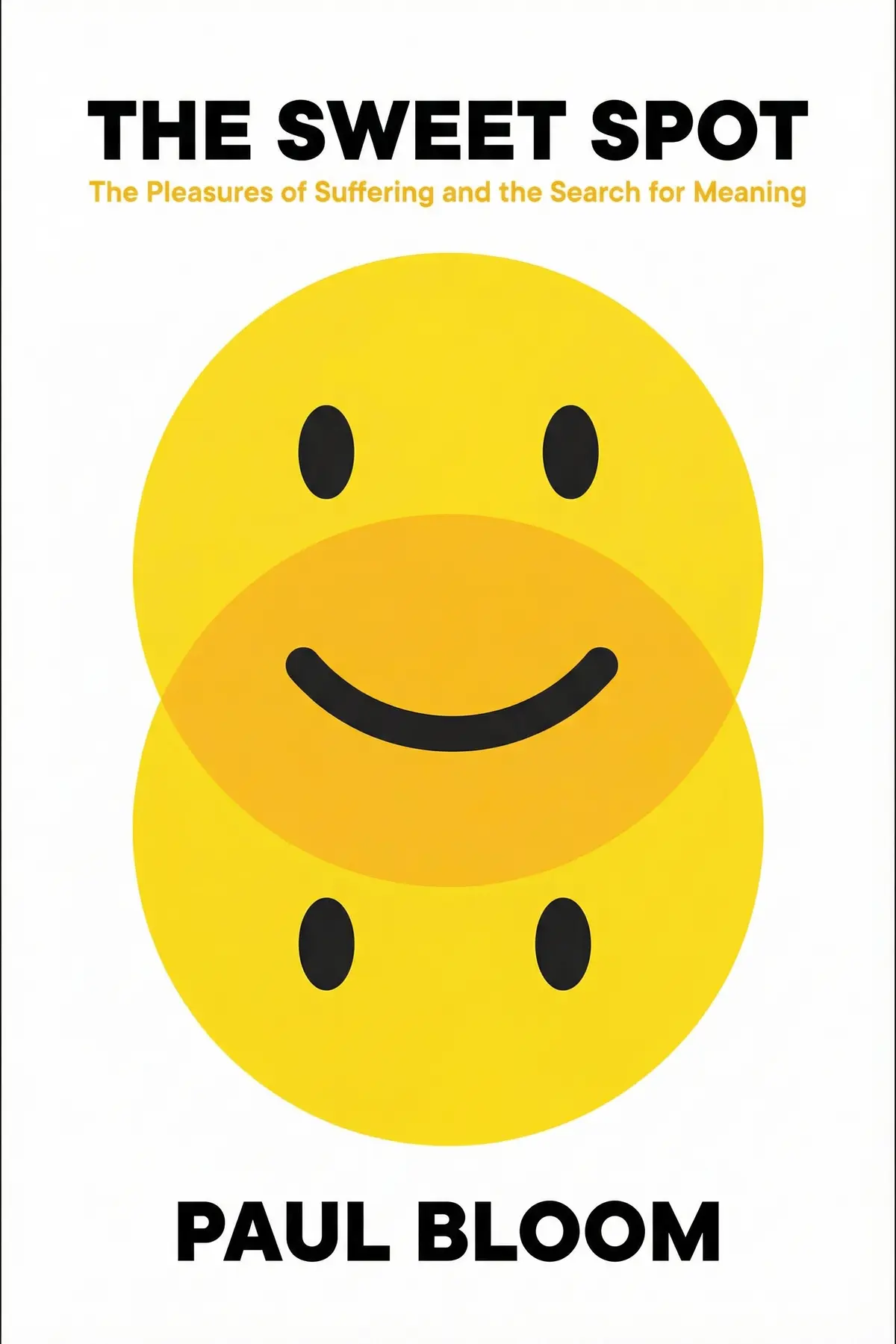
Table of Content
1. Introduction
1 min 59 sec
Think about the last time you truly enjoyed something that, on the surface, should have been unpleasant. Maybe it was the stinging heat of a spicy pepper that made your eyes water, or the grueling sensation in your muscles as you pushed through the final mile of a long run. Perhaps it was a sad movie that left you in tears, yet you walked away feeling strangely refreshed. These moments point to a fascinating paradox in the human experience: we often go out of our way to seek out discomfort. At first glance, this seems to contradict everything we think we know about biology. Most creatures spend their lives trying to avoid pain and secure safety, yet humans frequently choose the opposite path.
In this exploration, we dive into the psychological landscape of what makes life worth living. It turns out that a life dedicated solely to comfort and easy pleasure—a constant state of ‘hedonic’ happiness—is actually quite shallow and, eventually, boring. We are built for something more complex. We are built to find the ‘sweet spot’ between suffering and satisfaction. This isn’t about being a martyr or seeking out trauma; it’s about ‘chosen suffering.’ It’s the kind of difficulty we opt into because we know, deep down, it will lead us somewhere better.
We will examine why our brains are wired to appreciate contrast, how physical and mental effort can actually quiet the internal chatter of our minds, and why the most difficult roles we take on—like being a parent or pursuing a daunting career—are the ones we value most. This journey isn’t just about understanding the mechanics of pain; it’s about redefining what it means to live a flourishing life. By the end, you’ll see that the challenges you face aren’t just obstacles to your happiness; they are the very things that give your happiness its weight and your life its meaning. Let’s begin by looking at why a little bit of ‘bad’ is often necessary for a whole lot of ‘good.’
2. The Power of Contrast and Benign Masochism
2 min 55 sec
Explore why we often choose small doses of discomfort to heighten our eventual joy, using the fascinating concept of contrast to transform mundane experiences into something truly extraordinary.
3. Silencing the Self Through Intensity
3 min 07 sec
Discover how intense physical sensations and focused effort can provide a shortcut to mental peace, offering a temporary escape from the constant noise of self-criticism and anxiety.
4. The Reward of Mastery and Purposeful Effort
3 min 02 sec
Learn why the most satisfying achievements are often the most difficult, as we explore the deep psychological need to overcome obstacles and prove our own competence.
5. Meaning, Sacrifice, and the Parental Paradox
3 min 00 sec
Uncover the profound difference between daily happiness and long-term meaning, exploring why we choose roles like parenthood that bring stress but offer deep fulfillment.
6. Conclusion
2 min 12 sec
As we wrap up our journey through the ‘sweet spot’ of human experience, it’s worth reflecting on what actually constitutes a life well-lived. We have seen that the traditional view of humans as simple pleasure-seekers is incomplete. We are much more than that. We are seekers of contrast, masters of effort, and architects of meaning. The pursuit of a life without any pain or struggle is not only impossible but undesirable. It would lead to a state of stagnant boredom, where even the greatest joys would eventually lose their luster.
Instead, we can view suffering—at least the kind we choose—as a vital ingredient for a rich and vibrant existence. Through the lens of ‘benign masochism,’ we understand that small discomforts sharpen our appreciation for the good things in life. Through the concept of ‘Flow,’ we see that taxing ourselves mentally and physically can provide a much-needed escape from the anxieties of the self. And through the pursuit of mastery and meaning, we find that our greatest satisfactions often come from the hardest things we do.
To find your own ‘sweet spot,’ look at the areas of your life where you are currently struggling. Ask yourself: Is this struggle leading somewhere? Is it building a skill, deepening a connection, or serving a purpose? When we can find the narrative thread that connects our difficulties to our values, the nature of that difficulty changes. It stops being something to merely endure and starts being something to embrace.
Ultimately, a meaningful life is built on the four pillars we explored: connecting with others, making an impact, transcending loss, and weaving our experiences into a coherent story. Don’t be afraid of the ‘hard’ things. Whether it’s the burn of a workout, the stress of a big project, or the emotional weight of a deep relationship, these are the textures that make life feel real. They are the signals that you are fully inhabiting your world. By strategically choosing the right kinds of challenges, you can live a life that isn’t just comfortable, but one that is truly, deeply satisfying. Remember, the goal isn’t to avoid the sting—it’s to find the sting that is worth the honey.
About this book
What is this book about?
Have you ever wondered why we enjoy the sting of hot sauce, the exhaustion of a marathon, or the emotional toll of raising children? This summary explores the counterintuitive idea that a life of pure, unadulterated pleasure would actually be quite miserable. Instead, humans possess a deep-seated need for 'chosen suffering'—activities that are difficult, demanding, or even painful. By drawing on psychological research and philosophical insights, the text explains the 'sweet spot' where discomfort and gratification meet. It reveals how contrast enhances our enjoyment, how intense focus can silence a noisy mind, and how the hardest things we do often become the most meaningful. You will learn why true well-being isn't found in a life of ease, but in the intentional pursuit of challenges that test our limits and expand our sense of self.
Book Information
About the Author
Paul Bloom
Paul Bloom is a distinguished psychologist who currently teaches at the University of Toronto and holds the title of Brooks and Suzanne Ragen Professor Emeritus of Psychology at Yale University. He is a highly respected academic and writer whose work frequently appears in prominent publications like the New Yorker and the Atlantic. His previous books, including Just Babies and Against Empathy, have explored the complexities of human nature and morality.
Psych: The Story of the Human Mind
Paul Bloom
Ratings & Reviews
Ratings at a glance
What people think
Listeners find the book quite accessible and enjoy the author's writing style. They also value the shared insights, with one listener specifically praising the helpful discussion on motivational pluralism. Additionally, listeners agree with the premise that suffering brings meaning to human existence. However, the length of the ideas receives mixed reactions, as several listeners observe that there are no ground-breaking novel ideas.
Top reviews
Akira
Ever wonder why we choose to eat food that burns our mouths or watch movies that make us jump out of our seats? Bloom tackles these questions with a perfect blend of philosophy and cognitive science. The concept of 'benign masochism' is fascinating. It explains why we seek out these controlled bursts of pain to escape the boredom of a perfectly comfortable existence. The book argues that suffering is the secret ingredient to a meaningful life, and I have to say, I'm convinced. The chapter comparing Batman’s struggle to someone just building infrastructure was a brilliant way to illustrate why we are drawn to conflict. It's thought-provoking and written with a humble, gentle tone that invites reflection rather than preaching. I couldn't put it down.
Show moreKek
As someone who has always felt that a bit of struggle makes the reward sweeter, this book resonated deeply with me. Bloom argues that we aren't just pleasure-seekers; we are meaning-seekers, and meaning often requires pain. Whether it’s the physical exhaustion of a marathon or the emotional toll of raising children, these 'unfavorable conditions' are what give our lives texture. The writing is incredibly clear and avoids the jargon that usually bogs down psychology books. I especially appreciated the balanced perspective on how suffering can signal a cry for help or foster a sense of mastery. It’s a bold, contrarian take in a world that tells us to avoid discomfort at all costs. This book is a much-needed reminder that the 'sweet spot' of life is found in the struggle.
Show moreSuthee
After reading 'Against Empathy,' I was excited to see what Bloom would do next, and 'The Sweet Spot' did not disappoint. It’s an insanely good look at the human condition. Why do we intentionally put ourselves through hell? Bloom answers this by looking at everything from religious rituals to the 'benign masochism' of a hot bath. He shows that a life of pure ease would actually be quite miserable and boring. The book is short but packs a punch, forcing you to reflect on your own choices and what truly brings you satisfaction. It’s a beautiful blend of scientific research and philosophical inquiry. This is the kind of book that stays with you long after you close the cover, changing the way you view every little discomfort in your life.
Show morePetch
Finally got around to reading this and I was floored by the insights. Bloom is bold enough to argue that we actually *need* pain to be happy. It sounds like a contradiction, but he lays out the evidence so clearly that it’s hard to disagree. The way he discusses how struggle generates meaning really helped me reframe some of the harder parts of my own life. I appreciated that he didn't just stick to dry data but used examples from Batman to high-level philosophy. The book is succinct, punchy, and incredibly relevant in today's comfort-obsessed culture. It’s easily one of the most thought-provoking things I’ve read all year. If you want to understand why we are the way we are, read this book.
Show moreYuwadee
Paul Bloom has a gift for making dense psychological concepts feel approachable and even fun. In this book, he explores 'motivational pluralism,' the idea that humans don't just chase cheap thrills but actually crave a bit of a struggle to feel alive. I found the sections on how suffering provides a necessary contrast to pleasure particularly enlightening. For example, the relief of cold water after spicy food makes the pleasure so much sharper. While some of the theories on meaning felt like they were treading familiar ground from Viktor Frankl, Bloom’s writing is so lucid that I didn't mind the overlap. It is a quick, engaging read that definitely makes you rethink your own pursuit of a well-lived life. Some parts in the middle felt slightly repetitive, but the overall message about the necessity of struggle is quite poignant.
Show moreMalee
The chapter on why we find fictional evil so compelling was worth the price of the book alone. Bloom makes a great point: we don't want stories about people building institutions; we want the struggle of a hero against a villain. This 'motivational pluralism' explains so much about our obsession with grim fiction. While the book is a bit light on brand-new scientific breakthroughs, it does a fantastic job of synthesizing different fields like literary theory and moral psychology. My only real gripe is that it occasionally loses focus in the middle chapters. However, Bloom’s ability to draw from so many different disciplines makes it an edifying read. It’s a great addition to his previous work on empathy and morality.
Show moreSofia
Picked this up after hearing a podcast interview with the author and I have mixed feelings. On one hand, it’s a very solid primer on the psychology of suffering and pleasure. On the other hand, it doesn't offer many truly surprising revelations for anyone who has studied psychology before. Bloom references Frankl and Csikszentmihalyi constantly, which is fine, but it makes the book feel less like a new work and more like a summary of existing literature. I did enjoy the discussion on how chosen suffering helps us stay in the moment and distracts from daily anxieties. It’s an easy read, but it lacks the punch I was hoping for. Still, if you are new to the subject, this is a decent place to start.
Show moreThitiwan
Not what I expected from a scholar of Bloom's reputation. This book felt more like a collection of every interesting anecdote or study the author has ever come across rather than a cohesive, groundbreaking theory. To be fair, the writing style is easy to digest, but the lack of original insight is glaring. Much of the heavy lifting regarding the search for meaning is borrowed directly from 'Flow' or 'Man’s Search for Meaning.' If you’ve already read those classics, you won’t find much new here to chew on. It felt like another generic addition to the happiness industry’s pile of garbage, full of vague hypotheses that don’t quite land. I was looking for a deep dive into the human condition, but instead, I got a shallow survey of things I’d already seen on social media.
Show moreSuthinee
Truth is, I found the core argument about suffering being a means to maximize pleasure to be a bit circular. If we only choose to suffer because the 'contrast' makes us feel better later, aren't we still just pursuing pleasure? It feels like the author is trying too hard to create a new category that doesn't really exist. The book also tends to gloss over the darker, unchosen realities of human existence in favor of talking about horror movies and spicy food. This makes the 'search for meaning' aspect feel a bit shaky and shallow. While it’s written in a very accessible way, the lack of a fresh perspective left me feeling bored. It’s a fast read, but not a very substantial one.
Show moreWoravit
Frankly, this was a massive disappointment. The author spends hundreds of pages trying to prove a very thin hypothesis with random anecdotes about BDSM and hot baths. It felt incredibly disjointed. Every two paragraphs, there’s a new expert or a new study cited, which makes the narrative flow feel choppy and underdeveloped. Some of the arguments about finding meaning in tragedy felt uncomfortably close to toxic positivity. It shies away from acknowledging that some suffering is just pure, unredeemable horror that no one would ever choose. Calling this a 'search for meaning' is a stretch when it mostly feels like a superficial look at why we like spicy food. I struggled to finish it and wouldn't recommend it to anyone looking for actual depth.
Show moreReaders also enjoyed
59 Seconds: Change Your Life in Under a Minute
Richard Wiseman
A Liberated Mind: How to Pivot Toward What Matters
Steven C. Hayes
Acting with Power: Why We Are More Powerful Than We Believe
Deborah Gruenfeld
Age of Propaganda: The Everyday Use and Abuse of Persuasion
Anthony Pratkanis
AUDIO SUMMARY AVAILABLE
Listen to The Sweet Spot in 15 minutes
Get the key ideas from The Sweet Spot by Paul Bloom, plus 5,000+ more titles in English and Thai.
- 5,000+ titles
- Listen as much as you want
- 7-day free trial
- Cancel anytime







