
14 min 42 sec
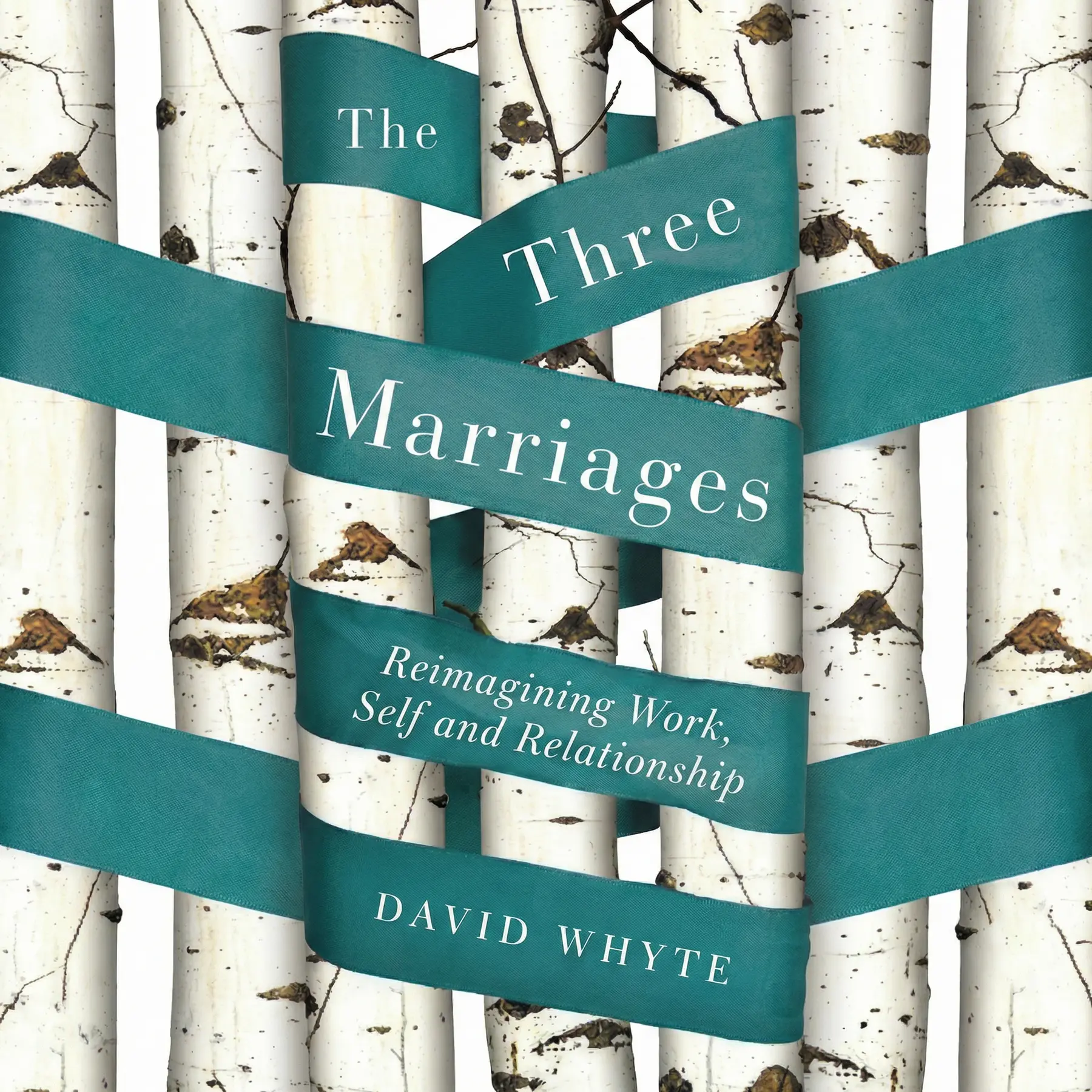
The Three Marriages: Reimagining Work, Self and Relationship
By David Whyte
Explore a holistic approach to life through the lens of three fundamental commitments: to your work, your loved ones, and your own internal development for a more unified existence.
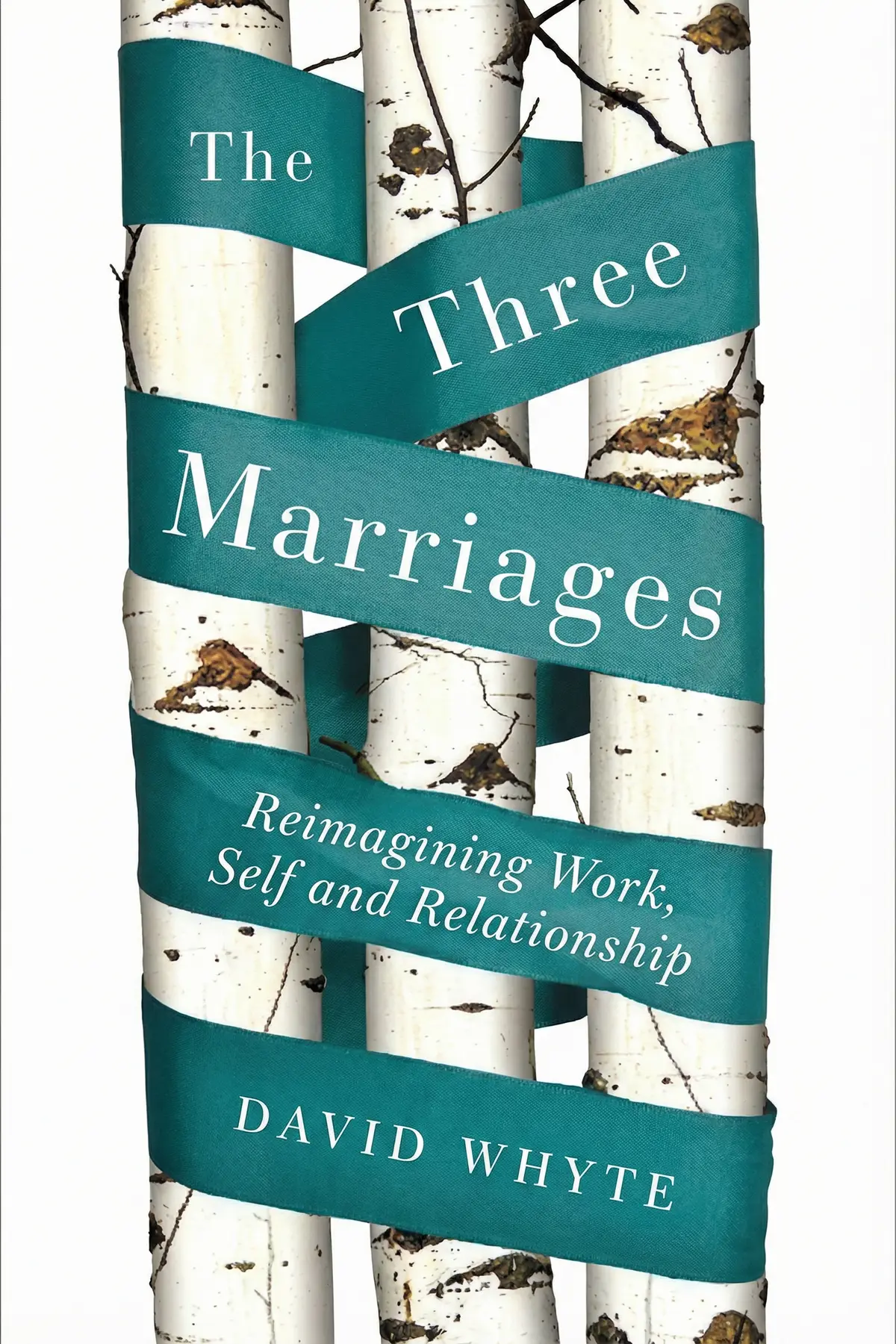
Table of Content
1. Introduction
2 min 02 sec
In the modern world, we often find ourselves caught in a perpetual tug-of-war. We are told to strive for work-life balance, a phrase that suggests we are constantly standing on a tightrope, trying to keep our professional ambitions from tipping us too far in one direction while our personal needs pull us in another. But what if this very concept of balance is the source of our exhaustion rather than the solution?
David Whyte offers a different lens through which to view our journey. He suggests that we are not balancing competing interests, but rather, we are navigating three fundamental and lifelong commitments. He calls these the three marriages. There is the marriage to our work, the marriage to our significant other, and perhaps the most important but often overlooked, the marriage to ourselves.
This perspective shifts the focus from managing time to managing relationships. When we think of a marriage, we think of a deep, ongoing conversation—one that requires attention, vulnerability, and a willingness to change. By viewing our career and our inner life through this same lens of commitment, we start to see how they are not actually separate categories. Instead, they are parts of a single, unified life.
In this exploration, we will look at how these three marriages interact. We will see how a failure in our inner life can poison our professional success, and how a vibrant personal relationship can provide the grounding necessary for creative breakthroughs. The goal here is not to find a perfect, static point of equilibrium, but to learn how to keep the conversation between these three commitments alive and honest.
Through introspection and the cultivation of purpose, we can stop trying to divide ourselves into pieces and start living as a whole person. This journey is about finding clarity in the midst of complexity and understanding that our work, our loved ones, and our souls are all pulling us toward the same ultimate destination: a life lived with meaning and presence. As we move through these ideas, consider which of your own marriages is calling for your attention and how you might begin to listen to its unique demands.
2. The Inner Marriage to the Self
2 min 40 sec
Discover why the relationship you have with your own inner world is the silent foundation upon which every other aspect of your life is built.
3. The Marriage to a Significant Other
2 min 42 sec
Explore how the commitment to another person acts as a mirror, challenging our personal growth while providing a sanctuary for shared evolution.
4. The Marriage to Work and Vocation
3 min 00 sec
Understand your career as more than a paycheck, but as a vital relationship with the world that demands your full creative participation.
5. The Myth of Balance and the Reality of Integration
2 min 53 sec
Learn why trying to balance your life like a scale is a failing strategy and how to view your competing priorities as a single, flowing conversation.
6. Conclusion
1 min 25 sec
The journey toward a meaningful life is not about finding a destination where everything is perfectly settled. Rather, it is about staying engaged in the three marriages that define our human experience: the marriage to ourselves, the marriage to those we love, and the marriage to the work we do in the world. As David Whyte suggests, these are not three separate paths, but one singular journey of discovery.
The path forward requires a commitment to introspection and a bravery to ask the difficult questions that keep these relationships honest and vibrant. We must move away from the frantic attempt to balance our lives and instead embrace the beautiful, messy integration of our whole selves. When we recognize that our inner life, our partnerships, and our vocations are all part of the same conversation, we find a new sense of clarity and purpose.
Take a moment to reflect on your own life. Which of your three marriages has been quiet lately? Where have you been settling for balance when you could be seeking integration? By giving each of these commitments the attention they deserve, you don’t just become more productive or a better partner; you become more truly yourself. You begin to live a life that feels like it belongs to you—a life where your work, your love, and your soul are finally in harmony. Carry this perspective with you as you navigate the complexities of your daily routine, and remember that every choice you make is an opportunity to deepen the conversation with the life you were meant to live.
About this book
What is this book about?
The Three Marriages offers a profound re-examination of how we structure our lives and our priorities. Instead of viewing our professional responsibilities, our personal relationships, and our inner growth as competing interests that must be balanced on a scale, this perspective suggests they are three distinct marriages that must be nurtured simultaneously. The book promises to guide the listener toward a more integrated sense of self by moving away from the exhausting pursuit of work-life balance and toward a life of clarity and purpose. Through the practices of introspection and the art of asking the right questions, the narrative explains how these three commitments—to work, to a partner, and to the self—are actually interconnected. Neglecting one inevitably leads to the depletion of the others, while honoring one can provide the fuel needed for the rest. It is a mindful framework for anyone looking to bridge the gap between their external achievements and their internal peace.
Book Information
About the Author
David Whyte
David Whyte is an English poet renowned for bridging the gap between poetry, the art of living and business. His other non-fiction publications include Crossing The Unknown Sea and the best seller The Heart Aroused.
Ratings & Reviews
Ratings at a glance
What people think
Listeners find the work thought-provoking, with one listener mentioning it offers a deep understanding of human motivation, and they enjoy the superb poetry and high-quality prose. The book earns praise for its readability, as one listener calls it a fun read, though some others find it difficult to follow. Opinions on the language quality are varied; while one listener admires its clarity, others consider it verbose.
Top reviews
Wyatt
Whyte writes with a poet’s soul, transforming the mundane struggle of "balancing" life into a profound conversation between three distinct commitments. I loved how he reframed work and relationships not as competing forces, but as necessary marriages that shape our identity. The prose is admittedly thick, often feeling more like a long-form poem than a traditional non-fiction book, but if you take it slow, the insights are staggering. His description of the "marriage to self" as an alchemical vessel for growth hit me particularly hard. It’s a book for those who aren't looking for quick tips, but for a deeper way of existing in the world. Truly a beautiful, soul-stirring read that demands your full attention.
Show moreZoe
Picked this up during a career transition and it was exactly what I needed to hear. Whyte’s rejection of the "work-life balance" myth is a breath of fresh air. He posits that work is a constant conversation, a place to find ourselves and, occasionally, to lose ourselves. The way he describes the internal marriage to one's own soul—the silence and the vulnerability required there—gave me a new perspective on my own stagnation. It’s a dense read, packed with poetic language and deep metaphors about yaks and mountains, but it’s a fun read if you’re into introspective philosophy. It’s changed how I view my daily commitments and the vows I've made to my craft.
Show moreSomkid
The section on Rilke and the panther alone is worth the price of admission. I’ve re-read this book twice now, once eight years ago and again recently, and it hits differently every time. Whyte understands that we are not stationary entities; we are constantly being "reduced, dissolved, and reformed" by our commitments. The idea that a marriage—whether to a person or a craft—is "creatively destructive" of our old identities is the most honest thing I’ve ever read about long-term commitment. It isn't always a dramatic arc, but a series of moments of putting one foot in front of the other. This is essential reading for anyone serious about their inner life.
Show moreTak
The core concept here is brilliant: that we are essentially married to our work, our partners, and ourselves simultaneously. Whyte argues that trying to "balance" these is a boring, stagnant goal; instead, we should let them speak to and enliven one another. I found the marriage to the self to be the most compelling section, especially the idea that we must remain "equal to the invitation" life offers. My only real gripe is his occasional gender essentialism. His take on Jane Austen—suggesting she couldn't have written her books if she'd married—felt narrow-minded and dismissive of the collective impact of millions of anonymous women. Still, the philosophical depth and the fabulous poetry segments make this a worthwhile investment of time.
Show moreJin
Is it possible for a book to be both profound and incredibly frustrating? David Whyte is clearly a genius when it comes to language, but this book wanders through so many digressions that I lost the thread constantly. He relies heavily on the biographies of Dickens and Stevenson to prove his points, but those examples felt forced in a modern context. I didn’t recognize my own experience in his descriptions of how men "leap" while women "discuss." It felt a bit like being lectured by a well-meaning but out-of-touch uncle. There is wisdom buried in the density, however, and you have to be willing to dig through the fluff to find the "burning bush" moments.
Show moreLaor
Finally finished this 350-page journey and I’m still chewing on the metaphors. The central thesis—that we must give ourselves fully to three non-negotiable marriages—is a game changer for anyone feeling burnt out. I especially loved the story of Rilke and the panther; the idea of "becoming the bars" to break through a creative block is something I’ll carry with me. My only real complaint is that the structure is quite rambling and unstructured. If you’re looking for a linear "how-to" guide, stay away. This is a book for meandering, for thinking, and for sitting with uncomfortable questions about your own path and how you show up for others.
Show moreMarasri
Ever wonder if your work is actually a relationship rather than just a paycheck? That’s the question Whyte explores with such elegance and patience. I’ve read a lot of self-help, but this feels different—it’s more like a spiritual apprenticeship. He treats the reader with respect, though he does get a bit carried away with his own stories of trekking in Tibet. Sometimes the people he meets there feel more like props for his enlightenment than actual humans. However, the insights on "original innocence" in our youth were breathtakingly beautiful. It’s a slow burn, but the payoff is a much deeper understanding of human motivation and the courage required to recommit to our paths.
Show moreNatnicha
Frankly, I struggled with the gender roles presented in these pages. Whyte is a marvelous speaker, but his writing here often leans into "men are the adventurers, women are the objects to be won" territory. Even the story of Stevenson and Fanny Osbourne felt intentionally old-fashioned in a way that didn't resonate with me as a modern woman. Beyond that, the book is incredibly repetitive. He takes ten sentences to say what could be said in two. I appreciated the segments of his own poetry scattered throughout, which were much more direct and impactful than the surrounding prose. It’s a thoughtful book, but the verbal density makes it a difficult recommendation for everyone.
Show moreAurora
Look, this isn't your standard self-help manual, and that's both its strength and its downfall. On one hand, the writing is gorgeous and evocative. On the other, it’s often so vague that the points waft away like smoke from a yak-butter candle. I didn't care for his views on Jane Austen, and I think he over-dramatizes the creative process as some grand, peak-and-valley arc when it's often just boring, daily work. While I enjoyed the "marriage of marriages" concept, the actual execution felt solipsistic at times. I’d recommend his poetry collections over this prose work if you want the "meat" without the 350 pages of digression and gender essentialism.
Show moreCholada
After hearing David on a podcast, I went in with high expectations, but I found the actual reading experience to be a complete slog. While his poetry is undeniably sharp, his prose here is buried under what I can only call "verbal wool." I constantly found myself re-reading paragraphs three or four times just to find the point, only to realize my mind had wandered again. There are gems here—the idea that work and life aren't separate is powerful—but the editing was non-existent. He spends dozens of pages on historical anecdotes like Robert Louis Stevenson that felt antiquated and, frankly, patronizing toward women. It’s easily 150 pages too long and feels like an exercise in narcissism. If you want his wisdom, just stick to his poetry.
Show moreReaders also enjoyed
Abundance: The Inner Path to Wealth
Deepak Chopra
59 Seconds: Change Your Life in Under a Minute
Richard Wiseman
A Guide to the Good Life: The Ancient Art of Stoic Joy
William B. Irvine
AUDIO SUMMARY AVAILABLE
Listen to The Three Marriages in 15 minutes
Get the key ideas from The Three Marriages by David Whyte, plus 5,000+ more titles in English and Thai.
- 5,000+ titles
- Listen as much as you want
- 7-day free trial
- Cancel anytime







