Battle Hymn of the Tiger Mother
Amy Chua
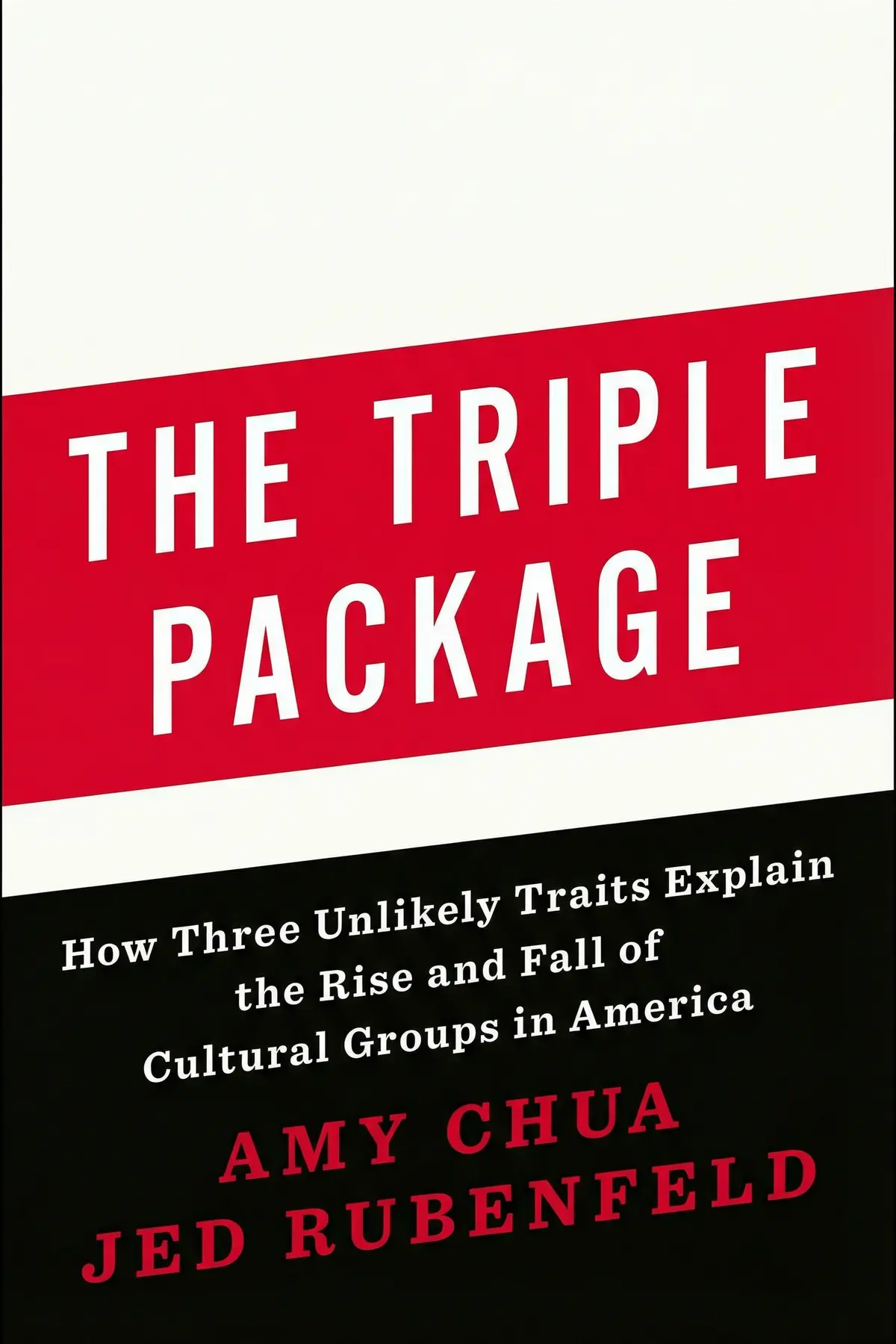
The Triple Package examines why certain cultural groups in America consistently outperform others. It identifies three specific psychological traits—superiority, insecurity, and impulse control—that create a unique, powerful drive for success and social mobility.
1 min 47 sec
Why is it that specific, often small, cultural groups in the United States seem to achieve a disproportionate amount of wealth, influence, and recognition? If you look at the statistics, the gaps are hard to ignore. For example, the Jewish community represents a tiny fraction of the global population, yet they claim roughly one-fifth of all Nobel Prizes. Similarly, groups like Mormons have transformed from marginalized outsiders into some of the most powerful figures in American business and politics. Is this a matter of luck, or is something deeper at work?
In this exploration of The Triple Package, we dive into the research of Amy Chua and Jed Rubenfeld to understand the hidden cultural engine driving these anomalies. They argue that the secret to this outsized success isn’t found in a group’s genetics or even the specific tenets of their faith. Instead, it lies in a specific combination of three cultural traits: a superiority complex, a sense of insecurity, and high impulse control. Individually, these traits are often viewed negatively in modern psychology or social circles. Yet, when they converge within a community, they create a potent formula for social and economic mobility.
Throughout this summary, we will look at how these three forces function together to push individuals toward the top of their fields. We’ll examine the tension between feeling special and feeling inadequate, and how the ability to delay gratification serves as the ultimate tool for long-term achievement. We will also touch upon the downsides of this high-pressure lifestyle—including the psychological toll it takes on the individual—and why these traits often fade as groups assimilate into the broader American culture. By the end, you’ll have a new perspective on why some people thrive and what it might mean for the future of the American identity.
2 min 33 sec
Certain groups in America consistently reach the top of the economic and social ladder, challenging our assumptions about how success is really achieved in a modern society.
2 min 35 sec
Believing your group is inherently special provides a protective shield against outside criticism, but it also creates an internal demand for excellence.
2 min 33 sec
While it seems counterintuitive, a persistent feeling of being ‘not good enough’ is a primary driver for those at the top of their game.
2 min 31 sec
Impulse control is the quiet engine that converts cultural ambition into tangible results, allowing individuals to endure short-term pain for long-term gain.
2 min 32 sec
It is the specific interaction between confidence, doubt, and discipline that creates an unstoppable momentum, far more powerful than any single trait.
2 min 40 sec
As groups integrate into the broader American culture, the very traits that drove their initial rise often begin to erode, leading to a decline in achievement.
2 min 30 sec
Success at this level is never free; it often comes at the cost of personal happiness, mental health, and a narrowed perspective on life.
2 min 29 sec
The United States was once a Triple Package nation itself, and its current struggle may be tied to the loss of those driving cultural forces.
1 min 35 sec
The Triple Package provides a provocative and often uncomfortable mirror to our ideas about success. It suggests that the path to the top isn’t paved with the things we usually celebrate, like high self-esteem and a balanced life. Instead, it is often driven by a volatile mixture of pride, fear, and relentless self-denial. We’ve seen how this combination works to propel specific groups—from Mormons to Indian immigrants—to the heights of American society, and we’ve seen the psychological and social costs that come with that climb.
The throughline of this exploration is that culture is a far more powerful engine of destiny than we often acknowledge. The ‘Triple Package’ isn’t a biological trait; it’s a set of psychological tools that any group, or even any individual, can technically adopt. However, doing so requires a difficult trade-off. It means trading comfort for striving and immediate happiness for long-term status.
As you reflect on these ideas, consider the balance in your own life and the values you pass on. While we might not want to live in a state of perpetual insecurity, there is a middle ground. We can find ways to instill discipline and a sense of purpose without sacrificing mental health. The ultimate lesson of Chua and Rubenfeld’s work is that success is a choice—not just an individual one, but a cultural one. By understanding the forces of superiority, insecurity, and impulse control, we gain the power to consciously decide which drivers we want to use to shape our future.
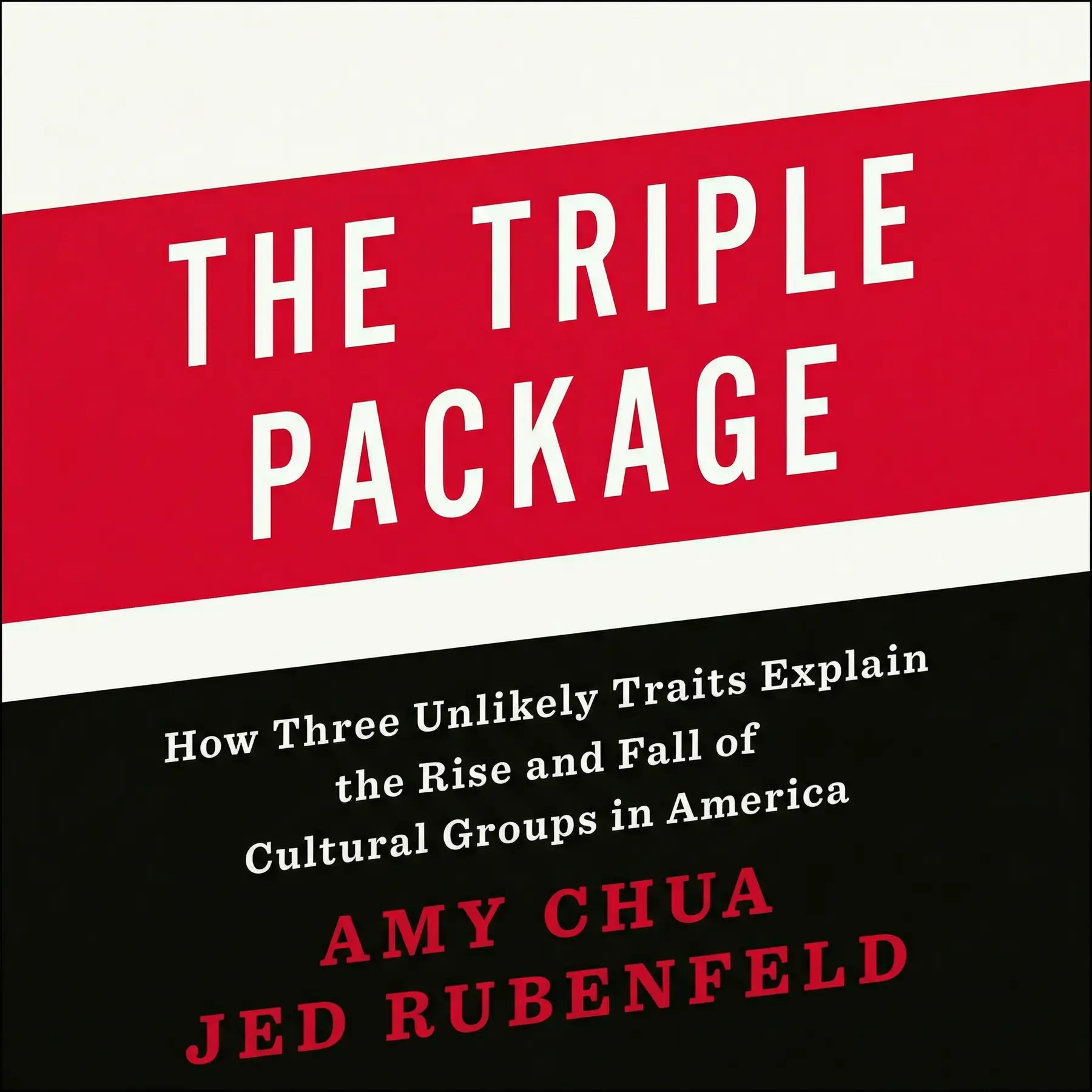
Have you ever wondered why certain ethnic and religious groups seem to possess an almost unfair advantage in the pursuit of the American Dream? In The Triple Package, authors Amy Chua and Jed Rubenfeld dive into the controversial and fascinating world of cultural achievement. They move past common explanations like genetics or basic religious tenets to uncover a specific psychological engine that they call the Triple Package. This framework consists of three seemingly contradictory traits: a deep-seated belief in one’s own group superiority, a haunting sense of personal insecurity, and a rigorous capacity for impulse control. The book explores how these forces interact within groups like Mormons, Jewish Americans, and various immigrant communities to produce remarkable outcomes in income, education, and professional influence. Beyond just documenting success, the authors also examine the heavy psychological price individuals pay for this drive and how America as a whole has shifted away from these traits, potentially losing its competitive edge in the process. It is a provocative look at the hidden cultural mechanics behind achievement.
Amy Chua and Jed Rubenfeld are both distinguished professors at Yale Law School and prolific authors. Amy Chua gained international fame and sparked widespread debate with her parenting memoir, Battle Hymn of the Tiger Mother. Jed Rubenfeld is a legal scholar who has also successfully ventured into fiction, writing two acclaimed mystery novels. Together, they bring a blend of sociological insight and rigorous analysis to the study of cultural success.
Listeners find this work to be extensively researched and packed with data and case studies, resulting in a captivating and accessible experience. They also praise the stimulating subject matter, with one listener noting how it reveals nuances that disintegrate stereotypes. Additionally, the book provides a persuasive argument concerning cultural impacts and is authored in a succinct style.
The chapter on the specific success of the Mormon community blew me away with its detail and nuance. I wasn't sure what to expect given the media firestorm, but I found the 'Triple Package' framework to be a genuinely fascinating way to look at achievement. The authors argue that a combination of a superiority complex, insecurity, and impulse control creates a unique drive that is often found in immigrant groups. I especially appreciated the sections on Nigerian and Lebanese Americans, as these are groups we don't hear about nearly enough in mainstream success narratives. To be fair, some might find the bluntness of their data-driven approach a bit jarring, but I found it refreshing. It’s a fast, engaging read that uses world history and current statistics to dismantle lazy stereotypes. This book isn't about claiming one race is better than another; it's about identifying the specific cultural values that move the needle. Highly recommended for anyone who likes thinking about the 'why' behind social mobility.
Show moreCan we actually discuss cultural success without it turning into a screaming match on social media? Chua and Rubenfeld managed to write a book that is both incendiary and deeply insightful at the same time. They argue that the very traits that make us successful are often the ones that make us the most miserable, which is a brilliant paradox. The research on Asian American parenting and Jewish cultural values was especially well-referenced and respectful. Not once did I feel like they were being 'racist' as some reviewers have claimed; if anything, they are celebrating the resilience of these communities. The book reveals nuances that disintegrate common stereotypes and replaces them with a clear-eyed look at cultural values. It’s a riveting book that stays with you long after you close the cover. If you can get past the initial shock of the premise, you’ll find a very sophisticated argument about why America is losing its competitive edge. This is easily one of the most thought-provoking books I've read in years.
Show moreWow, this was a refreshing departure from the usual platitudes about 'talent' or 'luck' that you see in most success manuals. Chua and Rubenfeld have written a masterpiece that explains how culture acts as a powerful engine for social mobility. The way they break down the 'superiority/inferiority' dynamic is brilliant and explains so much about the human condition. I loved the historical deep dives into the Phoenician roots of Lebanese success and the theological foundations of Mormonism. It’s rare to find a book that is this well-researched while still being such a compelling page-turner. To be fair, it’s going to make some people defensive, but that’s usually a sign that a book is onto something important. The authors go out of their way to be edgy without being disrespectful, and I think they succeeded beautifully. This book is a must-read for anyone who wants to understand the complex tapestry of American achievement. It’s enlightening, provocative, and ultimately, a very hopeful look at what people can achieve through sheer force of will.
Show moreAs a second-generation immigrant, many of the observations about family pressure and the drive to succeed felt uncomfortably accurate. Chua and Rubenfeld hit the nail on the head when they describe the need to 'redeem' the sacrifices our parents made. The writing is concise and avoids the fluff you usually find in these types of cultural studies books. I was particularly interested in how they explained the decline of these traits by the third generation, where the insecurity fades and the drive often vanishes with it. Look, the book is controversial for a reason, but if you actually read the text, it’s far more nuanced than the headlines suggest. It’s a well-researched look at how cultural forces shape our economic outcomes in America. I did wish they had spent more time on how these traits affect mental health long-term, but as a study of material success, it’s top-tier. It definitely leaves the reader with a lot of heavy questions to think about.
Show morePicked this up during a long flight and found myself finishing it before we even touched down. The book is an absolute page-turner that challenges the way we think about the 'model minority' and other cultural tropes. I loved the section on Justice Sonia Sotomayor and how she internalized these traits despite not being part of the 'traditional' Triple Package groups. It proves that these qualities—grit, delayed gratification, and a sense of purpose—aren't exclusive to any one ethnicity. The authors do a great job of using historical anecdotes to keep the data from feeling too dry or academic. My only real gripe is that they don't question whether this version of 'success' is actually making people happy. Is a high-paying job at a law firm worth a lifetime of insecurity and self-doubt? Regardless, the book is a fascinating deep dive into the mechanics of the American Dream. It’s concise, well-written, and definitely worth a read for the perspective shift alone.
Show moreAfter hearing all the controversy, I was surprised by how much the final chapters focused on the decline of the American work ethic. The authors make a very compelling case that the 'Triple Package' is actually what built the United States in the first place. We used to be a nation defined by impulse control and a sense of exceptionalism, but we’ve traded that for instant gratification. The specific examples, like the success of the Amish or the drive of Holocaust survivors, were incredibly moving and added a lot of heart to the book. Truth is, it’s a bit of a wake-up call for anyone worried about the direction of the country. I did find the writing a bit repetitive in the middle sections, but the overall message is powerful. It’s a fascinating look at how our internal narratives dictate our external reality. Even if you don't agree with every conclusion, you can't deny the amount of research that went into this. It definitely deserves a spot on your shelf.
Show moreWhile the authors back their claims with a mountain of sociological data, I'm not entirely sold on the correlation vs causation aspect here. The thesis is simple enough: certain groups outperform others because of a specific mix of internal pride and external anxiety. It’s a compelling idea, but the book often skirts around the massive role that initial wealth and systemic support play in these success stories. I did find the discussion on impulse control and the famous marshmallow test to be quite enlightening. However, the chapter titled 'The Underside of the Triple Package' felt way too brief considering the potential psychological damage these traits can cause. Personally, I think the book is a bit lopsided, acting more as a cheerleader for grit than a balanced critique of the cost of that grit. It is definitely thought-provoking and will spark a lot of dinner-table debates, but take the conclusions with a grain of salt. It's a solid 3-star read for the research alone, even if the execution feels a bit forced.
Show moreTruth is, the book's core thesis—that a mix of pride and anxiety fuels achievement—is interesting but potentially damaging if applied blindly. On one hand, I appreciate how the authors use abundant facts and examples to support their claims about specific immigrant groups. The success of Nigerian Americans was a particularly eye-opening section that I hadn't seen covered elsewhere. On the other hand, the book feels like it’s praising a very narrow, material version of success that revolves around test scores and income. It never really asks if we should want to cultivate 'insecurity' in our children just to get them into an Ivy League school. The chapters are short and the prose is clear, making it an easy read, but it lacks a certain moral depth. In my experience, the Triple Package sounds more like a recipe for a mid-life crisis than a fulfilling life. It’s a mixed bag that offers great sociological insights but questionable life advice. Read it for the data, but maybe ignore the parenting tips.
Show moreTo be fair, I expected a rigorous academic study but what I got instead were sweeping generalizations that often ignored economic starting points. The authors seem to think that a superiority complex and impulse control can overcome any obstacle, which feels very reductive in today’s economy. I found the structure quite frustrating, with nearly a hundred pages of notes making the actual book feel much shorter and less substantial than advertised. While they mention groups like Cuban and Jewish immigrants, they often ignore the huge diversity of experience within those communities. For example, they talk about Cubans as a monolith, ignoring the vast differences between different waves of migration. The tone is often patronizing, and it feels like the authors are more interested in stoking controversy than providing real solutions for upward mobility. It was a fast read, but not necessarily a good one. I wouldn't recommend this if you're looking for a serious look at sociology or economics.
Show moreRarely have I encountered a book that felt so intentionally divisive and elitist. To start with, the actual content only takes up about two-thirds of the pages, while the rest is just a massive block of notes and citations that don't actually justify the sweeping generalizations made. The authors seem to be shouting from an ivory tower, completely ignoring the economic advantages many of these 'successful' immigrants had before even arriving in America. Frankly, calling a superiority complex and deep-seated insecurity a 'package for success' is just a way to rebrand cultural neuroses as virtues. It felt like a sensationalist attempt to make a buck by being controversial rather than providing a rigorous sociological study. I found the tone to be self-righteous and deeply unsettling, especially how it overlooks the struggles of subgroups within the very cultures it claims to celebrate. Save your money and read something that promotes unity instead of this pseudo-intellectual tripe.
Show more
Tracy Rosenthal
Jessica Valenti

Johny Pitts

bell hooks

Fay Bound Alberti

Daniel Goleman
AUDIO SUMMARY AVAILABLE
Get the key ideas from The Triple Package by Amy Chua, plus 5,000+ more titles in English and Thai.