Battle Hymn of the Tiger Mother
Amy Chua
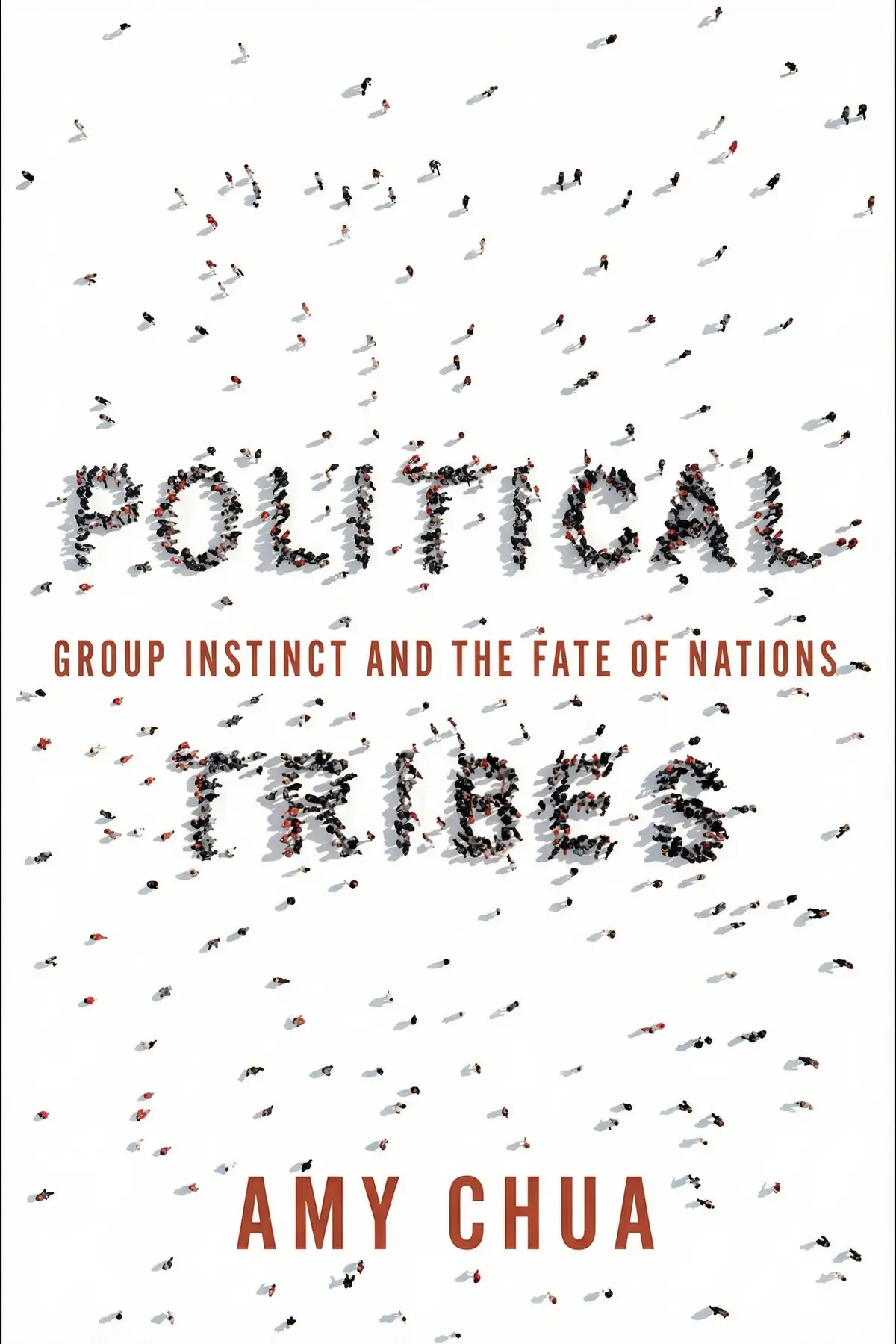
Political Tribes explores how primal group identities drive global conflict and domestic polarization, arguing that failing to understand tribalism leads to disastrous foreign policy and a fractured national identity.
1 min 43 sec
In our modern era, we often hear that the world is being reshaped by a wave of populism. We see it in the headlines every day: angry protests, shouting matches on television, and a political climate that feels more like a battlefield than a forum for debate. Whether it is the rise of movements in South America, the unexpected results of elections in Europe, or the deep divisions within the United States, there is a sense that the old rules of the game no longer apply. We are told that this is a clash of ideas—liberalism versus conservatism, or globalism versus nationalism. But what if the source of this tension is something much older and more fundamental to the human experience?
In her compelling work, Amy Chua suggests that the real force driving these shifts is tribalism. This isn’t a concept confined to ancient history or remote corners of the globe. Instead, tribalism is a primal instinct, a psychological necessity that dictates how we see ourselves and how we interact with others. It is the urge to belong to a group and, by extension, to exclude those who are not part of it. When we ignore this instinct, we fail to understand why people act the way they do, leading to massive errors in judgment on the world stage and at home.
Throughout this exploration, we will look at how this tribal drive has influenced some of the biggest events of the last century. We’ll see how a lack of tribal awareness led to the failures of the Vietnam and Iraq wars, and how it continues to fuel the rise of extremist groups. More importantly, we will examine how tribalism has come to define American life today, turning neighbors into enemies and making common ground feel like a distant memory. By understanding the mechanics of the tribe, we can begin to see the world—and each other—with a fresh perspective.
1 min 59 sec
Discover how the deep-seated human need for group belonging shapes our perception of reality and influences our moral choices in ways we often fail to recognize.
2 min 02 sec
Explore why Western policymakers often overlook the internal divisions of other countries, leading to a distorted view of global stability and national unity.
2 min 00 sec
Uncover the hidden source of many global conflicts: small ethnic groups that hold a disproportionate share of wealth, fueling resentment among the majority.
1 min 52 sec
Re-examine the Vietnam conflict through a tribal lens to see how a focus on global ideology obscured the ethnic realities on the ground.
1 min 59 sec
Analyze the catastrophic fallout of the Iraq War and how the sudden disenfranchisement of a ruling tribe paved the way for groups like ISIS.
1 min 51 sec
Discover how extremist organizations recruit by offering a powerful sense of belonging and empowerment to those who feel excluded from modern society.
2 min 09 sec
Witness the transformation of American politics as the country shifts from a unified national identity toward a landscape of warring tribal silos.
2 min 04 sec
See how shared beliefs can bridge racial and ethnic gaps, creating new tribal identities that defy traditional political expectations.
1 min 58 sec
Learn why moving beyond tribalism requires more than just policy changes, but a fundamental shift in how we engage with the humanity of our opponents.
1 min 34 sec
In the end, Political Tribes serves as a powerful reminder that we are not just rational actors in a marketplace of ideas. We are tribal beings, driven by a deep and often unconscious need for group belonging. This instinct has the power to build great nations, but it also has the power to tear them down. When we ignore the tribal dynamics of the world, we are flying blind. We make mistakes in foreign policy that cost thousands of lives and trillions of dollars, and we allow our own societies to fracture into hostile camps that can no longer communicate.
The throughline of Amy Chua’s work is that we must recognize these tribal forces if we want to manage them. We cannot simply wish tribalism away, nor can we assume that it only exists in ‘other’ places. It is a part of us all. The challenge for the twenty-first century is to find a way to honor our need for group identity without letting it devolve into dehumanization and conflict.
This begins with the difficult work of empathy. It requires us to step out of our comfort zones and listen to the fears and aspirations of those we have labeled as the ‘other side.’ It means looking for the shared human needs—for security, for respect, and for a sense of purpose—that exist beneath every tribal banner. If we can do that, we might find that the walls between us are not as solid as they seem. The path forward is not to destroy our tribes, but to expand our circle of concern until the ‘us’ is big enough to include everyone.
Political Tribes examines the deep-seated human instinct to divide the world into us and them. Amy Chua argues that this tribal impulse is often the most powerful force in politics, yet it is frequently ignored by Western policymakers who prefer to focus on ideology or economics. By looking at examples from the Vietnam War to the rise of ISIS, Chua shows how a lack of tribal awareness leads to catastrophic misunderstandings and failed interventions. The book also turns its lens toward the United States, suggesting that America is no longer a unified supergroup but is instead fracturing into hostile tribes. From the coastal elites to the rural working class, different groups are retreating into identity-based silos, viewing their fellow citizens as existential threats. The promise of this analysis is a clearer understanding of why our world feels so divided and a potential path toward empathy and reconciliation by acknowledging our shared human needs.
Amy Chua is a distinguished writer, legal scholar, and professor at Yale Law School. She has gained international recognition for her insightful and often provocative analysis of social and political dynamics. Her body of work includes the highly influential book World on Fire, which explored the impact of market-dominant minorities on global stability.
Listeners consider this work deeply enlightening for making sense of the modern political landscape and value its accessible nature, viewing it as essential reading. The writing style earns praise for its courageous examination of class, and listeners also admire the book's tempo, with one listener highlighting its international perspective. Additionally, the clarity of the explanations and the compassionate tone are viewed favorably; one listener points out how it leaves neither side innocent nor completely guilty. On the other hand, the author's perceived bias and her treatment of tribal dynamics elicit varied responses from listeners.
Chua provides a masterclass on how "identity" isn't just a buzzword but a fundamental human drive. She meticulously traces how the U.S. failed in Vietnam and Iraq by ignoring local tribal divisions, treating those complex societies as simple nation-states. It’s a gut punch to realize our foreign policy was essentially blind to the very things that make those people tick. When she shifts focus to America, the mirror is even more uncomfortable. Truth is, we are becoming the same "tribal" powder keg we failed to understand abroad. Her writing is crisp and moves fast, making dense sociological concepts feel like a conversation over coffee. I left this book feeling a mix of frustration and profound clarity.
Show morePicked this up expecting a dry academic text but was met with a deeply empathetic and urgent warning. Chua's exploration of the "market-dominant minority" concept changed how I view global conflict entirely. It’s not just about democracy vs. communism; it’s about who holds the money and who feels oppressed. The way she connects the dots between Venezuelan populism and the current American landscape is terrifyingly logical. Frankly, it’s a relief to read something that doesn’t just repeat the usual talking points. She challenges you to look at your own group preferences and see how they distort your empathy for the "other." A beautiful, necessary piece of work.
Show moreThe chapter on how America exports democracy without understanding local ethnic hierarchies is worth the price of the book alone. We constantly underestimate the power of belonging. Chua argues that our leaders are often oblivious to tribal realities because they live in a "super-tribe" that values individual rights over group loyalty. This blindness has led to catastrophic results in our military interventions. In my experience, most political books are just echo chambers, but this one actually challenges your worldview. It is a bold, insightful look at how we dehumanize those outside our circles. It leaves you with a lot of questions about where we are heading as a country.
Show moreAfter hearing about the "Tiger Mother" for years, I didn't know what to expect from Chua's political writing, but this is incredibly sharp. She writes with a global perspective that most American pundits lack. The way she links the resentment of "market-dominant minorities" in Southeast Asia to the growing class divide in the US is brilliant. It helped me understand why there's so much anger right now, even when the economy looks good on paper. It’s about more than money; it’s about the fear of losing your group identity. This is a must-read for anyone who feels like the world has stopped making sense.
Show moreIf you are tired of the constant shouting matches on social media, read this book to understand the "why" behind the noise. Chua suggests that we can only move forward by recognizing our tribal instincts rather than pretending they don't exist. The book is full of sense and sensibility, offering a roadmap that values empathy over binary thinking. I loved the optimistic epilogue where she looks for a "new version of the American Dream." It’s rare to find a book that is this critical of our failures while still remaining hopeful about our future. Truly a significant contribution to the debate over the state of our union.
Show moreWhy did we get the 2016 election so wrong? Amy Chua argues it’s because we ignore our primal need to belong to something larger than ourselves. She breaks down the "tribes" of modern America, from the coastal elites to the NASCAR-loving working class, without making either side out to be the cartoon villain. Personally, I found the biological context fascinating; we are literally hardwired for this group-think behavior. However, I do wish she’d spent more time on how social media algorithms specifically accelerate this division. It's a bold analysis that doesn’t leave any political party innocent. Highly insightful and probably more relevant now than when it was first published.
Show moreTo be fair, I went into this feeling pretty defensive about my own political "tribe." But Chua has a way of stripping away the rhetoric to show the human insecurity underneath it all. She does a meticulous job showing that humans aren’t just a little tribal—we’re very tribal. It’s in our DNA. I appreciated how she didn't just bash one side; she shows how the left’s focus on intersectionality can sometimes create its own exclusionary language. Meanwhile, the right’s ethnonationalism creates a different kind of wall. The pacing is great, and she avoids the typical jargon that ruins these kinds of books. It’s a short, pithy read that really sticks with you.
Show moreAmy Chua doesn't spare anyone in this scorching look at the American "train wreck" of foreign and domestic policy. Her thesis—that we ignore tribalism at our own peril—is backed by a staggering amount of research. I especially liked the sections on the "sovereign citizens" and how class resentment fuels tribal fires. Not gonna lie, some of the descriptions of elite oblivious-ness hit a little too close to home. My only real gripe is that she can be a bit repetitive with the "hardwired" theme. Still, the quality of explanation is high, and the book feels like a crucial step toward recognizing the problem. It’s not a comfortable read, but it’s an essential one.
Show moreWhile the analysis of Vietnam and Afghanistan is stellar, I felt the second half of the book oversimplified American culture. Calling WWE or the Prosperity Gospel a "tribe" feels like a stretch that doesn't quite carry the same weight as ethnic divisions in Iraq. It’s an interesting framework, but I worried that Chua was trying too hard to force a pattern where none existed. To be fair, she is an incredible writer and her pacing is top-notch. I just found the domestic comparisons a bit less rigorous than her historical foreign policy deep-dives. It's worth a read for the history alone, but take the cultural commentary with a grain of salt.
Show moreLook, I really wanted to like this, but the author's own biases seem to color the entire narrative. While she claims to be objective, there’s a persistent "both-sides-ism" that feels like it’s ignoring the actual power dynamics at play. Comparing the struggle for civil rights to "NASCAR nation" as equal tribes feels like a massive false equivalence. I found the historical sections interesting, but the modern-day application felt thin and a bit insensitive to the actual stakes of these movements. It’s readable and the pacing is fine, but I think the logic falls apart if you look at it too closely. Not as ground-breaking as the hype suggests.
Show more
Barack Obama
Masaji Ishikawa
John Rawls

Miles Taylor
Tracy Rosenthal
AUDIO SUMMARY AVAILABLE
Get the key ideas from Political Tribes by Amy Chua, plus 5,000+ more titles in English and Thai.