

16 min 13 sec
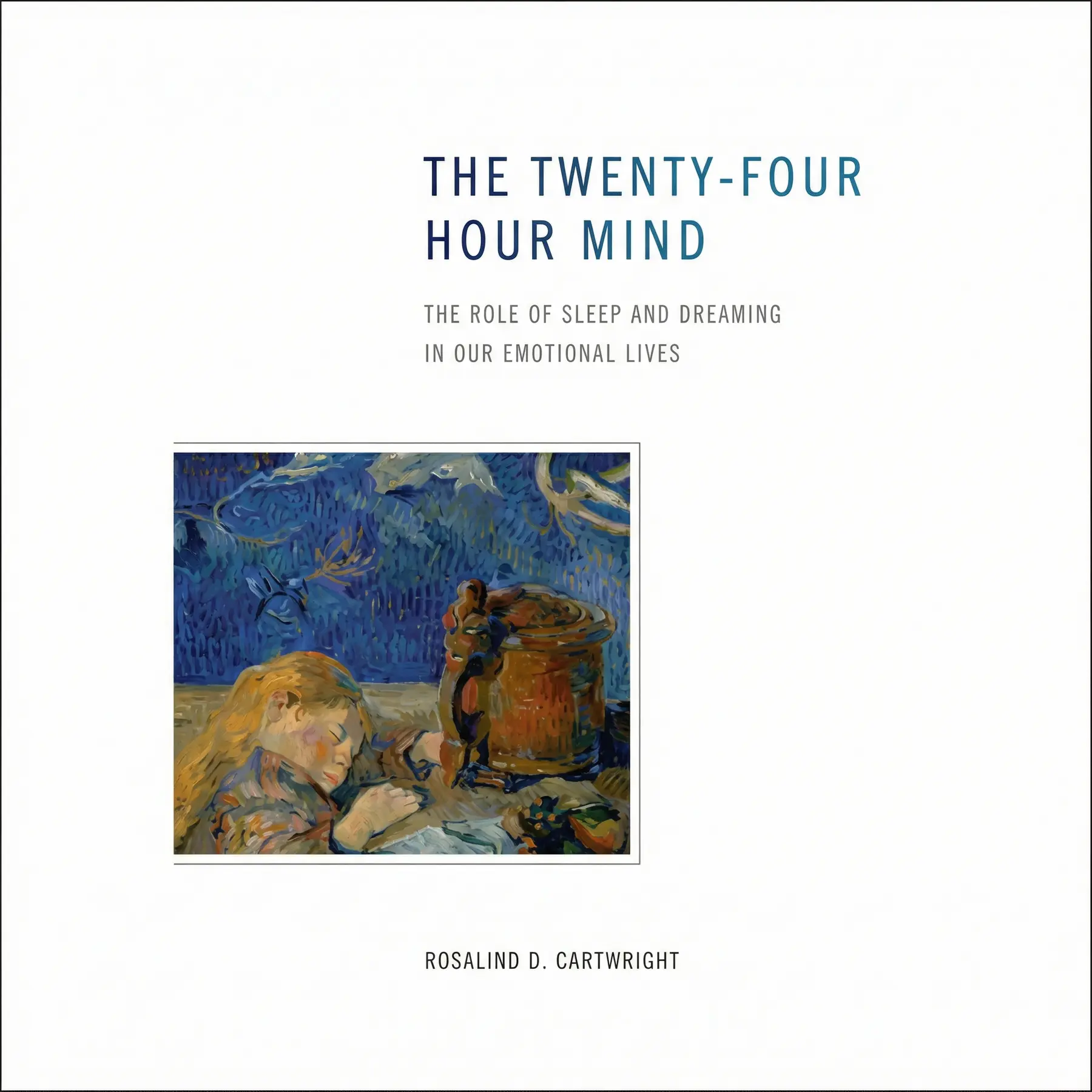
The Twenty-four Hour Mind: The Role of Sleep and Dreaming in our Emotional Lives
Explore the fascinating inner workings of the sleeping brain. This summary reveals how dreams function as an essential emotional regulator, helping us process complex feelings and maintain a stable sense of self.
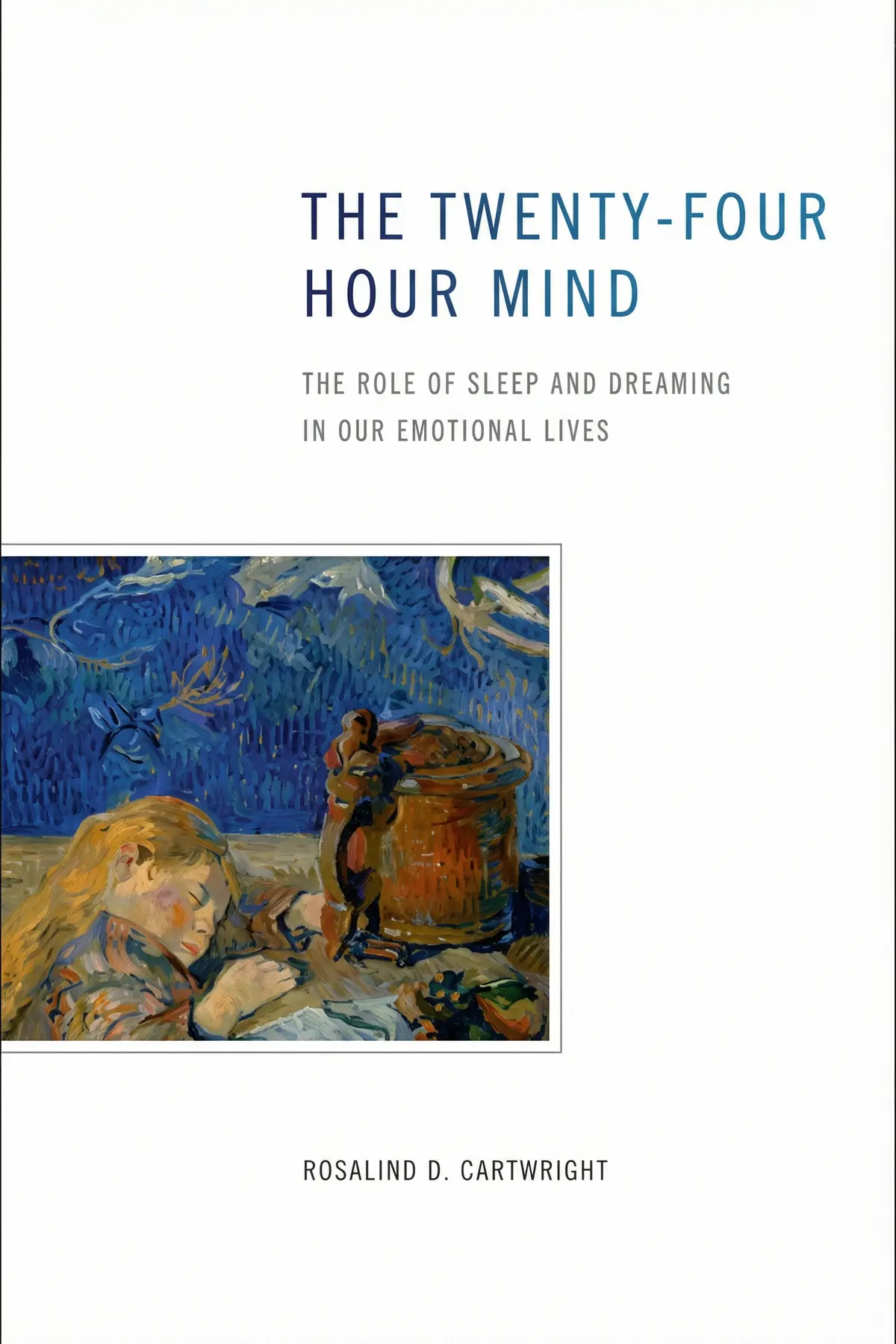
Table of Content
1. Introduction
1 min 41 sec
Every night, when you close your eyes and drift off, a profound transformation occurs. You might feel like you are simply disappearing from the world for a few hours, but inside your skull, a complex second act is just beginning. We often think of our lives as being divided into two distinct parts: the productive, conscious hours of the day and the silent, empty hours of the night. But what if that division is an illusion? What if the mind doesn’t actually stop working, but merely changes its focus?
This is the core premise we are exploring today. We are looking at the concept of a mind that operates on a full twenty-four-hour cycle. In this view, sleep isn’t a break from thinking; it’s a continuation of it in a different language—the language of dreams. This isn’t just a poetic idea; it is a scientific framework that helps explain why we feel the way we do, how we recover from emotional trauma, and what happens when the delicate balance of our sleep is disrupted.
Over the next several minutes, we will walk through the fascinating mechanics of the sleeping brain. We will see how our dreams act as an emotional thermostat, cooling down the heat of the day’s frustrations. We will explore the vital importance of REM sleep and how it serves as the workshop where our identity is forged and maintained. We will also look at the darker side of this twenty-four-hour cycle, examining what happens when the lines between waking and dreaming become blurred, leading to sleepwalking or even more extreme behaviors. By the end of this journey, you’ll have a new perspective on those eight hours of rest, seeing them not as lost time, but as an essential partner to your waking life.
2. The Unified Mind
1 min 51 sec
Discover why the traditional boundary between waking and sleeping is much thinner than we think, and how our brain maintains a continuous stream of consciousness.
3. The Emotional Thermostat
1 min 53 sec
Explore the critical role dreams play in regulating our moods and preventing emotional overload from the day’s events.
4. The Power of REM Sleep
1 min 40 sec
Understand the unique biological state of Rapid Eye Movement and why it is the most critical phase for our mental health.
5. Maintaining the Sense of Self
1 min 38 sec
Learn how dreaming helps us construct and preserve a consistent identity across the different chapters of our lives.
6. Sleep as a Diagnostic Tool
1 min 35 sec
Discover how the patterns of our dreams and sleep cycles can provide early warning signs for mental health issues like depression.
7. The Mystery of Parasomnias
1 min 41 sec
Delve into the strange world of sleepwalking and sleep-talking, where the brain exists in a middle ground between states.
8. Problem Solving in the Dark
1 min 27 sec
Learn how the brain uses the freedom of the dream state to find creative solutions that elude us during our waking hours.
9. Sleep Disorders and the Modern World
1 min 27 sec
Examine how our modern lifestyle conflicts with our biological need for sleep and the consequences of this disconnect.
10. Conclusion
1 min 20 sec
As we have seen, the human mind is a remarkable instrument that never truly rests. The concept of the twenty-four-hour mind reminds us that our nighttime experiences are just as vital to our identity and health as our daytime actions. Dreams are not mere fantasies; they are the essential tools the brain uses to process the complexities of our emotional lives, solve our most difficult problems, and maintain a consistent sense of who we are.
When we sleep well, we give our brains the opportunity to perform this critical maintenance. We wake up more resilient, more creative, and more emotionally balanced. Conversely, when we neglect our sleep, we disrupt a delicate biological system that has evolved over millions of years to keep us mentally sound. The evidence is clear: our mental health and our sleep health are inextricably linked.
The next time you prepare for bed, try to view the coming hours with a sense of respect and curiosity. You aren’t just ‘going to sleep’; you are handing the reins over to a different, equally important part of your intelligence. By prioritizing your rest and paying attention to the signals your dreams might be sending, you can harness the full power of your twenty-four-hour mind. Sleep is not a void; it is a workshop. Respect the process, and you’ll find yourself better equipped to face whatever the waking world throws your way.
About this book
What is this book about?
Have you ever wondered what your brain is actually doing while you are fast asleep? For a long time, science treated sleep as a period of total inactivity, a simple battery recharge for the body. However, as this exploration reveals, the truth is far more complex and active. The brain never truly turns off; instead, it shifts into a different mode of operation designed to manage our emotional well-being and solve the problems that baffle us during the day. This summary provides a deep dive into the concept of the twenty-four-hour mind. It explains the vital role of REM sleep in regulating our moods and how dreaming acts as a biological theater where we rehearse our responses to life's challenges. You will learn about the connection between sleep patterns and mental health conditions like depression, and gain insight into the mysterious world of sleepwalking and parasomnias. By understanding the continuity between our waking and sleeping lives, we can better appreciate the invisible labor our minds perform every night to keep us psychologically balanced.
Book Information
About the Author
Rosalind D. Cartwright
Rosalind D. Cartwright was a pioneering sleep researcher and the former director of psychology at the University of Illinois College of Medicine. Throughout her distinguished career, she focused her studies on the complex functions of dreaming and REM sleep. Her clinical expertise led her to open a Sleep Disorder Service, where she spent years diagnosing and treating patients with a wide range of sleep-related issues. A prolific writer in her field, she authored several influential books, including Night Life: Explorations in Dreaming, A Primer on Sleep and Dreaming, and Crisis Dreaming: Using Your Dreams to Solve Your Problems.
Ratings & Reviews
Ratings at a glance
What people think
Listeners view this book as a captivating exploration of the psychological history behind dreaming and sleep, noting its substantial additions to sleep science. They enjoy the comprehensive information and accessible presentation, with one listener pointing out the abundance of practical insights into mental health. The prose style draws varied opinions; some find it well-written, while others feel it is challenging in certain areas. Listeners prize the book's emotional depth, with one review specifically noting its positive effect on psychological well-being.
Top reviews
Suphan
Ever wonder where your mind goes when you finally close your eyes at night? Dr. Cartwright presents a compelling argument that we aren't just 'off' during sleep, but rather engaged in a vital emotional regulation process. I loved the idea of dreaming as a 'system defrag' for the soul. It makes so much sense that our brains are busy filing away the day’s trauma and stress to keep us sane. The book manages to balance complex neuroscientific data with accessible language, making it a great resource for anyone interested in mental health. Frankly, the section on how dreams help us process divorce and major life changes was moving. It’s a powerful reminder that our brains are always working to protect us, even when we aren't aware of it.
Show morePruet
Wow. This book is a deep dive into the 'mental workshop' that operates while we’re unconscious. I’ve read a lot of pop-psychology, but Cartwright’s work stands out because it’s grounded in actual research rather than just theory. Her take on how dreams update our sense of self is a profound insight. I found myself thinking about my own dreams as a form of nightly therapy, helping me rehearse new coping behaviors for the following day. The case studies, from sleepwalking to REM behavior disorders, were both terrifying and fascinating. Look, it’s a dense book, but the payoff is a much deeper respect for the complexity of human sleep. This should be required reading for anyone interested in the intersection of biology and psychology.
Show moreMia
As someone who has always struggled with vivid nightmares, Cartwright’s exploration of the sleeping brain felt incredibly validating. She moves beyond the old-school Freudian interpretations, replacing them with hard neuroscience that still feels deeply human. The concept that our dreams act as a 'night-shift' for our emotions is a game-changer for how I view my own rest. While the writing leans toward the academic side occasionally, the case studies on parasomnias kept me hooked. It’s fascinating to see how a lack of 'dream-work' can essentially fracture a person’s sense of self. Personally, I found the chapters on depression and REM cycles to be the most enlightening part of the whole book. If you want to understand the mechanics of your own subconscious, this is a solid choice.
Show moreSudarat
Finally got around to reading this one, and I'm struck by how much it changed my perspective on 'poor sleep hygiene.' Cartwright isn’t just talking about being tired; she’s talking about the erosion of the self. The book illustrates how a 'poverty of dreams' can lead to serious psychological consequences, using frightening examples like sleep-eating and sleep-sex. It’s a bit chilling to realize how thin the line is between our waking and sleeping worlds. The writing style is professional and authoritative, which I appreciated, even if it wasn't exactly a page-turner in the traditional sense. I found the 'internal psychotherapist' metaphor for dreams particularly beautiful. It really makes you prioritize your eight hours.
Show moreWacharapol
Picked this up because I’ve always been fascinated by how the brain handles emotional trauma during the night. Cartwright does a stellar job of explaining the 'twenty-four hour mind' as a continuous loop of processing. The way she breaks down the function of dreams in down-regulating stress is brilliant and backed by years of clinical studies. I especially enjoyed the parts about how sleep disorders can actually revitalize our understanding of normal dream functions. It’s not a light read, but it’s a rewarding one if you’re willing to put in the effort. Some of the legal sections were a bit long-winded for my taste, but they did provide a stark look at what happens when the sleeping mind goes haywire. Overall, a very enlightening work for the curious.
Show moreWissanu
This book provides a really interesting bridge between the world of neuroscience and the world of psychology. Cartwright explores how our sleeping minds are constantly working to maintain our emotional integrity, which is a comforting thought. I did find the sections on sleepwalking and the legal system to be the most memorable, particularly the detailed analysis of Scott Falater’s dream logs. It’s a bit of a weird mix of a textbook and a true crime story at times, but it mostly works. My only gripe is that it can be a little repetitive when she’s driving home her main theories. Still, the insight into how we 'save' emotionally important information into our neural networks is worth the price of admission. It’s a solid 4-star read.
Show moreAnucha
Rosalind Cartwright’s expertise shines through on every page of this fascinating study. She manages to take the 'nonsense of Freud' and replace it with a much more functional, evidence-based view of why we dream. The idea that we are 'works in progress' being updated every night is a powerful concept. I will say, the academic tone might be a bit much for some, but the case studies of 'protectors' and 'explorers' in the parasomnia chapters add some much-needed flavor. It’s a short book, only about 200 pages, so it doesn’t overstay its welcome. It gives you just enough to chew on without becoming overwhelming. For anyone dealing with insomnia or just curious about their own head, this is a great resource.
Show moreWipawan
The chapter on legal battles and sleepwalking murders was definitely the highlight here, though it felt a bit like a detour from the core science. Truth is, Cartwright is clearly a brilliant researcher, but her prose can be quite dry and dense for a casual reader. I was looking for something a bit more popularized, yet I found myself wading through academic jargon more often than not. I did appreciate the discussion on the Scott Falater case; it’s terrifying to think about the 'mindless' actions the body can perform while the self is tucked away. It’s a respectable compilation of a lifetime of work, but it lacks the narrative punch of other science writers. It is useful, certainly, but it’s a slow burn that requires a lot of patience.
Show moreAndrei
After hearing so much about this book in psychology circles, I had high expectations that were only partially met. The information is top-tier, especially regarding NREM and REM cooperation, but the structure felt disjointed. One moment we are looking at data on insomnia, and the next we are deep in the weeds of a murder trial. To be fair, the 'pool pump murder' case is gripping, yet it feels like it belongs in a different book entirely. I struggled with the pacing. Some sections fly by with interesting anecdotes, while others feel like reading a textbook. I’d recommend it to students of sleep science, but casual readers might find it a bit of a slog. It's a three-star read for me—valuable but clunky.
Show moreTawee
Not what I expected at all, to be honest. I was hoping for a more engaging look at the mysteries of the mind, but this felt like sitting through a very long, very dry lecture. The author is obviously an expert, but she fails to translate that expertise into a compelling narrative for a layperson. I found my mind wandering during the heavy technical sections on EEG patterns and brain imaging. Even the 'sensational' murder cases were presented in such a clinical way that they lost their impact. If you aren't already a student of sleep science, you might find this incredibly tedious. It lacks the warmth and storytelling found in other books about the human brain. I gave it two stars because the research is clearly sound, but the delivery just didn't work for me.
Show moreFeatured in
Readers also enjoyed


A Life Decoded: My Genome: My Life
J. Craig Venter
59 Seconds: Change Your Life in Under a Minute
Richard Wiseman

A Planet of Viruses
Carl Zimmer

A Short History of Nearly Everything
Bill Bryson
AUDIO SUMMARY AVAILABLE
Listen to The Twenty-four Hour Mind in 15 minutes
Get the key ideas from The Twenty-four Hour Mind by Rosalind D. Cartwright, plus 5,000+ more titles in English and Thai.
- 5,000+ titles
- Listen as much as you want
- 7-day free trial
- Cancel anytime







