
28 min 13 sec
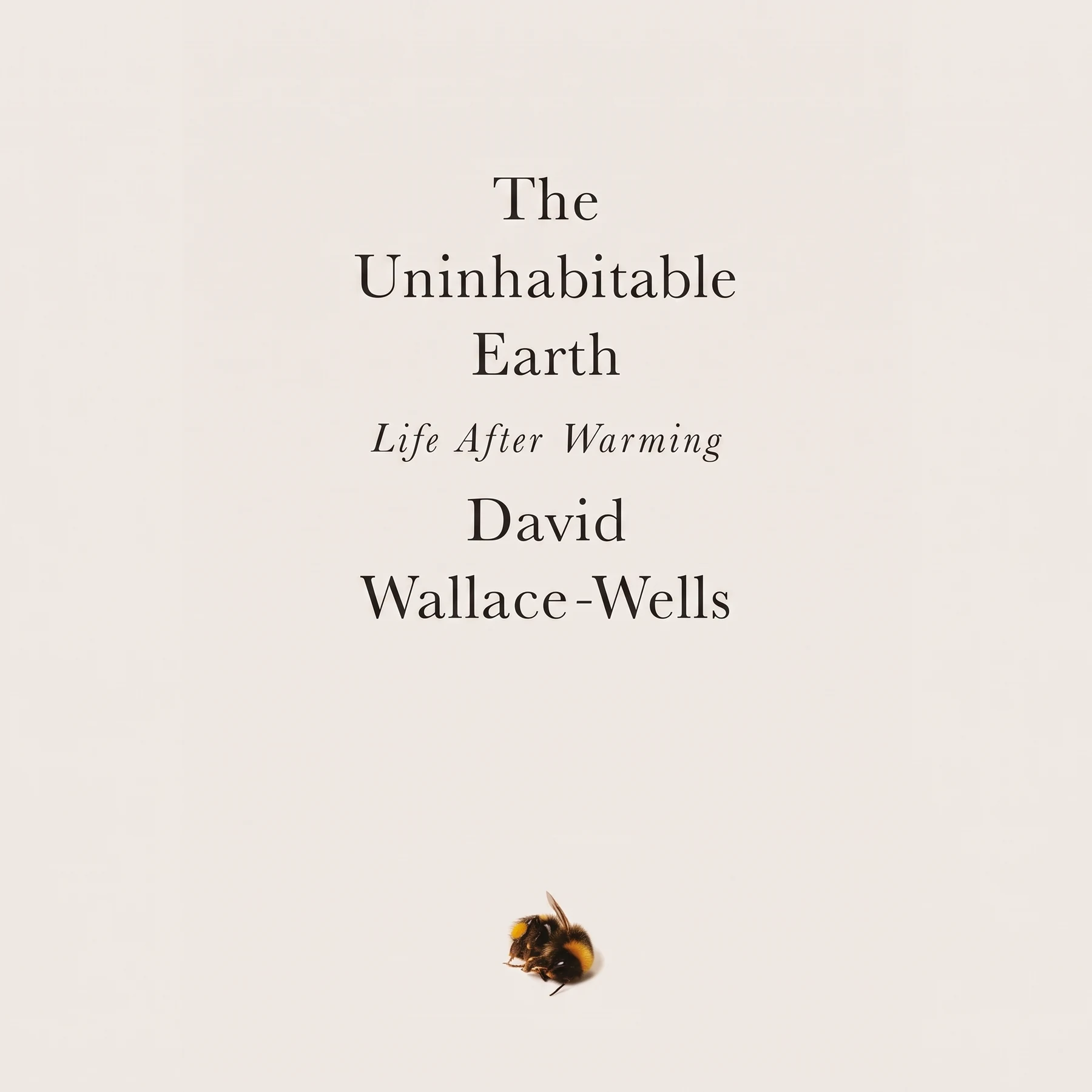
The Uninhabitable Earth: Life After Warming
David Wallace-Wells examines the terrifying realities of a warming planet, moving beyond mere climate warnings to detail the specific, cascading disasters that await humanity if systemic changes are not implemented immediately.
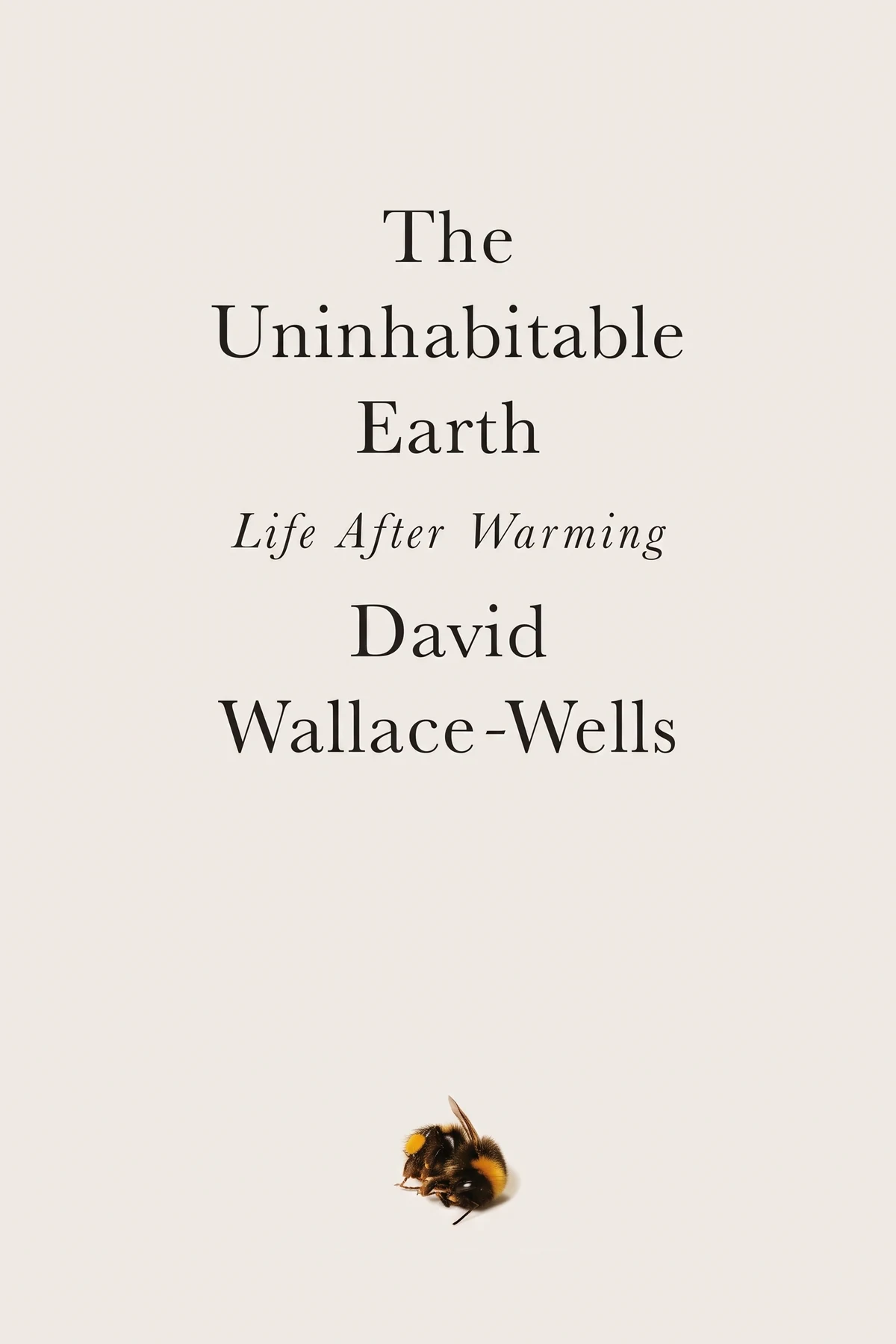
Table of Content
1. Introduction
1 min 49 sec
For decades, the conversation around our changing climate has often felt like a distant concern—something for future generations to resolve or a problem that could be managed with incremental policy shifts. However, David Wallace-Wells challenges this comfortable delusion with a bracing and terrifying vision of the reality we have already created. The central throughline of his work is simple yet devastating: we have pushed the Earth’s delicate systems to a breaking point, and we have done so with staggering speed. It is a common misconception that environmental degradation is a slow, multi-century process. In truth, more than half of all carbon emissions produced in human history have been released into the atmosphere in just the last thirty years. This means we are not just witnessing the consequences of our ancestors’ actions; we are living through the results of our own lifespans.
In the following summary, we will explore the specific ways the globe is transforming. This isn’t just about polar bears or melting glaciers in remote regions; it is about the collapse of agricultural stability, the inundation of our greatest cities, and the resurgence of ancient diseases. We’ll look at why the international agreements we’ve relied on for hope are far more fragile than they appear and how the environment itself may begin to accelerate its own destruction through terrifying feedback loops. This is a story of the future, but it is a future that has already begun to arrive. As we walk through these findings, the goal isn’t to induce despair, but to provide a clear-eyed understanding of the stakes. The world we knew is gone, and the world we are entering will require a level of urgency and systemic change that humanity has never before attempted. Let’s look at exactly what is at risk.
2. The Fragility of International Climate Targets
2 min 30 sec
Current global agreements are often hailed as victories, but a closer look at the data reveals they may be insufficient to prevent widespread disaster.
3. The Nature of Climate Cascades
2 min 27 sec
The Earth’s warming is not a simple linear process; instead, it involves complex feedback loops that can cause the planet to heat itself up even faster.
4. The Arrival of More Destructive Weather
2 min 41 sec
Atmospheric changes are already resulting in storms and hurricanes that are more frequent and far more violent than those of the past.
5. The Threat of Rising Oceans
2 min 33 sec
Rising sea levels are no longer a distant concern, as many of the world’s major cities face the prospect of being swallowed by the sea.
6. The Impending Food Crisis
2 min 32 sec
A warming world threatens the very foundation of human civilization: our ability to grow enough nutritious food to feed a growing population.
7. The Resurgence of Ancient and New Diseases
2 min 23 sec
As the planet warms, we are not only aiding the spread of current illnesses but also potentially unearthing ancient pathogens that have been frozen for millennia.
8. The Invisible Poison of Air Pollution
2 min 33 sec
Rising levels of carbon dioxide and industrial pollutants are not just warming the planet; they are directly harming our physical and mental health.
9. The Shrinking Supply of Freshwater
2 min 16 sec
Despite living on a planet covered in water, the tiny fraction available for human use is rapidly disappearing due to heat and mismanagement.
10. The Link Between Heat and Human Violence
2 min 23 sec
Rising temperatures don’t just impact our environment; they also appear to increase the frequency of interpersonal violence and large-scale conflict.
11. The Limits of Technological Solutions
2 min 30 sec
While we have the theoretical tools to remove carbon from the air, the current cost and scale required make them a risky gamble for the future.
12. Conclusion
1 min 36 sec
The portrait of the future painted by David Wallace-Wells is undeniably grim, but it is not a prophecy of certain doom; it is a map of our current trajectory. The overarching message is that we have run out of time for incrementalism. We are living in a single, narrow window of human history where our actions will resonate for thousands of years. The environmental stability that allowed human civilization to flourish is over, and we are now in a race to see how much of our world we can still save. We have seen how climate change is not a single issue but a pervasive force that will touch every aspect of our lives—our health, our safety, our food, and even our ability to think clearly.
However, the power to change this story still resides with us. While individual lifestyle changes are important, the scale of this crisis requires systemic, political action. The most important thing any person can do is to move beyond personal consumption habits and begin demanding radical change from the leaders and institutions that hold the levers of power. This means participating in the political process, supporting aggressive environmental policies, and holding corporations accountable for their impact on the planet. The uninhabitable Earth is a possibility, not a certainty. We are the authors of this story’s conclusion, and we must decide now whether we want to write an ending defined by collapse or one defined by the greatest act of collective survival in the history of our species.
About this book
What is this book about?
The Uninhabitable Earth provides a comprehensive and unflinching look at the multifaceted threats posed by climate change. Rather than focusing solely on rising temperatures, David Wallace-Wells explores how global warming will impact every facet of human existence, from the air we breathe and the food we grow to the stability of our geopolitical systems and the health of our minds. The book promises to strip away the complacency often associated with environmental discourse, replacing it with a vivid map of our near future. It covers the science of feedback loops, the inevitable rise of sea levels, and the potential return of ancient diseases. Ultimately, it serves as an urgent call to recognize that the era of environmental stability is over and that our actions in the coming decade will decide the severity of the coming crisis.
Book Information
About the Author
David Wallace-Wells
David Wallace-Wells is a columnist and deputy editor at New York magazine. He is also a national fellow at New America, a think tank focused on public policy issues ranging from health and gender to the environment.
Ratings & Reviews
Ratings at a glance
What people think
Listeners consider this an outstanding read featuring compelling evidence of climate change, depicting the environmental collapse as already in progress. The prose draws varied responses; although some deem the writing superb, others characterize it as disconnected and overly dramatic. It is regarded as a transformative and deeply reflective work, yet views differ on its intensity, as some find the content terrifying while others view it as unsettling. Perspectives on the tempo and verbosity are likewise split, with some encountering difficult stretches and frequent long sentences, whereas others value its comprehensive detail.
Top reviews
Fort
David Wallace-Wells doesn't pull any punches from the very first sentence. This isn't your typical dry, academic study on melting ice caps or carbon credits. Instead, it’s a gripping, visceral tour of the 'cascades' of catastrophe that await us if we don't pivot immediately. I was particularly struck by the section on how carbon dioxide is literally making our food less nutritious—turning healthy crops into 'junk food' by stripping away protein and vitamins. It is scarier than any horror novel I’ve ever picked up. While the tone is undeniably alarmist, the author argues that we need to be alarmed to actually move toward a Green New Deal. Some might find the prose a bit wordy in places, but the sheer weight of the documentation is life-changing. If you care about the future of our species, you simply have to read this.
Show moreDen
This is hands-down the most disturbing thing I’ve read this year. Wallace-Wells takes the concept of a 'climate apocalypse' and breaks it down into granular, terrifying detail. The statistics regarding Bitcoin’s carbon footprint alone were enough to make me rethink everything I thought I knew about modern technology. We often think of global warming as just 'sea level rise,' but this book explores the secondary effects like geopolitical instability and the collapse of international trust. The author paints a picture of a world where 'dog eat dog' becomes the new global policy as countries retreat into nationalistic corners. It’s a brutal read, and I had to put it down several times just to breathe. It’s not a book you 'enjoy,' but it is a book you must experience to understand the scale of the threat.
Show moreNoah
Wow. That’s really the only word for it. It is worse, much worse, than you think. Wallace-Wells has written something that feels like a manifesto for a world on fire. I loved the 'Cascades' section—it perfectly illustrates how all these different disasters aren't happening in isolation but are building on each other. The writing is sharp, though I'll admit some of the sentences are long enough to make your head spin. It’s a life-changing perspective on our current civilization. I found the section on 'The Church of Technology' to be a necessary critique of our misplaced hope that some magic invention will save us at the last second. This isn't an easy read, and it will definitely keep you up at night, but that’s exactly why it matters. Five stars for the sheer audacity of the reporting.
Show moreErn
The chapter on 'Plagues of Warming' will keep me up at night for weeks. Thinking about dormant bacteria in the tonsils of an antelope suddenly turning into a 'bullet' because of heat is a terrifyingly specific image. Wallace-Wells is excellent at finding these little details that make the abstract concept of 'warming' feel immediate and dangerous. Personally, I found the book much more engaging than the original article, though it does get a bit repetitive in the middle. The discussion on how the US and Russia might navigate the 'new normal' was particularly thought-provoking, even if it felt a bit like a geopolitical war game. It’s a tough, wordy read that requires your full attention, but the documentation of our current trajectory is essential. It’s a grim but necessary addition to any environmentalist’s bookshelf.
Show moreSai
Ever wonder what a 4-degree warmer world actually looks like? This book provides a vivid, if harrowing, answer. I was fascinated by the discussion of the 'Anthropic Principle' at the end, which offers a strange kind of hope amidst the darkness. The author acknowledges that while the situation is dire, we are the ones holding the steering wheel. I did find some of the scientific claims a bit controversial, especially regarding the abrupt release of methane, but the general thrust of the argument is backed by an overwhelming consensus. The way he describes the saiga antelope mass die-off was a particularly haunting parable for what happens when the environment crosses a tipping point. It’s a dense read and the pacing is a bit tough in the middle sections, but the insights into 'Crisis Capitalism' are worth the effort.
Show moreJob
After hearing about the 'climate apocalypse' for years, I finally decided to see what the fuss was about. This book is an absolute gut-punch. It isn't just about the weather; it’s about how warming will transform everything from our mental health to the very way we tell stories. The chapter on 'The Elements of Chaos' was particularly well-structured, even if it felt like a relentless barrage of bad news. I appreciated how the author touched on things I hadn't considered, like the possibility of ancient plagues being released from the thawing permafrost. To be fair, the prose can be a bit choppy and the lack of a 'how-to' guide for saving the planet is a notable omission. However, as a wake-up call, it is undeniably effective. It forces you to look at the southern border and global migration through a completely different lens.
Show moreViolet
As a reader who usually prefers dry data, the narrative approach here surprised me. Wallace-Wells creates a 'Climate Kaleidoscope' that forces you to see the crisis from a dozen different angles at once. I was particularly moved by the section on how our current political alliances are 'unbuilding' just as we need them most. The book is excellently written in parts, though I gotta say the sentences can get a little 'over-the-top' with the doom-and-gloom adjectives. It’s a life-changing read that makes the 'Green New Deal' seem not just like a good idea, but the only logical path forward. Even if you don't agree with every single scientific projection he makes, the overall picture of a world in 'cascading violence' is hard to ignore. It’s disturbing, yes, but also deeply human in its concern for our grandchildren’s future.
Show moreIsaiah
Is it possible for a book to be both essential and incredibly frustrating? Truth is, Wallace-Wells has gathered some truly terrifying facts here, but the writing style is so overwrought that I found myself skimming by the halfway point. He has a habit of using these long, run-on sentences that feel like they’re trying to mimic the chaos of the climate itself. It feels very much like a magazine article that was stretched out to fill a book-length format, leading to a lot of repetition. He talks about 'Heat Death' and 'Hunger' in ways that are thought-provoking, yet he offers almost nothing in the way of concrete solutions. It leaves you feeling paralyzed rather than empowered to make a change. I think I’d recommend the original New York Magazine article over the full book for most readers.
Show moreChiw
Look, the science presented here is vital, but the execution felt repetitive. I felt like the author made his point in the first fifty pages and then just kept saying the same thing in different ways for the rest of the book. The tone can be a bit condescending at times, as if the author is the only one who truly understands the gravity of the situation. I also agree with other reviewers that the lack of attention to solutions makes the whole experience feel a bit hopeless. It’s a '3-star' material for me because while the research is thorough, the 'choppy' and 'wordy' writing style makes it hard to recommend to a casual reader. It’s an important book, but I think a better editor could have trimmed it down significantly without losing the core message.
Show moreBae
Frankly, I found the writing style here to be a major barrier. The author seems to prioritize poetic flourishes and 'alarmist' rhetoric over clear, scientific communication. There are so many run-on sentences and 'overwrought' metaphors that the actual data gets lost in the noise. I was looking for a book that balanced the terrifying consequences with technological research or productive solutions, but this is just disaster after disaster. He even goes so far as to suggest that individual lifestyle changes are basically trivial, which feels incredibly cynical. If you want to actually understand the science of climate change, you’re better off reading reports from NASA or the IPCC. This felt more like an extended op-ed designed to scare people than a serious attempt to map out our future. It’s just too pessimistic for me to find it truly useful.
Show moreReaders also enjoyed
Beyond Words: What Animals Think and Feel
Carl Safina
Cod: A Biography of the Fish That Changed the World
Mark Kurlansky
Comfortably Unaware: What We Choose to Eat is Killing Us and Our
Richard A. Oppenlander
Cradle to Cradle: Remaking the Way We Make Things
William McDonough
Earth for All: A Survival Guide for Humanity
Sandrine Dixson-Decleve
Eating Animals
Jonathan Safran Foer
AUDIO SUMMARY AVAILABLE
Listen to The Uninhabitable Earth in 15 minutes
Get the key ideas from The Uninhabitable Earth by David Wallace-Wells, plus 5,000+ more titles in English and Thai.
- 5,000+ titles
- Listen as much as you want
- 7-day free trial
- Cancel anytime







