
12 min 36 sec
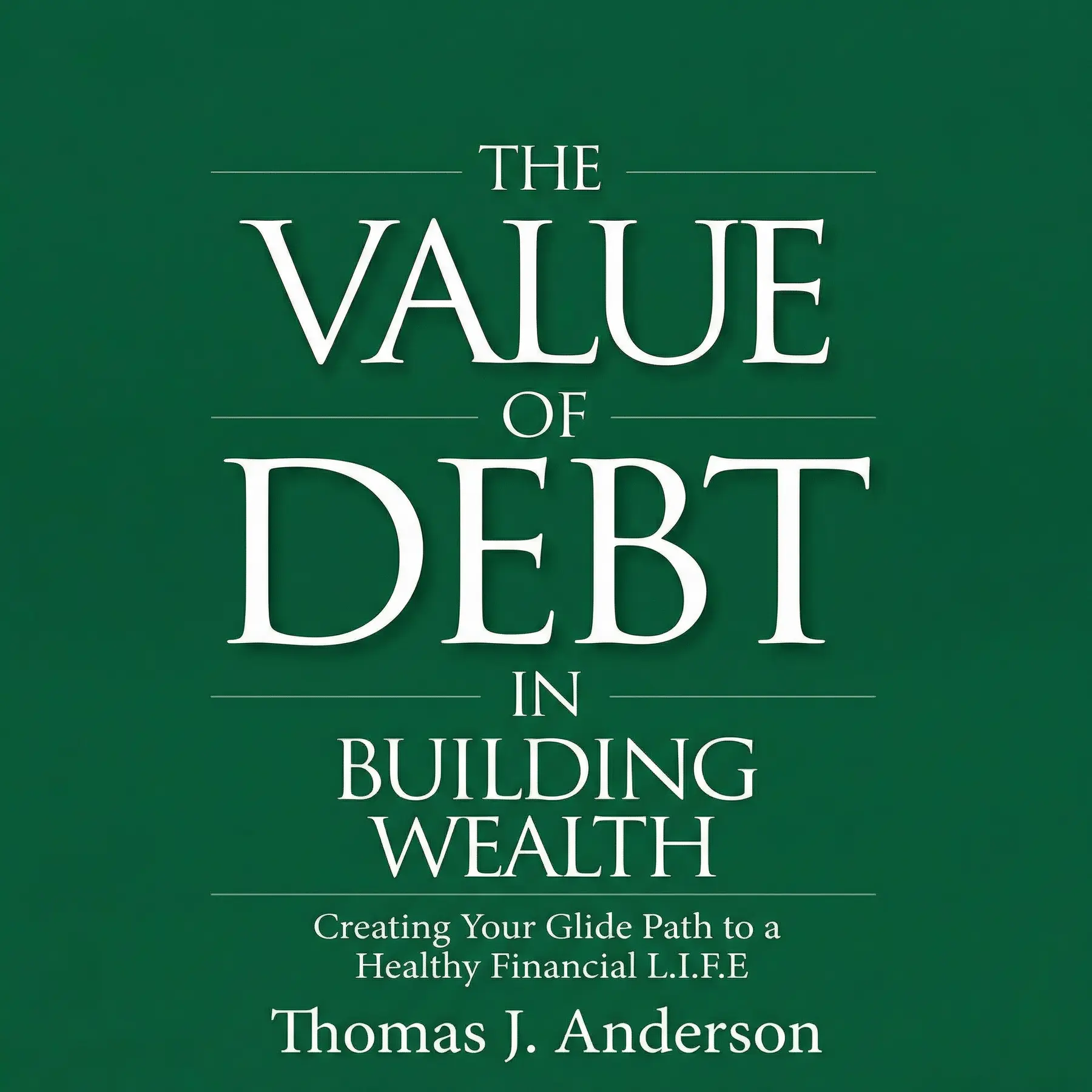
The Value of Debt in Building Wealth: Creating Your Glide Path to a Healthy Financial L.I.F.E
Thomas J. Anderson challenges traditional financial wisdom by explaining how strategic debt can actually accelerate wealth creation, providing a structured framework for managing liabilities to achieve long-term financial independence and security.
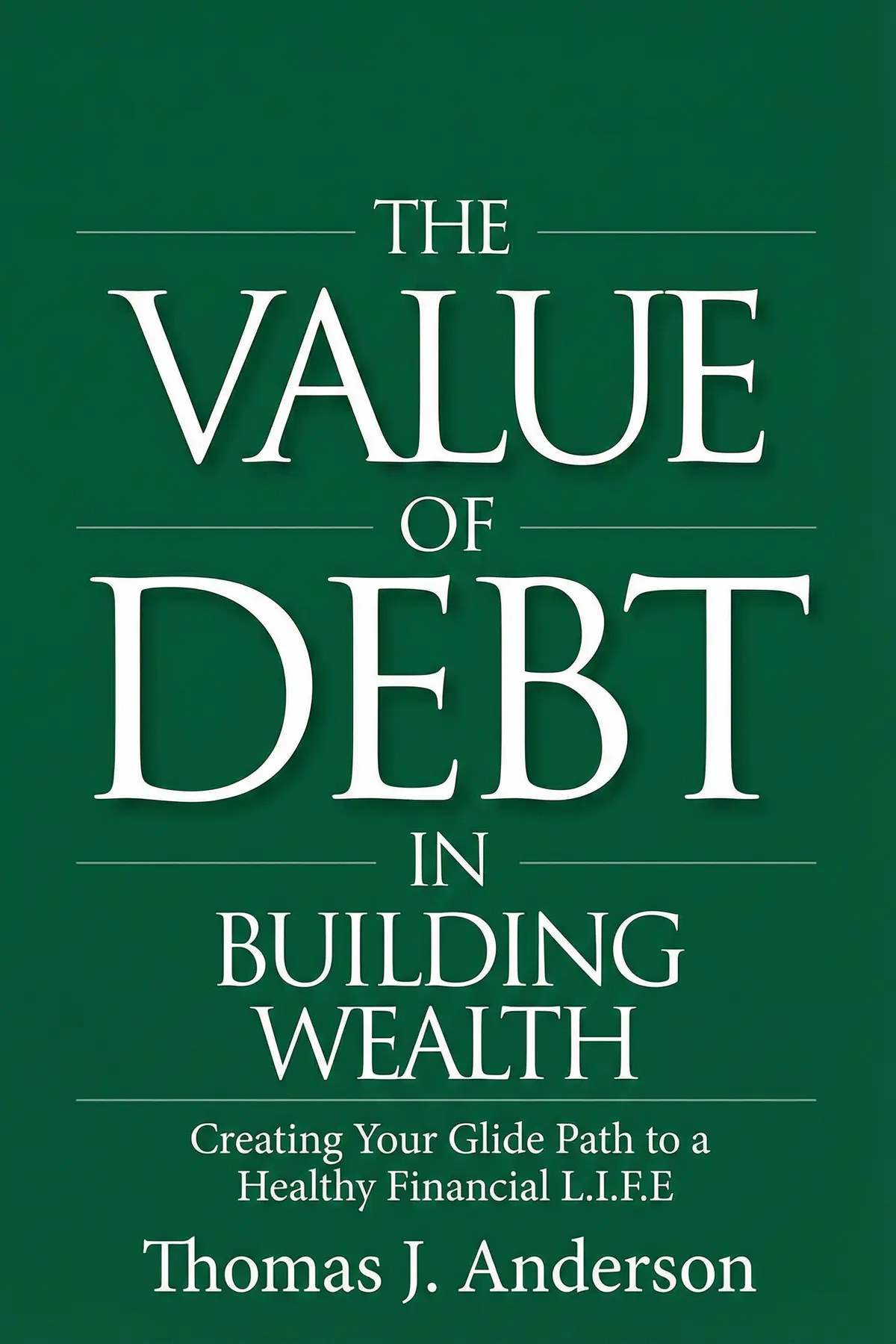
Table of Content
1. Introduction
1 min 21 sec
We have been conditioned to believe that debt is a dark cloud hanging over our financial lives. From a young age, many of us are taught that the ultimate sign of success is a ‘paid-off’ life—no mortgage, no loans, and no monthly payments to anyone. But what if that traditional path is actually slowing you down? What if the very thing you’ve been running away from is actually the engine that could drive you toward wealth much faster than you ever imagined?
In this exploration of Thomas J. Anderson’s work, we are going to challenge the common-sense notion that all debt is bad. We aren’t talking about reckless spending or maxing out credit cards for a shopping spree. Instead, we are looking at the sophisticated application of debt as a financial tool, much like how a Fortune 500 company uses credit to expand its operations and protect its cash flow.
We will walk through the ‘L.I.F.E.’ glide path—a four-stage journey that takes you from the initial ‘Launch’ phase all the way to ‘Equilibrium,’ where your assets and liabilities work in perfect harmony. Along the way, we’ll demystify complex terms like liquidity and debt-to-asset ratios, showing you why having cash in the bank is often more important than having a zero balance on your mortgage. By the end of this journey, you’ll see that building wealth isn’t just about what you own, but how intelligently you manage what you owe. Let’s dive into a perspective that turns conventional financial wisdom on its head.
2. The Strategic Advantage of Maintaining Debt
2 min 04 sec
Discover why families who keep their mortgages often end up wealthier than those who pay them off early, and how debt acts as a cushion.
3. Differentiating Between Oppressive and Enriching Debt
1 min 53 sec
Not all liabilities are created equal; learn how to identify which debts are holding you back and which ones are helping you grow.
4. The First Half of the L.I.F.E. Path
1 min 47 sec
Explore the Launch and Independence phases of financial growth, where the focus shifts from survival to building a solid foundation.
5. Scaling to Freedom and Equilibrium
1 min 59 sec
Learn how the debt-to-asset ratio becomes your primary metric as you transition into the final stages of financial mastery.
6. Capturing the Spread and the Power of Diversification
2 min 03 sec
Understand the mathematical secret of wealth: making sure your investment returns consistently outpace the cost of your debt.
7. Conclusion
1 min 29 sec
As we wrap up this look at Thomas J. Anderson’s wealth-building philosophy, the most important takeaway is a change in mindset. Debt doesn’t have to be a sign of financial failure; it can be a hallmark of financial sophistication. By shifting your focus from ‘debt-free’ to ‘liquidity-rich,’ you open up a world of flexibility and growth that traditional advice often ignores.
Remember the L.I.F.E. path: start by cleaning up your oppressive debts in the Launch phase, build your safety nets in the Independence phase, grow your assets to lower your debt ratio in the Freedom phase, and finally, reach that state of Equilibrium where your financial choices are entirely your own. The goal is to ‘capture the spread’—to make the math work in your favor by ensuring your investments grow faster than your interest costs.
As a final, actionable thought: take a hard look at your current living situation. We often assume buying a home is always the best move, but Anderson reminds us that sometimes renting is the more strategic choice. When you factor in property taxes, maintenance, and the ‘trapped’ nature of home equity, renting can sometimes provide the liquidity you need to fuel your investment portfolio more effectively. Whether you own or rent, the secret lies in the balance. Stop looking at your balance sheet as a source of stress and start looking at it as a dashboard for growth. Use your debt wisely, keep your cash accessible, and build your own glide path to a healthy financial life.
About this book
What is this book about?
Most financial advice treats debt as a burden to be eliminated as quickly as possible. However, Thomas J. Anderson argues that this conventional approach often limits your wealth-building potential. The Value of Debt in Building Wealth presents a contrarian but mathematically sound philosophy: when managed correctly, debt is a powerful tool for enhancing liquidity and capturing market returns. At the heart of the book is the L.I.F.E. framework—standing for Launch, Independence, Freedom, and Equilibrium. This model provides a clear, stage-by-stage guide for moving from a position of financial vulnerability to a state where debt is an optional, wealth-enhancing asset. By understanding the difference between oppressive and enriching debt, and learning how to 'capture the spread' between interest rates and investment returns, you can create a more flexible and robust financial future. This book promises a roadmap for those who want to stop fearing debt and start using it to secure a more prosperous life.
Book Information
About the Author
Thomas J. Anderson
Thomas J. Anderson is a highly successful investment banker and a New York Times best-selling author. He is the founder of the financial technology platforms Supernova Technology and Anasova. Anderson is widely recognized for his expertise in the intersection of debt and asset management, having authored several influential financial guides including Money Without Boundaries, The Value of Debt, and The Value of Debt in Retirement.
Ratings & Reviews
Ratings at a glance
What people think
Listeners find the book offers a fresh outlook on money management by presenting debt as a tactical asset for wealth creation instead of a liability to escape. Although some feel the delivery can be redundant, listeners value the useful ratios and worksheets tailored for various financial milestones. Furthermore, they appreciate the straightforward advice on using inexpensive debt to boost long-term capital, with one listener mentioning the concepts boosted their financial self-assurance. Many also note the book is a fast listen that successfully motivates people to oversee their household finances using a corporate-style framework.
Top reviews
Wichai
Ever wonder why the wealthy never seem to rush to pay off their low-interest mortgages? This book completely blew my mind by flipping everything I thought I knew about personal finance on its head. Anderson argues that debt shouldn't be viewed as a shameful burden but as a strategic tool to be managed much like a corporation handles its balance sheet. The concept of 'working debt' vs. 'hazardous debt' was a total game-changer for me. While the author's suggestion to avoid fixed payments might seem risky to some, his logic regarding liquidity and long-term asset growth is incredibly sound. I found myself taking pages of notes and rethinking my entire approach to my student loans and savings. It is a quick read, but the shift in perspective is deep and lasting.
Show moreUraiwan
This is the best financial book I have picked up in years, and I say that as someone who reads dozens of these annually. Anderson manages to redefine debt as an essential instrument for building wealth rather than a monster under the bed. The idea to treat your personal finances with a corporate-minded strategy is brilliant and, quite frankly, long overdue in the personal finance space. It’s an easy, quick read that provides practical examples of how to capitalize on debt through all stages of life. I particularly liked the focus on interest-only strategies to maximize cash flow and long-term savings. This book didn't just give me tips; it completely restructured how I view my balance sheet. It is absolutely well worth your time.
Show moreAna
As someone who always felt a bit lost with numbers, this book gave me a strange sense of confidence in my financial journey. I borrowed the ebook from my library, though I quickly realized a physical copy would have been better for scribbling math in the margins. The charts are a bit difficult to read on a small screen, but the information they contain is gold. I especially appreciated the breakdown of financial milestones and the specific asset-to-debt ratios recommended for different age groups. It helped me realize that I’ve been underestimating my own knowledge. I’ve already recommended this to a few friends who are currently obsessed with being 'debt-free' at the expense of their actual net worth. Definitely don't skip the appendixes at the end.
Show moreManika
The worksheets and specific financial ratios provided in these pages are worth the price of admission alone. Anderson does a great job of explaining how to use debt as a financial tool to build cash reserves rather than just focusing on paying everything off as fast as possible. I've always been told that all debt is bad, so this was a very refreshing and eye-opening perspective. To be fair, the book does get a bit repetitive in the middle sections, but the core message is powerful enough to carry it. The advice on managing both sides of the balance sheet is something more people need to hear. It’s a practical guide that encourages you to be smarter with your leverage. I'm glad I took the time to read it.
Show moreJiraporn
Finally got around to reading this after seeing it recommended on several finance blogs, and I'm mostly impressed. The way Anderson breaks down debt into four stages of financial life is very intuitive and helps take the emotion out of the equation. I'm a bit skeptical of his market timing advice, but the general strategy of treating yourself like a corporation is a winner. My only real gripe is that I had to keep shrinking the font on my Kindle to see the columns in the charts. This book is a very quick read, but it leaves you with an essay's worth of opinions on your own financial situation. If you want to maximize your long-term savings, you need to understand these concepts. It’s a solid addition to any finance shelf.
Show moreHiroshi
Gotta say, I was skeptical about a book praising debt, but the logic here is surprisingly robust. Anderson isn't telling you to go out and blow money on credit cards; he's showing you how to use low-rate loans to stay liquid and invested. The focus on 'working debt' to build cash reserves is a strategy that many of the wealthiest people use, yet it's rarely discussed for the average person. I found the section on interest-only debt particularly interesting, even if it feels counterintuitive at first. The book is definitely repetitive, and you'll find yourself nodding along to the same points several times, but maybe that's what it takes to break the 'debt is evil' conditioning. It's a very helpful, eye-opening read for anyone looking to optimize.
Show moreKatya
The core concept here is revolutionary, but the delivery suffers from a serious lack of editing and feels unnecessarily repetitive. Thomas Anderson provides some fantastic worksheets and ratios for different stages of life, which I found genuinely helpful for auditing my own situation. However, I felt like I was reading the same three chapters over and over again as the book progressed. Truth is, you could probably get 90% of the value by reading the introduction and the appendixes. He makes a compelling case for leveraging low-cost debt to build cash reserves, but the presentation is a bit dry, almost like a series of lecture notes from a weekend seminar. It’s a solid 3-star read: great ideas, but the execution is just okay.
Show moreOksana
Thomas Anderson makes a compelling case for leveraging low-cost debt, but I suspect the advice is most applicable to those in a very specific age bracket. He mentions the 21-34 range specifically, and for anyone older, these strategies might feel like they're arriving a bit too late to the party. The distinction between 'working debt'—like a smart mortgage or student loans—and 'hazardous debt' is a vital lesson for every young professional to learn. That said, the book gets very repetitive, with most chapters simply echoing the content of previous sections. I found myself skipping more than half the book once I grasped the primary formulas. It’s an eye-opening read for a Sunday afternoon, but it lacks the depth I wanted.
Show moreGabriel
Not what I expected, but I can't deny there is some meat on these bones if you're willing to dig. The author provides helpful worksheets for income and assets that helped me visualize my path forward more clearly. However, I can't help but feel that some of the repeated assumptions are fundamentally flawed, especially regarding market returns. Look, the theory of using low-cost debt to fund investments sounds great on paper, but it requires a level of discipline most people simply don't have. I enjoyed the section on avoiding fixed payments, yet I found the writing style a bit too reminiscent of an airport seminar. It's an interesting perspective to consider, even if you aren't going to apply every single concept to your own life.
Show morePhimwan
If you have already read 'The Value of Debt: How to Manage Both Sides of a Balance Sheet,' you should probably skip this one entirely. This version just fleshed out what I had already gathered from the original and added several market predictions that, frankly, have not panned out at all. Anderson's bet that the market would remain flat looks almost laughable now that we've lived through one of the biggest bull runs in history. While there are some interesting ideas about risk and portfolio over-allocation, they are buried under a boring presentation style. I was misled by the title and expected something more innovative from an author with these credentials. Save your money and just buy the first book instead.
Show moreReaders also enjoyed
AUDIO SUMMARY AVAILABLE
Listen to The Value of Debt in Building Wealth in 15 minutes
Get the key ideas from The Value of Debt in Building Wealth by Thomas J. Anderson, plus 5,000+ more titles in English and Thai.
- 5,000+ titles
- Listen as much as you want
- 7-day free trial
- Cancel anytime







