
17 min 57 sec
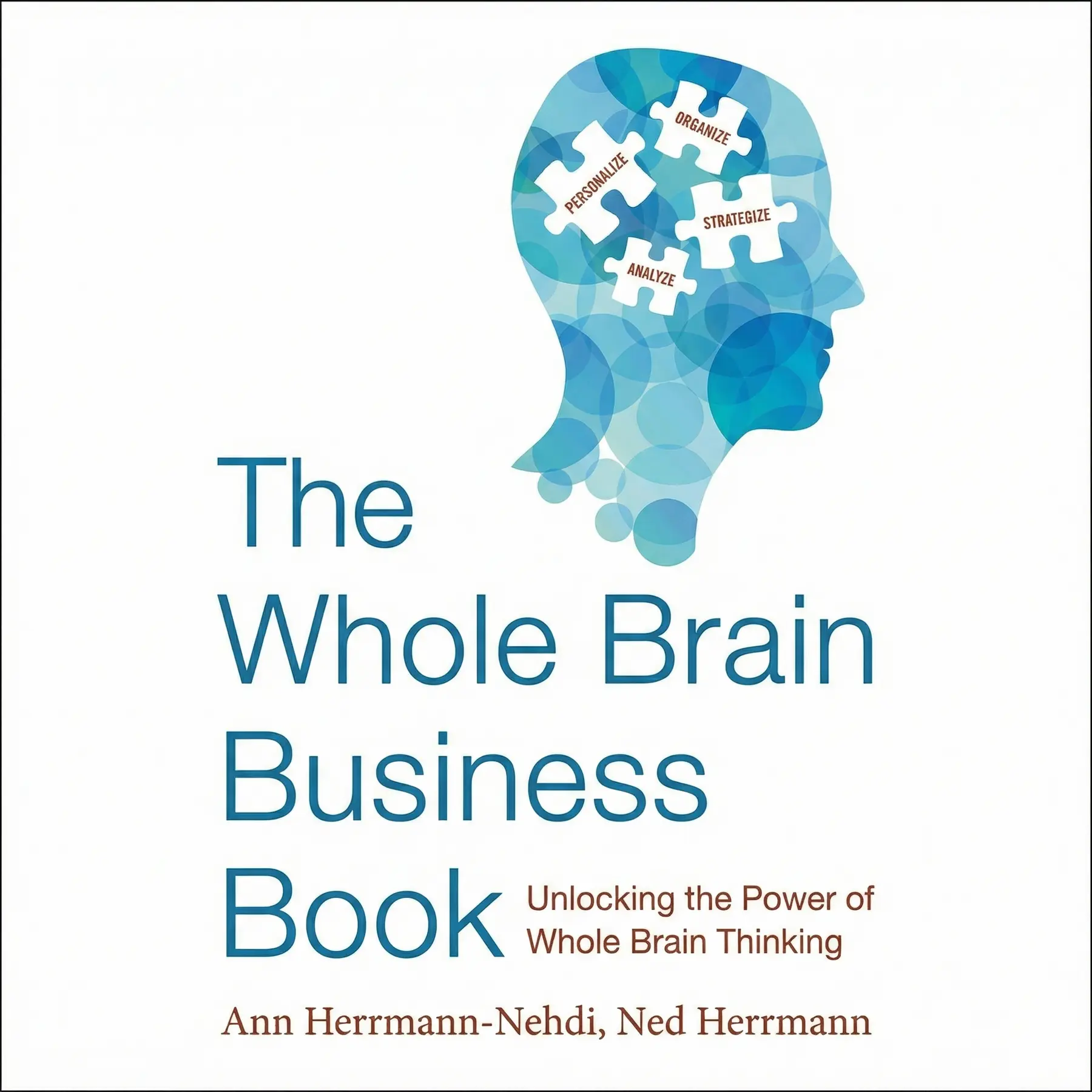
The Whole Brain Business Book: Unlocking the Power of Whole Brain Thinking
Discover how the Whole Brain Model transforms organizational performance. This guide reveals how understanding diverse thinking styles can bridge communication gaps, enhance leadership agility, and unlock hidden creative potential within any team.
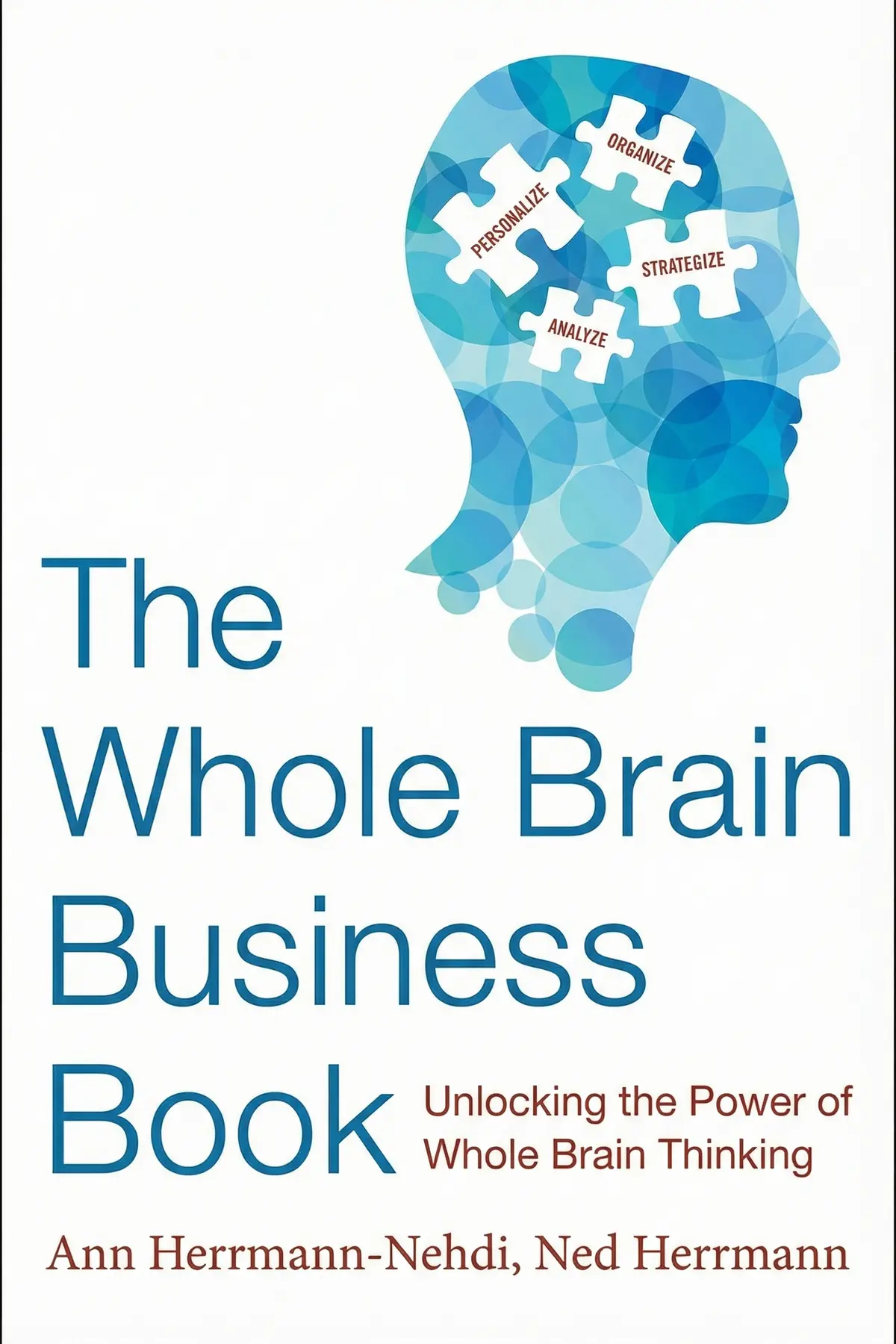
Table of Content
1. Introduction
1 min 57 sec
Imagine you are sitting in a high-stakes board meeting. On one side of the table, the Chief Financial Officer is presenting a spreadsheet filled with meticulous data, arguing that the numbers leave only one logical path forward. Across from them, the Creative Director is growing visibly restless, sketching out a vision for a bold new brand identity that completely ignores the budgetary constraints. Meanwhile, the Project Manager is nervously checking the timeline, worried about the logistical feasibility of either plan, while the HR Director is scanning the room, sensing the rising tension and worrying about how this conflict will affect the team’s morale.
This scenario plays out in thousands of offices every day, and it usually ends in frustration. We often blame these clashes on personality defects, ego, or simple stubbornness. But what if the source of the friction wasn’t character, but the very way our brains are wired to process information? This is the central premise of the work pioneered by Ned Herrmann and expanded by Ann Herrmann-Nehdi. They suggest that our brains are the most underutilized assets in any business, and the key to unlocking their value lies in understanding our thinking preferences.
In this exploration of the Whole Brain Model, we will see that everyone carries a unique mental map. Some of us are naturally drawn to logic and analysis, while others thrive on structure, human connection, or visionary possibilities. None of these styles are inherently superior, but when they operate in isolation, they create blind spots. When they are harnessed together, however, they form a powerful engine for innovation and growth.
Throughout this summary, we will break down the four quadrants of human thought and see how they influence everything from individual productivity to global corporate strategy. You will learn why diverse teams consistently outperform uniform ones and how you can personally develop “situational wholeness”—the ability to shift your mental gears to meet whatever challenge stands in your way. By the end, you’ll have a new lens through which to view your colleagues, your tasks, and your own potential.
2. The Four Quadrants of the Thinking Brain
3 min 02 sec
Explore the foundational architecture of the Whole Brain Model, moving beyond simple personality labels to understand the specific cognitive habits that define how you process reality.
3. The Power of Cognitive Diversity in Teams
2 min 41 sec
Learn why the most efficient teams aren’t the ones who agree most often, but the ones who leverage their mental differences to find more robust solutions.
4. Adapting Leadership for a Complex World
2 min 47 sec
Discover how the best leaders move beyond their default thinking styles to master ‘situational wholeness’ and guide their organizations through change.
5. The Architecture of the Creative Process
2 min 56 sec
Demystify innovation by seeing it as a structured journey through different brain states, rather than a random bolt of lightning.
6. Stretching Toward Personal Transformation
2 min 46 sec
Unlock your full potential by learning how to ‘claim mental space’ in the areas of thinking you’ve traditionally avoided or ignored.
7. Conclusion
1 min 48 sec
As we wrap up our journey through the Whole Brain Model, it’s worth reflecting on the central throughline: awareness is the catalyst for transformation. We’ve seen that our thinking preferences act like invisible lenses, coloring every interaction we have and every decision we make. When we are unaware of these lenses, we are at the mercy of our biases. We clash with colleagues, we get stuck in repetitive patterns, and we limit our own potential.
However, once we identify the four quadrants of the brain—the analytical, the organized, the interpersonal, and the strategic—the world starts to look different. We begin to see that the colleague who frustrated us with endless details isn’t being difficult; they are providing the necessary B-quadrant structure that keeps our projects from collapsing. We realize that the visionary who seems to have their head in the clouds is actually providing the D-quadrant fuel that will drive our future success.
The ultimate goal of The Whole Brain Business Book isn’t just to label people, but to provide a framework for “situational wholeness.” It’s about building the cognitive flexibility to meet any challenge with the right kind of thinking. It’s about creating teams where differences are celebrated as assets rather than managed as liabilities. And on a personal level, it’s about having the permission to grow beyond your current boundaries.
So, as you step back into your work and your life, ask yourself: Which quadrant have I been ignoring lately? What would happen if I looked at my current biggest challenge through a completely different lens? By embracing the full spectrum of human thought, you don’t just become a better professional; you become a more integrated, effective, and creative human being. The power to change your results starts with changing the way you think.
About this book
What is this book about?
The Whole Brain Business Book introduces the Herrmann Brain Dominance Instrument (HBDI) and the transformative concept of Whole Brain Thinking. It explores the idea that every individual has a unique cognitive profile, divided into four primary quadrants: the analytical, the organized, the interpersonal, and the strategic. By identifying these preferences, professionals can better understand why certain tasks feel effortless while others are draining. The book promises a roadmap for leveraging cognitive diversity to drive business results. It moves beyond simple personality tests to provide a framework for improving team collaboration, making more informed decisions, and leading through complex organizational changes. It also provides a systematic approach to innovation, showing that creativity is not a mystical gift but a process that can be managed and scaled. Ultimately, it offers a guide for personal and professional growth by teaching readers how to stretch their thinking beyond their natural comfort zones.
Book Information
About the Author
Ann Herrmann-Nehdi
Ned Herrmann was a physicist and former head of management education at General Electric, best known for developing the Herrmann Brain Dominance Instrument (HBDI), a pioneering tool in cognitive and learning style analysis. His work laid the foundation for Whole Brain Thinking, which has been widely adopted in leadership and organizational development. Ann Herrmann-Nehdi, Ned’s daughter, is a business leader, author, and expert in applied neuroscience and learning, who expanded on her father’s work as CEO of Herrmann International. She has contributed extensively to the field of thinking agility and cognitive diversity and is a sought-after speaker and consultant for global organizations.
Ratings & Reviews
Ratings at a glance
What people think
Listeners find the book educational, with one listener noting it functions as an instruction manual for our thinking brain. They consider it a worthwhile read.
Top reviews
Bunyarit
Have you ever felt like you and your boss are speaking two completely different languages? This book explains why that happens through the lens of brain specialization. The HBDI framework is more than just another personality test; it’s a tool for navigating complex corporate environments. I loved the deep dive into how different quadrants respond to change. For instance, A-quadrant thinkers need facts, while D-quadrant types need a vision. Integrating these styles within a single team can apparently boost efficiency by over 60 percent, which is a staggering statistic. The case studies, like the bank merger that avoided layoffs by using whole-brain planning, were fascinating. It really makes you realize that creativity isn't just for the marketing department. We all have it; we just use different mental pathways to get there. Highly recommended for leaders who want to stop the thinking silos in their tracks.
Show morePiyanart
I decided to pick this up after hearing about the HBDI model in a seminar, and it did not disappoint. The most striking takeaway for me was the idea of nurture over nature in our cognitive development. The fact that seventy percent of our thinking patterns are learned means we aren't stuck in our ways. I loved the comparison to how children learn technology without the mental walls adults build. It's an inspiring call to reclaim that openness. The book provides fantastic, actionable steps to stretch into your non-dominant quadrants. Whether it's through drawing exercises or reimagining problem statements, the focus on 'everyday creativity' is refreshing. It’s not just for 'artistic' types; it’s for anyone who wants to solve problems more effectively. This is a must-read for entrepreneurs who need to balance big visions with gritty execution.
Show moreVimolwan
Finally, a guide that treats innovation as a process rather than a mystery! What sets this book apart is its sheer practicality. It isn't just theory; it’s a guidebook for real-world application. I was particularly impressed by the chapter on innovation stages. The authors break down the creative process into stages that align with different quadrants—curiosity, incubation, evaluation, and execution. This makes creativity feel like a manageable process rather than a stroke of luck. I also enjoyed the 'permission certificates' mentioned for trying new thinking styles; it’s a small touch that addresses the psychological fear of looking incompetent. The writing is clear, and the insights into how to influence different types of thinkers are gold. If you want to build a team that can actually solve complex problems without constant friction, read this.
Show moreLucia
Looking at business through the lens of neuroscience changed my entire perspective on leadership. My biggest takeaway from this read was the concept of the 'cognitive fingerprint.' We all have these ingrained patterns, but we aren't prisoners to them. The book provides a powerful roadmap for personal growth by showing us how to stretch into our 'blind spots.' I’ve always avoided the interpersonal C-quadrant, but the strategies here for building empathy and connection are actually logical and doable. It’s a transformative way to look at performance. The authors manage to blend GE-era research with modern management theory in a way that feels accessible. Whether you’re an entrepreneur or a middle manager, understanding the four quadrants will change how you approach every meeting and project. It truly is a whole brain approach to success.
Show moreKob
This book acts as a comprehensive instruction manual for your mental hardware. While most business guides tell you what to do, Herrmann-Nehdi focuses on how you think while doing it. The Whole Brain model—dividing thinking into analytical, organizational, interpersonal, and strategic quadrants—is eye-opening. I found the section on 'situational wholeness' particularly useful for my day-to-day project management. It helps you recognize when you’re stuck in a B-quadrant rut of spreadsheets and need to pivot to C-quadrant relationship building. Sometimes the prose gets a bit dry, and the authors certainly love their own model, but the practical applications for team alignment are undeniable. If you’ve ever wondered why your team reaches consensus fast but fails to innovate, the answer is likely in these pages. It's a solid read for anyone wanting to understand the mechanics of cognitive diversity.
Show moreSophia
Dealing with team dynamics is usually a headache, but this book provides a much-needed roadmap. I appreciated the specific focus on the 'Leadership Pipeline' and how our thinking preferences must evolve as we climb the ladder. What worked for me as an individual contributor—heavy on A and B quadrants—won't work now that I'm managing a diverse department. The authors emphasize that cognitive diversity is a strength, even if it creates friction initially. The writing style is professional and well-organized, though it occasionally feels like a long advertisement for their assessment tool. Still, the practical advice on communication is worth the price of admission alone. I've already started tailoring my emails to match my colleagues' profiles—data for the analysts and big-picture goals for the visionaries—and the response has been noticeably better.
Show moreDavid
Most business books promise the world, but this one actually delivers a tangible framework. The Whole Brain model is a classic for a reason. I found the section on how different professions attract specific thinkers to be particularly spot-on. It explains so much about why departments like Finance and Design often clash! The truth is, we need that tension to create better solutions. The authors do a great job of showing how situational wholeness is the key to modern leadership. The book is structured logically—very B-quadrant friendly—but it has enough heart and vision to keep other types engaged too. My only gripe is that it can feel a bit dated in its examples. Nonetheless, the core psychology is timeless and incredibly relevant for today's remote and hybrid teams. It is a worthy read for any manager.
Show morePranee
It's rare to find a book that is both incredibly insightful and incredibly repetitive at the same time. The core concept—the four quadrants of thinking—is brilliant and transformed how I view my coworkers. I’m definitely a B-quadrant organizer, and realizing my boss is a D-quadrant strategist explains our constant friction. However, I’ve got to say, the authors could have made their point in about a hundred fewer pages. You’ll find the same ideas recycled throughout the chapters on leadership, innovation, and personal growth. It feels like they were trying to fill a page quota. To be fair, the information is valuable, but the wordiness makes it hard to stay engaged. If you can skim through the repetitive bits and focus on the exercises, there is a lot of gold here. Just don't expect a fast-paced narrative.
Show moreSupaporn
After working in HR for a decade, I’ve seen every brain model under the sun. This one is solid, but it isn’t the 'secret sauce' the authors claim it to be. In my experience, these types of programmes work because people start paying attention to one another, not necessarily because of a specific quadrant theory. That said, the book is a decent primer on cognitive diversity. It’s well-written and offers plenty of exercises, which I appreciate. However, it’s a bit of a slog. The chapters on organizational change are particularly long-winded. I’ll give it credit for being a comprehensive instruction manual for team-building, but it didn't exactly blow my mind. It’s a useful reference to have on the shelf for the models alone, but maybe not one you need to read cover-to-cover if you are already familiar with the HBDI.
Show moreSiraporn
The chapter regarding Ned Herrmann’s time at General Electric felt more like a victory lap than a teaching moment. To be frank, I found this volume quite frustrating. While the underlying model is credible, the tone of the book is off-putting. It feels like the authors spend half the time boasting about their successes rather than providing new insights. For a book that preaches the importance of appealing to all thinking styles, it is surprisingly dense and wordy. As a creative thinker myself, I was looking for more visual representations, but I got buried in technical jargon and repetitive explanations. It's ironic that they fail to practice the whole brain communication they advocate for. There are some useful guidelines buried in here, but you have to dig through a lot of fluff to find them. I'd suggest finding a summary online instead of slogging through the whole thing.
Show moreReaders also enjoyed
A Year with Peter Drucker: 52 Weeks of Coaching for Leadership Effectiveness
Joseph A. Maciariello


Acting with Power: Why We Are More Powerful Than We Believe
Deborah Gruenfeld
All In: How Great Leaders Build Unstoppable Teams
Mike Michalowicz

7 Powers: The Foundations of Business Strategy
Hamilton Helmer
AUDIO SUMMARY AVAILABLE
Listen to The Whole Brain Business Book in 15 minutes
Get the key ideas from The Whole Brain Business Book by Ann Herrmann-Nehdi, plus 5,000+ more titles in English and Thai.
- 5,000+ titles
- Listen as much as you want
- 7-day free trial
- Cancel anytime







