

17 min 16 sec
Think Like a UX Researcher: How to Observe Users, Influence Design, and Shape Business Strategy
Learn to move beyond surface-level testing by adopting a strategic, detective-like mindset. This guide reveals how to uncover deep user insights through observation, rigorous questioning, and scientific analysis to build products users truly love.
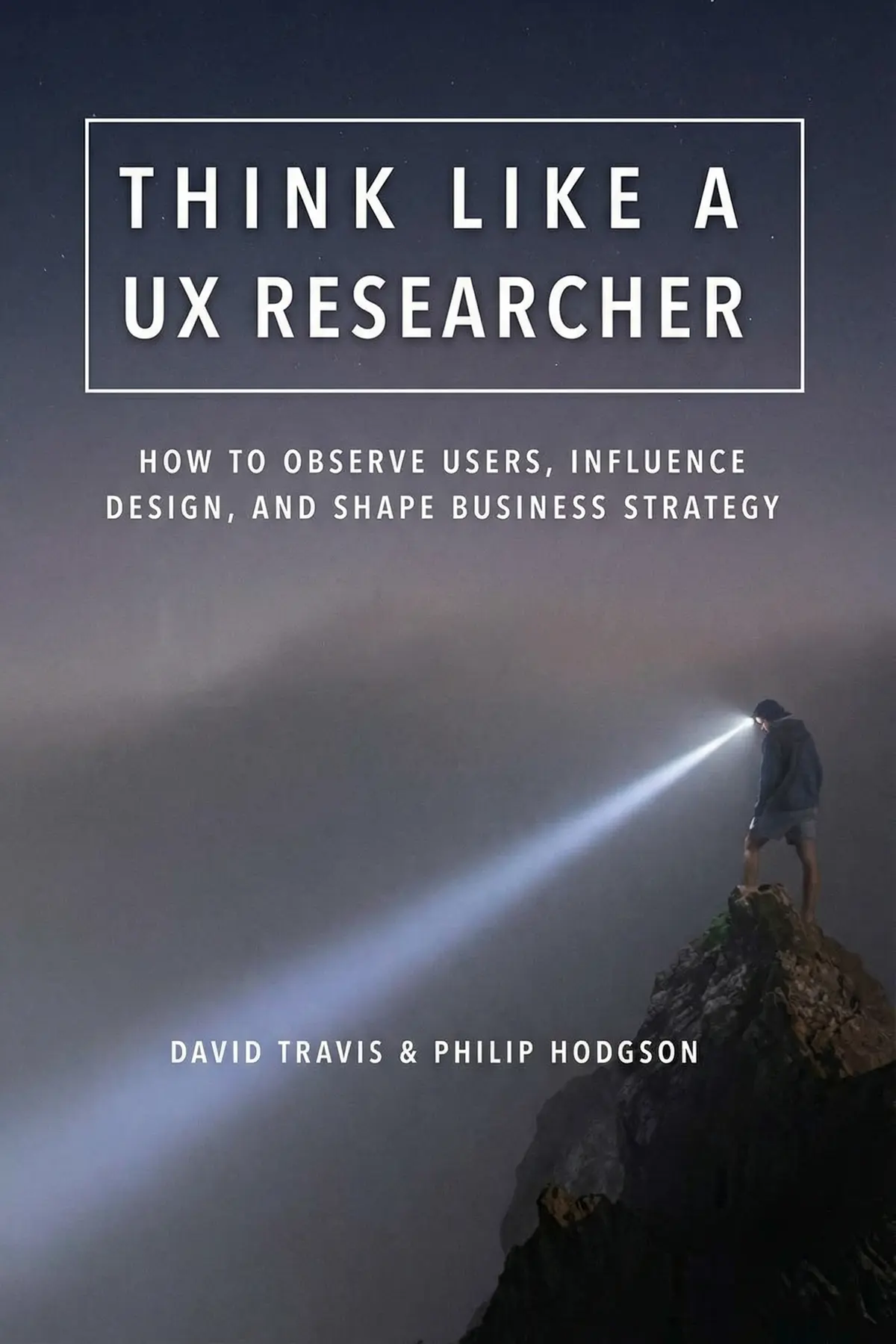
Table of Content
1. Introduction
1 min 22 sec
Have you ever wondered why some products seem to effortlessly capture the market’s heart while others, even those backed by massive budgets and talented engineers, simply vanish without a trace? It is a riddle that haunts many businesses. Often, we assume the secret lies in a flashier feature or a bigger marketing push. But the real answer usually lies much deeper: it is found in the quality of the user experience research. The difference between a product that people adore and one they ignore is rarely about the technical bells and whistles; it is about how well the creators truly understood the human being on the other side of the screen.
In this summary, we are going to explore the strategic mindset required to move beyond basic testing and truly inhabit the world of your users. We will move away from the idea of research as a mere series of checkboxes and toward a model of rigorous, detective-like investigation. You will discover why listening to what users say is often the fastest way to get the wrong answer, and why observing what they actually do is the golden key to true innovation. We will look at how to avoid the common mental traps that lead even the smartest teams astray and how to bring a level of scientific skepticism to your entire design process. By the end of this journey, you will have a roadmap for asking the more difficult questions, gathering more reliable data, and turning those insights into products that solve real problems in a way that feels like magic to the user.
2. Avoiding the Psychological Traps of User Research
2 min 05 sec
Discover the seven most common mistakes that derail user studies and learn how to swap assumptions for evidence-based observation.
3. Adopting the Mindset of a UX Detective
1 min 51 sec
Learn how to solve the mysteries of user behavior by applying the rigorous investigative methods of history’s most famous detective.
4. Defining the Problem Before Seeking the Solution
1 min 52 sec
Discover why the most expensive research fails without a clear question and how to build a foundation for actionable insights.
5. Mining Insights from Secondary Research
1 min 39 sec
Uncover how to save time and resources by effectively utilizing the vast amount of information that already exists.
6. Managing Stakeholders as Strategic Partners
1 min 44 sec
Learn to steer conversations away from preconceived solutions and toward the underlying problems that drive business value.
7. The Power of Design Ethnography
1 min 45 sec
Discover why watching users in their natural habitat reveals deeper truths than any laboratory test or survey ever could.
8. Mastering the Art of the Contextual Interview
1 min 45 sec
Learn the master-apprentice model for interviewing that turns users into teachers and researchers into insightful students.
9. Applying Scientific Rigor to Prevent Product Failure
1 min 53 sec
Use the tools of critical thinking and skepticism to protect your projects from the dangers of corporate groupthink.
10. Conclusion
1 min 20 sec
As we have seen, thinking like a UX researcher is about much more than just running a few tests or asking people for their opinions. It is a disciplined, strategic approach that requires the curiosity of a detective, the skepticism of a scientist, and the empathy of an ethnographer. By avoiding the common psychological pitfalls of bias and credulity, and by focusing on what people actually do rather than what they say, you can uncover the deep, underlying truths that lead to truly great design.
The throughline of this journey is the importance of evidence. Whether you are conducting desk research, interviewing stakeholders, or observing users in their natural environments, your goal is always to move from assumption to certainty. When you define your problems clearly and validate your ideas through rigorous observation and critical thinking, you stop guessing and start building.
As you move forward, try to implement these ideas in your daily work. Start by spending just two hours every few weeks directly watching your users. Challenge your own assumptions and encourage your team to do the same. Remember that your job is not just to design a product, but to solve a mystery for a human being. If you can do that, you will not only create better products, but you will also become an indispensable leader in your organization’s strategy. Thank you for listening, and we hope these insights help you build something that truly matters to your users.
About this book
What is this book about?
Think Like a UX Researcher is a deep dive into the strategic side of user experience. It moves the conversation away from simple usability testing and toward a holistic understanding of how users interact with products in the real world. The authors argue that the biggest mistakes in product development often stem from psychological biases, poor question design, and a failure to observe actual behavior over stated opinions. The book provides a roadmap for professionals to transition from being simple technicians to becoming strategic partners in the business. It offers specific methodologies—such as design ethnography and secondary research—that help teams uncover the hidden 'why' behind user actions. By applying a scientific lens to the design process, researchers can move beyond corporate groupthink and validate their ideas with hard evidence. The promise is a more reliable, user-centered approach to innovation that reduces the risk of product failure and creates lasting value for both the user and the business.
Book Information
About the Author
David Travis
David Travis, an ethnographic researcher and usability expert, has written three books on UX strategy and trained over 30,000 students through his courses. Philip Hodgson has more than 25 years of UX research experience and has influenced product design across various markets and industries worldwide. Both authors hold PhDs in experimental psychology.
Ratings & Reviews
Ratings at a glance
What people think
Listeners find the work very educational, as it is brimming with research-supported user experience insights and filled with practical case studies and examples. It is regarded as essential reading for UX practitioners, and one listener highlights that the material is quite simple to consume.
Top reviews
Sarocha
Finally got around to reading Travis and Hodgson’s work, and it’s a refreshing departure from the dry, academic texts often found in this field. The authors excel at bridging the gap between theoretical frameworks and the messy reality of day-to-day product development. I particularly appreciated the focus on behavioral data over what people claim to do, which is a nuance many researchers miss. Each chapter functions as a standalone lesson, making it the perfect companion for a morning commute or a quick lunch break. While some might find the essay format a bit disjointed, I found it incredibly easy to digest without feeling overwhelmed. It’s packed with evidence-based strategies that I could implement immediately in my current project. This is a must-have for anyone who wants to stop just doing research and start thinking like a true investigator.
Show moreSukit
As a senior practitioner, I wasn't sure if I would find much new material here, but I was pleasantly surprised by the depth of the insights. The book does a fantastic job of articulating high-level management strategies alongside the more granular, tactical skills required in the researcher's toolkit. Truth is, even after years in the industry, I needed the reminder to evaluate the strength of evidence more critically than I have been lately. My only minor gripe is that the section on survey design felt a bit rushed compared to the other brilliant chapters. Still, the reflective questions at the end of each segment are gold for team discussions and individual professional growth. It’s rare to find a book that serves both juniors and veterans with such equal utility and grace.
Show moreTak
The structure of this book makes it a standout choice for busy professionals who don't have time to plow through a 400-page narrative. By presenting the content as a series of bite-sized, actionable essays, Travis and Hodgson ensure that the reader remains engaged and focused. To be fair, calling it a textbook would be a disservice because it feels much more like a mentorship session with two industry giants. I was especially drawn to the chapters on persuading stubborn stakeholders who view research as a bottleneck rather than a catalyst. The real-life examples and case studies provided a solid foundation for every piece of advice offered throughout the text. It’s an essential read for anyone navigating the complex world of modern user experience design.
Show morePawinee
Ever wonder why your research findings aren't actually influencing the product roadmap? This book provides the answers by focusing on the psychological and organizational hurdles that every researcher faces. The shift from a simple quantitative vs. qualitative dichotomy into an attitudinal vs. behavioral framework was a massive "aha" moment for me. Not gonna lie, I’ve been recommending this to every junior on my team because it builds the foundational mindset necessary for success. The writing style is lucid, engaging, and devoid of the unnecessary jargon that plagues so much of our industry's literature. It’s not just about the methods; it’s about the philosophy of understanding human behavior in a commercial context and delivering real value to the business.
Show moreSophia
Wow, this really shifts the paradigm of what a UX resource should look like in the current market. Instead of focusing solely on tools, Travis and Hodgson dive deep into the cognitive biases and mental models that shape our research outcomes. I was captivated by the way they unpacked the intricacies of team-building and high-level strategy without losing sight of the practitioner's daily grind. The tone is perfectly balanced—professional yet accessible, with enough wit to keep the pages turning. In my experience, most books in this niche either go too deep into academia or stay too shallow, but this one hits the sweet spot. It’s a refreshing, thought-provoking guide that will undoubtedly hone your craft and improve your evidence-based decision-making.
Show moreNiphon
After hearing so much buzz about "Think Like a UX Researcher," I had high expectations, and I'm happy to report they were largely met. The authors have a gift for taking complex psychological concepts and making them incredibly easy to understand for a general audience. I particularly enjoyed the focus on real-world studies and research-backed data, which gives the advice a level of authority that is often missing from "opinion-led" UX books. My favorite part was the discussion on why behavioral data is usually more reliable than what users say during interviews. It’s a lucid, engaging read that avoids the fluff and gets straight to the heart of what makes research effective. This belongs in every professional's library.
Show moreNew
This isn't your typical how-to guide, and that’s exactly why it’s so vital for the current landscape of digital product design. By focusing on the "why" and the "how we think," the authors empower you to adapt to any methodology or organizational constraint. The chapter on behavioral versus attitudinal data is worth the price of the book alone, providing a critical lens for any practitioner. I loved the provocative questions at the end of each essay—they really force you to examine your own biases and current team practices. Though some might find the lack of a linear narrative confusing, the flexibility of the structure allows for a more personalized learning experience. It is easily the most insightful book on the topic I have encountered.
Show moreKom
In my experience, the essay-style format is the greatest strength of this book, allowing for a non-linear exploration of complex topics. I found myself skipping around based on the challenges I was facing at work that week, and every chapter delivered substance. The actionable tips for building a research culture are particularly relevant for those of us working in organizations with low UX maturity. While the career advice section was a bit thin, the technical sections on usability testing and data interpretation were masterfully executed. Frankly, the inclusion of reflection questions makes this feel like a workshop in book form, which is incredibly valuable for self-led learners. It’s a solid 4-star read that I’ll definitely be revisiting as my career progresses into more senior leadership roles.
Show moreSven
Picked this up on a recommendation from a colleague, and I’m genuinely impressed by how much practical wisdom is packed into these pages. It’s not a book you read once and put on a shelf; it’s a toolkit you keep on your desk for constant reference. Personally, I think the most valuable parts are the sections on how to properly evaluate the strength of evidence before making big design bets. Some chapters felt a little too short for the weight of the topics they covered, leaving me wanting just a bit more depth in certain areas. However, the overall quality of the insights far outweighs these minor shortcomings. It’s an excellent investment for any designer or researcher serious about elevating their impact.
Show moreOm
Look, I wanted to love this given the rave reviews, but it felt a bit like a collection of blog posts stitched together rather than a cohesive manual. Some of the chapters are undeniably brilliant, yet others felt repetitive or slightly out of touch with the hyper-fast pace of a productivity-obsessed startup. In my experience, the advice on long-term ethnographic studies is often hard to sell to a CEO who wants results by yesterday. That said, the authors’ expertise is clear, and the sections on behavioral analysis are top-notch. If you are looking for a linear "how-to" manual, this probably isn't the best place to start your journey. It works better as a reference book to dip into when you need a specific spark of inspiration or a new perspective on a persistent problem.
Show moreReaders also enjoyed



AUDIO SUMMARY AVAILABLE
Listen to Think Like a UX Researcher in 15 minutes
Get the key ideas from Think Like a UX Researcher by David Travis, plus 5,000+ more titles in English and Thai.
- 5,000+ titles
- Listen as much as you want
- 7-day free trial
- Cancel anytime







