
A Year with Peter Drucker: 52 Weeks of Coaching for Leadership Effectiveness
Joseph A. Maciariello
Explore the hidden mechanics of the world through the lens of systems thinking, learning how interconnected elements and feedback loops shape everything from our biology to global economics and environmental sustainability.
1 min 24 sec
Have you ever looked at a recurring problem in your life or in society and wondered why it keeps happening despite everyone’s best efforts to fix it? Usually, we try to solve problems by looking at a single cause and effect. We think that if we just change one thing, everything else will fall into line. But the reality is that the world doesn’t work in straight lines. It works in circles, webs, and complex structures that we call systems.
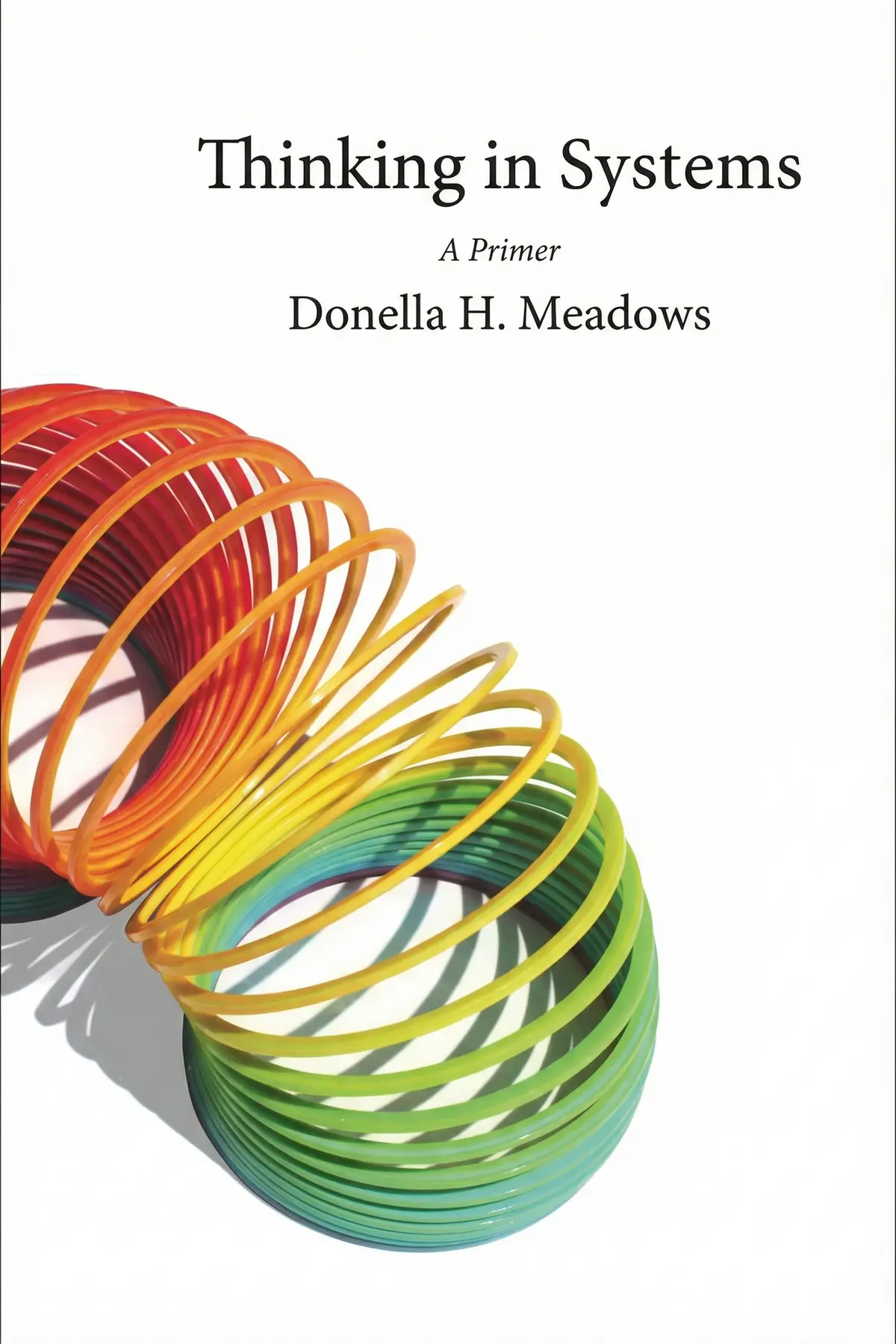
Thinking in Systems is about pulling back the curtain on these structures. A system isn’t just a machine; it is your body, your family, the company you work for, and the ecosystem of the entire planet. These are all collections of parts that work together to achieve a specific purpose. When we learn to see the world through this lens, we stop reacting to individual events and start understanding the underlying patterns.
In this exploration, we are going to dive into the vocabulary of systems. We will look at how things accumulate and drain, how self-regulating loops keep things stable, and how certain loops can cause things to spiral out of control. We will also look at the common traps that systems fall into—the reasons why well-intentioned policies often fail and why resources are so often depleted. Most importantly, we will find the leverage points: those places in a system where a small shift can lead to a massive change in behavior. By the end of this journey, you won’t just see the trees; you’ll see the forest and the hidden forces that make it grow.
1 min 56 sec
Beyond just a collection of parts, every system is defined by the unseen connections and the underlying purpose that drives its behavior over time.
1 min 43 sec
The foundation of system behavior lies in what accumulates and what moves, creating a dynamic balance that defines how the system looks at any moment.
1 min 53 sec
Discover how systems regulate themselves through balancing loops and how they drive their own growth or decay through reinforcing loops.
2 min 07 sec
Learn why the most successful systems are those that can endure shocks, organize themselves, and maintain a functional hierarchy.
1 min 59 sec
Human intuition is often ill-equipped for a nonlinear world, leading to common errors in how we interpret events and set boundaries.
1 min 49 sec
Examine the systemic archetypes that lead to gridlock and the depletion of shared assets, and how to break these destructive cycles.
1 min 46 sec
Adjusting the physical structure of a system, such as its storage capacity and bottlenecks, can lead to significant improvements in performance.
1 min 55 sec
Often, the most powerful changes come not from moving physical parts, but from restoring missing information and rewriting the rules of engagement.
1 min 57 sec
The deepest leverage points involve shifting the overall goal of the system and challenging the fundamental beliefs that hold the structure together.
2 min 06 sec
In the end, systems thinking is not just a technical skill but a mindset that requires humility, observation, and an appreciation for the immeasurable.
1 min 28 sec
The journey through the world of systems reminds us that we are part of a vast, interconnected web. We have seen that a system is defined by its purpose and its connections, more than its physical parts. We have explored the way stocks and flows create the visible world and how feedback loops—both balancing and reinforcing—control the rhythm of life and growth. We have also learned about the common pitfalls that wait for us when we ignore systemic logic, such as the Tragedy of the Commons and policy resistance.
But the ultimate takeaway of systems thinking is one of empowerment. While we cannot control the world with the flick of a switch, we have found that there are leverage points where we can make a difference. By restoring information, changing rules, and most importantly, shifting our goals and paradigms, we can influence even the most stubborn systems.
As you move back into your daily life, take the ‘systems view.’ When you see a problem, don’t just look for a villain to blame; look for the structure that makes the behavior possible. Be patient with the delays, be protective of resilience, and stay curious about the feedback loops around you. The world is complex, but it is not incomprehensible. By learning to think in systems, you gain the ability to navigate that complexity with more wisdom and a deeper sense of connection to the whole. Always keep your eyes on the prize and maintain the expectation of a positive outcome, because the way we think about the system is often the very thing that determines its future.
At its core, this work is an invitation to stop seeing the world as a collection of isolated events and start seeing it as a web of interconnected systems. Donella Meadows provides a foundational toolkit for understanding the complex structures that govern our lives, whether they are as small as a single cell or as vast as the global climate. By moving away from linear logic and embracing the messy, dynamic reality of feedback loops, stocks, and flows, readers gain a new perspective on why problems persist and how they can be solved. The book promises to transform your problem-solving abilities by revealing where the most powerful points of leverage exist. You will discover how systems maintain themselves, why they sometimes fail spectacularly, and how to redesign them for greater resilience and health. It is a guide for anyone looking to navigate a complex world with more wisdom, patience, and effectiveness, offering a bridge between technical analysis and intuitive understanding.
Donella Meadows was a pioneering environmental scientist, educator, and writer who was widely regarded as a visionary in the field of systems analysis. Her work emphasized the intersection of environmental health and social systems. During her lifetime, she became one of the world's most influential analysts of complex global trends, eventually earning the prestigious MacArthur Genius Grant for her contributions. Meadows passed away in 2001, leaving behind a legacy of systems-oriented thinking that continues to inform modern sustainability and policy.
Listeners find this work to be a superb entry point into systems thinking, praising its readable prose and practical illustrations. Furthermore, they characterize it as a brief but powerful listen with deep insights that transform lives, and one listener mentions that it offers a practical toolkit for engaging with systems. Additionally, listeners appreciate its ethical framework, especially its inclusive take on sustainability, and its ability to simplify intricate concepts.
Wow. This isn't just a manual; it’s a complete rewiring of how you perceive reality. Donella Meadows takes incredibly dense concepts like feedback loops and stocks and flows and makes them feel intuitive. Truth is, I expected a dry textbook, but what I got was a profound moral perspective on how we interact with the world. The writing is accessible and rhythmic, avoiding the jargon that usually bogs down technical primers. I particularly loved the section on system leverage points—it’s a game-changer for anyone trying to influence organizational change. While some examples feel tied to its original 1993 context, the underlying logic is timeless. It forces you to look past surface-level events to the hidden structures driving them. If you want to understand why 'success to the successful' is such a dangerous trap, read this. It is a quick but deeply impactful read that I'll be returning to for years.
Show moreEver wonder why the world feels so chaotic despite our best efforts to control it? Meadows explains that our failure to think in systems is usually the culprit. This book is a masterpiece of clarity, turning the 'messy' real world into a series of understandable patterns and archetypes. To be fair, she admits much of this is common sense, but it's the kind of common sense that is rarely practiced in high-stakes decision-making. I was especially moved by her rehabilitation of President Carter’s approach to the oil shock; it shows how counter-intuitive 'systemic' solutions can be. The prose is elegant and doesn't waste a single word. It’s a life-changing shift in mindset that makes you stop looking at individual players and start looking at the rules of the game. If everyone in government read this, we might actually start solving root causes instead of just chasing symptoms. Simply brilliant.
Show moreThe chapter on systems traps alone is worth the price of admission for this book. It’s rare to find an author who can explain why 'success to the successful' leads to monopolies using such clear, non-mathematical language. Meadows has a gift for making you realize that the problems we face are often structural rather than personal. This book changed how I view the news; I no longer see events in isolation but as outputs of a larger, invisible machine. The emphasis on 'resilience' over 'efficiency' is a lesson that modern business desperately needs to learn. I appreciate that the volume was published posthumously because it feels like a raw, honest distillation of a lifetime of wisdom. It’s impactful, profound, and surprisingly quick to get through. If you are tired of surface-level analysis, this book will give you the goggles you need to see the underlying architecture of life.
Show moreTruth is, I was skeptical about the sustainability focus at first, but Meadows won me over with her sheer logic. She doesn't just tell you that the environment is important; she shows you how the flows of our economy are fundamentally linked to the stocks of our planet. The way she breaks down 'non-linearity' helped me understand why small changes can lead to such massive, unexpected shifts in behavior. Sentence by sentence, this book is a joy to read—it's clear, rhythmic, and deeply humane. It advocates for a world where we honor information and pay attention to what is important, not just what is quantifiable. This is more than a business book; it’s a guide for being a better inhabitant of Earth. I’ve recommended it to everyone in my circle, from engineers to teachers. It really is a must-read for anyone who cares about the future.
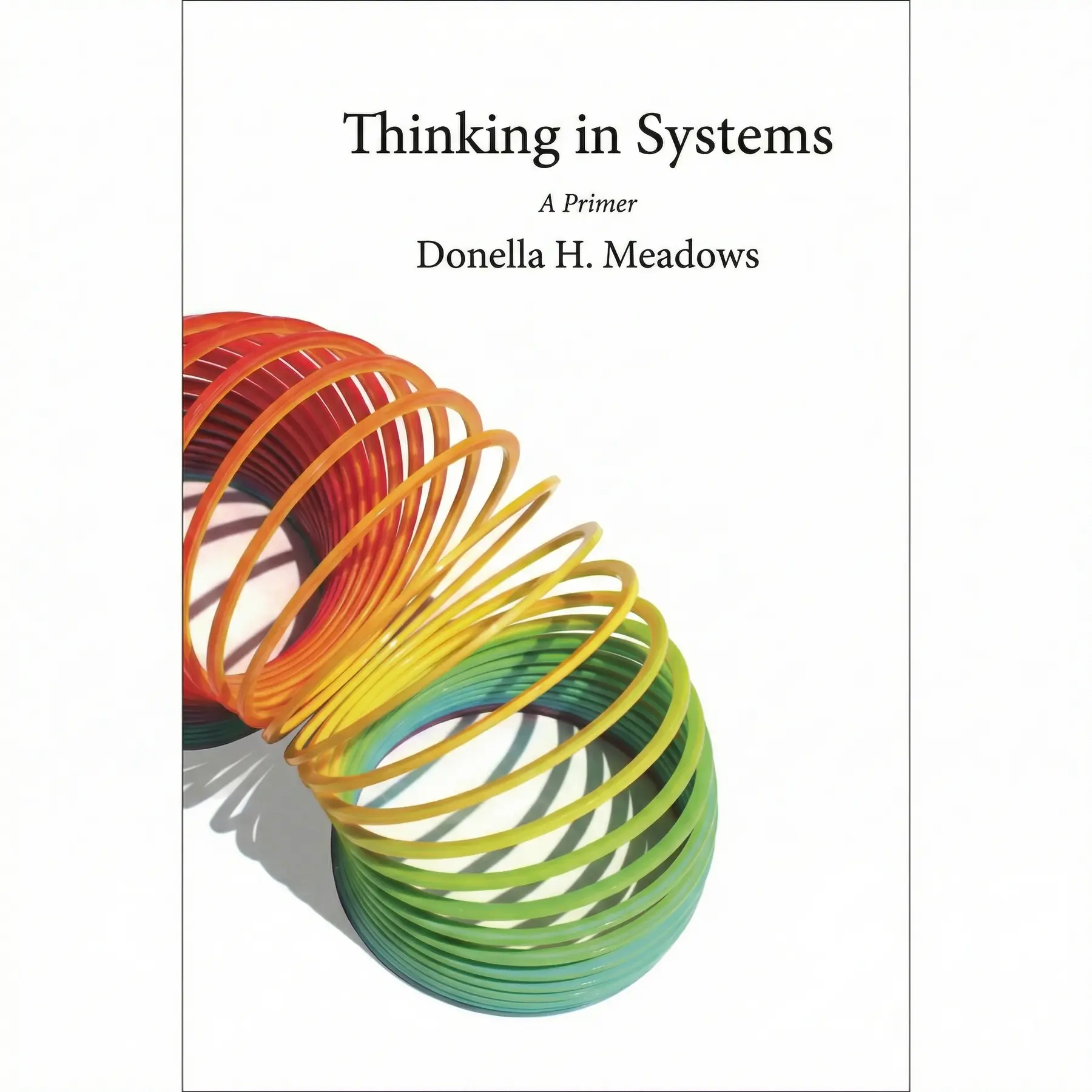
Show moreFinally got around to reading this classic and it totally lived up to the massive reputation it has. Meadows takes the slinky on the cover and uses it as a perfect metaphor for internal structure driving external behavior. I loved how she emphasized that the problem isn't usually the people, but the system they are operating within. This perspective is so liberating and helps reduce the frustration one feels when looking at broken institutions. The writing style is engaging and the short chapters make it easy to digest one concept at a time. It’s one of those rare books that makes you feel smarter with every page you turn. By the end, you won't be able to look at a thermostat, a corporation, or a forest the same way again. It provides a useful, accessible toolset for anyone ready to engage with the world more effectively. Five stars for being a genuine eye-opener.
Show moreAfter hearing so much about the MIT school of system dynamics, I finally dived into this classic primer. The layout is remarkably clear, using simple diagrams that help visualize how systems actually function over time. Meadows is at her best when discussing 'bounded rationality' and why even 'rational' actors end up creating a tragedy of the commons. Frankly, the chapter on systems traps—like policy resistance and escalation—was the highlight for me. It perfectly explained why some government interventions, like the birth rate policies in Romania, fail so spectacularly. My only minor gripe is that the first few chapters feel a bit slow and repetitive for those already familiar with basic logic. Still, as a toolset for navigating complexity, it is indispensable. It encourages you to honor information and expose your mental models to the light of day. This is essential reading for anyone in policy or management.
Show moreAs someone who works in software architecture, I found the concepts of reinforcing feedback and delays incredibly pertinent to my daily work. The way Meadows describes how systems are responsible for their own behavior is a refreshing departure from the blame-game culture prevalent in most industries. I gotta say, the distinction between stock-limited and flow-limited resources was a 'lightbulb' moment for my understanding of scalability. The book is short and punchy, yet it manages to tackle big questions about sustainability and ethics without feeling preachy. Some critics argue it’s a bit too informal or 'MIT-centric,' and to be fair, it does ignore some competing systems theories. However, for a beginner, that streamlined focus is actually a benefit rather than a drawback. It provides a solid foundation before you go off into more complex, academic territory. Definitely a worthwhile addition to any professional's bookshelf.
Show moreLook, this is a fantastic primer, even if it feels slightly dated in its specific geopolitical examples. The core strength lies in its ability to simplify complexity without being reductive or insulting to the reader's intelligence. I found the discussion on 'eroding goals' to be particularly haunting, as it applies to everything from personal fitness to global climate policy. The author’s voice is warm and encouraging, which helps when you’re wrestling with the idea that our mental models are always incomplete. Personally, I would have liked more rigorous evidence or specific case studies showing 'systems thinking' in action within a corporate setting. It leans a bit heavily on environmentalism, which is Meadows' background, but the logic translates well to any field. It’s a tool for seeing the big picture when everyone else is focused on the pixels. A solid four stars for its utility and grace.
Show moreIn my experience, the book skims over the finer points of theory in favor of an informal, almost conversational tone. While this makes it accessible, it also leads to some conceptual incoherence that frustrated me as a student of formal logic. The author frequently slides between realism and constructivism without acknowledging the tension between the two. Also, the narrow focus on system dynamics at MIT means that many other valuable systemic approaches are completely ignored. This creates a bit of a 'success to the successful' trap for the book itself, crowding out more nuanced accounts of systems thinking. To be fair, the examples like the Romania population policy are fascinating and help ground the abstract concepts in reality. It’s a decent introductory text for those who know nothing about the subject. However, those looking for a rigorous, academic treatment of systems theory should probably look elsewhere.
Show moreNot what I expected given the massive hype surrounding this title on social media. While it is certainly an easy read, I found much of the content to be a collection of half-baked thoughts that don't quite cohere into a rigorous theory. Epistemologically, the book oscillates between claiming we can model reality and saying models are just useful fictions. This muddled approach left me feeling like I was reading a book of 'common sense' platitudes rather than a scientific text. For instance, telling the reader to 'get the beat of the system' is poetic but hardly actionable advice for a professional analyst. Furthermore, the focus is quite narrow, ignoring decades of systems research outside of the specific MIT brand of dynamics. It feels more like a mystical manifesto for sustainability than a serious tool for understanding complex structures. It might be fine for a complete novice, but for me, it lacked the depth I was looking for.
Show moreJoseph A. Maciariello
Deborah Gruenfeld

Mike Michalowicz


AUDIO SUMMARY AVAILABLE
Get the key ideas from Thinking in Systems by Donella H. Meadows, plus 5,000+ more titles in English and Thai.







