
16 min 22 sec
This Is Why You Dream: What Your Sleeping Brain Reveals About Your Waking Life
Explore the hidden architecture of your sleeping mind. This guide reveals how dreams regulate emotions, spark creative breakthroughs, and serve as a vital training ground for the challenges of waking life.
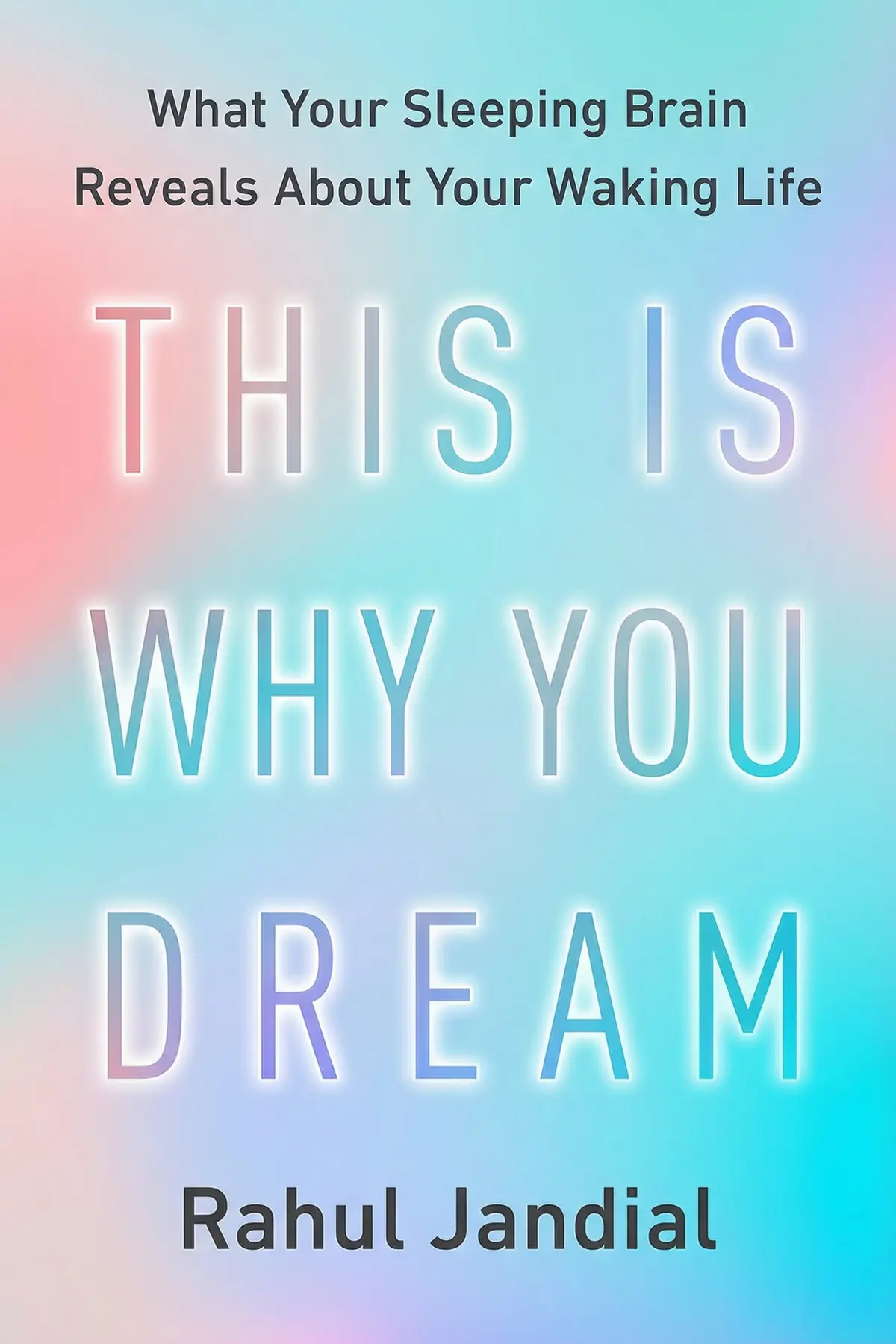
Table of Content
1. Introduction
1 min 53 sec
Every night, as you drift into sleep, a remarkable transformation occurs within your skull. The world around you fades, your muscles go slack, and your conscious self seems to vanish—only to be replaced by a vivid, often bizarre, and deeply emotional internal landscape. We spend roughly a third of our lives in this state, yet for most of human history, the purpose of these nightly journeys remained a mystery. In the past, we looked to the heavens or the mystical for answers. The ancient Egyptians viewed dreams as divine messages, while the Romans and Greeks scoured them for glimpses of the future. Across various cultures, dreams have been seen as soul journeys or spiritual guides. But today, the conversation has shifted from the mystical to the biological.
In this exploration of Rahul Jandial’s insights, we are moving away from the idea that dreams are just random noise or spiritual omens. Instead, we are looking at them through the lens of modern neuroscience. What we find is that the border between your waking life and your sleeping life is far more porous than you might think. Your brain doesn’t simply turn off when you hit the pillow; it shifts into a different mode of operation, one that is crucial for your emotional health, your ability to solve complex problems, and your creative genius.
As we dive into the science of why we dream, you’ll discover that these nightly narratives are not just passive experiences. They are active, essential functions of the human mind. We will explore how your brain’s architecture changes during sleep, why nightmares might actually be a necessary part of your development, and how you can even learn to take the reins of your own dreams. By the end of this journey, you’ll see that dreaming is perhaps the most sophisticated tool the brain has for processing the chaos of the waking world.
2. The Architecture of the Dreaming Brain
3 min 25 sec
Discover how your brain shifts gears during sleep, handing the controls over to an imagination network that works far harder than you realize.
3. The Purpose of Our Nightly Terrors
3 min 19 sec
Nightmares might feel like a malfunction of sleep, but they serve a deep evolutionary and developmental purpose that shapes who we are.
4. Harnessing the Creative Power of Sleep
3 min 20 sec
Your most brilliant ideas might be waiting for you in the transition between wakefulness and sleep—if you know how to look for them.
5. Navigating the World of Lucid Dreaming
3 min 00 sec
What if you could wake up inside your own dream? Learn the science of lucidity and how to gain control over your nightly adventures.
6. Conclusion
1 min 25 sec
As we have seen, the narratives that play out behind our closed eyelids are far from being meaningless diversions. They are, in fact, one of the most vital functions of the human brain. From the emotional regulation provided by the limbic system to the ‘overfitted brain’ theory that explains how dreams keep us adaptable, every aspect of dreaming serves a purpose. We’ve explored how nightmares act as a training ground for our fears and how the creative sparks found in the moments before sleep can lead to world-changing discoveries.
The throughline of all this research is clear: your sleeping life and your waking life are two sides of the same coin. By understanding why you dream, you gain a deeper understanding of who you are. You can use this knowledge to process your emotions more effectively, solve problems more creatively, and even confront your fears through lucidity.
Next time you lay your head down to rest, remember that you aren’t just ‘turning off.’ You are entering a sophisticated internal laboratory. Take a moment to set an intention or reflect on a challenge you’re facing. Your brain is about to spend the next several hours working through the complexities of your life, weaving together stories that help you make sense of the world. Pay attention to those stories—they are the key to unlocking the full potential of your mind.
About this book
What is this book about?
This Is Why You Dream takes readers on a journey through the neurological landscape of the sleeping brain. By moving past ancient myths and focusing on cutting-edge research, it explains how the mind functions when the external world is shut out. The book explores the specialized brain networks that take over during sleep, the evolutionary purpose of nightmares, and the profound link between our nightly narratives and our creative potential. Beyond just explaining the 'why' of dreaming, the book offers a promise of better self-understanding. It illustrates how we can harness the power of our dreams for emotional healing and problem-solving. It also provides practical insights into lucid dreaming, showing how we can gain awareness within our sleep to improve our waking lives. Ultimately, it reveals that dreaming is not merely a passive state but an active, essential cognitive process that defines our human experience.
Book Information
About the Author
Rahul Jandial
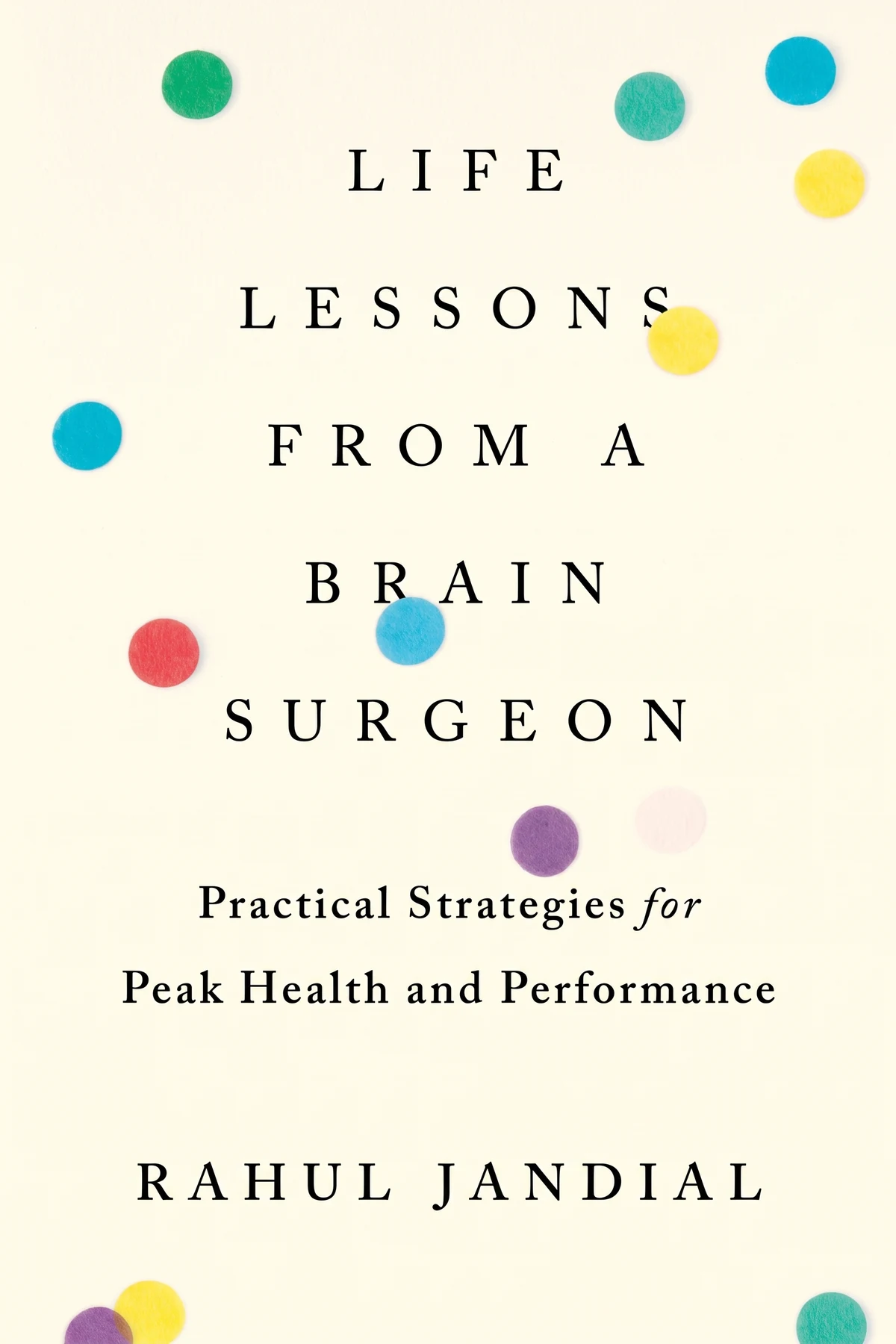
Rahul Jandial serves as a brain surgeon and researcher at the City of Hope National Medical Center located in Los Angeles. He is recognized as a leading expert in neuroscience and has authored several best-selling works focused on brain health and peak performance, including the acclaimed Life Lessons from a Brain Surgeon.
Ratings & Reviews
Ratings at a glance
What people think
Listeners describe the book as a captivating and superb experience, commending its educational value. One listener is especially impressed by how the writer clarifies dream complexities, whereas another points out the thorough research. This investigation into the psyche earns favorable remarks, as one listener emphasizes the unique viewpoint it offers.
Top reviews
Anthony
This book completely shifted my perspective on what happens after I close my eyes. Dr. Jandial uses his background as a brain surgeon to ground these wild concepts in actual neuroscience. The way he explains the 'Imagination Network' makes so much more sense than old-school Freudian interpretations. I was particularly gripped by the sections on how nightmares serve as an evolutionary threat rehearsal. It’s not just scary fluff; it’s your brain practicing for survival. While the tone is clinical in parts, it never feels like a dry textbook. Every chapter offers a new nugget of information that I found myself sharing with friends the next day. Highly recommended for anyone who wants to understand the nightly theater of their mind.
Show moreErn
After hearing Dr. Jandial on a podcast, I had to grab this. It did not disappoint! I’m truly astonished by the connection between dreams and physical health. The fact that certain dream patterns can be early warning signs for neurodegenerative diseases is mind-blowing. It makes you realize that dreaming isn't just a random side effect of sleep, but a vital biological function. Jandial's style is clear and accessible, making complex brain regions like the limbic system easy to understand for a layperson. I also appreciated the practical tips on dream engineering. It’s a fascinating, eye-opening read that provides a totally different perspective on our waking lives. This is easily one of the best non-fiction books I’ve picked up this year.
Show moreRatchada
Wow, I never realized how much work my brain was doing while I was 'resting.' Dr. Jandial’s exploration of the sleeping brain is nothing short of breathtaking, especially the hauntingly beautiful concluding thought that death itself might just be one final dream. The book manages to be both deeply scientific and profoundly emotional. I loved the breakdown of the 'Imagination Network' and how it differs from our waking executive functions. It explains so much about why our dream-logic feels so real until the moment we wake up. The sections on dream engineering and using smells to trigger specific dreams were particularly fascinating. If you want a book that makes you look at your pillow as a gateway to another dimension, this is it. It is an absolutely essential read for the curious mind.
Show moreNatalie
Picked this up because I’ve been keeping a dream journal for years and wanted a scientific backing for my experiences. Most of the content on lucid dreaming and the Default Mode Network was familiar to me, but Jandial’s writing style is what makes it shine. He explains the transition between wakefulness and sleep as a fertile ground for creativity that we often ignore. I loved the specific examples of historical figures like Kekulé finding solutions in their sleep. Even if you aren't a science nerd, the prose is fluid and easy to follow. My only gripe is that some sections felt a bit like a summary of other famous studies rather than brand-new insights. Still, it’s a very informative and well-researched guide to the dreaming brain.
Show moreThanit
Look, I’m not usually a science reader, but Jandial makes the brain feel accessible. This book is totally worth it for the tidbits about how corporations might one day try to 'invade' our dreams for advertising. That sounds like sci-fi, but he grounds it in current research. The exploration of erotic dreams and creativity was handled with great maturity and scientific rigor. I especially liked the section on 'threat rehearsal'—it explains why I’m always dreaming about being chased! The writing is vivid and the chapters are well-organized. While it occasionally gets a bit bogged down in technical definitions, the author usually pulls it back with a relatable anecdote or a fascinating clinical case study.
Show moreCee
Finally got around to reading this exploration of the sleeping mind. As a neuroscientist himself, Jandial brings a level of authority that many pop-psychology books lack. He distinguishes beautifully between 'bad dreams' and clinical nightmares, which was an epiphany for me. The idea of the 'Imagination Network' taking over when the executive functions sleep is a great framework for understanding our nocturnal hallucinations. I did find that the middle section on creativity felt a little repetitive, echoing things I've read in other creativity-focused books. However, the overall package is polished and provides a nuanced understanding of our cognitive lives. It’s an intellectually stimulating journey that makes you appreciate the complexity of the human brain.
Show moreMichael
Ever wonder why your dreams feel so vivid yet make zero sense? This book attempts to answer that, starting with a brilliant look at evolution and the erotic dimensions of our subconscious. Frankly, the first few chapters had me hooked. However, the narrative trajectory faltered significantly as the author veered into what felt like aimless meandering through various sleep theories. I wanted more of that sharp, surgeon-like focus, but instead, I got a lot of tangential musings that lacked a cohesive thread. It’s still a decent read for the facts about how dreams might signal early-stage Parkinson's or Alzheimer's. To be fair, Jandial writes with a lot of heart and accessibility, even if the structure feels a bit loose towards the end.
Show moreSomkid
The chapter on how dreams can predict illness like Parkinson’s was absolutely chilling and worth the price of the book alone. Beyond that, I found the book a bit hit-or-miss. The author starts with high energy, exploring the fascinating world of nightmares and child development. But as the book progressed, it felt like the central theme started to blur. I found myself skimming through the parts that felt like aimless meandering into vague psychological theories. It’s certainly informative, and Jandial is clearly an expert, but the pacing was off for me. If you’re looking for a quick overview of dream science, this works, but don't expect a tight, edge-of-your-seat narrative throughout the entire thing.
Show moreKamol
Personally, the first half is a solid five stars, but then it starts to drift. The insights into the evolutionary purpose of dreams were profound and had me thinking for days. But then the author veered into these long, tangential musings on various theories that didn't feel as grounded as the earlier chapters. It’s a bit of a mixed bag. On one hand, you get amazing facts about how children's dreams evolve with their brains. On the other hand, you get some aimless meandering that feels like it’s just filling pages. It’s a great book if you want a general overview of facts you thought were fiction, but it loses its coherence toward the end. I’d still recommend it for the first 100 pages alone.
Show moreStella
Not what I expected from a neurosurgeon, to be honest. While the opening segments regarding the evolution of dreaming were intellectually stimulating, the rest of the book felt like it was wandering without a map. I was looking for deep, groundbreaking science, but a lot of this felt like recycled information for anyone who has even briefly studied sleep hygiene. The author's focus wavered too often. He would start a fascinating thought about erotic dreams and then immediately jump into a different, unrelated theory that felt more like filler than a discovery. Truth is, I struggled to stay engaged when the chapters started feeling like a series of disconnected blog posts rather than a rigorous scientific exploration. It was quite disappointing given the initial promise.
Show moreFeatured in
Readers also enjoyed
A Liberated Mind: How to Pivot Toward What Matters
Steven C. Hayes
Acting with Power: Why We Are More Powerful Than We Believe
Deborah Gruenfeld


Alien Earths: The New Science of Planet Hunting in the Cosmos
Lisa Kaltenegger

Age of Propaganda: The Everyday Use and Abuse of Persuasion
Anthony Pratkanis
AUDIO SUMMARY AVAILABLE
Listen to This Is Why You Dream in 15 minutes
Get the key ideas from This Is Why You Dream by Rahul Jandial, plus 5,000+ more titles in English and Thai.
- 5,000+ titles
- Listen as much as you want
- 7-day free trial
- Cancel anytime







