

21 min 51 sec
Through the Language Glass: Why the World Looks Different in Other Languages
Explore how the language you speak influences the way you see the world, from the colors you name to the way you navigate physical space, challenging old theories with modern linguistic insights.
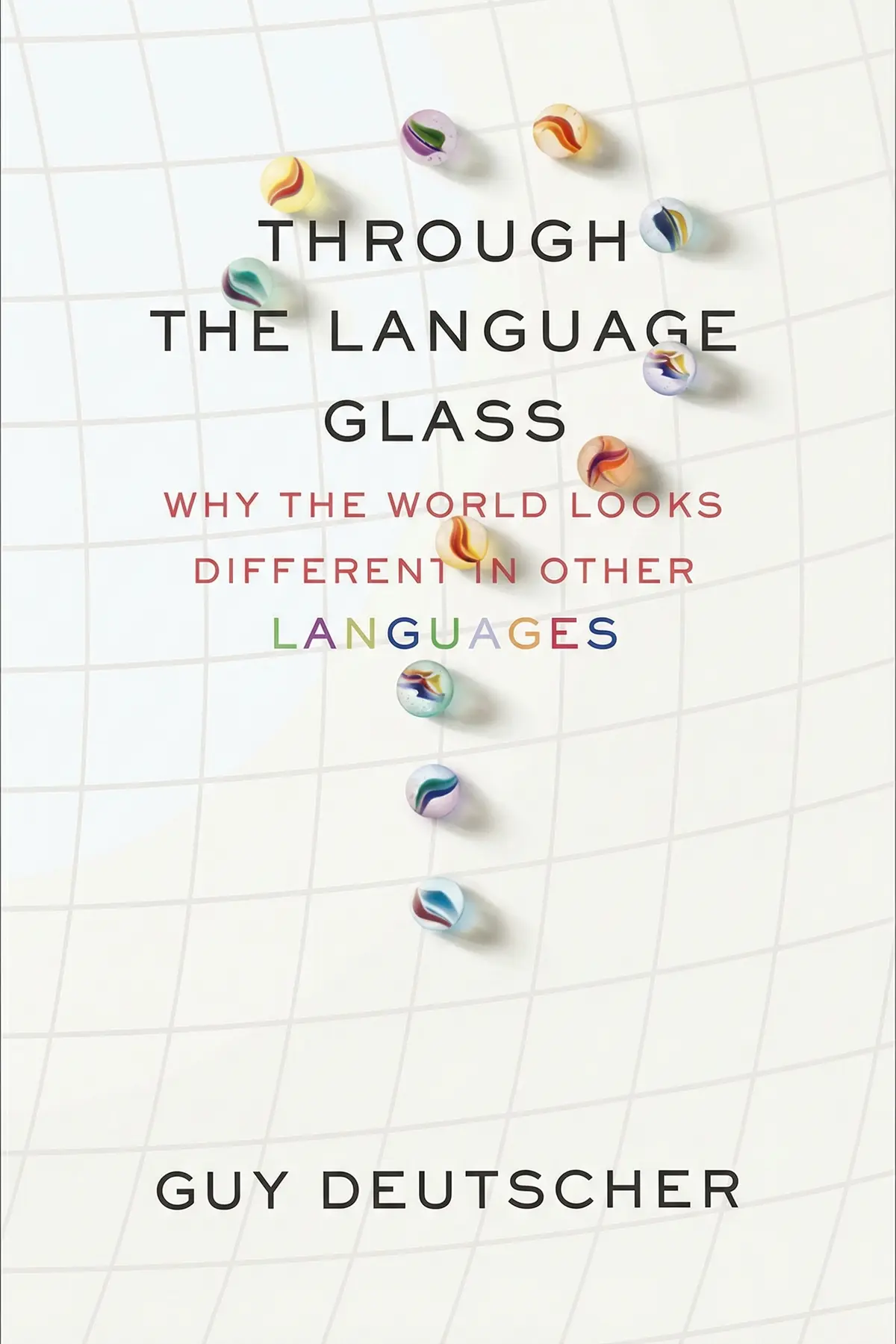
Table of Content
1. Introduction
1 min 54 sec
Imagine looking up at a clear afternoon sky and not having a word for the color you see. To a modern speaker, the idea seems impossible. Blue is one of the most basic categories of our existence. Yet, if you go back to the earliest recorded literature of humanity, you find a world described in strangely limited hues. This mystery is the starting point for a deep dive into the human mind and the linguistic tools we use to navigate it. The central question is both simple and profound: does the language we speak change the way we see the world?
For a long time, the scientific community oscillated between two extremes. One side believed that all humans see the world exactly the same way, regardless of their native tongue, and that language is merely a set of labels for universal concepts. The other side, popularized in the mid-twentieth century, suggested that language is a prison for our thoughts, dictating what we can and cannot perceive. In this summary of Guy Deutscher’s work, we move past these black-and-white arguments to find a more nuanced reality.
We will journey through the history of color science, investigate the oddities of ancient Greek poetry, and look at how remote tribes navigate without ever using the words ‘left’ or ‘right.’ We’ll see how the very structure of your sentences can influence your memory and how the gender assigned to an inanimate object like a bridge or an apple can change your emotional associations with it. This is not just a study of words; it is an investigation into the ‘language glass’—the subtle, often invisible lens through which we interpret every sight, sound, and direction in our lives. By understanding how language reflects culture and influences thought, we gain a clearer picture of what it truly means to be human in a world of diverse voices.
2. The Strange Hues of Ancient Literature
2 min 09 sec
What if ancient civilizations saw a different world? Discover why historical texts from the Greeks to the Hebrews lacked common color words like blue.
3. The Universal Ladder of Color Names
2 min 14 sec
Is there a hidden order to how languages grow? Explore the fascinating discovery that colors are named in the exact same sequence across the globe.
4. The Difference Between Seeing and Naming
1 min 51 sec
Does lacking a word mean you’re blind to a color? Learn how a remote island expedition proved that perception exists even without vocabulary.
5. The Biological Logic of Vocabulary
1 min 59 sec
Why is red the first color we name? Explore how nature and culture collaborate to prioritize certain visual experiences over others.
6. Social Complexity and the Simplification of Speech
1 min 58 sec
Why are some languages more complex than others? Discover the surprising link between the size of a society and the structure of its grammar.
7. What Language Forces Us to Say
1 min 52 sec
Language isn’t about what you *can* say, but what you *must* say. Uncover how grammatical requirements shape our focus and attention.
8. The Emotional Weight of Gendered Nouns
2 min 15 sec
Can a bridge be ‘beautiful’ or ‘strong’ based solely on its grammatical gender? Explore how ‘he’ and ‘she’ affect our perception of objects.
9. Navigating Without Left or Right
1 min 49 sec
Imagine living without ‘left’ or ‘right.’ Discover how an Australian tribe uses the stars and the sun to describe even the smallest movements.
10. How Language Rewires the Brain's Vision
2 min 08 sec
Can a word change how your brain processes light? See the evidence that language actually shifts how our brain’s hemispheres perceive color.
11. Conclusion
1 min 42 sec
As we have traveled from the ‘wine-dark’ seas of Homeric Greece to the compass-oriented minds of the Australian outback, a clear picture has emerged. Language is neither a total prison nor a transparent window. Instead, it is a complex ‘glass’ that both reflects the culture of its speakers and shapes the perceptions of those who use it. We’ve seen that while all humans share the same biological machinery, our cultures decide which parts of the spectrum to name, which directions to prioritize, and which details—like gender or evidence—are too important to leave out of a sentence.
The debate between nature and culture doesn’t have a single winner. Nature provides the constraints—the way our eyes see light or the way our brains process space—but culture provides the emphasis. By forcing us to pay attention to certain aspects of reality over and over again, our native language builds mental habits that stay with us for a lifetime. These habits influence our memory, our navigation, and even our basic sensory experiences.
The most important takeaway is a sense of wonder at the diversity of the human experience. Learning a new language isn’t just about learning new labels for the same old things; it’s about practicing a new way of paying attention. It’s an invitation to step outside your own ‘language glass’ and see the world through a lens that might be more elegant, more sturdy, or more oriented toward the stars. In a world that often feels divided, understanding how our languages shape our perspectives is a powerful step toward truly understanding one another.
About this book
What is this book about?
Have you ever wondered if someone speaking a different language actually perceives reality differently than you do? This summary dives into the fascinating relationship between the words we use and the thoughts we think. It revisits historical debates about why ancient civilizations lacked a word for the color blue and explores whether our brains are hardwired for certain concepts or if culture takes the lead in shaping our minds. Through an examination of diverse global cultures—from the Australian Outback to the streets of Europe—this exploration reveals that while language doesn't trap us in a specific worldview, it does act as a subtle lens. By the end, you will understand how grammatical structures, gendered nouns, and spatial coordinates provide a unique framework for every speaker, influencing memory, orientation, and even visual processing.
Book Information
About the Author
Guy Deutscher
Guy Deutscher is a distinguished linguist and serves as an Honorary Research Fellow at the University of Manchester. Recognized for his deep contributions to the field of linguistics, he has also authored the acclaimed work, The Unfolding of Language.
Ratings & Reviews
Ratings at a glance
What people think
Listeners consider this work captivating and skillfully authored, featuring compelling evidence regarding the link between speech and thinking. They value its linguistic observations, specifically the exploration of color recognition and cultural classification systems. Listeners call it a true mental spark that heightens interest in the topic while staying humorous and intelligently structured.
Top reviews
Saovapa
This book is a rare treat that actually challenges how you perceive the very sky above you. Deutscher manages to take a potentially dry subject like philology and turn it into a gripping detective story about the color blue. I was particularly struck by the discussion on how Homer described the sea as "wine-dark," a phrase I’ve heard a thousand times but never truly questioned until now. It turns out that our ancestors didn't just have different words; their entire visual categorization was structured by their cultural needs. The prose is elegant and witty, avoiding the typical academic slog while still maintaining intellectual depth. While some might find the deep dive into 19th-century research a bit much, I found it necessary for the payoff. It’s a pure brain stimulator that left me looking at my surroundings through a completely different lens. Definitely recommended for anyone who thinks they know how their own mind works.
Show moreChanon
As someone who grew up bilingual, I’ve always felt like a slightly different person depending on which language I was speaking. Deutscher finally provides some scientific backing for that intuition without falling into the trap of cheap stereotypes. He handles the controversial Sapir-Whorf hypothesis with a surgeon’s precision, reviving it in a way that feels modern and evidence-based. I particularly enjoyed the section on how grammatical gender can subtly influence our associations, like how a bridge might be seen as "elegant" or "strong" based on its linguistic gender. The writing is clever and often very funny, which I didn't expect from a book about linguistics. It’s the kind of work that stays with you long after you close the cover, making you listen more closely to the "labels" we use every day. An absolute masterpiece of popular science that respects the reader's intelligence while keeping the tone light.
Show moreLars
Not gonna lie, I expected this to be a bit of a slog, but it turned out to be one of the most amusing science books I’ve ever picked up. The author has this dry, witty sense of humor that keeps the pages turning even when he’s diving into the complexities of morphological structures. I loved the way he explained how Russian water changes gender from "she" to "he" when you add a tea bag—it’s such a small, specific detail that perfectly illustrates his point about language being a cultural convention. It really makes you think about how our "labels" aren't just names, but lenses that focus our attention on certain aspects of reality. The book is incredibly well-researched but never feels like it's talking down to you. It’s one of those rare volumes that manages to be both erudite and genuinely entertaining. Total brain candy.
Show moreUraiwan
Ever wonder why some cultures have an uncanny sense of direction even in pitch-black caves? That was the most mind-blowing part of this read for me. The author explores how languages that use geographic coordinates—North, South, East, West—instead of egocentric ones like "left" or "right" actually rewire the speaker's brain. It makes you realize that our mother tongue isn't just a tool for communication, but a framework that dictates our spatial reality. To be fair, the first half of the book is heavily weighted toward color perception, which might feel repetitive if you’ve read any linguistics before. However, Deutscher’s writing is so charming and accessible that even the familiar bits feel fresh. It’s a compelling argument against the idea that all human thought is biologically hard-wired. It’s a great pick for a book club because there is so much to debate regarding how we categorize the world.
Show moreRatthapong
Picked this up after hearing so many people rave about it, and it mostly lived up to the hype. The book serves as a brilliant counter-argument to the idea that language has zero impact on our cognitive processes. Deutscher explores how cultural conventions eventually morph into what we perceive as "human nature." Personally, I found the evidence regarding spatial orientation to be the most convincing part of his argument. It’s fascinating to think that a simple linguistic choice can provide someone with a permanent internal compass. My only minor gripe is that the author can be a bit dismissive of other linguistic theories at times, which felt a little one-sided. Still, the research is presented clearly and the anecdotes about the Matses tribe in the Amazon are truly unforgettable. It’s a solid 4-star read for anyone interested in the intersection of culture and psychology.
Show moreAkira
After hearing a lot about the "Great Linguistic Wall," I was curious to see how Deutscher would tackle such a complex subject. He argues convincingly that language is essentially our most powerful technology, shaping how we categorize the world around us. The discussion on how different languages force us to pay attention to different things—like the source of our information or the exact location of an object—was eye-opening. Frankly, it’s a relief to read someone who isn't afraid to say that culture does, in fact, influence the way we think. The book is very well-structured, moving from the history of color studies into modern cognitive science. Some of the linguistic technicalities in the middle were a bit dense for a casual reader, but the author usually provides a helpful analogy to pull you back through. It's a fascinating look at the structures that govern our lives.
Show moreViolet
Not what I expected, but in a good way. I thought this was going to be a collection of "untranslatable words" from different cultures, but it’s actually a much deeper dive into the architecture of the human mind. The way Deutscher links the development of color vocabulary to the complexity of a society's manufacturing was a perspective I hadn't considered before. It turns out that if you don't have the technology to create a color, you often don't have a specific name for it. It's a brilliant blend of history, anthropology, and linguistics. I will say that the lack of color illustrations in the digital version made some of the color-wheel descriptions a bit harder to follow, so maybe grab a physical copy if you can. Overall, it’s an insightful read that makes a very strong case for how our mother tongue acts as a filter for everything we experience.
Show moreMalee
Wow, this was a lot more history than I bargained for. While the central thesis about how language influences thought is fascinating, the author spends what feels like an eternity on William Gladstone and his studies of Homer. I appreciate the thoroughness, but it really slowed down the momentum for me in the middle sections. Truth is, I wanted more about the modern experiments on gender and space, which were packed into the final third of the book. The stuff about Russian speakers and their different words for shades of blue was incredible, but I had to slog through a lot of 1800s academic beef to get there. Deutscher is clearly brilliant and he writes with a lot of humor, but the pacing felt a bit off. If you’re a history of science nerd, you’ll love it; if you’re here for the "language glass" promise, you might find yourself skimming.
Show moreKwan
The chapter on Homer’s color perception is genuinely one of the most interesting things I’ve read all year, but the rest of the book struggled to maintain that high bar. Guy Deutscher is a fantastic writer, yet I found his narrative voice a bit too "lecture-heavy" in certain stretches. He spends a massive amount of time debunking old theories before finally getting to his own points, which can be frustrating if you’re looking for a more direct exploration of the topic. I was also hoping for more variety in the languages discussed, as it seemed to circle back to the same few examples quite often. To be fair, the points he does make about how we see colors like blue and green are revolutionary and well-supported by experimental data. It’s a good book, don’t get me wrong, but it felt like it could have been about fifty pages shorter without losing much of its impact.
Show moreSue
Look, I really wanted to like this, but I couldn't get past the tone. For a book written by a linguist in the 21st century, the use of words like "primitive" and "savage" to describe non-Western cultures felt incredibly outdated and jarring. It’s almost as if the author is writing from a colonial perspective that should have been retired decades ago. He completely avoids discussing how language loss is often a result of imperialism, choosing instead to use passive phrases like "onward march of civilization." While the scientific bits about color perception and the "language lens" are technically interesting, the lack of social context made it hard for me to engage with the material. If you can ignore the problematic phrasing, there’s some good information here, but for me, the delivery ruined the message. It's a shame because the core questions the book asks are very important.
Show moreReaders also enjoyed

59 Seconds: Change Your Life in Under a Minute
Richard Wiseman



A Liberated Mind: How to Pivot Toward What Matters
Steven C. Hayes
Acting with Power: Why We Are More Powerful Than We Believe
Deborah Gruenfeld

Age of Propaganda: The Everyday Use and Abuse of Persuasion
Anthony Pratkanis
AUDIO SUMMARY AVAILABLE
Listen to Through the Language Glass in 15 minutes
Get the key ideas from Through the Language Glass by Guy Deutscher, plus 5,000+ more titles in English and Thai.
- 5,000+ titles
- Listen as much as you want
- 7-day free trial
- Cancel anytime







