
19 min 54 sec
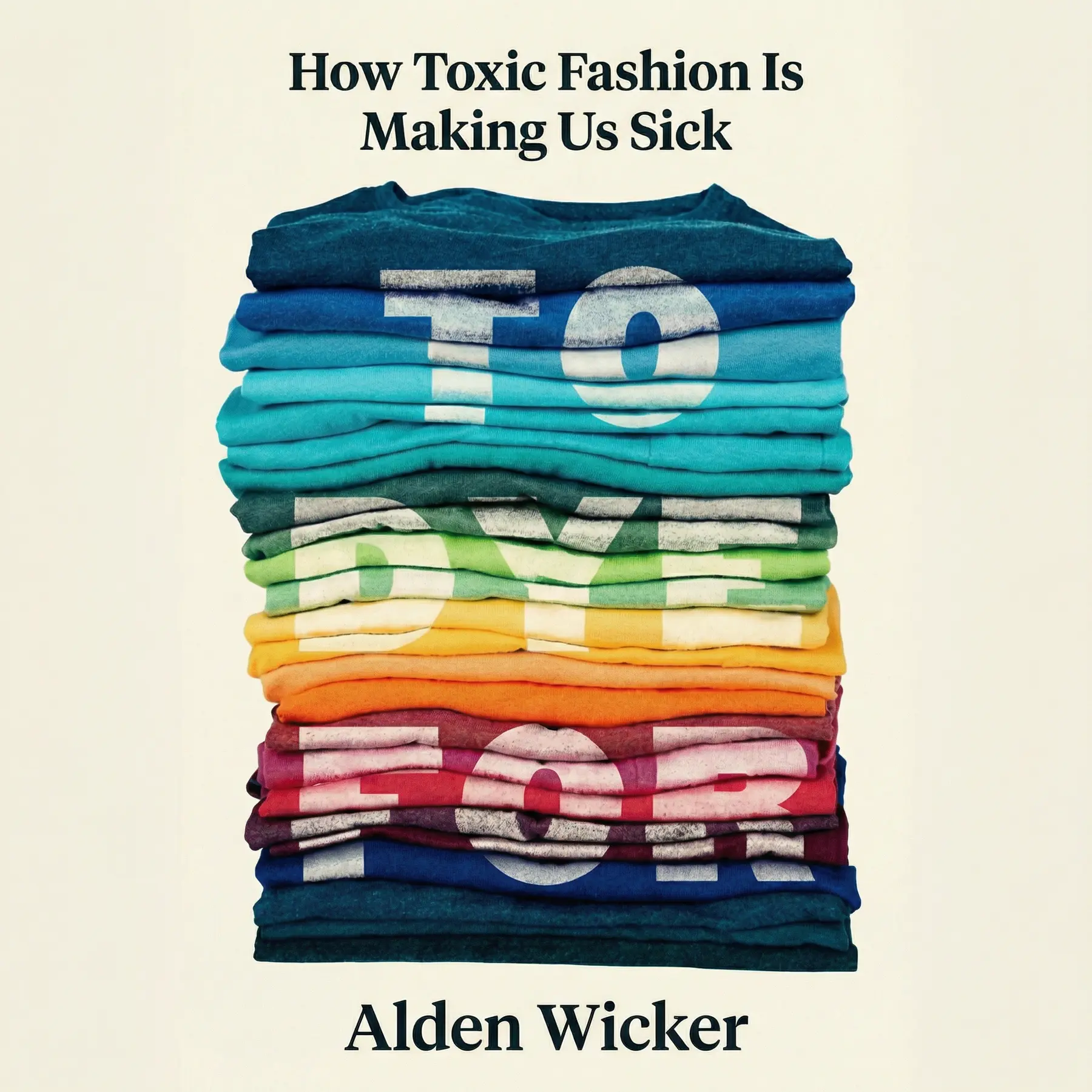
To Dye For: How Toxic Fashion Is Making Us Sick
By Alden Wicker
To Dye For investigates the hidden chemical crisis within the fashion industry. Alden Wicker reveals how toxic dyes and finishes impact human health, from hormonal disruptions to severe chronic illnesses, and how consumers can fight back.
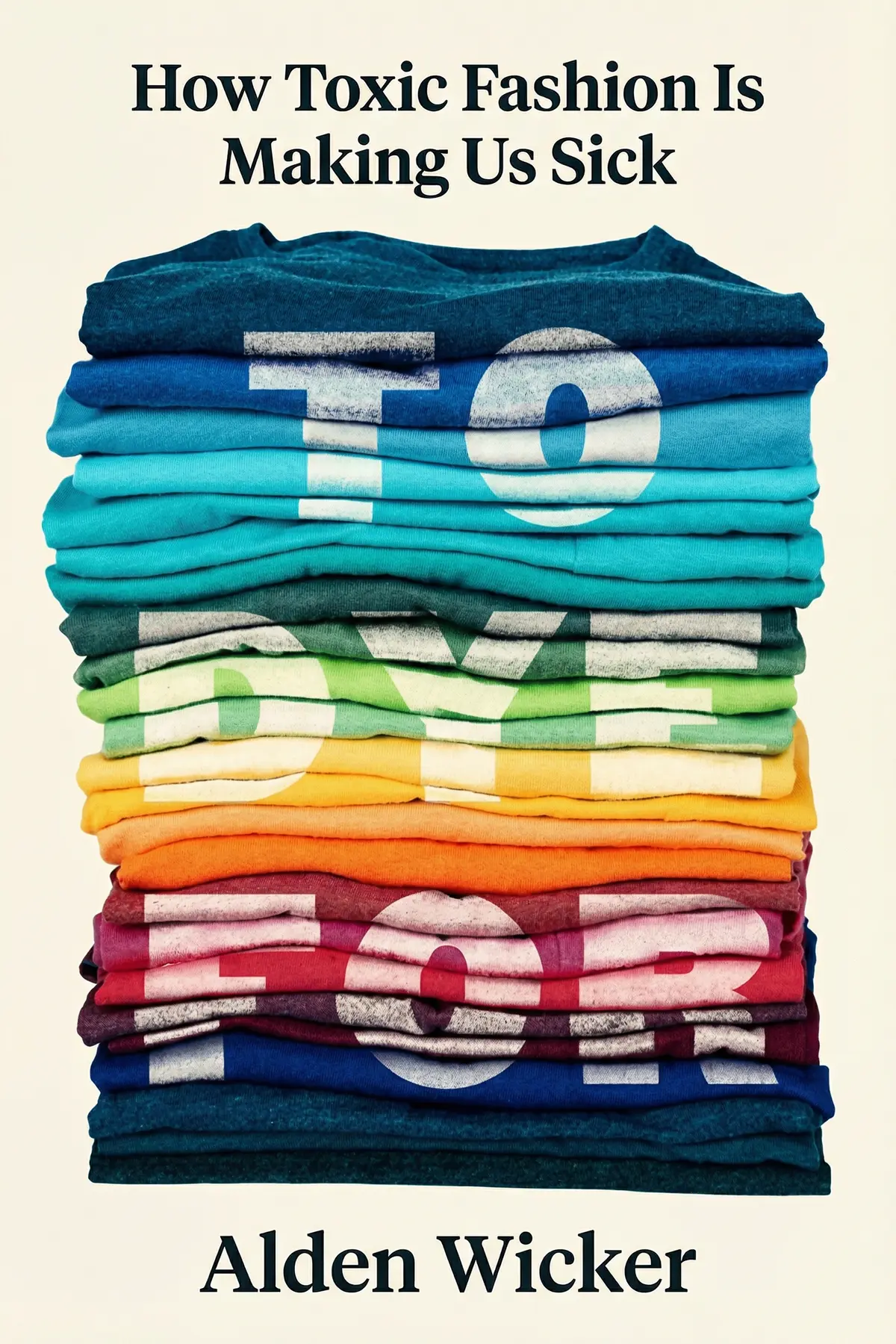
Table of Content
1. Introduction
1 min 49 sec
Imagine putting on your work clothes every morning, unaware that the very fabric touching your skin is slowly poisoning you. For a flight attendant at Alaska Airlines in 2011, this wasn’t a paranoid fantasy—it was a devastating reality. What began as the routine issuance of a new, professional uniform soon spiraled into a medical nightmare of heart and liver damage, forced relocation to the desert for relief, and the collapse of her personal life. She wasn’t an isolated case; hundreds of her colleagues reported rashes, hair loss, and thyroid issues.
This story is the starting point for a deep dive into the invisible world of textile chemistry. We often think of fashion in terms of style, price, or perhaps carbon footprints, but we rarely consider our clothes as a delivery system for complex, often unregulated chemicals. Our garments are our second skin, and they are in constant contact with our largest organ. Yet, as we will explore, the industry that produces these items is shrouded in secrecy, relying on toxic substances that the general public knows almost nothing about.
In the following minutes, we will look at why airline crews became the modern version of canaries in a coal mine, how the history of fashion is surprisingly paved with poison, and why the current global supply chain makes it so difficult to know what we’re actually wearing. We will also examine the sobering health implications—from fertility struggles to autoimmune crises—and ultimately, we will discuss practical steps you can take to protect yourself. This journey isn’t just about fashion; it’s about the fundamental right to know what we are putting on our bodies and demanding a future where our clothes don’t make us sick.
2. The Flight Attendant Crisis
2 min 19 sec
Discover how a simple change in workplace attire led to a massive health crisis for airline crews and served as a warning for the general public.
3. The Vulnerability of Children
2 min 04 sec
Explore why the chemicals in our clothing pose a disproportionate risk to the youngest members of our families and how they enter the body.
4. A Long History of Toxic Trends
2 min 24 sec
Trace the dark evolution of fashion from the mercury-laden hats of the past to the modern chemical hazards hidden in today’s synthetic materials.
5. The Endocrine Disruption Crisis
2 min 00 sec
Understand the link between the chemicals in our clothes and the global decline in fertility and hormonal health.
6. Mast Cells and Chemical Sensitivity
2 min 03 sec
Learn how repeated exposure to textile toxins can cause the immune system to go into overdrive, leading to life-altering sensitivities.
7. The Hidden Cost of Global Production
1 min 53 sec
Go behind the scenes of international manufacturing to see how a lack of transparency and regulation endangers workers and consumers alike.
8. The Myth of the 'Safe' Synthetic
1 min 46 sec
Examine why natural fibers are generally safer than synthetics and why ‘performance’ features often come with a hidden chemical price.
9. Taking Action and Voting with Your Wallet
2 min 01 sec
Discover practical strategies for cleaning up your closet, from better shopping habits to simple laundry tips that reduce chemical exposure.
10. Conclusion
1 min 35 sec
As we have seen throughout this exploration of To Dye For, the clothes we wear are far more than just fabric and thread; they are products of a complex and often dangerous chemical industry. From the sobering lessons learned by airline crews to the global fertility crisis linked to endocrine disruptors, the evidence is clear: the current state of fashion is a threat to public health. We have allowed a system to flourish where “proprietary secrets” take precedence over the safety of workers and consumers, and where regulations are far too slow to catch up with the reality of modern manufacturing.
However, this is not a hopeless situation. The first step toward change is awareness. By understanding the link between our health and our wardrobes, we can begin to demand better. This means pressuring brands for full disclosure of their chemical use, advocating for policy changes that ban hazardous substances before they cause harm, and supporting the development of green chemistry.
On an individual level, you have the power to vote with your dollars. Choose natural fibers, support transparent brands, wash your new clothes, and embrace the safety of secondhand items. We must stop viewing fashion as a disposable commodity and start seeing it as an investment in our well-being. Our skin is a gateway, not a barrier, and it is time we started treating it with the respect it deserves. By making more informed choices today, we can help weave a safer, cleaner, and more honest future for the fashion industry.
About this book
What is this book about?
Have you ever wondered why that new pair of jeans has such a distinct smell, or why a certain shirt makes your skin itch? To Dye For pulls back the curtain on the global textile industry to reveal a disturbing reality: our clothing is often saturated with a cocktail of hazardous chemicals. This book explores the systemic lack of transparency in fashion manufacturing, documenting the harrowing experiences of those most affected—from airline crews wearing toxic uniforms to factory workers in textile hubs. Alden Wicker investigates the link between modern clothing and a host of health issues, including reproductive problems, autoimmune disorders, and extreme chemical sensitivities. The book serves as both a wake-up call and a guide. It promises to equip you with the knowledge needed to navigate a marketplace filled with hidden toxins. By understanding the lifecycle of our garments and the chemicals used to treat them, you can make safer choices for your family and join the movement for a cleaner, more ethical fashion future.
Book Information
About the Author
Alden Wicker
Alden Wicker is an award-winning journalist who writes about sustainable fashion and the impact of the clothing industry. Her work has appeared in The New York Times, Wired, The Cut, Vox, Vogue, InStyle, Harper’s Bazaar, and many other publications. She’s also the founder of Eco-Cult, a blog dedicated to sharing information about sustainability and ethics in fashion.
Ratings & Reviews
Ratings at a glance
What people think
Listeners describe the book as extensively researched and accessible, with one person highlighting how it clarifies technical jargon. Beyond the commended writing style, listeners find the narrative to be both intriguing and enlightening. Additionally, they value its advice on avoiding dangerous chemicals, with one review emphasizing the straightforward reporting of its results.
Top reviews
Tim
Wow. I will never look at my favorite workout leggings the same way again after finishing this investigative masterpiece. Alden Wicker manages to turn dense chemical jargon into a fast-paced narrative that feels more like a corporate thriller than a dry industry report. The chapters documenting the plight of flight attendants and their toxic uniforms were particularly gut-wrenching to read. It is terrifying to realize that while we obsess over what we put in our bodies, we rarely consider what we put on them. The lack of ingredient labels on our clothing is a massive regulatory failure that this book exposes with surgical precision. While the findings are distressing, I appreciated the practical tips at the end for mitigating exposure. This is essential reading for anyone who wears clothes—which is everyone.
Show moreAhmed
Ever wonder why your skin breaks out in hives for no apparent reason despite using the 'cleanest' detergents on the market? This book provides the terrifying answer. Wicker exposes how the fashion industry treats our skin as an open door for PFAS, azo dyes, and formaldehyde. What struck me most was the discussion on how no one is testing for the synergistic effects of these chemical cocktails. We are essentially walking chemistry experiments for brands that prioritize profits over public health. The writing style is engaging and urgent, making it hard to put down even when the subject matter makes you want to throw out your entire wardrobe. It’s an honest, haunting report that finally gives a voice to those suffering from 'mysterious' autoimmune issues.
Show moreSook
Picked this up after seeing a viral TikTok about the author’s television interview being canceled by lawyers at the last minute. If the big fashion brands are this scared of the information in these pages, you know it’s something you need to read. The truth is, our clothes are being treated with chemicals that are banned in other products, yet we wear them against our largest organ all day. Wicker’s reporting on the flight attendants who lost their careers due to uniform-induced disabilities is heartbreaking. This isn't just a book for 'crunchy' moms; it's a legitimate industry exposé. It is a wake-up call for consumers and a demand for government regulation. Easily one of the most important books I’ve read this year.
Show moreHazel
To Dye For is the 'Silent Spring' of the fashion world. Before reading this, I was dimly aware that fast fashion was bad for the planet, but I had no idea it was directly making us sick. Wicker explains how wrinkle-resistant and waterproof coatings are essentially poisoning our bloodstreams. The book is fascinating and eye-opening, especially the sections on how children are more susceptible to these toxins. I appreciated that the author didn't just dump a bunch of problems on us; she actually offered a path forward. She emphasizes that the burden should be on the industry and government, not just the individual shopper. It’s an empowering read that makes you want to join a revolution. Truly a must-read for the modern consumer.
Show moreYulia
After hearing about the legal pushback this book faced, I knew I had to see what the fuss was about. This is a courageous piece of journalism. Wicker doesn't just scratch the surface; she digs deep into the systemic issues of how clothes are dyed and processed. The book is distressed in the best way possible—it makes you angry, as it should. It’s high time we realized that 'affordable' fashion comes with a hidden cost to our health. From autoimmune issues to reproductive troubles, the links she draws are compelling. It’s a quick read despite being heady with information. This book provides the evidence we need to demand better transparency from the brands we trust. An absolute game-changer for the industry.
Show morePraepimon
As someone who works in the fashion industry, Wicker’s deep dive into textile toxicity was both necessary and deeply disturbing. She does a phenomenal job breaking down complex chemical formulas into something the average reader can actually digest without a PhD. However, I have to agree with other readers that the book gets quite repetitive in the middle sections. I felt like I was reading the same anecdotal evidence about skin rashes over and over again. To be fair, the research is top-notch, and her trip to India provides a much-needed global perspective on the human cost of our cheap dyes. I just wish the editing had been a bit tighter because the core message is too important to be buried in redundant chapters. Still, a solid four stars for the sheer amount of eye-opening data presented here.
Show moreRatthapong
Wicker does a great job of awakening readers who know very little about the 'black box' of textile manufacturing. I was particularly fascinated by the history of toxic dyes and how little has changed since the Victorian era, despite our supposed technological advancements. The book is well-researched and easy to follow, even when it delves into the specifics of endocrine disruptors and neurological disorders. I did find the tone a bit western-centric at times, and I would have liked more focus on the colonial history that created these global supply chains. Nevertheless, the call to action is powerful. It successfully causes you to rethink everything in your closet. It’s a heady, informative read that stands above the usual 'sustainable fashion' books that only focus on carbon footprints.
Show moreTariq
Finally got around to this after hearing so much buzz in the sustainability community. The book is incredibly thorough—perhaps a bit too thorough in parts—but the level of detail is necessary to prove just how unregulated the industry is. I was shocked to learn that over 40,000 chemicals are used commercially, yet so few have been tested for human safety. Wicker’s writing is smooth and accessible, making even the most complex industry jargon easy to grasp for the 'Average Joe.' My only gripe is the repetition of the flight attendant case; while moving, it started to feel like filler by the third mention. Overall, it’s an honest reporting of findings that will definitely change how I shop for my family in the future.
Show moreSirichai
The subject matter is undeniably important, but the execution felt a bit uneven to me. On one hand, the investigative journalism regarding the garment factories in India is stellar and heartbreaking. On the other hand, the book feels like it could have been cut in half without losing any of the major points. I found myself skipping ahead toward the end because the narrative kept circling back to the same arguments about synthetic materials. Also, as a scientist, I felt the tone was occasionally a bit too reactionary. Not every synthetic fiber is a death sentence, and I think a bit more nuance was needed to balance the alarmism. It’s a conversation-starter for sure, but it lacks the objective polish I was expecting from such a hyped title.
Show moreLuckana
Frankly, I found this to be more of an alarmist manifesto than a serious scientific inquiry. I returned the audiobook about ten minutes in after the author went on a crunchy diatribe about her all-natural lifestyle. It felt like the content was heavily filtered through a lens of general chemophobia rather than objective data. While I don't doubt the textile industry has massive issues with pollution and worker abuse, the writing here relies too much on anecdotes. Where are the peer-reviewed longitudinal studies? Reviews noting that it’s light on hard science and heavy on 'vibes' were unfortunately spot on. I’d rather look up the specific case of the Delta flight attendants on my own than sit through hours of reactionary rhetoric. Not for me.
Show moreReaders also enjoyed
AUDIO SUMMARY AVAILABLE
Listen to To Dye For in 15 minutes
Get the key ideas from To Dye For by Alden Wicker, plus 5,000+ more titles in English and Thai.
- 5,000+ titles
- Listen as much as you want
- 7-day free trial
- Cancel anytime







