
A Higher Loyalty: Truth, Lies and Leadership
James Comey
Discover how crossing borders can broaden your perspective and transform you into a more informed global citizen. This guide explores how immersive travel challenges prejudices and encourages a deeper understanding of our world.
1 min 30 sec
Imagine for a moment a curious finding from the world of psychology. Researchers have discovered that if you are feeling a bit low, the simple physical act of forcing yourself to smile can actually trigger a genuine shift in your mood. It seems that our external actions have a surprising power to reshape our internal reality. This same principle, according to travel expert and historian Rick Steves, applies to how we interact with the world at large.
We often think of travel as an escape—a chance to disconnect from our daily lives and lounge by a pool. But what if travel was actually a way to lean in? What if, instead of just visiting a place, we practiced the art of seeing the world through the eyes of the people who live there? This is the core philosophy of what Steves calls travel as a political act. It’s the idea that by immersing ourselves in different cultures, we aren’t just having a good time; we are performing an act of global citizenship.
In the pages that follow, we are going to explore how shifting your perspective can turn a simple trip into a transformative life experience. We’ll look at how to move past the superficial gloss of tourism to find the true heart of a nation. We will travel through the complex history of the Balkans, the resilient spirit of El Salvador, and the surprising hospitality found in Iran. Along the way, we’ll discover how to shed the fears and prejudices that keep us divided. By the end of this journey, you’ll see that the true value of a passport isn’t just where it takes you, but the person you become because you went.
2 min 20 sec
Explore why the ancient role of the court jester is the perfect metaphor for a modern traveler seeking to bring home the truth about the wider world.
2 min 36 sec
Discover how your existing biases act as a filter for reality and learn the techniques for removing those barriers to truly experience a new culture.
2 min 28 sec
Unpack the intricate and often painful history of the former Yugoslavia to understand how symbols and flags continue to shape the present-day identity of its people.
2 min 38 sec
Trace the path from colonial exploitation to the rise of liberation theology, exploring how El Salvador’s past informs its current social and political landscape.
2 min 43 sec
Look beyond the ‘war on drugs’ to see how different nations handle addiction, focusing on European models of harm reduction versus American incarceration.
2 min 40 sec
Break through the wall of political rhetoric to find the true character of Iran, where a history of revolution meets a culture of profound kindness toward strangers.
1 min 45 sec
As we reach the end of this journey, the message of Rick Steves becomes clear: the world is far too beautiful and far too complex to be viewed through the narrow lens of fear or nationalistic pride. Travel is the ultimate teacher because it forces us to confront our own ignorance and replaces it with firsthand experience. When we choose to leave our comfort zones, we aren’t just taking a vacation; we are participating in the vital work of building a more peaceful world.
The throughline of this exploration is that our perspective is a choice. We can choose to stay within the familiar, or we can choose to be like the medieval jester, seeking truth in the market and bringing it back to the court. We have seen how the history of the Balkans, the struggles of El Salvador, the social experiments of Europe, and the hospitality of Iran all offer lessons that can make us better, more informed citizens.
So, what can you do with this information? The next time you plan a trip, look for the history. Before you go, spend a few hours learning about the past of your destination. Understand the ‘why’ behind the current political climate. When you arrive, make it a point to talk to the locals—not just the tour guides, but the shopkeepers, the students, and the elderly. Ask them what they love about their country and what they worry about.
Remember that every border you cross is an opportunity to break down a wall within yourself. By seeing the world as it truly is, you contribute to a global conversation that values empathy over rhetoric. Travel as a political act is about returning home with a heart that is a little more open and a mind that is a little more critical. It’s about realizing that we are all, in the end, part of the same human story. So go out there, be curious, and let the world change you.
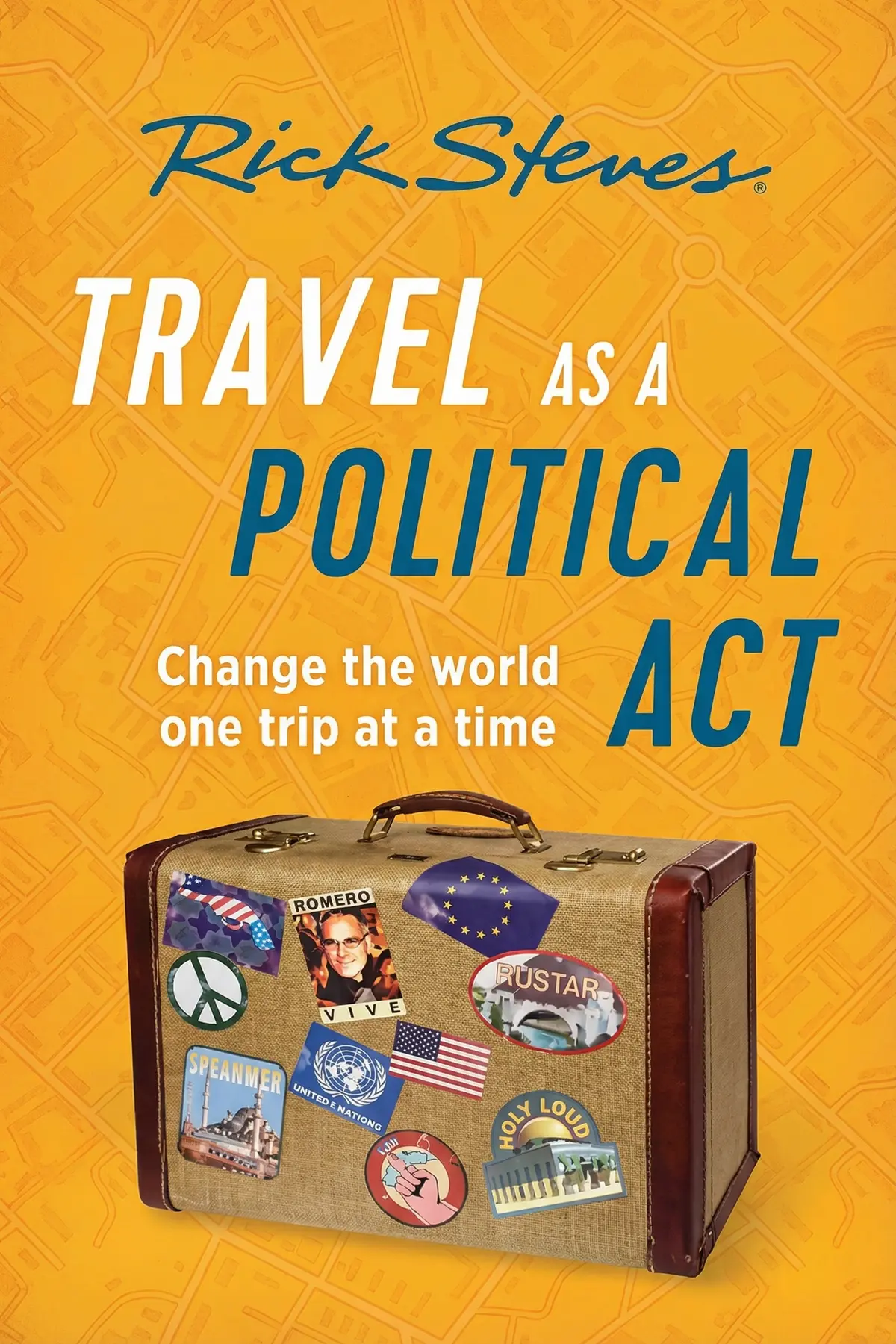
Travel as a Political Act is a compelling argument for why we should view our international journeys as more than just simple vacations. Rick Steves, a renowned travel expert, suggests that by stepping outside our bubbles, we can confront our own biases and gain a more sophisticated understanding of global affairs. The book promises to change the way you see the world and your place in it, using travel as a tool for peace, social justice, and informed citizenship. Through vivid accounts of his experiences in regions like the Middle East, Central America, and the former Yugoslavia, Steves illustrates how personal encounters can dismantle the simplistic narratives often presented by politicians and the media. You will learn how to navigate different cultures with humility and curiosity, turning every trip into an opportunity for growth. Ultimately, this work serves as a manifesto for the modern traveler, showing that by understanding others, we can better understand ourselves and contribute to a more harmonious global community.
Rick Steves is an American travel writer and television host. He has spent much of his life traveling overseas and writing books about his experiences. Steves is also a teacher on the topic of travel, advising people on both the logistics of travel and how to get the most out of their trips.
Listeners find the material accessible and mentally stimulating, offering profound cultural insights and compelling motivations for exploring the globe. They value the high-quality information provided and the way it fosters a deeper appreciation for different societies, while one listener points out that it offers helpful historical context. The work is praised for its engaging prose and storytelling, with one listener characterizing it as a well-written reflection of the world.
Rick Steves has always been a staple in my household for his practical guidebooks, but this feels like his most vital work. Truth is, I wasn't expecting such a deep dive into the scars of the former Yugoslavia or the complexities of Iranian daily life. He manages to humanize 'the other' in a way that feels incredibly urgent in today's polarized climate. The chapter on drug policy was particularly eye-opening, as he contrasts the American 'war on drugs' with more pragmatic European models. While his trademark 'dad humor' and cheesy jokes are definitely present, they make the heavy political pills much easier to swallow. It’s a thought-provoking manifesto that encourages us to pack our bags with a sense of empathy rather than just a shopping list. This isn't just a book about where to go; it’s a profound reflection on how we should exist in a global community. Truly well-written and essential for any American traveler.
Show moreFinally got around to reading this and it’s a total game-changer for how I plan my next trip. I’ve always been a fan of the 'Rick Steves' way' of travel, but seeing his convictions laid out like this gave me a new level of respect for him. The way he discusses secular Islam in Turkey and Morocco was fascinating and debunked so many myths I didn't even realize I held. It’s a well-written reflection of the world that isn't afraid to criticize American exceptionalism while still remaining hopeful. I loved the specific detail about the woman in Yugoslavia with shrapnel in her back—it makes the 'political' feel incredibly personal. Some might call him a 'wanker' for his views, but I think he’s just a man who has seen enough of the world to know we don't have all the answers. This is a must-read for anyone who wants their travel to mean something more.
Show moreWow, I didn't expect a travel writer to tackle US drug policy or the Israeli-Palestinian conflict so effectively. Rick Steves has a way of making complex issues feel accessible without totally dumbing them down. I've read a lot of political books, but this one is unique because it's rooted in actual human experience rather than just dry statistics. His focus on 'people-to-people' diplomacy is exactly what the world needs right now. The chapters are short, punchy, and filled with insightful anecdotes from his decades on the road. I particularly liked how he linked his travel experiences in Europe to his actual political activism in Washington state. It shows he’s not just talking the talk. It’s an easy read that manages to be both challenging and comforting. If you think travel is just about beaches and museums, this book will prove you wrong.
Show moreThe chapter on El Salvador alone is worth the price of admission. It’s rare to find a mainstream figure who is willing to talk so openly about the darker side of American foreign policy and how it affects real people. Steves has a gift for taking these big, scary political concepts and grounding them in the sights and sounds of a local marketplace or a family dinner. Personally, I found his section on Denmark’s 'high tax, high content' lifestyle to be a great rebuttal to the usual talking points we hear in the US. The book is easy to read and filled with the kind of cultural exploration that makes you want to book a flight immediately. Yes, he’s a bit of a nerd, and yes, the writing is very 'Rick Steves,' but his sincerity is infectious. This book really helped me appreciate a country's culture on a much deeper level.
Show morePicked this up after watching his specials for years, and I’m so glad I did. This book provides such great reasons to travel beyond just seeing the sights. It’s about engagement and education. Steves does a fantastic job of showing how travel can be a cure for the provincial mindset that so many of us fall into. The narrative quality is excellent; it feels like you're sitting down for a long lunch with him as he recounts his most transformative experiences. I was especially moved by his homecoming chapter and how he applies the lessons learned abroad to his own community. It’s a well-written, heart-on-his-sleeve kind of book. Even if you don't agree with all his politics, his passion for global understanding is hard to argue with. A truly insightful and thought-provoking read for any aspiring globetrotter.
Show moreEver wonder if your vacation could actually change your worldview? Steves argues that it should, and for the most part, he makes a compelling case. I found the sections on El Salvador and Denmark to be the highlights, offering a stark contrast between American interventionism and European social safety nets. He’s at his best when he’s explaining how taxation in Scandinavia actually leads to a high quality of life—it’s an perspective we rarely hear in the States. To be fair, the writing style can be a bit 'travel brochure' at times, and he does rely heavily on ellipses for emphasis, which can get a little distracting. Some might find his takes a bit simplistic, but for the average traveler who just wants to understand the world better, it’s a goldmine of historical background. It’s an easy read that leaves you with plenty to chew on long after you finish the final page.
Show moreThis book is a refreshing departure from the usual 'best cafes in Paris' guidebooks that dominate the shelves. Steves uses his platform to challenge Americans to look at their own country through the lens of others, which is a brave move for a mainstream travel writer. I particularly enjoyed the chapter on the 'Smart on Drugs' approach in Europe. It provides a historical background that is often missing from our domestic debates. My only real gripe is that he can be a bit repetitive with his themes, and the prose isn't exactly high literature. He uses '...' as a crutch in almost every paragraph, which makes the flow feel a bit disjointed. However, the cultural exploration is top-notch. It’s a thought-provoking read that definitely helps you appreciate a country’s culture beyond the tourist traps. A solid four stars for the message alone.
Show moreLook, I appreciate what Rick is trying to do here, but the execution felt a bit shallow for someone who has traveled as much as I have. He spends a lot of time on 'people-to-people' interactions, which is great, but his analysis of the Israel-Palestine conflict felt incredibly wishy-washy and safe. He tries so hard not to offend anyone that he ends up saying very little of substance in those chapters. Also, can we please have a moratorium on that Mark Twain 'travel is fatal to bigotry' quote? It’s used in every single travel blog and it’s right there again in these pages. The book is definitely aimed at a more provincial American audience that might be afraid of leaving their comfort zone. If you’re already a seasoned, politically-aware traveler, you might find this a bit 'Intro to Sociology.' It’s a nice effort, but it just didn't go deep enough for me.
Show moreNot what I expected from the man who taught me how to use the London Underground. While I agree with many of Steves' points, the tone of this book is often painfully cheesy. He tries to bridge the gap between 'traveler' and 'activist,' but he ends up sounding like a high school social studies teacher trying to be 'cool' for his students. The information quality is decent, especially regarding the history of the Balkans, but his analysis of the Middle East felt incredibly superficial. He barely scratches the surface of the Palestinian viewpoint, opting instead for a 'can't we all just get along' sentiment that feels naive. It’s not a bad book, and it’s certainly an easy read, but it lacks the intellectual rigor I was hoping for. It’s a good starting point for people who have never thought about these issues, but it likely won't satisfy more experienced readers.
Show moreAs a frequent international traveler, I found this remarkably condescending. Steves writes from this position of extreme American privilege, smugly proclaiming that he's seen more of a city than the locals just because he visited a poor neighborhood. The chapter on El Salvador felt particularly patronizing; he acts as if he discovered the effects of US foreign policy for the first time, even though scholars have been writing about this for decades. The writing style is also quite grating. It reads like a script for one of his TV shows, complete with corny jokes and a very 'unapologetic dad' vibe that just doesn't work in a serious political context. Frankly, it’s intellectually lazy. He tackles complex geopolitical issues with the depth of a travel brochure. If you want a real education on global politics, look elsewhere. This is just an ego trip disguised as activism, and it’s honestly a bit embarrassing.
Show moreJames Comey
Anthony Pratkanis
Barack Obama
Masaji Ishikawa
John Rawls
Miles Taylor
AUDIO SUMMARY AVAILABLE
Get the key ideas from Travel as a Political Act by Rick Steves, plus 5,000+ more titles in English and Thai.







