
14 min 33 sec
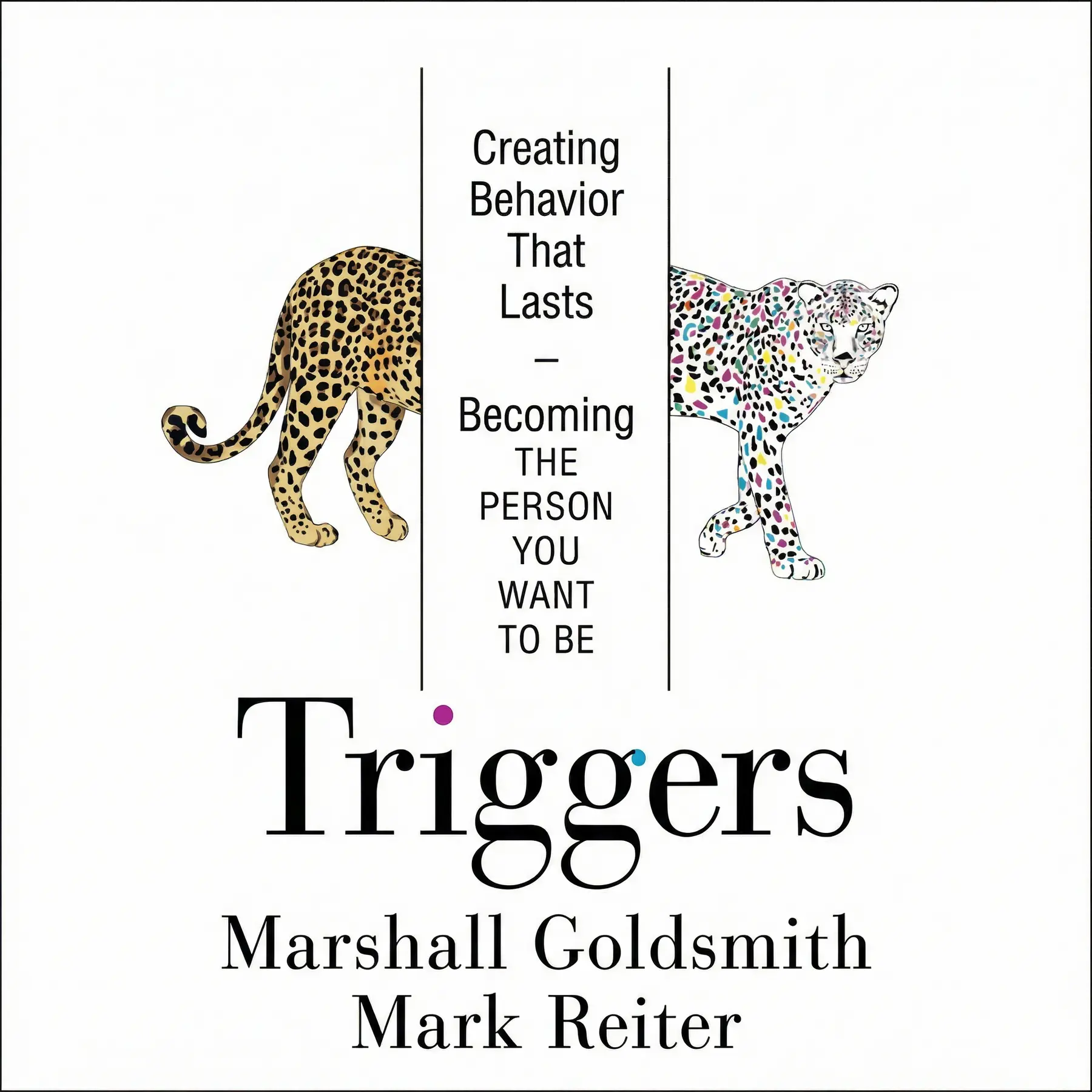
Triggers: Creating Behavior That Lasts – Becoming the Person You Want to Be
Discover how environmental stimuli dictate your behavior and learn practical strategies to reclaim control. This guide offers tools to overcome internal resistance and build lasting habits for personal and professional growth.
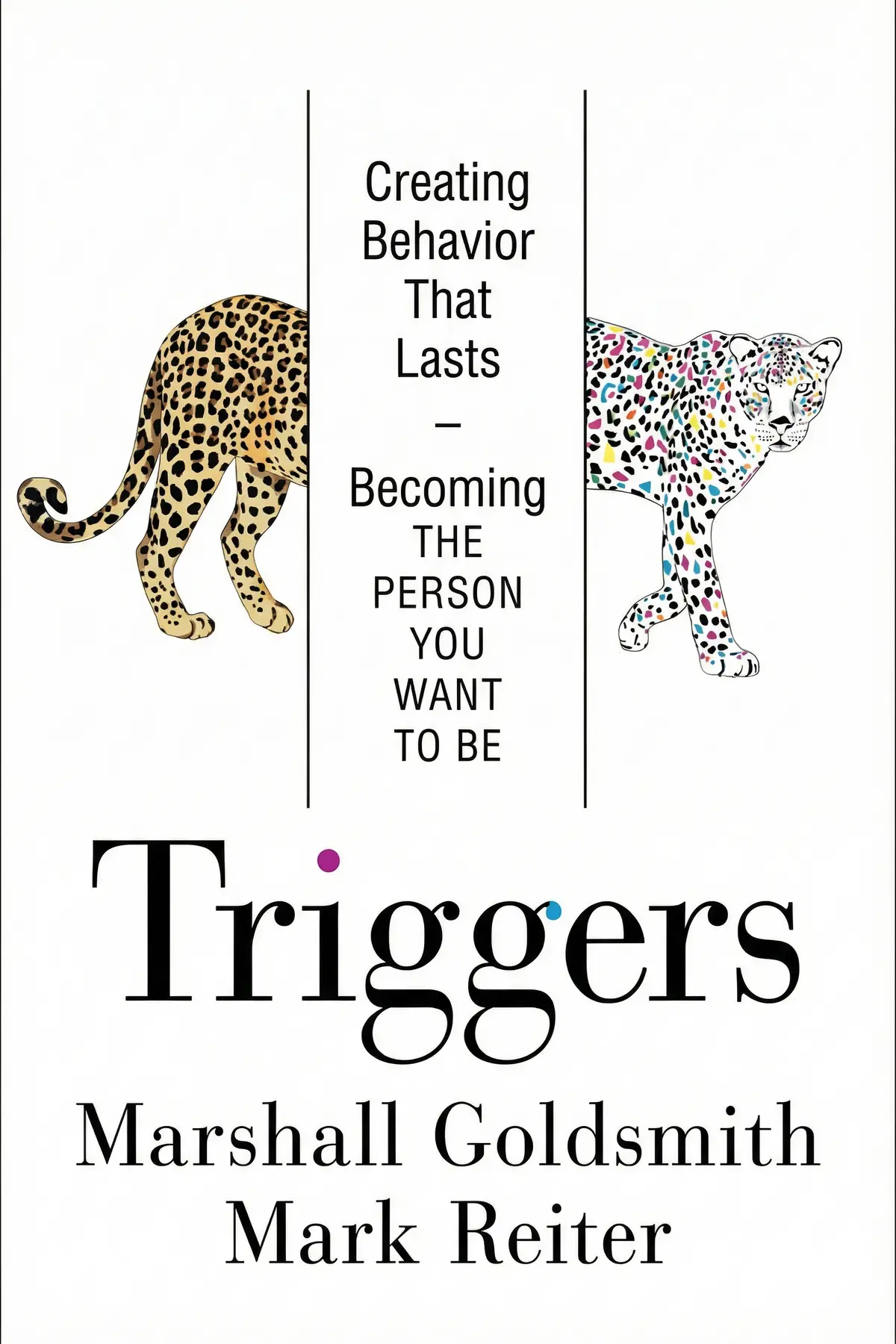
Table of Content
1. Introduction
1 min 48 sec
We all carry a vision of the person we want to be. Perhaps you see yourself as a patient parent, a focused professional, or someone who maintains a rigorous health routine. Yet, there is often a significant gap between that ideal image and our daily reality. Why do we so frequently act in ways that contradict our own goals? Why is it so incredibly difficult to maintain a diet, stay calm in a heated meeting, or simply finish the tasks we set for ourselves?
The reason isn’t a lack of character or a fundamental flaw in our personality. Instead, the culprit is often found in the world around us. We are constantly interacting with a relentless stream of environmental stimuli—what we call triggers. These triggers are like invisible hands, pushing and pulling our behavior in directions we didn’t intend to go. Think about the last time you were determined to eat healthy, only to find yourself reaching for a snack the moment you saw a vibrant advertisement or smelled something delicious. That wasn’t a failure of will; it was a response to a powerful trigger.
In this journey, we are going to explore how these triggers operate and, more importantly, how we can master them. We will look at why our environment is often a hostile place for our intentions and how we can build internal and external structures to protect our goals. By the end of this discussion, you’ll understand a specific throughline: that while we cannot control every stimulus the world throws at us, we can absolutely control our response. We will move from being reactive victims of our circumstances to being proactive leaders of our own lives. Through simple but profound techniques like active questioning and disciplined feedback, you will learn how to bridge the gap between the person you are and the person you truly want to become.
2. Understanding the Invisible Force of Triggers
2 min 02 sec
Explore how everyday stimuli shape your thoughts and actions without you even realizing it, and why awareness is the first step to freedom.
3. The Internal Obstacles of Belief and Ego
1 min 58 sec
Discover the psychological traps and overconfidence that prevent us from admitting we need to change in the first place.
4. Using Feedback to Break the Impulse Loop
1 min 54 sec
Learn how to insert a moment of reflection between a stimulus and your reaction to regain control over your life.
5. Adapting Your Strategy to Your Surroundings
1 min 40 sec
Discover how to lead your own behavior by forecasting challenges and adjusting your approach to fit different environments.
6. The Power of Active Questions and Accountability
1 min 54 sec
Transform your daily routine by shifting from passive observations to active, responsibility-driven self-inquiry.
7. Combating Exhaustion with Deliberate Structure
1 min 43 sec
Understand why your willpower fades by the end of the day and how creating routines can save your mental energy for what matters.
8. Conclusion
1 min 34 sec
As we wrap up this exploration of behavioral change, it becomes clear that the journey to becoming the person you want to be is not a one-time event, but a continuous cycle. We live in a world that is constantly trying to shape us, but by developing a deep awareness of our triggers, we can reclaim our role as the sculptor of our own lives. We’ve seen how triggers can be deceptive, how our own beliefs can hold us back, and how the simple act of asking ‘Did I do my best?’ can shift us from passive bystanders to active participants.
This leads us to what we can call the circle of engagement. In this circle, a trigger leads to an impulse, but instead of jumping straight to action, we insert awareness. That awareness leads to a conscious choice, which results in a new behavior. That behavior then becomes a new trigger for the people around us, creating a positive ripple effect. We saw this in the story of the man who chose to truly listen to his wife. His awareness of his own impulse to be distracted allowed him to make a choice that improved his own character and strengthened his relationship.
The ultimate lesson here is that you must own your change. You cannot wait for a more supportive environment or a less stressful day to begin. The environment will always be full of challenges. However, by using active questions, maintaining daily accountability, and building structures to support your willpower, you can navigate any environment with intention. Tomorrow morning, when you face your first trigger, don’t just react. Stop, breathe, and ask yourself what kind of person you want to be in that moment. That is where your transformation begins.
About this book
What is this book about?
Have you ever wondered why even your best intentions often fall by the wayside? This exploration delves into the hidden forces that shape our actions: triggers. Every day, we are bombarded by environmental cues—from the scent of food to the tone of a colleague’s voice—that pull us away from our desired path. This summary breaks down the psychological mechanisms behind these reactions and explains why our own internal beliefs often act as hurdles rather than helpers. The book provides a transformative framework for behavioral change, shifting the focus from passive observation to active engagement. By learning to identify the specific people and situations that influence us, we can move from impulsive reactions to conscious choices. You will discover the power of daily accountability through active questioning and the importance of creating structure to combat decision fatigue. Ultimately, the promise is a more intentional life where you no longer feel like a passenger to your surroundings, but rather the architect of your own character and future.
Book Information
About the Author
Marshall Goldsmith
Marshall Goldsmith is recognized as one of the most influential business thinkers in the world. He works as an executive coach and author, specializing in helping leaders achieve positive, lasting change in behavior. Mark Reiter is a literary agent based in New York who has contributed his expertise to numerous successful projects, having collaborated on 13 previous books prior to this work.
Ratings & Reviews
Ratings at a glance
What people think
Listeners find this book both deep and absorbing, filled with actionable strategies and direct paths toward transforming their behavior. Furthermore, they value the inspiring message and stimulating perspective, while one listener points out how it encourages personal introspection. The title also garners favorable remarks for its clarity and accessibility, with one review emphasizing its talent for breaking down intricate ideas into plain, easy-to-understand language.
Top reviews
Michael
The concept of 'Did I do my best' changed my entire morning routine and how I view my personal accountability. I used to blame my environment or my boss when I didn't reach my goals, but this book forced me to look inward. Marshall Goldsmith breaks down complex behavioral psychology into simple, actionable steps that anyone can follow regardless of their professional level. Track your daily questions. It helps. It’s not just about business; it’s about being a better person in your relationships and for yourself. The writing is incredibly readable and the stories, while mostly corporate, are easy to translate to everyday life situations. This is easily one of the most motivational books I’ve picked up in years because it emphasizes effort over perfect results. I’ve already recommended it to three people in my department who were feeling burnt out lately.
Show moreHiroshi
Ever wonder why you keep making the same mistakes even when you know better? This book explains that our environment is a relentless trigger that pulls us away from our best selves. I loved the emphasis on active questions rather than passive ones. Instead of asking if I was happy, asking if I did my best to be happy made me realize I have more control than I thought. The simplicity of the language makes the complex psychology feel accessible to anyone, not just psychology majors or high-level executives. It’s a very engaging read. It moves fast. You will find yourself reflecting on your own behavior by the end of the first chapter. While some might find the author a bit self-centered, the methodology he presents is undeniable if you actually do the work. I’m currently on day twenty of my daily questions and the shift in my focus is palpable.
Show moreBam
This book is a masterclass in self-accountability for those of us who feel like our environment is constantly working against us. Marshall Goldsmith provides clear steps to identify the triggers that cause us to react poorly or lose sight of our long-term goals. I appreciated how he distinguishes between 'knowing' what to do and actually 'doing' it, which is where most self-help books fail. The actionable practice of tracking daily effort rather than just results is a total game-changer for maintaining motivation over the long haul, especially when you are dealing with projects that take months to complete. Look, some might find his tone a bit smug, especially when he talks about his executive coaching sessions, but the logic is sound. It’s a very insightful and engaging read that pushes you to take responsibility for your own happiness and engagement. I’ve started using the six questions every night, and it’s eye-opening to see where I’m actually slacking. Highly recommend this for anyone looking for a practical guide to behavioral change.
Show moreZanya
Picked this up during a career transition and found it to be exactly the wake-up call I needed. The core idea that we are often victims of our environment resonated deeply. I’ve started the daily questions, and frankly, my productivity shift was immediate. Goldsmith’s focus on 'doing your best' is a powerful mindset change. Not gonna lie, the name-dropping of billionaire clients got old fast. It feels like he's writing for a specific elite circle. Still, the practice is easy to follow. If you ignore the ego, the substantive advice for behavioral changes is excellent.
Show morePakpoom
Finally got around to finishing this for my office book club, and I have to say the results were surprising. The 'Daily Questions' framework is such a simple way to maintain focus on behavioral goals, especially in a chaotic work environment. My coworkers and I spent a long time discussing the AIWATT principle and how it applies to our stressful weekly meetings. Personally, I found the author’s tendency to brag about his high-profile clients a bit distracting, yet the core message remains powerful. He translates complex concepts into simple language that anyone can use to self-reflect and improve their interpersonal relationships. It’s a very readable book that doesn’t require a background in psychology to appreciate or implement. Some parts felt a bit repetitive, but the repetition helps hammer home the need for structure in our lives. It’s definitely a thought-provoking approach to self-improvement that I'll keep on my desk for reference.
Show moreBo
After hearing several colleagues rave about the 'Daily Questions' method, I decided to give it a shot to see if it lived up to the hype. I was pleasantly surprised by how much I enjoyed the focus on internal locus of control and personal effort. The book is filled with motivational content that really helps you self-reflect on why you aren't reaching your full potential. I found the chapter on environmental triggers particularly insightful because it helped me identify why I always lose focus in the late afternoon when the office gets loud and my energy starts to dip. Gotta say, the author does come across as a bit full of himself at times, which might be a turn-off for some readers. However, the clear steps and easy-to-use templates for tracking progress make it a worthwhile investment of your time. It’s a quick read that provides a lot of value if you are actually willing to put the work in.
Show morePong
Not what I expected from a typical business book, but in a good way because it focuses more on the person than the profit. The emphasis on being fully engaged and finding meaning in everyday tasks is something we all need to hear more often to stay grounded. I liked how the book translates complex behavioral concepts into simple language that felt very relatable, even when the specific examples were about high-powered CEOs. It’s an engaging read that offers a lot of thought-provoking moments regarding how we allow our environment to dictate our moods. Personally, I think the 'Did I do my best' questions are the most valuable takeaway because they remove the excuses we usually make for ourselves. While the author’s tone can be a bit 'holier-than-thou' at points, the practical tips for making behavioral changes are too good to ignore. It’s a solid addition to any self-improvement library and a great tool for anyone serious about self-reflection.
Show moreSophia
As someone who works in a mid-level management role, I found the advice a bit of a mixed bag. The core idea of AIWATT (Am I Willing At This Time) is actually brilliant and has helped me pause before reacting to annoying emails or difficult colleagues. However, much of the book felt like it was written exclusively for well-to-do exec types who have personal assistants to handle their daily chores. Truth is, the 'Empty Boat' parable was a nice reminder to let go of anger, even if I’d heard similar stories in Zen Buddhism books before. While the techniques for behavioral change are solid, the delivery is often repetitive and leans heavily on the author’s own success. I didn’t care for the parts where he seemed to judge people for having basic human weaknesses. It's a decent read for the practical tips, but be prepared to filter out a lot of ego to get to the good stuff.
Show moreClara
Truth is, I have a love-hate relationship with Marshall Goldsmith's writing style throughout this entire book. On one hand, the 'Empty Boat' parable and the AIWATT acronym are incredibly useful tools for emotional regulation in the heat of the moment. On the other hand, the author's constant focus on elite CEOs and his oddly judgmental stance on things like weight loss can be quite grating. It feels like he’s speaking to a very specific, privileged audience while ignoring the objective obstacles that regular people face every day. To be fair, the information presented is solid and the 'Did I do my best' phrasing is a brilliant way to stay honest with yourself. It’s not groundbreaking stuff if you’ve read a lot of positive psychology, but it is packaged in a very accessible way. I’d say it’s worth a read for the practical frameworks, provided you can stomach the occasional bragging.
Show moreFord
Look, I really wanted to like this one given the high praise it gets in corporate circles, but the author’s tone was a major barrier for me. Frankly, the constant name-dropping of CEOs and the 'first-world martyr' attitude felt incredibly out of touch with anyone living a normal life. I found the section on 'Did I do my best' to be somewhat useful, but it’s buried under pages of what feels like a lecture from someone who has never struggled with a real budget. Someone please get this man a sandwich because he spends way too much time obsessing over what people are eating. The weirdly judgmental comments about weight were a huge turn-off and felt totally unnecessary for a book about behavioral change. To be fair, there are a few decent nuggets of wisdom regarding environmental triggers, yet they aren't worth wading through the smugness. If you can ignore the elitist vibe, you might find something here, but I just couldn't get past the author's personality.
Show moreFeatured in
Readers also enjoyed
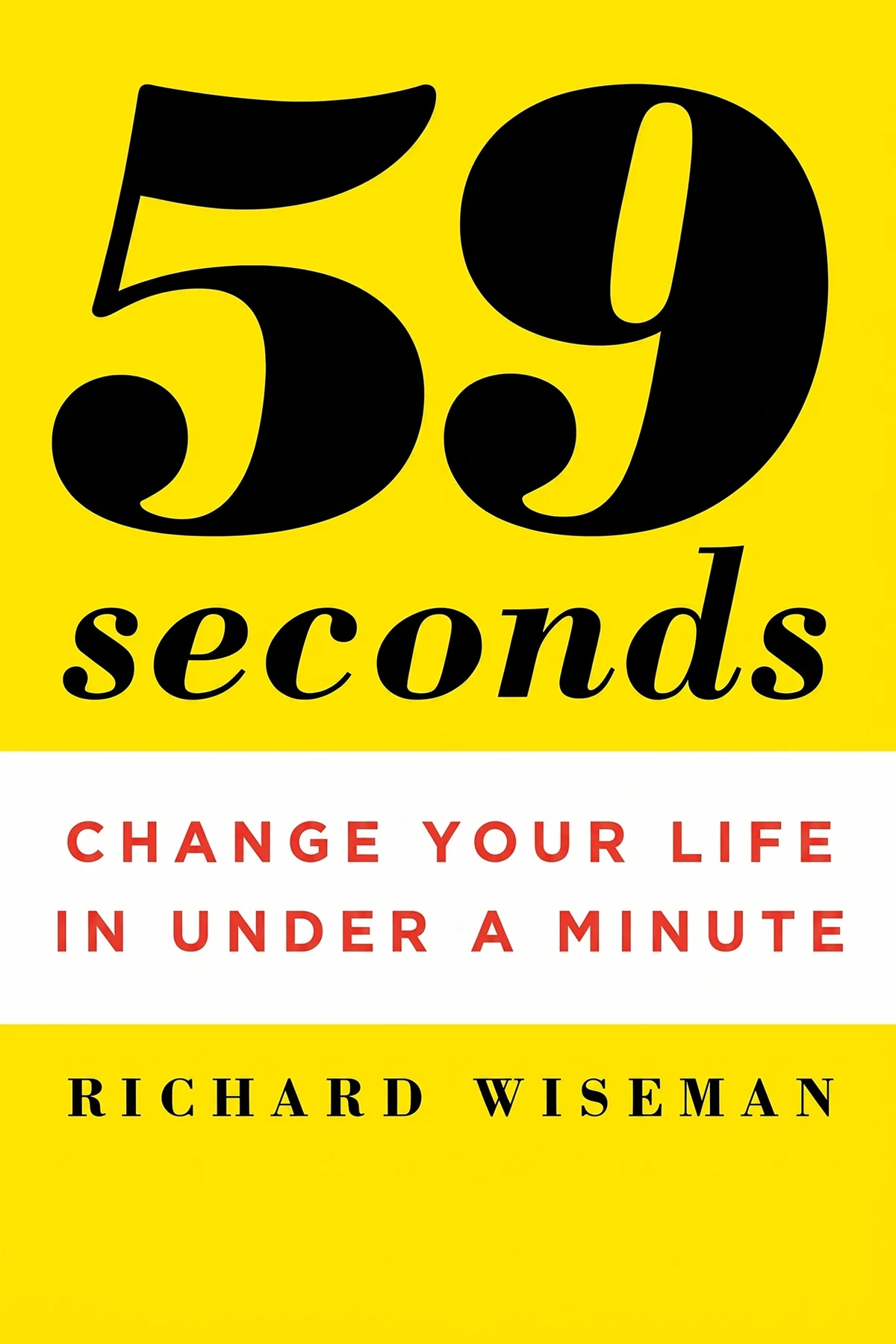
59 Seconds: Change Your Life in Under a Minute
Richard Wiseman
A Guide to the Good Life: The Ancient Art of Stoic Joy
William B. Irvine
A High-Performing Mind: Strengthen Your Mind and Live Your Best Life
Andrew D. Thompson
AUDIO SUMMARY AVAILABLE
Listen to Triggers in 15 minutes
Get the key ideas from Triggers by Marshall Goldsmith, plus 5,000+ more titles in English and Thai.
- 5,000+ titles
- Listen as much as you want
- 7-day free trial
- Cancel anytime







