
20 min 06 sec
What Got You Here, Won’t Get You There: How Successful People Become Even More Successful!
What Got You Here, Won’t Get You There explores how the habits that fueled your initial rise can become obstacles to future success, providing a blueprint for behavioral change in leadership.
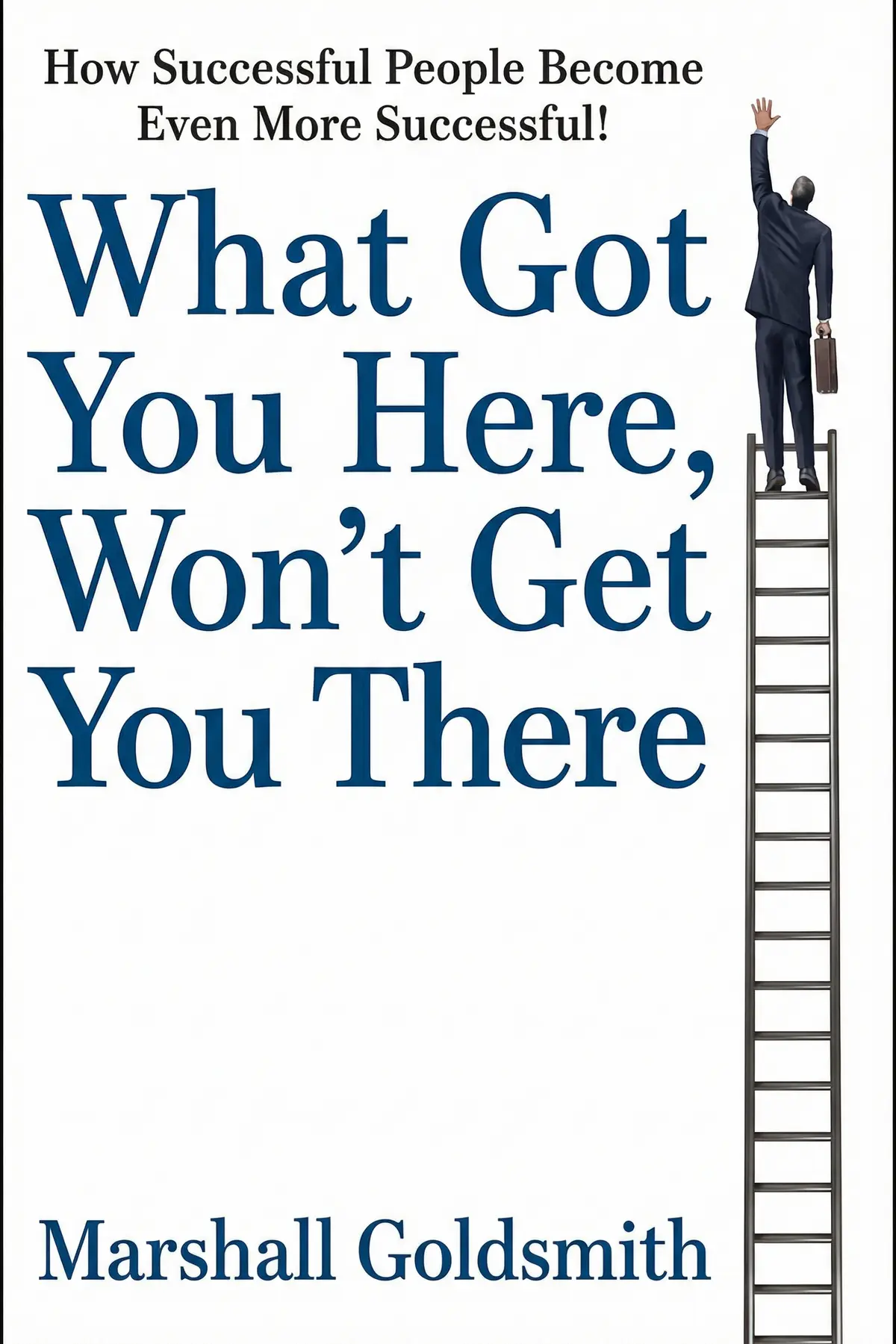
Table of Content
1. Introduction
1 min 34 sec
Imagine the classic image of a high-powered executive. You probably see someone who is incredibly sharp, highly competitive, and perhaps a bit too focused on their own status. While these people are undeniably successful, they often carry a heavy burden of habits that make them difficult to work with. The central paradox of professional growth is that the very behaviors that helped you climb the first few rungs of the ladder might be the exact things preventing you from reaching the top.
We often assume that because we have achieved great things, our current way of operating is perfect. However, success can actually be a barrier to self-improvement. It creates a sense of validation for all our actions, even the ones that alienate our colleagues or cloud our judgment. This is where the wisdom of executive coaching becomes essential. It’s about recognizing that technical skills only get you so far; after a certain point, your success is determined entirely by how you treat people and how you manage your own ego.
In this exploration, we are going to look at why successful people become superstitious about their own flaws and why the simple act of stopping a bad behavior can be more revolutionary than any new skill you might learn. We’ll look at the hidden costs of needing to win every conversation and the danger of letting goals blind you to your own values. By the end, you’ll see that the path to becoming a better leader isn’t just about doing more—it’s about being more aware of what you need to let go of. This isn’t just about professional advancement; it’s about becoming a better colleague and a more authentic person in every area of your life.
2. The Superstition of Success
1 min 54 sec
Success often leads us to believe our flaws are actually the secrets to our achievements, creating a dangerous cycle of bad habits.
3. The Power of Ceasing Negative Behavior
2 min 09 sec
Stopping a destructive habit can have a more significant impact on your career than starting a dozen productive ones.
4. Curbing the Compulsion to Win
2 min 11 sec
The competitive drive that makes you successful can become a liability when it bleeds into every trivial interaction.
5. The Hidden Tax of Adding Value
2 min 10 sec
Trying to improve every idea you hear can actually demotivate your team and destroy their sense of ownership.
6. The Distorting Lens of Goal Obsession
2 min 13 sec
When we become too focused on a specific outcome, we can lose sight of our values and the people around us.
7. The Mirror of Authentic Feedback
1 min 58 sec
True growth requires looking past our own delusions and learning to value the criticism of those around us.
8. The Transformative Power of Gratitude and Apology
2 min 02 sec
Using simple words like ‘sorry’ and ‘thank you’ can de-escalate tension and repair damaged professional relationships.
9. The Discipline of Long-Term Change
2 min 13 sec
Meaningful behavioral change isn’t an overnight event; it requires a consistent process of follow-up and public accountability.
10. Conclusion
1 min 42 sec
The journey from where you are now to where you want to be isn’t paved with more technical expertise or harder work. It’s paved with self-awareness. The habits that helped you survive and thrive in the early stages of your career—the competitive fire, the goal obsession, the need to be the smartest person in the room—are often the very things that will hold you back as you move into leadership. The core message here is that successful people often succeed in spite of their quirks, not because of them. To reach the next level, you must be willing to let go of the behaviors that no longer serve you.
Real change starts with humility. It starts with asking for honest feedback and actually listening to the answer without getting defensive. It involves the discipline of stopping negative behaviors, like ‘adding value’ to every idea or needing to win every argument. It requires you to use the power of apology and gratitude to mend the relationships your ego might have damaged. Most importantly, it requires a commitment to a long-term process. You cannot change overnight, but you can change over time if you have the courage to involve others in your progress.
As an immediate step, consider conducting your own ‘360-degree feedback.’ Ask the people you work with—your bosses, your peers, and your subordinates—to give you frank, honest input on what you should stop doing. Tell them to focus on the future and how you can improve, rather than dwelling on past mistakes. When they give you their feedback, don’t argue and don’t justify. Just say ‘thank you.’ That simple act is the first step toward a version of success that isn’t just about what you’ve achieved, but about the kind of leader you’ve become.
About this book
What is this book about?
This summary dives into the psychological paradox facing many high achievers: the belief that their success is a result of their flaws rather than in spite of them. It identifies common behavioral traps, such as the compulsive need to win every argument, the habit of adding unnecessary suggestions that kill employee motivation, and the obsession with goals that can cloud moral judgment. The core promise is a practical method for moving from individual brilliance to effective leadership. It explains how to identify destructive habits through feedback, how to apologize without making excuses, and why simply stopping a negative behavior is often more valuable than starting a positive one. By following these insights, professionals can break through career plateaus and foster a culture of respect and productivity within their organizations.
Book Information
About the Author
Marshall Goldsmith
Marshall Goldsmith is a veteran executive coach with more than 30 years of experience in measuring and analyzing behavior in organizations. Having worked with over 100 top executives, he was ranked as one of the top ten executive educators by the Wall Street Journal.
The Earned Life: Lose Regret, Choose Fulfillment
Marshall Goldsmith
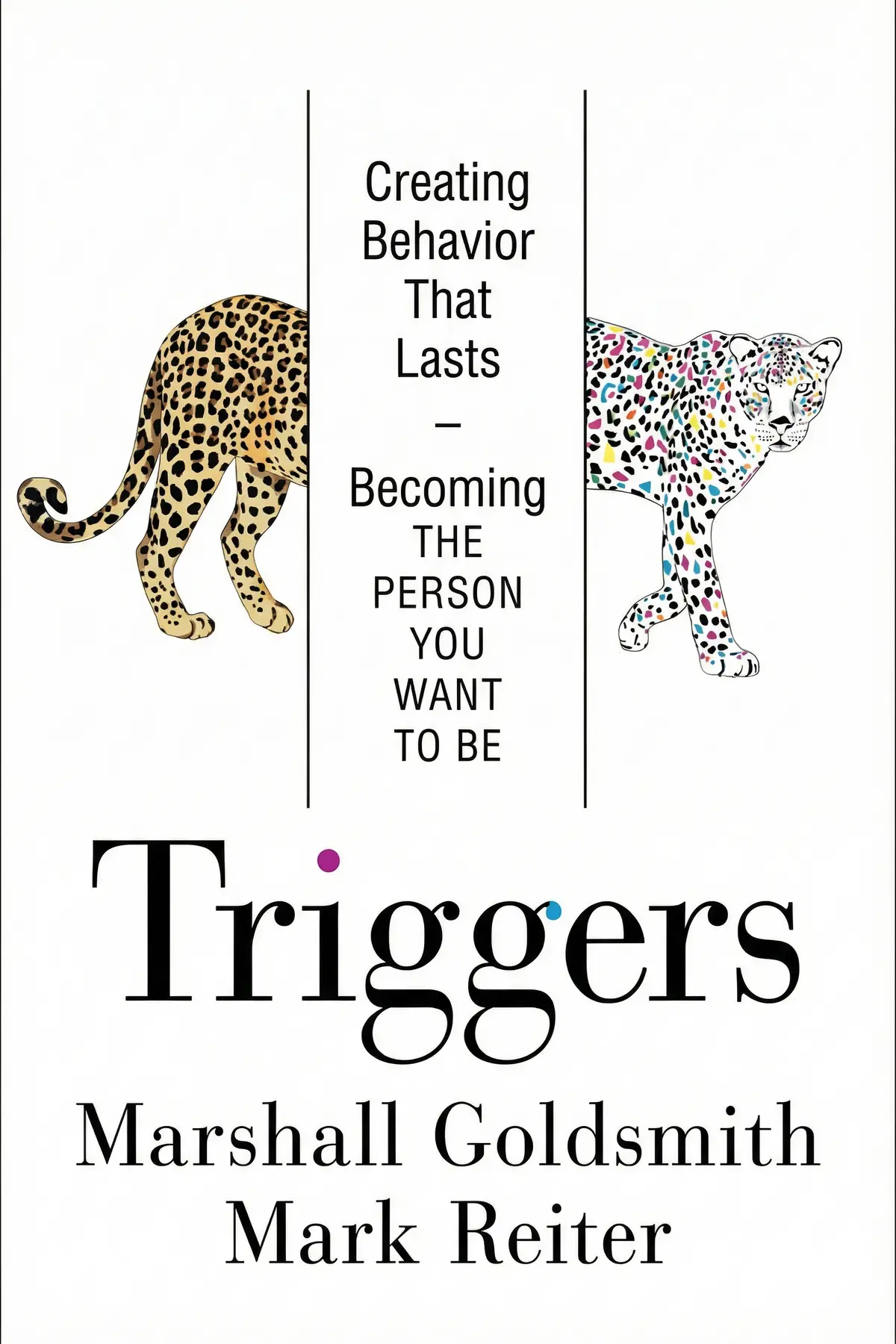
Triggers: Creating Behavior That Lasts – Becoming the Person You Want
Marshall Goldsmith
Ratings & Reviews
Ratings at a glance
What people think
Listeners view this title as an essential read for individuals in leadership, brimming with sagacious and reflective concepts that encourage them to analyze their daily interactions and shift their mental frameworks. Additionally, they value the actionable tips and clear-cut strategy that is easy to apply, regarding it as a significant tool for personal development that yields impressive results.
Top reviews
Siraporn
The transition from being a star individual contributor to a leader is rarely smooth. Goldsmith nails the reason why: the very traits that make you an expert—like your obsession with technical details—can actually sabotage your ability to lead others effectively. I appreciated the deep dive into 'adding too much value,' where your desire to improve an idea actually drains the ownership from the person who proposed it. In my experience, this is the most common mistake for new managers who can't stop tinkering with their team's output. The writing style is punchy and direct, which makes the hard truths easier to swallow. While some of the corporate anecdotes feel a bit 'old boys club,' the core behavioral science remains incredibly relevant today. It’s a profound piece of self-improvement that forces you to examine your daily interactions through a lens of humility. If you're stuck in your career, the problem might not be what you aren't doing, but what you refuse to stop doing.
Show moreWatcharee
Wow, I wish I had read this five years ago before I started managing a team. Most management books tell you what to do, but Goldsmith focuses on what to stop, which is much harder. The idea that people will only change if it is in their own best interest is a simple but powerful truth. I love the concept of the 'human Switzerland' where you treat every idea with complete neutrality. It’s a short, punchy book that doesn't waste time with unnecessary fluff. If you're looking to level up your people skills, this is the definitive guide.
Show moreSomboon
After hearing about this title for years, I didn't expect it to actually reshape how I talk to my family, not just my coworkers. The habit of starting with 'No, But, or However' is such a subtle way of shutting people down. Once you see it, you can't un-see it in every conversation you have. Frankly, the advice on practicing gratitude by saying 'thank you' instead of 'goodbye' is a small tweak that has already improved my relationships. Goldsmith’s straightforward approach is exactly what busy professionals need—less theory, more action. The book delivers amazing results by forcing you to take accountability for your own annoying behaviors. It’s easily one of the most influential management books I’ve read in a decade. Every page has a nugget of wisdom that makes you rethink your entire communication style.
Show moreYok
Finally got around to reading this staple of corporate life, and I feel personally attacked by Habit #4. Making destructive comments or sarcastic remarks just to seem witty is a trap I fall into way too often. The truth is, these habits are subtle success inhibitors that we justify as part of our 'authentic' personality. Goldsmith’s approach is refreshing because it isn’t about adding new skills to your plate, but about creating a rigorous 'to-stop' list. To be fair, some of the examples involving wives and assistants feel incredibly dated and a bit alienating to a modern reader. However, the advice on simply saying 'thank you' to all feedback—even the negative stuff—is a total game changer for professional growth. It’s practical, straightforward, and easy to act upon if you have the stomach for some ego-bruising. It’s a must-read for anyone who thinks they’ve already reached their peak.
Show moreGabriel
As someone who struggles with 'adding too much value' in every single meeting, this was a wake-up call I didn't know I needed. Goldsmith explains how a 5% improvement to someone’s idea can result in a 50% drop in their commitment to it. That math is staggering. The book is packed with these thought-provoking insights that immediately change how you view your daily encounters. I’ve already started catching myself before I say 'but' or 'however,' and the difference in my team's energy is palpable. Not gonna lie, the tone can be a bit repetitive, and the author clearly loves his own success stories. But if you can look past the ego, the practical advice is pure gold for career progression. It moves beyond abstract management theory and gives you a concrete roadmap for behavioral change. It’s a fast read that delivers amazing results if you're actually willing to listen to the feedback.
Show moreSkylar
This book doesn't offer a magic pill for success, but it does give you a very clear mirror to look into. Ever wonder why you’re hitting a ceiling despite being the smartest person in the room? Goldsmith suggests it’s probably because you’re constantly telling everyone how smart you are. The section on 'claiming credit' was particularly painful to read because it highlighted things I’ve done without even thinking. The writing is conversational and the advice is easy to implement starting today. I did find the focus on the executive suite a bit narrow, as these habits affect people at every level of an organization. Still, the emphasis on gratitude and active listening is universal. This is a profound piece of self-improvement that makes you think about how you show up for others. I'll be keeping this on my desk as a frequent reference for my 'to-stop' list.
Show moreIvan
Gotta say, I never realized how much I was alienating my peers just by starting sentences with the word 'but.' This book is full of these small, behavioral glitches that hold us back from true leadership. I appreciated the chapter on 'punishing the messenger,' which is something I’ve seen kill company cultures time and time again. To be fair, some of the author’s anecdotes feel a bit like he’s bragging about his social circle. But the core message—that your technical skills won't save you at the top—is undeniable. The advice on asking 'is it worth it?' before speaking is a simple tool that has saved me from numerous foot-in-mouth moments. It’s a must-read for those in management who are brave enough to ask for honest feedback. Even with the dated examples, the behavioral insights are top-notch.
Show moreFatima
Marshall Goldsmith manages to strip away the fluff that usually bogs down management literature. He gets right to the point: you are probably your own biggest obstacle. The concept of 'feedforward' instead of feedback is a brilliant way to handle workplace performance. It focuses on the future instead of litigating the past, which reduces defensiveness and actually gets people moving. I did take issue with the way he treats every day as a press conference where colleagues are waiting for you to trip up. That feels a bit paranoid and exhausting for a healthy work environment. However, the 20 habits he identifies are spot on for most high-achievers I know. It’s an easy-to-read guide that provides a clear path for anyone looking to refine their interpersonal skills. Definitely worth the time for the to-stop list alone.
Show moreChaiwat
While the central premise is brilliant, the book often feels like an extended advertisement for Goldsmith's coaching business. He constantly reminds the reader about his high-profile clients and the millions he gets paid, which gets a bit tiresome after the third chapter. To be fair, the '20 Habits' list is an excellent diagnostic tool for anyone in a leadership position. The chapter on 'passing judgment' hit home for me because it's so easy to impose our own standards on others without realizing it. Personally, I found the section on apologizing to be the most impactful part of the whole book. Many executives view an apology as a sign of weakness, but Goldsmith frames it as a strategic tool for rebuilding trust. It’s a solid 3-star read—great information, but you have to wade through a lot of self-promotion to get to the good stuff.
Show moreElan
Look, the advice on stopping bad habits is solid, but the delivery is stuck in a 1980s boardroom. I found myself increasingly frustrated by how the author describes women as 'moms who want it all' or focuses on their revealing outfits rather than their professional expertise. It is hard to take modern leadership advice seriously when the majority of female examples are relegated to secondary roles or treated as anomalies in a man's world. The book is essentially a guide for high-powered, aggressive men to stop being jerks to their subordinates. If you can filter out the blatant sexism and the repetitive name-dropping of Fortune 500 CEOs, there are some nuggets of wisdom regarding active listening. But frankly, in this day and age, we shouldn't have to sift through such an outdated worldview to find value. The core concepts are available in better, more inclusive books. This one needs a serious 21st-century update or it should just be retired.
Show moreReaders also enjoyed
7 Powers: The Foundations of Business Strategy
Hamilton Helmer

A Bigger Prize: How We Can Do Better Than the Competition
Margaret Heffernan
A Year with Peter Drucker: 52 Weeks of Coaching for Leadership Effectiveness
Joseph A. Maciariello
AUDIO SUMMARY AVAILABLE
Listen to What Got You Here, Won’t Get You There in 15 minutes
Get the key ideas from What Got You Here, Won’t Get You There by Marshall Goldsmith, plus 5,000+ more titles in English and Thai.
- 5,000+ titles
- Listen as much as you want
- 7-day free trial
- Cancel anytime







