
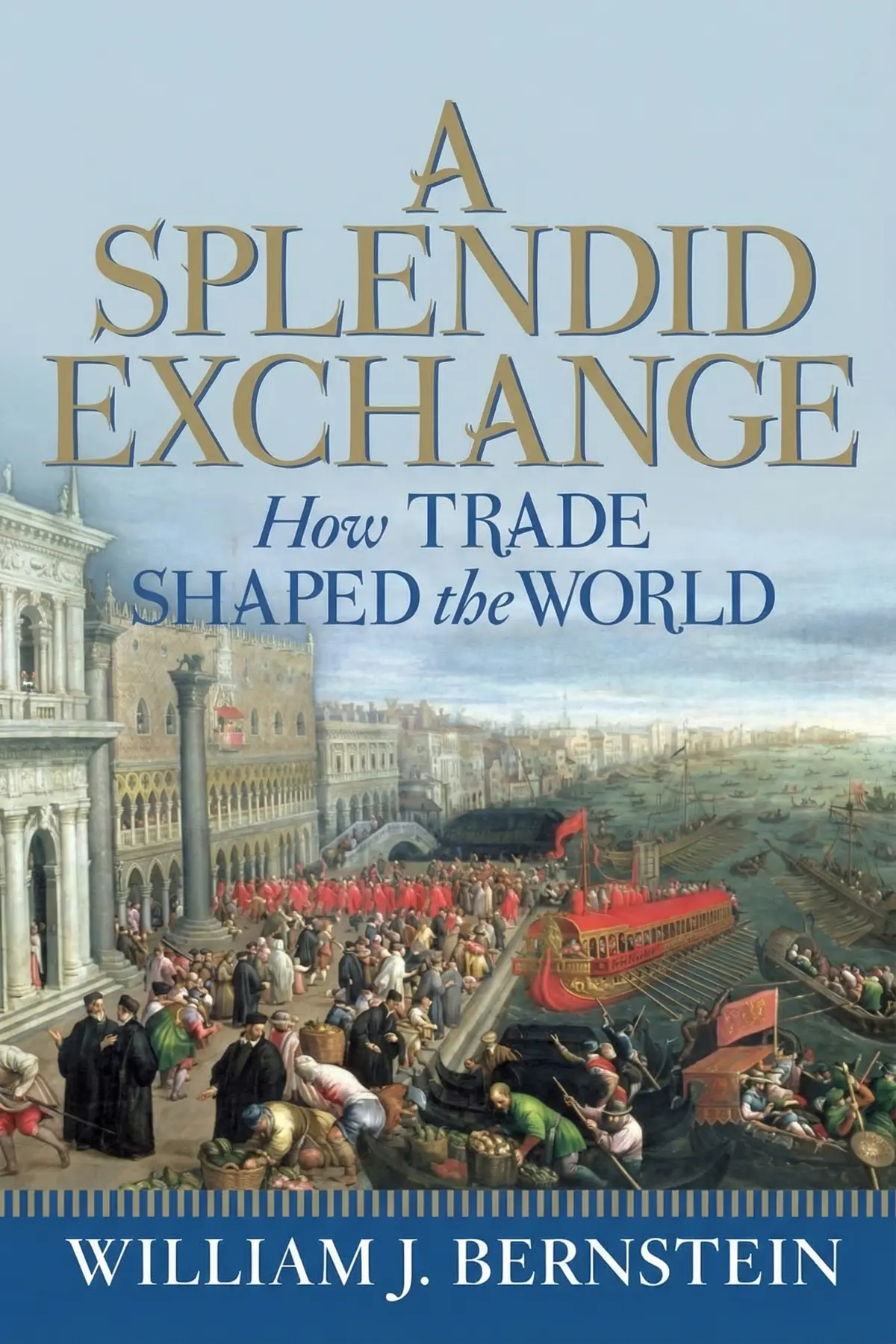
A Splendid Exchange: How Trade Shaped the World
William J. Bernstein
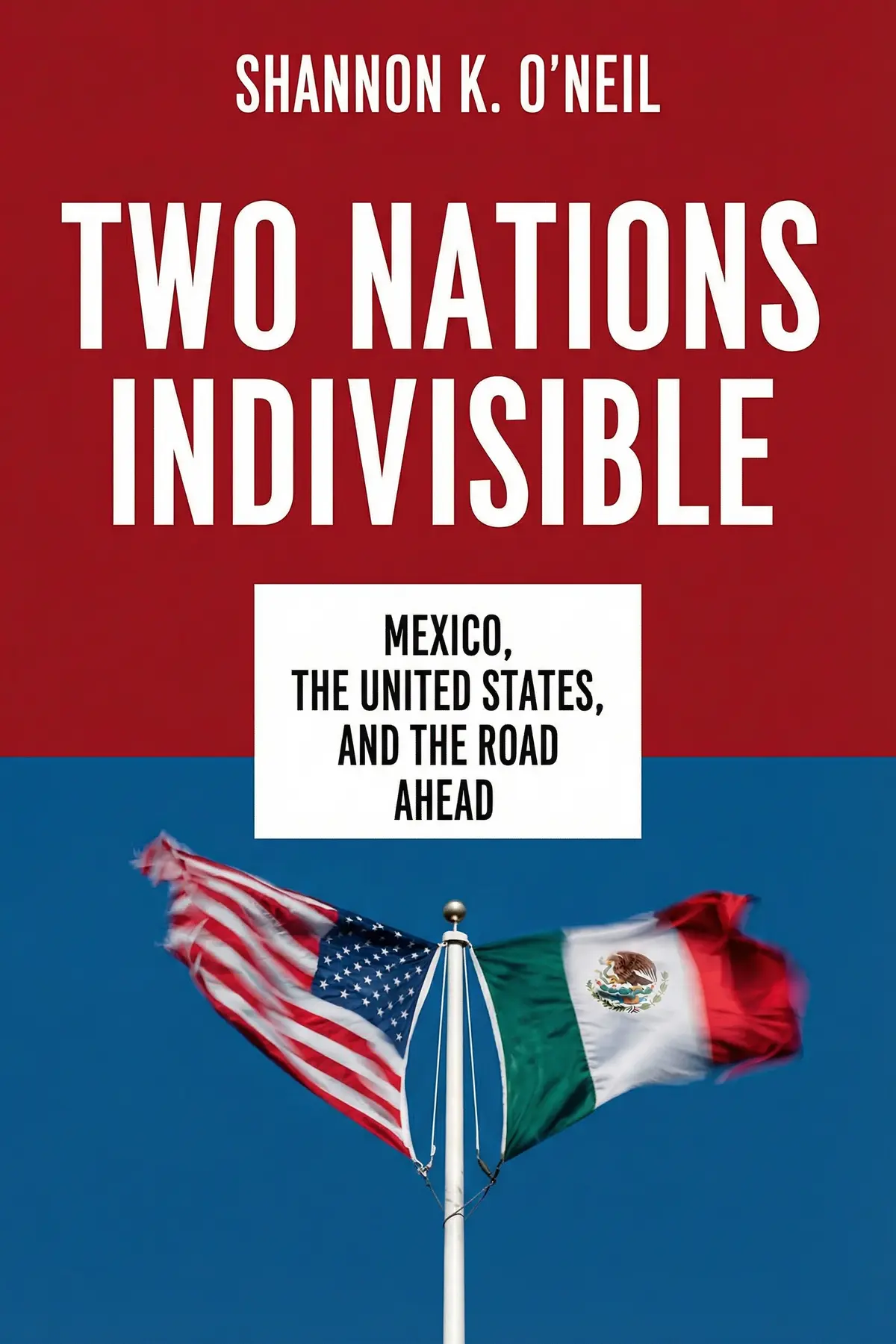
Explore the intricate bond between Mexico and the United States. This analysis moves beyond headlines to reveal how economic integration, political shifts, and shared challenges shape a deeply connected North American future.
1 min 34 sec
When we think about the relationship between the United States and Mexico, the images that often come to mind are those of physical barriers, heated political debates, and a sense of profound difference. During the 2016 American election cycle, the idea of a massive wall became a central point of contention, symbolizing a desire to separate two nations that are, in reality, more connected than many realize. This friction reveals a fundamental tension in the North American experience: while we share a border, we often struggle to share a common understanding.
In this exploration of Two Nations Indivisible, we are going to look past the political slogans to find the real story of Mexico’s transformation. Over the last several decades, our southern neighbor has undergone a radical metamorphosis, moving from a rigid, one-party political system toward a more open, though still struggling, democracy. Economically, it has shifted from a closed market to a global manufacturing hub.
However, these changes haven’t always been easy or smooth. We’ll look at how media portrayals often miss the bigger picture, focusing on violence while ignoring the rise of a new middle class. We will examine the historical roots of migration, the reality of the drug trade, and the untapped potential for a partnership that could redefine the global standing of both countries. The central throughline here is simple but profound: the United States and Mexico are no longer just neighbors; they are partners whose successes and failures are deeply intertwined. By the end of this journey, you’ll see why the road ahead for one nation is inevitably the road ahead for the other.
2 min 07 sec
Media coverage often highlights Mexico’s darkest moments of violence and crime, but these sensational stories mask a surprising narrative of economic resilience and urban growth.
2 min 16 sec
Building a bridge between two sovereign governments is a delicate task, and even the most well-intentioned diplomatic efforts can be derailed by domestic pride and unforeseen leaks.
2 min 16 sec
Migration is rarely just about a desire to leave; it is often the direct result of systemic economic shocks that leave families with no other choice but to seek stability elsewhere.
2 min 05 sec
For seventy years, Mexico was governed by a single political machine. The transition to a multiparty democracy was not a single event, but a hard-fought struggle led by the people.
2 min 03 sec
Opening borders to trade brought unprecedented growth to Mexico’s export sector, but it also highlighted the domestic struggle against powerful corporate monopolies.
2 min 05 sec
The rise of violence in Mexico is not just a local failure, but the unintended consequence of successful law enforcement efforts in other parts of the world.
1 min 58 sec
To move forward, the U.S. and Mexico must treat migration and infrastructure not as political battlegrounds, but as shared economic opportunities that require a common-sense overhaul.
2 min 08 sec
Recent legislative shifts in Mexico suggest a nation finally ready to tackle its most deep-seated issues, from education quality to the transparency of its energy sector.
1 min 38 sec
As we look at the full picture of the relationship between Mexico and the United States, it becomes clear that the ‘indivisible’ nature of these two nations is not just a poetic sentiment; it is a hard economic and social reality. We have seen how the sensationalism of the media often blinds us to the real progress being made in Mexican cities, and how the historical waves of migration were driven by economic forces that neither country could ignore. We’ve also explored the difficult transition from a one-party state to a democracy and the challenges of a trade relationship that is both a source of growth and a source of internal friction.
The takeaway is that we can no longer afford to view Mexico through a lens of fear or isolation. The problems of one nation—whether they be drug violence, economic stagnation, or infrastructure decay—quickly become the problems of the other. But the opposite is also true: the prosperity of Mexico is a win for the United States.
To move forward, both nations must embrace a future of deeper integration. This means moving toward common-sense immigration laws that reflect market realities, investing in the physical connections that allow trade to flow, and supporting the judicial and political reforms that make Mexico a stronger democracy. The road ahead will likely be filled with diplomatic hurdles and political debates, but the destination is worth the effort: a North American partnership that is secure, prosperous, and truly indivisible. The next time you see a headline about the border, remember the factories, the students, and the millions of families whose lives are the real fabric of this essential alliance.
Two Nations Indivisible challenges the common misconceptions that dominate the American perception of Mexico. Instead of focusing solely on border security and drug-related violence, Shannon K. O’Neil provides a nuanced look at the evolving social and economic landscape of America’s southern neighbor. The book explores how Mexico transitioned from a one-party authoritarian state to a budding democracy and how its economy became a global manufacturing powerhouse through agreements like NAFTA. Readers will discover the deep-seated reasons behind immigration patterns, the structural issues that allow monopolies to persist, and the tragic consequences of shifting drug trade routes. More importantly, the book offers a promise of mutual prosperity. By moving away from isolationist rhetoric and toward genuine collaboration on infrastructure, labor laws, and judicial reform, both the United States and Mexico can build a partnership that benefits the entire continent. This is a story of two countries whose fates are inextricably linked, urging a move toward a more integrated and supportive relationship.
Shannon K. O’Neil is a distinguished expert on Latin American affairs serving at the Council on Foreign Relations, a non-partisan American organization dedicated to analyzing and explaining foreign policy challenges. Her insightful commentary on international relations has been featured in prominent publications, including the Washington Post, the Los Angeles Times, and USA Today. Two Nations Indivisible represents her first book-length exploration of the complex ties binding the North American continent.
Listeners find the book informative and skillfully written, with one listener noting that it provides statistical reports. Additionally, the work receives positive remarks for its accessibility and clarity in describing the relationship between Mexico and the United States. Listeners also value the tempo, with one listener pointing out the author's masterful job of marshalling facts and arguments. However, listeners disagree on the value for the money.
Shannon O'Neil does a fantastic job of deconstructing the outdated 'distant neighbors' narrative that has plagued US-Mexico relations for decades. Her prose is clear and the pacing keeps you engaged, even when she’s diving into dense economic data or the fall of the PRI. I was particularly struck by her argument that we are far more integrated than the average American realizes. The way she marshals facts to show Mexico's ascending middle class is eye-opening. However, I do think she glosses over some of the deeper corruption issues that still haunt the business sector. Still, it's a vital read for anyone who wants to move past the headlines of drug violence to see the real, cosmopolitan Mexico that is emerging right next door.
Show moreEver wonder why the US and Mexico can't seem to get on the same page? This book offers some of the best answers I've seen in years. O'Neil’s central thesis—that we are 'indivisible'—is backed by a masterful assembly of facts regarding our shared economic destiny. She doesn't just give opinions; she supplies the numbers to prove that Mexico is no longer the country it was in the 1980s. I particularly enjoyed the sections on how Mexican democracy has matured since 2000. It’s a shame this isn’t required reading for every staffer on Capitol Hill. The clarity of her argument is refreshing and the pacing is perfect for a weekend read. This is exactly the kind of nuanced analysis we need more of.
Show moreAs someone who follows Latin American politics, I found this to be an incredibly informative look at the modern state of our southern neighbor. O'Neil provides a much-needed correction to the sensationalized news coverage that focuses solely on cartel violence and border crossings. The book is well-written and flows naturally from historical context to modern policy prescriptions. To be fair, her perspective is definitely shaped by her time among the Mexico City elites, which sometimes makes the analysis feel a bit detached from the struggles of the rural poor. But her clarity on how NAFTA has fundamentally reshaped both economies is undeniable. It’s a solid piece of research that challenges the 'backward country' stereotype with hard data and compelling arguments.
Show moreThe chapter on the transition from an oil-reliant economy to a diverse manufacturing hub was the highlight for me. O’Neil explains complex trade relationships with a readability that is rare in political science texts. She makes a compelling case for why a prosperous Mexico is in the best interest of the United States. I appreciated the statistical reports she included, as they provide a sturdy backbone for her 'glass-half-full' outlook. My only real gripe is that the policy suggestions toward the end felt a bit repetitive of things I've heard in other think-tank circles. Nevertheless, the book is a masterclass in marshalling arguments to prove that our two nations are truly indivisible. It’s worth the price for the historical context alone.
Show moreFinally got around to reading this and I'm glad I did. It’s a short but punchy volume that seeks to dispel the false images Americans have of Mexico. Instead of dirt streets and poverty, O'Neil shows us a country of growing democracy and sophisticated industries. The way she explains the cracking of PRI’s soft authoritarianism is brilliant and easy to follow. Look, some might argue it’s too optimistic, but after years of hearing nothing but 'failed state' rhetoric, this perspective is refreshing. The book is well-paced and never gets bogged down in unnecessary jargon. It provides a clear roadmap for how the US can stop treating Mexico as a problem to be solved and start seeing it as a partner.
Show moreThis book masterfully bridges the gap between scholarly research and accessible journalism. O'Neil provides a compelling narrative of Mexico's ascent, focusing on the emergence of a cosmopolitan population that the American media loves to ignore. I appreciated how she placed drug violence in a broader perspective, ensuring it didn't overshadow the real story of economic reform. The prose is clean and the arguments are easy to digest, making it a great pick for anyone interested in foreign policy. While I agree with other reviewers that it can be a bit 'gringo-centric' in its prescriptions, the overall message is vital. We need to stop seeing the border as a wall and start seeing it as a bridge. A very readable and important work.
Show moreWhile the pacing is excellent and the writing is sharp, I couldn't help but feel the book takes a very gringo-centric approach to the drug problem. O'Neil is quick to point out the violence in Mexico but eludes the uncomfortable reality of US drug consumption driving the whole machine. Truth is, the book is at its best when discussing commercial ties and the growth of the Mexican middle class. She paints a picture of a country on the rise, which is a welcome change from the usual doom-and-gloom. I wish she had spent more time on civil society instead of just focusing on market-oriented think tanks. It’s a good 3-star read that offers a lot of information, even if it feels a bit lopsided at times.
Show moreI found the statistical reports and the deep dive into migration trends to be the most valuable parts of this book. O'Neil correctly identifies that migration has actually been falling, contrary to popular belief. However, her focus on the 'Hermes silk tie' crowd in Mexico City is a bit distracting. The book feels like it was written for and by the elite, which makes sense given her acknowledgments section. I was also surprised there was no mention of major corporate scandals like the Walmart bribery case. It makes you wonder if her proximity to the Mexican Businessmen's Council colored the narrative too much. It’s definitely informative and well-written, but you have to take the rosy economic outlook with a grain of salt.
Show moreFrankly, the argument about Mexican re-election laws was where O'Neil lost me a bit. She suggests that allowing re-election would create more accountability, but that seems to ignore the very different democratic traditions of Mexico compared to the US. Beyond that, the book is quite good. It’s a well-written summary of why the 'distant neighbors' concept is dead. She handles the topic of NAFTA with great skill, showing the mutual benefits that are often ignored by politicians. The book is informative, but the tone can feel a little too sure of itself at times. It’s a solid 3-star effort that provides a lot of clarity on trade, even if the political analysis feels a bit speculative.
Show moreNot what I expected, given the rave reviews from the policy world. This book is heavily supported by the wealthy Mexican elite, and it shows. O'Neil spends so much time poking fun at the Mexico City upper class while simultaneously relying on them for all her data. Where is the voice of the actual people? She talks about civil society but mostly just cites market-friendly think tanks. Plus, ignoring the Foreign Corrupt Practices Act and major bribery cases felt like a massive oversight for a book claiming to look at the 'road ahead.' The writing is clear enough, but I didn't find the value for money here. It felt more like a polished PR piece for NAFTA than a balanced sociological study.
Show moreWilliam J. Bernstein
John Rawls


Miles Taylor

Yanis Varoufakis
AUDIO SUMMARY AVAILABLE
Get the key ideas from Two Nations Indivisible by Shannon K. O’Neil, plus 5,000+ more titles in English and Thai.







