
A Higher Loyalty: Truth, Lies and Leadership
James Comey
Uncanny Valley is a candid memoir detailing Anna Wiener’s transition from New York’s literary world to Silicon Valley’s high-tech bubble, exposing the industry's ethical fractures, toxic culture, and the personal cost of the digital gold rush.

1 min 39 sec
Imagine standing on the edge of a new frontier, one where the old rules of economics and professional prestige are being rewritten overnight by people barely out of college. For a generation of millennials coming of age after the 2008 financial crisis, Silicon Valley wasn’t just a place; it was a promise. It promised that you could be part of something world-changing, that your work could have an immediate, global impact, and—perhaps most importantly—that you would finally be paid what you were worth.
This is the world Anna Wiener stepped into when she left the crumbling towers of Manhattan publishing for the glass-and-steel optimism of San Francisco. In this summary of her memoir, we are going on a journey through the heart of the tech boom. We’ll see the industry not through the eyes of the billionaire founders, but from the perspective of the people who actually built the foundations of our digital lives: the support staff, the account managers, and the believers who bought into the dream of a better future.
As we move through Wiener’s story, we’ll uncover the layers of ‘the uncanny’—the unsettling feeling that something is familiar yet fundamentally wrong. We’ll explore how the idealism of early startups curdled into something more cynical, how the push for flat hierarchies masked deep-seated inequalities, and how the pursuit of data led to a surveillance state we all helped build. This isn’t just a career retrospective; it’s a throughline that explains how the values of a few thousand people in a small corner of California came to redefine the world for the rest of us. It’s a story about losing oneself in a corporate identity and the difficult, necessary process of finding the way back out.
2 min 37 sec
Traditional industries offered prestige without pay, leading a generation of ambitious young professionals to look toward the booming tech sector for survival and value.
2 min 24 sec
Initial excitement for ‘disruptive’ tech often masks a disconnect between a company’s lofty mission and the actual interests of its founders.
2 min 19 sec
The process of entering the tech world involves bizarre, high-pressure interviews that prioritize ‘cultural fit’ and ‘hustle’ over traditional qualifications.
2 min 24 sec
Access to powerful internal data tools creates a sense of omnipotence among tech workers, leading to a casual disregard for user privacy and ethics.
2 min 34 sec
The tech industry’s promise of meritocracy often hides systemic sexism and a rigid cultural hierarchy that devalues non-technical roles.
2 min 25 sec
Startup leadership, often concentrated in the hands of young, inexperienced men, can lead to toxic management styles and a lack of basic human empathy.
2 min 31 sec
Even companies that brand themselves as ‘hacker-friendly’ or ‘radical’ often replicate the same power imbalances and toxic dynamics as their more corporate peers.
2 min 24 sec
The gap between digital work and physical reality can lead to a profound sense of malaise and a loss of connection to one’s own body and community.
2 min 29 sec
The insular ‘echo chamber’ of the tech industry often leads to solutions that ignore structural issues, while simultaneously creating new social crises.
2 min 13 sec
Finding personal meaning requires rejecting the industry’s narrow definitions of skill and recognizing the human cost of unbridled technological growth.
2 min 08 sec
As we look back on Anna Wiener’s time in the tech industry, the throughline becomes clear: the ‘Uncanny Valley’ isn’t just a place in California or a stage in robotics; it’s a state of mind. It’s the feeling of living in a world that is almost human, but is actually governed by algorithms, data metrics, and the whims of a few young men who have mistaken their wealth for wisdom.
Wiener’s journey from publishing to tech and back again serves as a modern parable for anyone trying to navigate the digital age. It reminds us that while the ‘gold rush’ of technology offers incredible financial rewards, it also demands significant moral and personal sacrifices. We see how easy it is to lose oneself in a corporate identity, especially when that identity is wrapped in the seductive language of ‘innovation’ and ‘changing the world.’ We see the importance of valuing the ‘non-technical’ aspects of life—the empathy, the emotional labor, and the messy physical reality that software can never fully capture.
The final takeaway is both a warning and a source of empowerment. The warning is that we must be vigilant about the systems we help build and the data we provide; the surveillance state is not just a government project, but a corporate one that we participate in every day. The empowerment lies in the realization that we can choose to walk away. Like Wiener, we can reclaim our own values and definitions of success. We can recognize the ‘conflict diamonds’ in our own lives and decide that the human cost is too high.
As you move forward, consider the ‘God Mode’ in your own life—the areas where you might be valuing efficiency over humanity, or data over experience. Wiener’s story encourages us to reconnect with the tangible, to question the ‘missions’ of the companies we support, and to remember that the most important work isn’t always the work that pays the most. In a world of digital shadows, the most radical thing you can do is to remain fully, unapologetically human.
Uncanny Valley offers a rare, insider-outsider perspective on the peak years of the Silicon Valley boom. The narrative follows Anna Wiener, who leaves a low-paying job in the prestigious but stagnating world of New York publishing to find her fortune in the fast-paced tech industry of San Francisco. What begins as a quest for financial stability and professional purpose evolves into a startling look at the reality behind the digital curtain. The book promises a deep dive into the cultural and social dynamics of the tech world, from the absurdity of startup interviews to the chilling implications of mass data collection. It explores the 'uncanny' feeling of living in a city being reshaped by immense wealth and the moral compromises required to succeed in a field that values disruption above all else. Through Wiener's eyes, we see the rise of surveillance capitalism, the pervasiveness of office sexism, and the growing disconnect between the tech elite and the real world. Ultimately, it is a story about reclaiming one's identity and values in an environment designed to commodify them, offering a sobering reflection on the cost of the technological progress we often take for granted.
Anna Wiener is a contributing writer for the New Yorker, where she focuses her reporting on Silicon Valley, start-up culture, and the intersection of technology and society. Her insightful commentary has also appeared in prominent publications such as the Atlantic, Harper’s Magazine, the New Republic, and New York. This memoir, which chronicles her personal experiences within the tech industry, marks her debut as an author.

Listeners find the memoir absorbing and skillfully written, offering vivid descriptions and useful information regarding tech policy. The storytelling approach earns praise, as one listener highlights the poignant observations of life in San Francisco. Although the initial half of the book is captivating, listeners feel it loses momentum later on, and both the narrative quality and pacing draw mixed reviews. Perspectives on its insight are also divided, with some finding it illuminating while others remark that it lacks moral lessons.
Wow, this book felt like a fever dream of my own career in the Bay Area. I drank at those same bars and did those exact team-building exercises involving shots and sweatbands at the mouth of the tunnel. Wiener nails the queasy recognition of realizing your "meaningful" job is just making a billionaire's dream come true. Her writing style is sophisticated and her observations about the Haight and the Castro are spot on. It’s the most authentic account of the "hustler" spirit I’ve ever read. Not gonna lie, it made me a little uncomfortable because it was so accurate, but that’s the sign of a great memoir. Too real. I highly recommend it.
Show moreThere’s an intellectual weight to Wiener’s writing that you rarely find in these types of tech-exposed memoirs. She doesn't just complain; she analyzes the power structures and the "mass suspension of disbelief" required to work in a startup. The chapters on data analytics and the moral quandaries of selling user data were the highlights for me. It’s funny, incisive, and captures a very specific moment in time before the tech bubble started to show its cracks. Even the parts about her loneliness in San Francisco felt deeply relatable. This is a must-read for anyone who wants to understand the psychology of the modern corporate world. She has a sharp wit and some great turns of phrase.
Show moreListening to the audiobook while walking through the Mission district was a surreal experience. This book is exceptionally good at portraying the cultural drama of Silicon Valley without resorting to tired clichés. Wiener has a sharp wit and a way of stringing sentences together that feels both modern and classic. I loved the details about moving into her first one-bedroom and the transition from being a "book person" to a "tech person." It’s a fabulous observation of "what is"—or what was just a few years ago before the world changed. While it’s a self-select type of book, it’s a masterful piece of non-fiction that stays with you long after the final chapter. I'm actually very proud of this book.
Show moreFinally got around to reading this and I’m surprised by how much I enjoyed the social commentary. Wiener captures the "Down for the Cause" mentality of startups with terrifying accuracy. One of the most poignant observations was how her work as a woman was interpreted as "love" while her male colleagues were seen as "strategists." That hit deep. The book is informative about tech policy and data harvesting without being a dry textbook. My only gripe is the ending, which felt rather abrupt and pat. Still, it’s a well-written chronicle of an incredibly strange industry during an even stranger era. It nails the Silicon Valley tech bro culture to a T.
Show morePicked this up on a whim and found the transition from the dusty world of New York publishing to the glossy Silicon Valley bubble fascinating. Wiener is an excellent writer who manages to make customer support roles feel high-stakes. She captures the "twenty-four-hour hustle" and the way work wedges into your identity until there's nothing else left. Personally, I liked the lack of names—it made the industry feel like one giant, faceless machine. However, the second half definitely sags, and some of the characters feel more like archetypes than real people. It’s a sharp, incisive look at wealth and ambition that kept me turning pages despite the lack of a traditional plot.
Show moreThe way Wiener deconstructs the "tech bro" archetype is both hilarious and deeply unsettling. She captures the absurd perks, like the collegiate-yet-feudal benefits at the major search engine companies, with a very cynical eye. It’s a great book for anyone interested in the culture of tech, though it might be alienating if you’re looking for a hero to root for. To be fair, Wiener is honest about her own flaws and her complicity in the system. The prose is beautiful, almost too poetic for the subject matter. I did find the lack of concrete conclusions a bit frustrating, but maybe that's the point of the "uncanny valley." It's an exceptionally good chronicle of a weird time.
Show moreWiener’s prose is undeniably sharp, but the stylistic choice to omit every single company name becomes a chore by chapter three. I understand she’s trying to create a "brandless" feel to emphasize the homogeneity of the Valley, but it just distances the reader. The book starts strong with her move from New York publishing to San Francisco, and the initial culture shock is hilarious. However, the narrative arc peters out quickly. Just when you think a subplot about surveillance or data ethics is going somewhere, it gets muted. It feels more like a collection of essays than a cohesive story. To be fair, she has a great turn of phrase, but I wanted more nuance. I never felt invested in the narrator.
Show moreAs someone who lived in San Francisco during the mid-2010s, the descriptions of $18 salads and "glacier-traversing" outfits hit close to home. The atmosphere is captured perfectly, but the pacing is all over the place. The first half is engaging and fast-paced, but once she settles into her third startup, the story loses its momentum. Truth is, there aren't many moral lessons here, and Wiener remains at arm's length throughout. She observes the "tech bro" culture with a biting wit, yet she never quite explains why these people behave this way. It’s an interesting look at a specific time and place, but it lacks the depth of a true exposé. It just ends without a real ending.
Show moreWait, so is this a memoir or just a long-form complaint about being non-technical in a technical field? I felt like the book was mis-sold as a scathing exposé of gender discrimination. Instead, we get endless descriptions of what people are wearing and the food they eat. Look, I’m a woman in tech, and I found her accusations of sexism to be a bit of a reach in several chapters. There's a specific party scene that just felt like she was annoyed because she wasn't the center of the conversation. Her refusal to name companies—calling things "the social media platform everybody hates"—is an annoying stylistic choice that feels pretentious. It’s written like a very long, very try-hard Twitter thread. Choppy. Annoying.
Show moreI really wanted to like this, but I couldn't get past the first fifty pages. The memoir is largely unfocused and frankly quite boring. Wiener seems to have an aversion to actually naming anything, which turns every sentence into a riddle you have to solve with Google. It's a lot of telling without any real showing. She mentions sexism like it's a checkbox, but the examples she gives felt more like personal awkwardness than systemic critique. To be fair, the writing is polished, but the narrative is just missing a heartbeat. I stopped about halfway through because I didn't care about the protagonist or her "struggle" in an industry she didn't even seem to like. It’s over-hyped and ultimately uncompelling.
Show moreJames Comey

Philip Freeman


Jonathan Eig

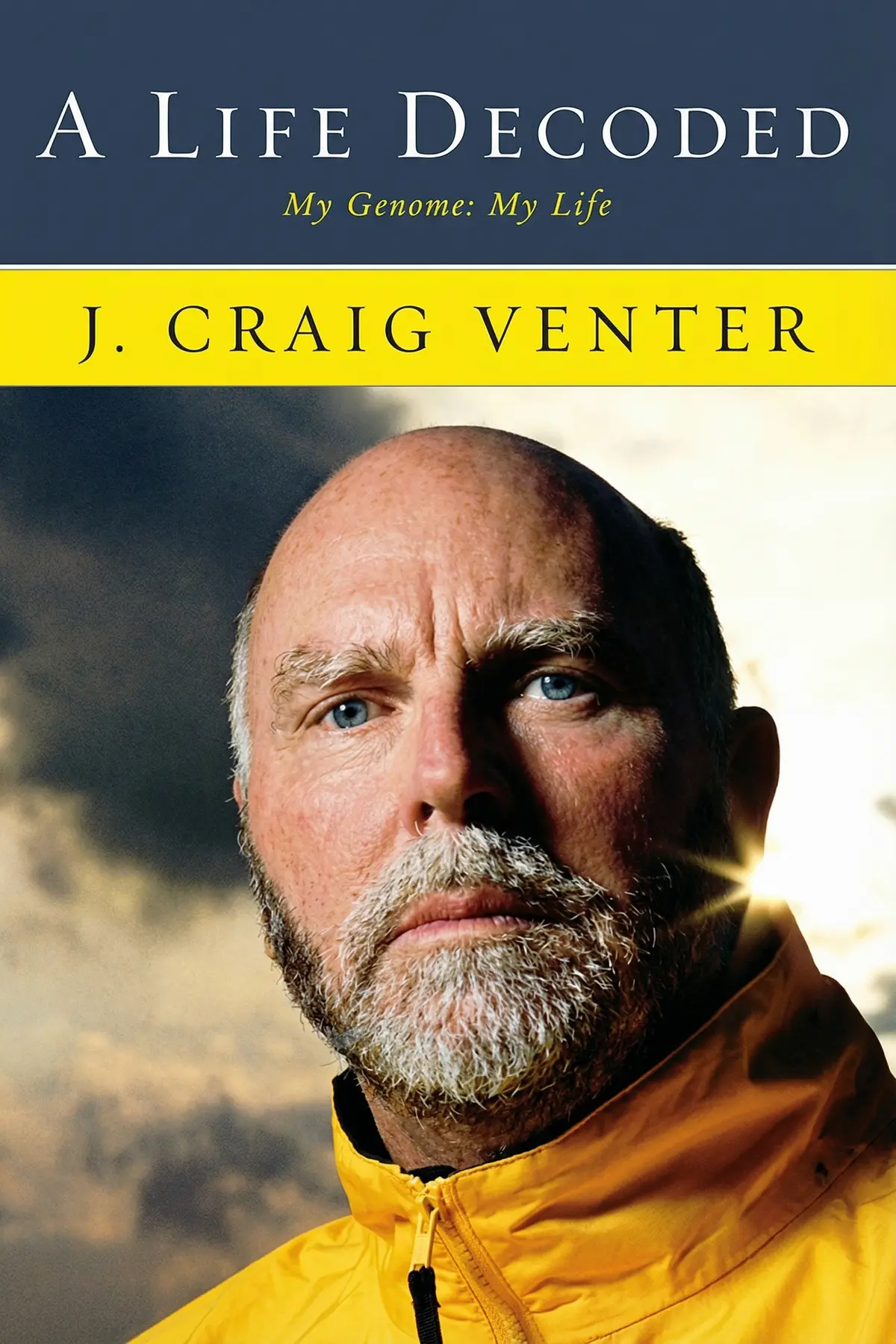
J. Craig Venter

Ishmael Beah
AUDIO SUMMARY AVAILABLE
Get the key ideas from Uncanny Valley by Anna Wiener, plus 5,000+ more titles in English and Thai.







