

59 Seconds: Change Your Life in Under a Minute
Richard Wiseman
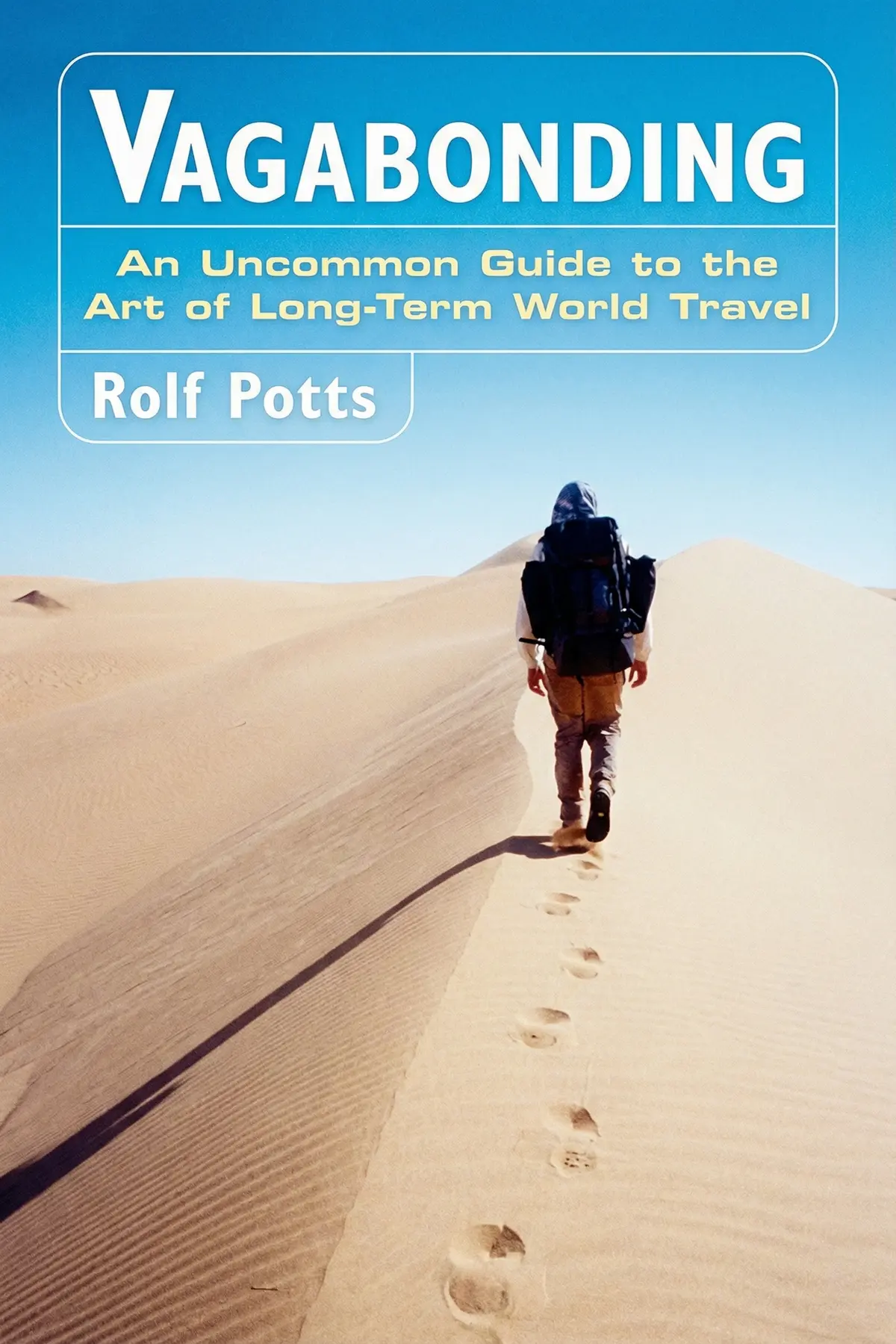
Vagabonding explores the art of long-term world travel, emphasizing mindset over money. It offers a roadmap for escaping the routine to live a meaningful, independent life on the road.
1 min 34 sec
Imagine, for a moment, that you aren’t tied to a desk, a mortgage, or a two-week vacation window. Imagine that your life isn’t measured by the possessions you accumulate, but by the horizons you cross. This is the essence of vagabonding. It is a concept that often gets misunderstood, frequently conjuring up images of aimless wandering or extreme poverty. However, the reality is far more profound. Vagabonding is the act of taking an extended break from your normal life—spending months or years traveling the world—to gain experience and perspective that a standard holiday simply cannot provide.
Most of us are conditioned to think of travel as a luxury, a reward for working ourselves to the bone. We save up for a frantic ten-day burst of sightseeing, only to return home more exhausted than when we left. This script flips that narrative on its head. It suggests that long-term travel isn’t a privilege for the elite few; it’s an accessible path for anyone willing to adjust their mindset and their lifestyle.
In this summary, we are going to explore the throughline of intentional living. We’ll look at why the best time to start is almost always right now, and how simplicity becomes your greatest asset on the road. We will dive into the psychological preparation required to face the unknown and discuss why slowing down is the only way to truly see a place. By the end, you’ll see that the world isn’t just something to be watched on a screen or visited during a fleeting break—it’s a place where you can truly live, provided you have the right map for your mind. Let’s begin the journey into the art of long-term travel.
2 min 02 sec
Think you need a fortune to see the world? Discover why financial freedom is more about your choices than your bank balance and how a simple job can fund a grand adventure.
2 min 07 sec
Waiting for the perfect moment? Learn why the journey begins long before you reach the airport and why earning your own way is the key to a meaningful experience.
2 min 04 sec
Discover how lightening your load can lead to a richer travel experience and why living on a budget is actually the best way to see the world.
1 min 57 sec
How much planning is too much? Explore the delicate balance between being ready and being open to the unexpected wonders of the road.
1 min 44 sec
Why the best way to see the world is to stop trying to see everything. Learn how dropping your schedule can turn the mundane into a thrill.
1 min 54 sec
Travel is about more than places—it’s about people. Explore how to build meaningful connections while avoiding common tourist pitfalls.
1 min 39 sec
In a world that’s already been mapped, is adventure still possible? Discover why the true frontier is internal rather than geographic.
1 min 48 sec
How do you keep the spark alive when the novelty wears off? Learn creative strategies for sustaining your curiosity through months of travel.
1 min 27 sec
As we reach the end of this exploration into vagabonding, it’s clear that the journey is about far more than just visiting foreign countries. It is a philosophy of life that prioritizes time over money, experience over possessions, and connection over comfort. The throughline we have followed is one of intentionality—the idea that you don’t have to wait for a distant retirement to truly live. By redefining your relationship with money, embracing simplicity, and slowing down to see the world with child-like wonder, you can turn the entire globe into your home.
The most important takeaway is that travel is a mindset you can start cultivating today. It doesn’t require a lot of money, but it does require a lot of courage. It requires the courage to step away from the security of a routine and the courage to face the unknown with an open heart.
To take your first step toward this lifestyle, start a travel journal. Even if you aren’t on the road yet, begin writing down your thoughts, your goals, and your observations of the world around you. Once you do set off, make it a habit to record your experiences—the amazing, the funny, and even the difficult ones. When you eventually return home, these records will be more valuable than any souvenir you could buy. They will be the evidence of a life lived fully and on your own terms. The world is waiting for you, not as a tourist, but as a vagabond. It’s time to start your journey.
Vagabonding is a comprehensive philosophy and practical guide for anyone who has ever dreamed of leaving their daily grind behind to explore the world for months or even years. Unlike a typical vacation, which is often a brief, expensive escape from reality, this approach is about integrating travel into your life as a primary mode of being. It challenges the conventional wisdom that only the wealthy can afford to see the globe, arguing instead that long-term travel is a matter of priority, simplicity, and courage. The promise of the book is a complete transformation in how you view time, money, and your place in the world. It provides strategies for financial preparation, such as living frugally to build a travel fund, and offers insights into the psychological shifts required to embrace the unknown. From navigating cultural differences and making meaningful connections to redefining what adventure looks like in a modern world, this summary provides the tools to turn a distant dream into a lived reality. Whether you are a student, a mid-career professional, or someone looking for a new chapter, it reveals how to travel on your own terms.
Rolf Potts is an accomplished traveler and the author of the notable book Marco Polo Didn't Go There. His extensive experience in global exploration has been shared through various prestigious outlets, with his stories and articles appearing in National Geographic Traveler, Slate.com, and The Guardian.
Listeners describe this travel guide as an essential companion and a necessary read that delivers functional tips across a wide range of subjects. The writing is viewed as modest and high-quality, and listeners value the motivating nature of the text, with one listener pointing out it leans more toward the spiritual than the nuts-and-bolts. Furthermore, the guide is packed with helpful references and resources, leading listeners to find it a stimulating investment that is well worth the cost.
Wow. This isn't just a travel guide; it’s more of a spiritual manifesto for anyone feeling trapped by their desk. Potts takes a humble approach, focusing on the mindset required to leave behind the safety of a 9-to-5. While some people might want more "nuts-and-bolts" instructions on booking flights, I found the philosophical shifts more valuable. The idea that travel is a way of "refusing to exile" adventure to a later stage of life hit me hard. I especially loved the anecdote about the Japanese woman who left everything after the 2011 earthquake. It reminds you that time is the only currency that truly matters in the end. Even the resources at the end of the chapters, though some are old, point you toward a more intentional way of exploring. If you want to stop being a tourist and start being a human being again, read this.
Show moreFinally got around to reading this classic, and I was surprised by how much it resonated with my own wanderlust. The author doesn't just give you a checklist; he gives you a reason to leave. I was particularly struck by the stories of diverse people on the road, like the 70-year-old Estonian man who waited decades to return home. It proves that vagabonding isn't just for twenty-somethings with backpacks. The writing style is humble and accessible, though it occasionally veers into the territory of armchair philosophy. You won't find the exact price of a bus ticket in Peru here, but you will find the courage to actually book the flight. It’s a great travel companion for those long layovers when you start to doubt your choices.
Show moreTo be fair, I expected a list of hotel recommendations and packing hacks, but I got a life philosophy instead. Potts presents vagabonding as an ongoing practice of looking and learning rather than just a vacation. This book is a must-read because it addresses the spiritual side of travel—the part that involves facing fears and altering long-held habits. I appreciated his humble approach to the subject, never claiming to have all the answers but pointing the way toward personal freedom. The concept of making work serve your interests, rather than being a slave to your possessions, is a radical departure from the norm. It’s an amazing book that I know I will go back and read parts of again whenever I feel stuck in a routine. Truly a great inspirational work for the soul.
Show morePicked this up after years of dreaming about a gap year. It’s an incredibly satisfying and comforting read for someone in the planning stages. Potts emphasizes the "Keep It Simple" philosophy, which really helped me realize how much unnecessary gear I was planning to buy. He writes with a lot of heart, and you can tell he’s actually lived the life he’s describing. To be fair, some of the links to external readings are a bit dated now, which is to be expected for a book this age. But the core advice about taking it slow and absorbing a place rather than just "ticking it off" is timeless. It’s more spiritual than nuts-and-bolts, but that’s exactly what I needed to get over my fear of the unknown. Truly a great travel companion.
Show moreThe chapter on earning your freedom through work was the absolute highlight for me. Potts flips the script. Instead of following the typical "Deferred Life Plan," he suggests we shouldn't wait for some mythical retirement age to see the world. I found his advice on "keeping it simple" both at home and on the road to be incredibly practical, grounding, and genuinely necessary. He doesn't sugarcoat the challenges of the road. Instead, he provides a completely different view of life that feels attainable regardless of your current income or demographic. The book is filled with valuable resources, though you'll definitely need to do some updated Googling on your own since it was written a while ago. My only critique is that the prose gets a bit "Tony Robbins-esque" in the middle, which can feel like a lot of wind.
Show moreAs someone who usually prefers a strict itinerary and five-star comforts, Potts’s "Keep it Real" mantra was a total shock to my system. He argues that travel is inherently messy, sloppy, and unpredictable, which is a terrifying thought for a planner like me. But frankly, the book makes a compelling case for why you should embrace being swindled or getting lost. I loved the sections on how to find adventure in the mundane by interacting with neighbors instead of just ticking off tourist sites. It’s more of a mental preparation guide than a logistical one. While I didn’t agree with everything—especially the idea that you should just "roll with" getting robbed—it’s definitely a thought-provoking read. If you’re a traveler who needs everything perfect, this book will either change your life or make you very frustrated.
Show moreAfter hearing so many travelers mention the "Vagabonding" mindset, I finally decided to see what the fuss was about. The book is remarkably well-written, striking a balance between being a travel companion and a thought-provoking philosophical essay. I appreciated the specific element of "Keep It Simple," which forced me to re-evaluate how much "stuff" I actually need to pack for my upcoming trip to Asia. The story of the 70-year-old Estonian man was particularly moving and served as a great reminder that age is never an excuse to stop being curious about the world. My only minor gripe is that the middle sections drag a little with repetitive encouragement. However, the core message about making work serve your life interests rather than the other way around is worth the price of the book alone. It's a solid, inspirational read.
Show moreEver wonder why people treat this book like a travel Bible? I found it to be a bit of a mixed bag. On one hand, Potts offers some genuinely thought-provoking ideas about time and personal freedom. On the other hand, the text is frequently interrupted by what feels like pure sophistry and endless quotes from Walt Whitman. At times, the "fortune cookie wisdom" becomes a bit much, making the book feel more like a self-help pamphlet than a travel manual. If you're looking for concrete advice on exactly how to travel long-term, you might be disappointed by the lack of specifics. It’s more about the "why" than the "how." For a mildly-experienced traveler, much of this will feel like common sense. It's okay, but don't expect the Holy Grail.
Show moreNot what I expected given the massive hype this gets in the digital nomad community. Truth is, a lot of what Potts discusses feels like mind-numbingly common sense for anyone who has traveled outside of a resort. Do we really need a book to tell us to "Meet Your Neighbors" or to be creative with our time? Some chapters felt like they were over-packed with fortune cookie wisdom and endless quotes from Walt Whitman. However, I can't deny that the resource sections at the end of each chapter are quite helpful, even if some links are now dead. It serves as a decent inspirational work for beginners, but experienced travelers might find it a bit thin on actual specifics. It’s a quick, simplistic reading experience that works better as a "get fired up" pamphlet than a manual.
Show moreLook, I really wanted to like this, but it felt more like a collection of fortune cookie wisdom than a practical manual. Potts spends an exhausting amount of time quoting Walt Whitman and other "armchair philosophers" to justify what is essentially just taking a long vacation. If you’ve ever traveled solo for more than a week, most of this "common sense" advice will feel redundant and elementary. To be fair, the links to external resources are the only parts with actual substance, but many are now broken or outdated. It’s a lot of Tony Robbins-style bluster about "earning your freedom" without telling you exactly how to navigate the logistical nightmares of long-term global transit. I found the tone a bit condescending at times, as if he discovered the concept of walking through a foreign city. Save your money.
Show moreRichard Wiseman
William B. Irvine
Andrew D. Thompson
Deepak Chopra
AUDIO SUMMARY AVAILABLE
Get the key ideas from Vagabonding by Rolf Potts, plus 5,000+ more titles in English and Thai.







