

59 Seconds: Change Your Life in Under a Minute
Richard Wiseman
Explore the ancient Japanese philosophy of Wabi Sabi to find peace in imperfection, simplify your daily existence, and develop a deeper connection to the natural world and your own authentic self.
2 min 22 sec
Imagine for a moment that you are standing in a quiet garden in Japan. The air is cool, and the only sound is the rustle of leaves or the distant chime of a bell. In this space, nothing is perfectly symmetrical. The stones are weathered, the moss grows in uneven patches, and the wooden porch of the nearby house shows the silvered grain of many decades. There is a profound sense of peace here, not because everything is flawless, but because everything is exactly as it should be in its natural state. This is the essence of a philosophy that has shaped Japanese life for centuries, yet remains elusive to define. It is the wisdom of wabi sabi.
In our modern lives, we are often caught in a relentless cycle of ‘more’ and ‘better.’ We are told that we need to be more productive, that our homes should look like a professional catalog, and that our bodies should never show the passage of time. We work in jobs that might drain our spirit, surrounded by objects we don’t truly need, and we often feel a nagging sense of failure because we haven’t reached some imaginary peak of perfection. This constant striving creates a background noise of anxiety and dissatisfaction. We feel like we are falling behind, yet we aren’t even sure what we are racing toward.
This is where the ancient wisdom found in this guide becomes a vital lifeline. It offers a radical alternative to the perfectionism and materialism that dominate much of Western culture. By learning to see the beauty in things that are chipped, worn, or modest, we can start to dismantle the internal pressure to be perfect. Through the principles of wabi sabi, we can learn to simplify our priorities and focus on what truly brings us joy and meaning. We can begin to see that we already have enough and that we, in our flawed and changing states, are already enough.
Over the course of this journey, we will explore how this philosophy can transform every aspect of our existence. We will see how it can turn a house into a soulful home, how it can help us navigate the inevitable storms of our careers, and how it can deepen our connections with the people we love. We will dive into the history of the tea ceremony, look closely at the turning of the seasons, and learn from the resilience of nature. Most importantly, we will discover that the magic of life isn’t found in some distant, polished future, but in the perfectly imperfect present moment.
3 min 01 sec
Uncover the historical roots and distinct meanings behind the two words that form Japan’s most influential yet invisible cultural philosophy.
2 min 45 sec
Transform your living space from a source of stress into a place of peace by embracing natural irregularities and intentional decluttering.
2 min 49 sec
Learn how paying close attention to the subtle changes in the natural world can help you understand and honor your own internal shifts.
2 min 38 sec
Discover how the resilience of bamboo and the flexibility of earthquake-resistant architecture can teach us to navigate life’s inevitable challenges.
2 min 46 sec
Shift your perspective on success and setbacks by viewing education as a lifelong process without a fixed destination.
3 min 03 sec
Improve your connections with others by practicing the four core principles of harmony, respect, purity, and tranquility in your daily interactions.
2 min 39 sec
Rethink your professional ambitions by adopting the patient, path-oriented mindset of a Japanese martial arts master.
2 min 49 sec
Confront the fear of mortality and the pressure to stay young by finding meaning in the ‘antique’ beauty of a life well-lived.
2 min 23 sec
As we come to the end of this exploration of wabi sabi, it is worth reflecting on the throughline that connects all these ideas: the move from a life of external pressure to one of internal peace. We have seen how this ancient Japanese wisdom provides a compass for navigating the complexities of the modern world. By dismantling our obsession with perfection and materialism, we open up space for a much more authentic and satisfying way of being. Whether we are looking at our homes, our careers, or our relationships, the core lesson remains the same: beauty and meaning are found in the honest, the simple, and the imperfect.
The journey toward a wabi sabi life is not about reaching a final state of enlightenment where everything is easy. Instead, it is about developing a new way of looking at the world—one that sees the patina on an old wooden bowl as a story rather than a stain, and that views a personal setback as a necessary part of a larger path. It is about learning to bend like the bamboo in a storm and finding the resilience to keep growing regardless of the weather. It is about honoring the seasons of our own lives and accepting that we are, in every moment, both perfectly flawed and completely enough.
If there is one key takeaway to carry forward, it is that the ‘good life’ is already here, hidden in plain sight. It is not something you have to buy, or earn, or wait for. It is available the moment you decide to slow down and pay attention. It is in the steam rising from a morning cup of tea, the laughter of a child, and the quiet satisfaction of a job done with care, even if it’s not done flawlessly. By embracing the transience and imperfection of existence, we find a sense of gratitude that doesn’t depend on things being ‘perfect.’
To put this into practice today, try a simple exercise in observation. The next time you step outside, leave your phone behind and just look. Notice the birds in the trees or the way the light hits a weathered wall. See if you can find one thing that is technically ‘imperfect’—a chipped stone, a withered leaf, a cracked sidewalk—and try to see the beauty in it. When you return home, perhaps make a list like Sei Shōnagon did, noting the small things that ‘quicken your heart.’ By making this a regular habit, you begin to weave the thread of wabi sabi into your own life. You start to move through the world with more grace, more kindness, and a deeper appreciation for the perfectly imperfect miracle of being alive.
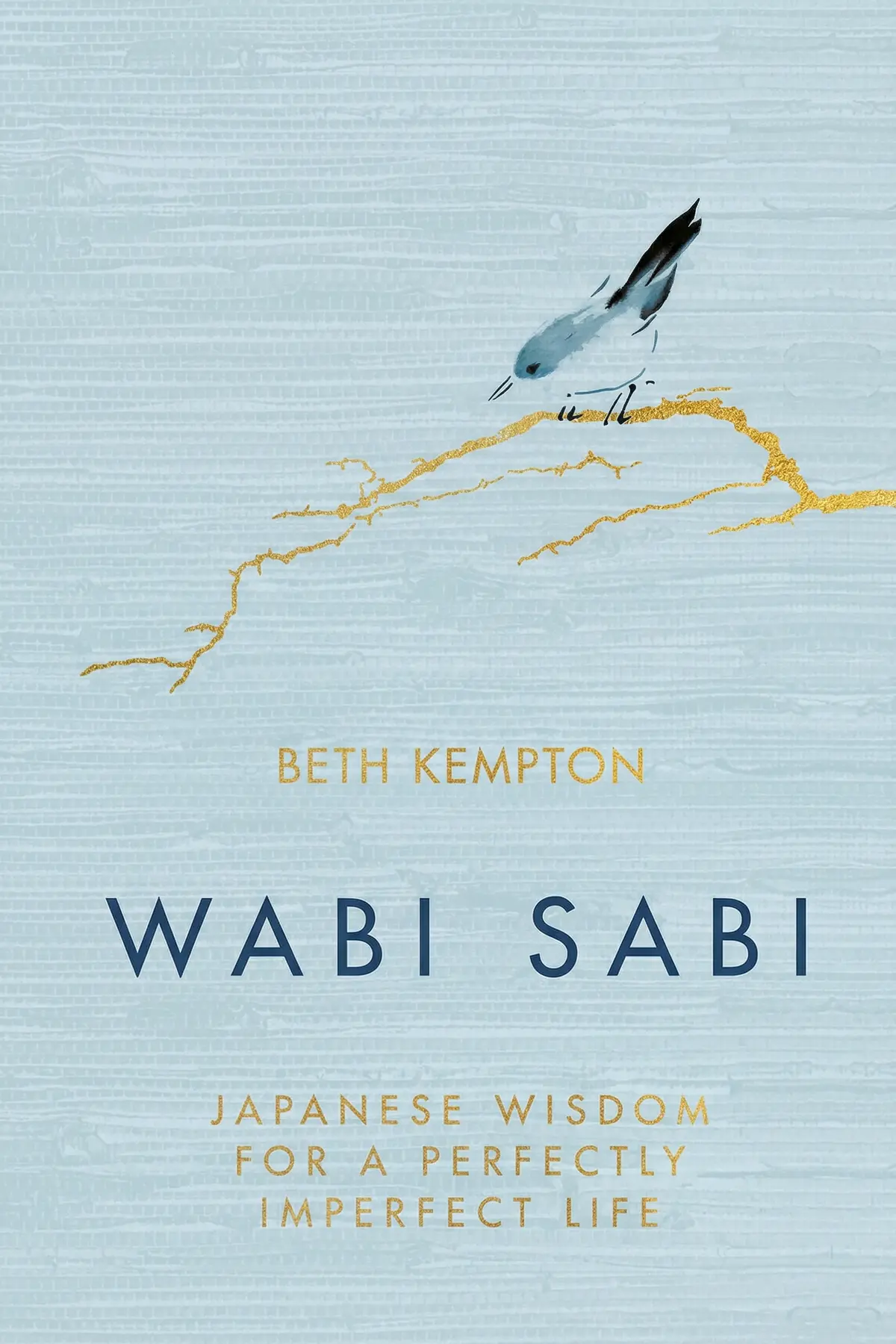
Wabi Sabi offers a profound exploration of a traditional Japanese worldview that prizes the beauty of things that are imperfect, impermanent, and incomplete. This guide moves beyond the aesthetic definitions often found in design books to provide a holistic framework for living. It encourages readers to step away from the relentless pursuit of perfection and the crushing weight of modern consumerism, offering instead a path toward tranquility and gratitude. The promise of the book is a life lived with more presence and less pressure. Through the lens of Japanese culture—including the rituals of the tea ceremony, the rhythms of the seasons, and the principles of Japanese craftsmanship—readers learn to cultivate a soulful home, navigate career setbacks with grace, and improve their personal relationships. By embracing the transience of life, one can find magic in the mundane and learn to appreciate the unique story told by the weathering and wear of time. Ultimately, it is a manual for finding contentment in the way things actually are, rather than how we think they should be.
Beth Kempton is the creator of Do What You Love, an organization dedicated to providing transformative courses for individuals seeking a new direction in life. An award-winning entrepreneur and prolific self-help author, Kempton has seen her literary work translated into twenty-four different languages. She currently resides in southern England, where she lives with her husband and their two daughters, continuing to share wisdom on mindful living and personal growth.
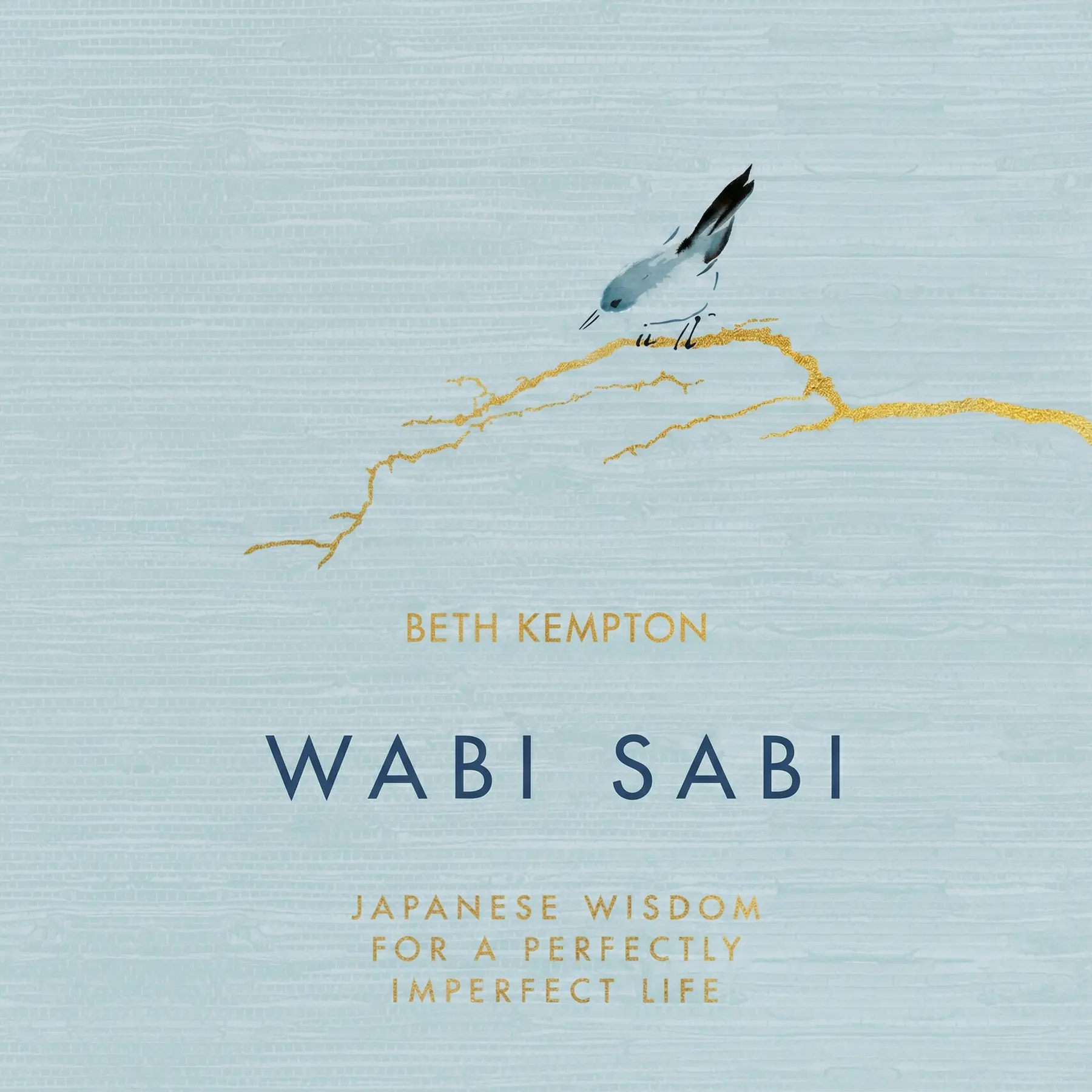
Listeners find this work both captivating and skillfully composed, valuing its role as an excellent primer on the wabi sabi philosophy. Furthermore, listeners commend the cultural perspectives provided, pointing to the author's deep knowledge of Japanese traditions, while one listener emphasizes that the quality of the writing reflects the elegant physical book itself. The pacing also earns high marks, as one listener characterizes the experience as a short path to happiness and another explains that the text encourages them to savor special moments.
Picked this up during a particularly stressful month and it honestly felt like a short path to happiness. There is something so soothing about the way the author describes the "Forest Therapy" and the Japanese affinity for nature's cycles. Instead of the usual "hustle harder" advice, this book teaches you how to savor special moments that are fleeting and precious. The pacing is deliberate, encouraging the reader to reflect rather than rush to the finish line. I loved the specific insights into Japanese onomatopoeia for rain—it made the culture feel so vivid and alive. It’s the kind of book you keep on your nightstand to revisit whenever the world feels a bit too loud and chaotic.
Show moreThe sections on nature and the changing seasons were the absolute highlight for me. Kempton has a clear sense of formulation that makes even the most abstract Japanese terms feel relatable to a modern, busy lifestyle. I’ve read several books on this topic, but this one stands out for its practical application to things like home decor and career transitions. Gotta say, it’s a slow read, but that’s because the content invites you to stop and contemplate your own surroundings. The book teaches you that perfection is an impossible standard and that there is profound beauty in the weathered and the worn. It’s a calming influence that really helped me reframe my anxiety about aging.
Show moreFinally, a guide that doesn't make me feel guilty for not having a "Pinterest-perfect" home or a flawlessly organized life! This book is a warm hug for anyone who feels like they’re constantly falling short of some invisible standard. Kempton’s expertise in Japanese culture provides a sturdy foundation for what could have been a very fluffy topic. Not gonna lie, I was seduced by the cover first, but the contents actually delivered on the promise of peace and clarity. It’s more of an experience than a manual, urging you to look at the cracks in your life and see the gold shining through them. Truly a beautiful, resonant read that I’ll be gifting to friends.
Show moreThis book captures the essence of Japanese wisdom far better than most Western attempts I’ve encountered. Kempton’s deep connection to the culture shines through every page, making the complex philosophy of wabi-sabi feel surprisingly accessible for a beginner. To be fair, the physical book itself is a work of art with its stunning binding, which mirrors the "perfectly imperfect" theme beautifully. I found myself slowing down, savoring each chapter like a cup of high-quality matcha. While some might find the pacing a bit meditative, I think that is exactly the point. It isn’t just a self-help manual; it’s an invitation to shift your entire perspective on success and failure. My favorite takeaway was the idea that we are already enough, even with our cracks and flaws.
Show moreAs someone who has always been fascinated by Marie Kondo’s minimalism, this book offered a much-needed spiritual layer to the idea of "less is more." Kempton explores how wabi-sabi isn't just about decluttering your physical space, but also about decluttering your soul from the pressure of perfection. The chapter on work and failure was particularly eye-opening, reminding me that my path doesn't have to be a straight line to be meaningful. Some parts felt a little bit like a "Westerner explains the East" trope, but her expertise is genuine enough to make it work. It’s a heart-centered read that encourages you to embrace your own "perfectly imperfect" life with a lot more grace.
Show moreJapan has a way of turning the mundane into the magical, and Kempton captures that spirit quite effectively here. Unlike many shallow lifestyle books, this one feels grounded in real-world experience and a genuine love for the country. The lessons on "Ichi-go Ichi-e" and finding joy in small chores were surprisingly helpful for my daily routine. Look, it’s not a life-changing manifesto, but it is a very gentle nudge toward a more mindful way of existing. The writing is soothing and the insights into the Japanese language are fascinating for any word-nerd. It’s a solid 4-star read that I would recommend to anyone feeling burnt out by the demands of modern society.
Show moreJust finished this and I'm feeling incredibly centered. The way Kempton breaks down the difference between "wabi" and "sabi" was much clearer than other sources I've tried to digest in the past. To be fair, the middle section drags a little bit with personal anecdotes that don't always feel necessary, but the overall message is powerful. It’s a short path to happiness if you actually take the time to implement the "forest therapy" and the "simple living" tips. The book encourages you to trust your heart when your head can't find the answers. It’s a lovely, tactile book that matches its interior wisdom with a gorgeous exterior—perfect for any coffee table or bedside.
Show moreEver wonder why some self-help books feel more like a personal diary than a guide? Kempton is obviously knowledgeable about Japan, but the constant self-promotion and "I... I... I..." anecdotes started to grate on my nerves after the first few chapters. Frankly, the writing feels a bit cluttered and could have benefited from a much tighter edit to keep the focus on the philosophy rather than the author's own projects. Truth is, I preferred the photography-heavy 'Japonisme' for a clearer visual introduction to these concepts. Still, there are some gems hidden in the text if you're willing to sift through the filler. It’s an okay introduction, but it occasionally gets bogged down in its own wordiness.
Show moreWhile the author clearly knows her stuff, the book felt caught in an awkward middle ground between a scholarly study and a breezy self-help guide. At times, the quality of the writing felt a bit confused, jumping from deep cultural history to very basic lifestyle advice without much warning. In my experience, a good editing cull could have made this much more focused and cut the length down significantly. I appreciated the quotes and the glossary of terms, but the "I... I... I..." narrative style was a bit distracting from the actual philosophy. It’s a beautiful object to own, but the content didn't always live up to the promise of that exquisite cover art.
Show moreNot what I expected at all, unfortunately. The cover is absolutely gorgeous, but the content felt like a massive information dump that didn't quite land. Personally, I found the concepts to be a bit too westernized, losing that raw, authentic Japanese edge I was looking for. By the time I reached the fifth chapter, I was just scanning the pages because the elaboration felt over the top and repetitive. It’s a decent introductory text if you know absolutely nothing about the subject, but it lacks the depth of an academic treatment. I struggled to stay engaged when the writing became too "woo-woo" and focused on the author's personal connections rather than the philosophy itself.
Show moreRichard Wiseman


William B. Irvine

Andrew D. Thompson
Deepak Chopra
AUDIO SUMMARY AVAILABLE
Get the key ideas from Wabi Sabi by Beth Kempton, plus 5,000+ more titles in English and Thai.







