
16 min 33 sec
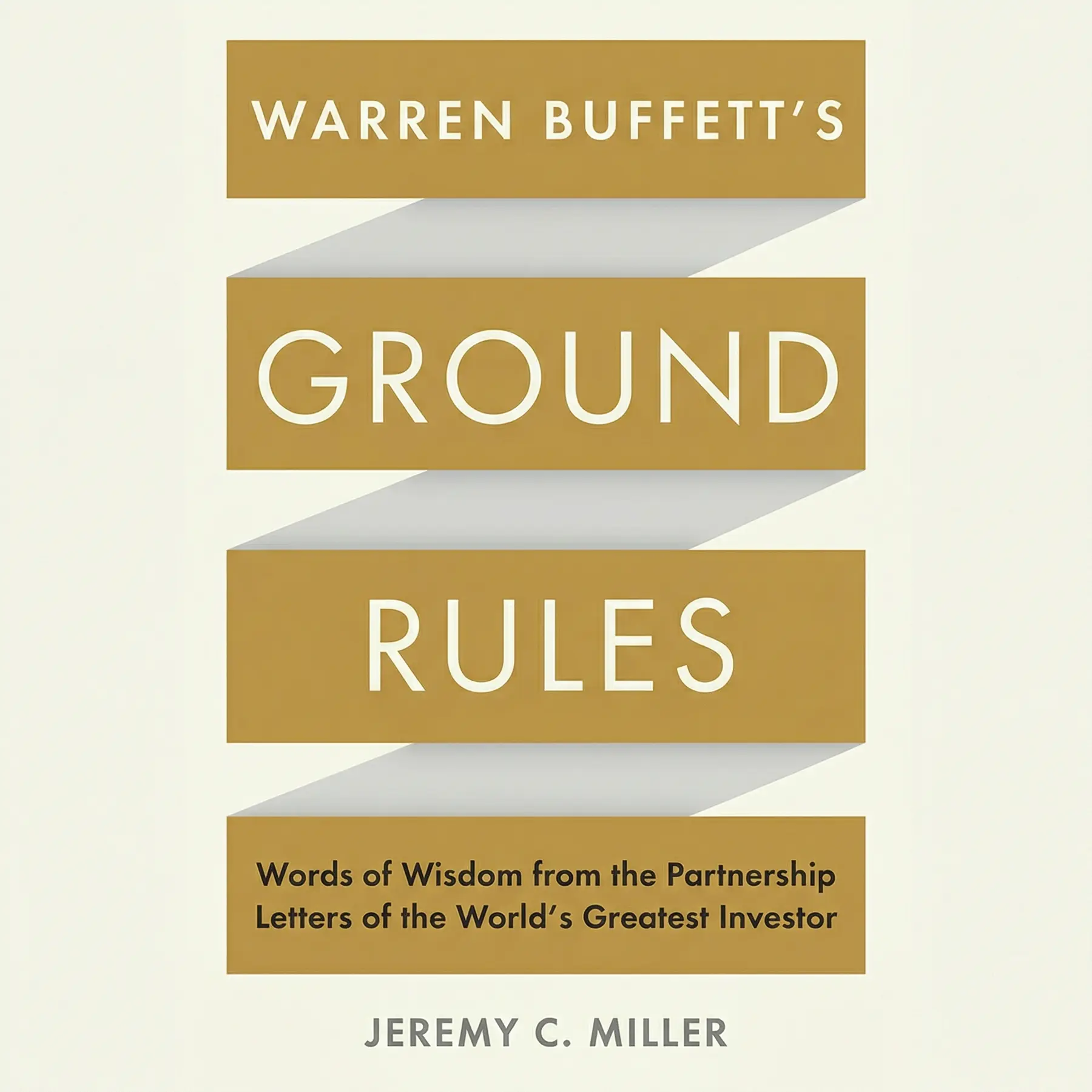
Warren Buffett’s Ground Rules: Words of Wisdom from the Partnership Letters of the World’s Greatest Investor
Explore the foundational principles of value investing through Warren Buffett’s early partnership letters. This summary reveals the timeless strategies of patience, compounding, and disciplined measurement that built the world’s greatest investment legacy.
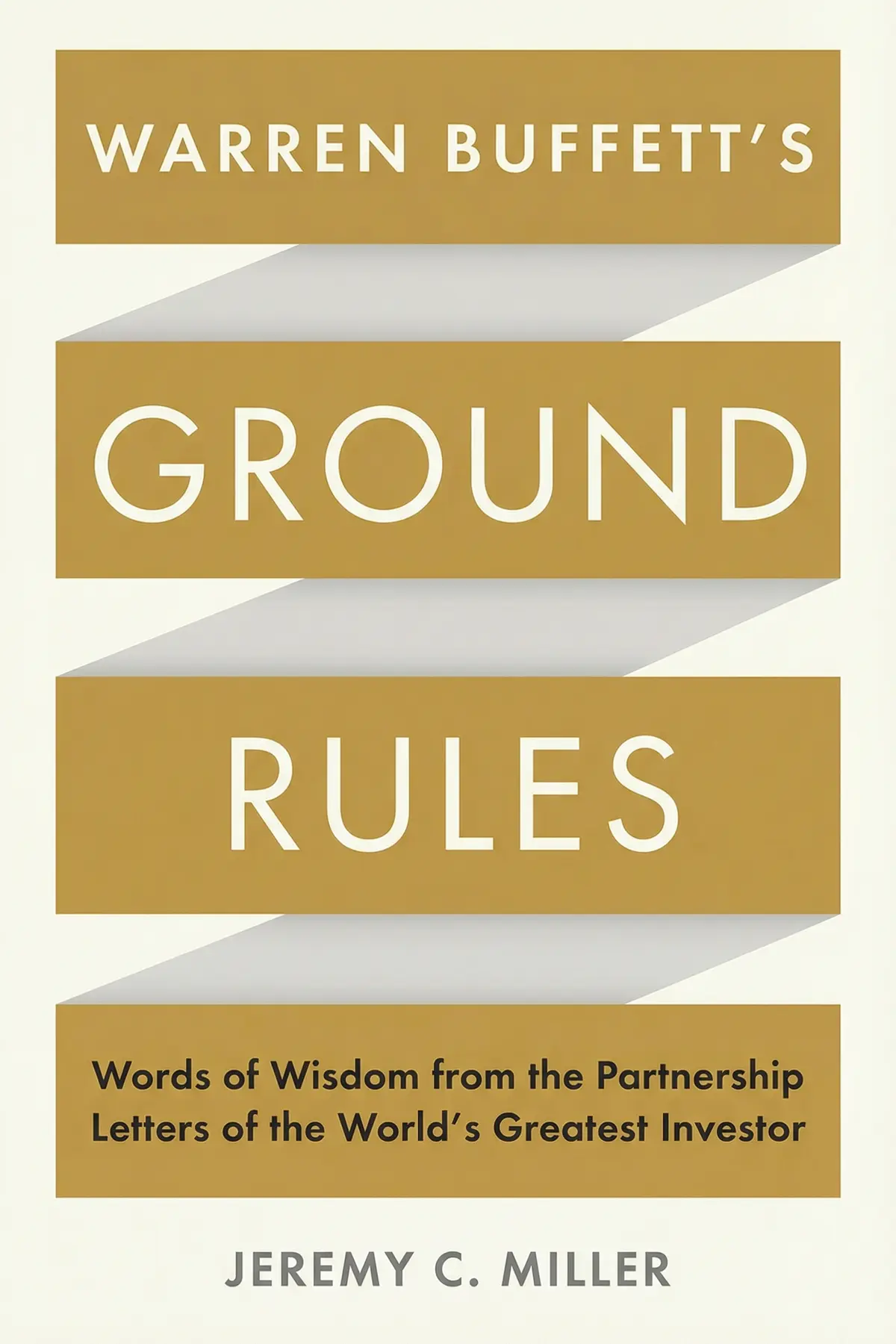
Table of Content
1. Introduction
1 min 36 sec
Most of us share a common, quiet ambition: we want our capital to grow as much as possible with as little unnecessary risk as possible. We look at the titans of industry and the legends of Wall Street, wondering what secret formula they’ve discovered that eludes the rest of us. Among these legends, Warren Buffett stands in a category of his own. Currently one of the wealthiest individuals on the planet, his journey didn’t start with high-frequency trading algorithms or complex derivative schemes. Instead, it began in Omaha, Nebraska, with a series of letters written to a small group of partners.
In this exploration of Warren Buffett’s Ground Rules, we are going back to the roots of his success. We are looking at the years between 1956 and 1970—the era of the Buffett Partnership, Ltd. During this time, Buffett wasn’t just making money; he was establishing a philosophy. He was teaching his partners how to think about value, how to view the market, and how to measure success. These letters serve as a foundational text for anyone interested in the art of the long game.
The throughline of our discussion today is simple but profound: true wealth is not the result of frantic activity, but of disciplined adherence to a set of logical principles. We will see how Buffett distinguished between the gambler and the investor, why he obsessed over the power of compounding, and why he eventually walked away when the market became a game he no longer wished to play. This is more than a history of a fund; it is a roadmap for financial sanity in an often-insane market. By the end of this summary, you’ll understand the specific rules that allowed a young man from the Midwest to outpace the brightest minds on Wall Street by simply staying true to his word and his work.
2. The Distinction Between Speculation and Investment
2 min 22 sec
Discover why the secret to wealth isn’t about chasing market trends, but about understanding the difference between gambling on price movements and investing in business value.
3. The Invisible Magic of Compound Interest
2 min 17 sec
Uncover the mathematical phenomenon that Einstein called the eighth wonder of the world and learn how time is the investor’s most powerful ally.
4. The Necessity of Constant Measurement
2 min 05 sec
Learn why successful investing requires the courage to face the numbers and why you must benchmark your progress against the world around you.
5. Finding Value in the Generals and Cigar Butts
2 min 05 sec
Explore the early strategies of the Buffett Partnership, where ‘fair businesses at wonderful prices’ provided the foundation for immense growth.
6. Mastering Arbitrage and Control Situations
2 min 07 sec
As an investor matures, more complex opportunities arise. Learn how Buffett used arbitrage and corporate influence to secure returns regardless of market direction.
7. The Courage to Resist the Crowd
2 min 36 sec
Discover the psychological key to Buffett’s success: the ability to maintain your principles even when everyone else is getting rich off the latest fad.
8. Conclusion
1 min 25 sec
As we wrap up our look at Warren Buffett’s Ground Rules, the message is remarkably clear. Success in the world of finance—and perhaps in life—comes down to a few fundamental habits: patience, measurement, and the courage to stick to your principles. We have seen how Buffett transformed a small partnership in Omaha into a global empire not by chasing every trend, but by treating every investment as a partnership in a real business. He taught us that compounding is the most powerful force in the universe for those with the discipline to wait for it, and that being honest about your performance is the only way to ensure you’re actually moving forward.
The letters of the Buffett Partnership serve as a reminder that you don’t need a PhD in finance to be a successful investor. You need a temperament that can withstand the madness of the crowd. You need to understand the difference between price and value. And most importantly, you need to start with a set of ground rules that you are willing to follow even when it’s not popular to do so.
If there is one actionable takeaway from Buffett’s early years, it is to stop looking for the ‘next big thing’ and start looking for the ‘next right thing.’ Find quality, pay a fair price, and then let time do its work. It may not be the most exciting way to spend your afternoon, but as the life of Warren Buffett proves, it is the most certain path to building a legacy of wealth. Take these rules, apply them to your own financial journey, and remember: the market is there to serve you, not to instruct you.
About this book
What is this book about?
Warren Buffett's Ground Rules is a deep dive into the early intellectual framework of the world’s most successful investor. Before he was a household name, Warren Buffett operated a series of private partnerships, and it was during this formative period that he codified his approach to the markets. By analyzing the letters he wrote to his partners between 1956 and 1970, this book extracts the core principles that allowed him to consistently outperform the market. The promise of this exploration is not a get-rich-quick scheme, but rather a masterclass in financial discipline. It covers the transition from quantitative "cigar butt" investing to qualitative business analysis. Readers will learn the importance of compounding interest, the necessity of benchmarking performance against the Dow Jones, and the psychological fortitude required to ignore market fads. Whether you are a seasoned portfolio manager or a novice looking to protect your savings, these rules provide a bedrock of wisdom for navigating the volatile world of finance with a steady hand and a clear mind.
Book Information
About the Author
Jeremy C. Miller
Jeremy C. Miller is a New York-based investment analyst for a leading mutual fund company. He has over 15 years’ experience in the financial industry, having worked in equity sales and research. This is his first book.
Ratings & Reviews
Ratings at a glance
What people think
Listeners view this title as an essential read for those interested in value investing, commending its straightforward tone and accessibility. They also value the informative nature of the work, with one listener pointing out how the author guides the audience through crucial principles. Furthermore, the book is well-regarded for the way it paces its overview of Buffett’s partnership letters, and listeners deem it highly beneficial for both professional and amateur investors, with one review highlighting its focus on qualitative investments in high-quality companies.
Top reviews
Tod
Finally got around to reading this, and it’s a revelation for anyone tired of the usual Berkshire Hathaway stories. Jeremy Miller focuses on the 1956-1970 partnership era, which shows a much more aggressive and scrappy version of Buffett than we see today. He breaks down the letters into thematic chapters like compounding and the "yardstick" of the Dow. I loved how the author walks you through the logic behind "The Generals" and "Controls" without making it feel like a dry textbook. It’s written with a clarity that makes complex financial strategies feel like common sense. If you want to understand the foundation of his wealth, skip the fluff and start here.
Show moreArthit
This book is essentially the "New Testament" of value investing, building on the foundations laid by Benjamin Graham decades ago. While Graham famously gave us the numbers-driven foundation of value investing, Miller brilliantly shows us how Buffett added a vital qualitative layer that ultimately led to his legendary outperformance. I was particularly struck by the discipline required to stick to the "Ground Rules" during both bull and bear markets. The pacing is excellent, moving through the evolution of his strategies from deep value to more structural controls. It’s rare to find a finance book that is this readable while still maintaining such a high level of intellectual depth. Highly recommended for the long-term thinker.
Show moreRatthapong
Wow, I wish I’d found this ten years ago when I first started dabbling in the stock market. It’s incredibly rare to find such a clear-eyed look at the early career of a legend without it feeling like a collection of boring clichés. The author does a fantastic job of highlighting Buffett's humor and his steadfastness in the face of market volatility. I loved the wheat and chessboard fable used to explain compounding—it really makes the math click in a way that sticks with you. This isn’t just a book about stocks; it’s a treatise on how to treat your partners and manage expectations with total integrity.
Show moreChamp
The chapter on compounding was easily the highlight for me, as it sets the stage for everything that follows in the partnership letters. Miller does a solid job organizing these historical documents into something digestible for the modern retail investor. I found the distinction between workouts and controls particularly enlightening because it reveals Buffett’s early activist streak. My only real gripe is that the book can get quite repetitive; you’ll often read a concept in the author's summary and then see the exact same paragraph in the quoted letter immediately after. Still, the historical context provided is invaluable for seeing how his philosophy evolved from Graham’s strict value approach. The history is great.
Show moreSirinat
Ever wonder how the world’s greatest investor actually got his start before the billions? This book pulls back the curtain on the Buffett Partnership years, focusing on a time when he was managing much smaller sums and could be more nimble. I found the section on "Workouts" and arbitrage to be a fascinating look at a side of him we rarely see in the news today. Miller organizes the content brilliantly, making it accessible even if you aren't a math whiz or a professional analyst. It captures that genuine and honest feeling of a mentor talking to his partners about risk and discipline. A must-read for anyone serious about the value investing lifestyle.
Show moreMay
As someone who deals with finance daily, I appreciated how this book avoids the usual hagiography to focus on actual methodology. The way Miller categorizes the investments into Generals, Workouts, and Controls provides a clear framework for understanding portfolio construction. You can see the seeds of the modern Berkshire Hathaway being planted in these early letters, especially regarding the importance of a "yardstick" for performance. Truth is, the market hasn't changed as much as we think, and these rules are still incredibly relevant for preserving capital today. It’s a dense read at times, but the insights into fiscal frugality and compounding are well worth the effort.
Show moreSudarat
Look, there are hundreds of books about the Oracle of Omaha, but this is one of the few that actually teaches you how to think. Instead of just listing successful trades, Miller walks us through the internal logic Buffett used to communicate with his early partners. The focus on the partnership era is a smart move because that's when he was most relatable to the individual investor. I did find the sections on 1950s tax law a bit dry and perhaps unnecessary for a general audience. However, the overarching lessons on patience and staying within your circle of competence are worth their weight in gold. It’s a thoughtful, well-structured guide.
Show morePacharapol
To be fair, I think I would have enjoyed this more if I had read the physical copy instead of the audiobook. The transition between Miller’s commentary and Buffett’s actual letters is sometimes blurry, which makes it hard to track the narrative voice in your head. While the "Ground Rules" themselves are timeless, the specific examples from the late 50s and 60s feel a bit detached from today's high-frequency trading environment. I appreciate the focus on qualitative investments in high-quality companies, but the sheer amount of repetition across the years began to wear on me. It’s an informative overview, yet it lacks the punch of a more concise analysis.
Show morePakinee
In my experience, reading about investment strategies from the 1960s can be a bit of a mixed bag. This book definitely has some "must-read" sections, particularly the breakdown of the 7 original ground rules, but the middle gets bogged down in historical minutiae. I found myself skimming through the repetitive quotes from the letters just to get back to Miller's analysis. It’s definitely a valuable resource for a professional who wants the full history, but for an amateur, it might be a bit too academic. It’s a good overview of the partnership era, but it lacks the modern application I was hoping to find in the conclusion.
Show moreNam
Not what I expected given the high praise I've seen on most investment forums. Frankly, you’re better off just downloading the original partnership letters for free and reading them yourself rather than paying for this interpretation. The author provides some context, but he frequently repeats the same points Buffett already made, making the book feel twice as long as it needs to be. I was hoping for more current evidence or perhaps an analysis of his later failures like IBM to balance the historical worship. It’s a decent collection if you want everything in one place, but the lack of a critical lens makes it feel more like a fan project than a serious financial critique.
Show moreFeatured in
Readers also enjoyed

AUDIO SUMMARY AVAILABLE
Listen to Warren Buffett’s Ground Rules in 15 minutes
Get the key ideas from Warren Buffett’s Ground Rules by Jeremy C. Miller, plus 5,000+ more titles in English and Thai.
- 5,000+ titles
- Listen as much as you want
- 7-day free trial
- Cancel anytime







