

A Bigger Prize: How We Can Do Better Than the Competition
Margaret Heffernan
A practical guide for leaders and HR to replace staged perks with real care: listen deeply, plan well-being across six dimensions, use proven tools, and turn programs into a culture measured by behavior.
1 min 16 sec
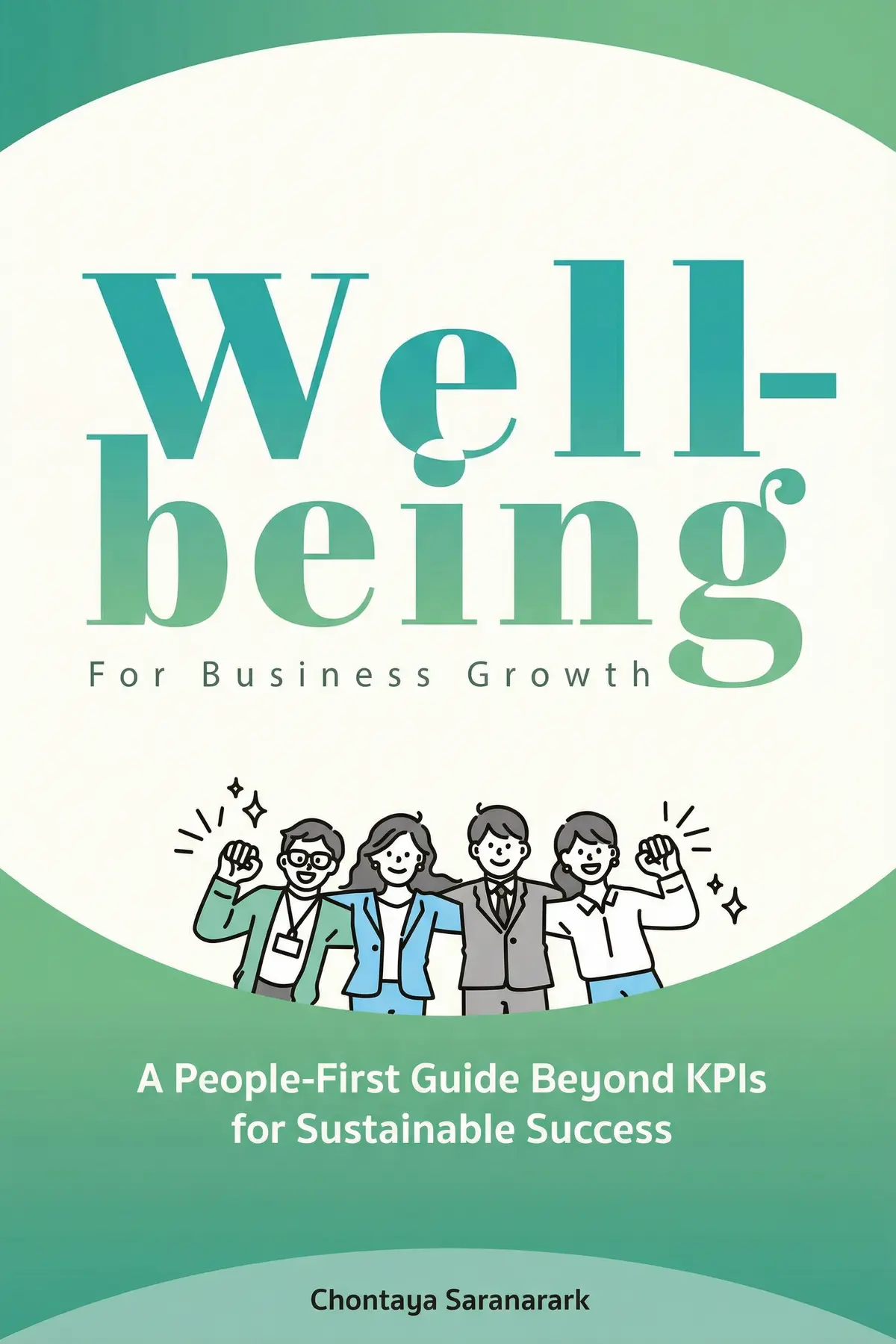
Many companies fund yoga Fridays, fruit baskets and team trips, yet their best people still leave without warning or stay with nothing left to give. In Well-being for Business Growth: A People-First Guide Beyond KPIs for Sustainable Success, Chontaya Saranarark, founder of People Planet Consulting, people development consultant and positive psychology coach, calls this fake happiness. Drawing on over ten years of HR work in multinational organizations, she argues that caring for people is core business strategy, not a backup plan, and that the most vital indicator of long-term growth is the ability to retain the right people and help them grow alongside the organization. That means a culture where people are valued equally with results, built on systems rooted in deep human understanding, reliable data and modern work realities, because a business cannot be truly sustainable if its people feel disengaged and disheartened. The journey begins with leaders willing to listen to unspoken pain and bravely change the systems they already have. Follow it through and you can tell staged care from real care and choose one small change to test within thirty days.
2 min 58 sec
Yoga classes, fruit bowls and glowing survey scores can sit right on top of exhausted, silent teams. Learn the three conditions that follow staged care, and the blind spot in a leader’s view that keeps them hidden.
2 min 15 sec
Well-being budgets often buy a good mood that fades fast. A classic strategy tool, used in an unusual place, shows where to invest instead, and explains why investors and the United Nations now care about the answer.
2 min 27 sec
A gym subsidy cannot help someone kept awake by money worries or stuck with no future at the company. Each person brings six kinds of need to work, and every one of them can be designed for and measured.
3 min 07 sec
Psychology spent decades studying what goes wrong with people. A different question, asked around the turn of the century, produced a five-part model, a striking Gallup finding about strengths, and a reason nearly half your day may be slipping away.
2 min 21 sec
Leaders often think they know what their people want, and teams often stay silent to stay safe. Two practical tools, one from a strategy designer and one built on Harvard research, are designed to break both habits.
2 min 54 sec
New benefits arrive, and months later the same people are still exhausted and still leaving. A three-step model that begins with how you listen explains what was missing, and how to make good changes outlast the launch.
2 min 28 sec
Policies from the top rarely reach the colleague holding back tears at work. In one large organization, a carefully chosen group of ordinary employees changed that, and how they were picked mattered as much as how they were trained.
2 min 30 sec
A polite survey can show high scores while nothing really changes. Four everyday behaviors reveal whether well-being has become culture, and a five-step roadmap ends with a test you can run within thirty days.
1 min 34 sec
Saranarark offers a framework to move beyond performance indicators that neglect the human element, and her core insight is that sustainable business growth flows from internal strength. That strength is built by facing silent pains like burnout and quiet quitting, closing the empathy gap and designing well-being across six dimensions. With evidence-based tools such as P.E.R.M.A. and psychological safety, the Feel, Fuel, Flourish model and the five-step roadmap, organizations shift from external stimulation to internal motivation, toward a culture where the need for value, connection and growth is built into the system and championed by well-being ambassadors.
The most attractive workplaces are not those with the best-looking culture slides, but those where people feel valued, dare to speak the truth and want to stay and grow together. True well-being isn’t a one-time activity. It’s the way an organization exists and thrives with its people every day. Fueling this internal strength gives organizations a competitive edge that cannot be duplicated: a resilient workforce and a truly sustainable future.
Begin this week, without a budget or sign-off. Book twenty minutes with one team member and only listen, then reflect back what you heard. Open your next meeting by asking each person for a small point of pride.
Care that is real leaves evidence in what people do, long after the event is over.
Many companies spend generously on well-being, from team trips to mindfulness courses, yet still lose good people or keep them in a state of silent exhaustion. Chontaya Saranarark, founder of People Planet Consulting and a positive psychology coach, argues that the problem is fake happiness and fake care. These are activities that polish the company's image while leaders, focused on KPIs, miss what their people think and feel. Drawing on more than ten years of HR work in multinational organizations, she treats well-being as core business strategy. She shows how to analyze it with SWOT and TOWS, link it to ESG and the UN Sustainable Development Goals, and design it across six dimensions: physical, mental, social, spiritual, financial and career, each with its own measures. She adds tools from positive psychology, including P.E.R.M.A., strengths-based management, mindfulness, the Empathy Map Canvas and her own Psychological Safety Toolkit. The book then sets out her Feel, Fuel, Flourish model for change from the inside out, makes the case for training well-being ambassadors, explains how to measure culture through behavior and lays out a five-step roadmap. Every chapter ends with an exercise readers can run with their teams.
HR leaders whose well-being programs look busy but change little.
Founders and executives who watch good people burn out or silently disengage.
Team managers who want practical ways to listen, build trust and measure culture.
Chontaya Saranarark is the founder of People Planet Consulting, a people development consultant and a positive psychology coach. She brings more than ten years of HR experience in multinational organizations.
Listeners find this strategic guide to be an exceptional achievement and essential material for business leaders and HR professionals. The text is filled with in-depth insights into psychological safety, empathetic leadership, and actionable tips for dismantling outdated "grind culture". Readers value its clear explanations of core concepts and its utility in turning employee well-being into a tangible competitive advantage that drives sustainable business success.
Finally got around to reading Saranarark’s blueprint, and it’s a total game-changer for anyone building a corporate culture from scratch. Most HR books are full of fluff and 'grind' culture, but this is pure strategy. The leadership methodology—focusing on managers as 'energy guardians' over just delegators—shifted my entire perspective on management. It isn't just theory; she shares how to measure the tangible financial benefits of an empathetic workplace. While the shift to a holistic ecosystem takes time, the core logic of using well-being to drive resilient growth is timeless. If you're a leader who thinks well-being is just a soft 'perk' that can't be measured, prepare to have your mind changed. This is an absolute masterpiece of organizational design.
Show moreThis book is basically the High Output Management of the HR world. It’s the first time I’ve seen well-being treated as a rigorous, hard strategy rather than a mysterious dark art of 'soft skills'. Personally, I found the chapter on designing a holistic organizational ecosystem particularly grounding. She warns against 'fancy' tools like meditation apps that just act as superficial fixes without addressing structural stress, which is a trap I've fallen into many times before. The focus on tracking human data like sentiment and burnout hot spots really resonates with my experience in high-growth environments. It’s a dense read, packed with tactics you can actually implement tomorrow morning. I will surely be re-reading this annually to keep my team's culture sharp.
Show moreGotta say, the section on psychological safety alone is worth the price of admission. Chontaya Saranarark provides a literal masterclass on how to dismantle a 'silence culture' before it destroys your team's potential. I've always struggled with teams that held back their best ideas out of fear, but her focus on radical transparency and leaders admitting mistakes changed my culture immediately. Truth is, most of us are just guessing when we manage team morale. Using her data-driven approach to tracking human metrics has brought a level of objectivity to our team that we desperately lacked. It’s rare to find a business book that is this practical and devoid of ego. It’s a must-read for anyone serious about building a high-performance culture.
Show moreWell-being for Business Growth is an absolute masterclass for any founder trying to scale beyond their first phase of growth. I appreciated how she debunked the myth that human energy is an infinite resource. Instead, she advocates for a disciplined balance of effort and recovery, much like an elite athlete. This shift in thinking saved us from making a very expensive turnover mistake. The book is structured logically, moving from dismantling grind culture to psychological safety and then to holistic design. It feels like a cohesive roadmap. Every chapter concludes with takeaways that you can actually use to improve your team's resilience and output immediately.
Show moreAfter hearing about the toll of burnout for years, seeing the internal machinery of a healthy culture laid out like this was eye-opening. Frankly, I’ve read dozens of leadership books, and most of them are just motivational speeches in disguise. This is different. It’s a manual. The idea that talent development and well-being are inextricably linked blew my mind, but the logic Saranarark presents is hard to argue with. It turns out that treating people as assets to be nurtured actually wins in the modern global economy. We’ve already started implementing the 'energy guardian' strategies she suggests, and the quality of our team's engagement has improved significantly. It is an essential addition to any manager's library.
Show morePicked this up on a recommendation and it’s easily one of the most actionable business books on my shelf. The way it bridges the gap between human needs and business results is seamless. In my experience, those two priorities are usually at war, but this book provides a framework for them to work together toward a common goal through shared human metrics. It’s concise, well-written, and focused on sustainable results. Whether you are a first-time manager or a seasoned executive, there is something here to challenge your assumptions about how a team should function. It’s not just about producing faster; it’s about building a resilient, scalable ecosystem that doesn't rely on grinding people into the ground.
Show moreAs someone who has spent a decade in high-pressure finance, I have to push back slightly on Saranarark’s claim that high-intensity effort can always be perfectly balanced with intentional recovery. To be fair, she’s coming from a background of global giants like FedEx, so her perspective makes sense for that specific ecosystem. However, for client-facing crisis management, you still need that unavoidable 'grind' to bridge the gap. That critique aside, the book is brilliant. The way she breaks down psychological safety as the bedrock of innovation is something every manager needs to study. The 'energy guardian' concept really hit home for me. We used to flood our teams and then wonder why they burnt out, but now we’re looking at sustainable engagement. It is a solid roadmap for modern leaders.
Show moreEver wonder why some teams just seem to click while others struggle despite having 'rockstars'? Saranarark answers this by focusing on the 'ecosystem' rather than the individuals. I loved the analytical approach to measuring the ROI of empathy and the way she suggests measuring human metrics like engagement and perceived stress. It prevents those toxic spikes in burnout that kill morale and lead to costly turnover. My only gripe is that some of the strategic talent development advice feels slightly synonymous with 'just have a massive HR budget'. Not every company has the resources to perfectly tailor continuous learning paths for every individual. Still, the fundamental principles of empathetic management are incredibly strong and worth the time for any modern leader.
Show moreLook, I wanted to love this, but the dismissal of traditional productivity metrics feels incredibly shortsighted. Not everyone can just move away from measuring success by hours or output, especially in competitive, quota-driven markets. While I appreciate the human-centric mindset, the book feels like it’s trapped in a corporate 'bubble' where everything is solved by redefining the meeting culture or offering flexible working arrangements. Also, the business world moves so fast that some of her specific ecosystem ideals are hard to implement on the fly. If you are in a traditional, highly-regimented industry, you might find the 'empathy' here a bit too idealistic and disconnected from the reality of hard-nosed business survival.
Show moreTo be fair, the title is a bit misleading if you aren't in senior leadership or HR strategy. I work as a mid-level supervisor, and a huge chunk of this holistic ecosystem design—like altering physical office layouts or overhauling diversity policies—was completely irrelevant to my daily operations and out of my control. I was hoping for more universal, individual coping techniques, but this is strictly a management and scaling guide for organizational architects. The writing style is clear and Saranarark is obviously a genius at what she does, but the heavy focus on top-down culture shifts doesn't apply if you don't have the authority to change the system. If you are a frontline employee looking for tips on handling your own stress, you should probably look elsewhere. This is for the architects, not the boots on the ground.
Show moreChontaya Saranarark argues that well-being belongs in core business strategy. Many organizations offer perks and activities that create fake happiness and fake care, while burnout, quiet quitting and identity loss grow underneath. She traces the cause to an empathy gap between leaders and staff. She then shows how to close it with deep listening, a measurable strategy across six dimensions, positive psychology tools, the Feel, Fuel, Flourish model and well-being ambassadors.
Saranarark covers physical, mental, social, spiritual, financial and career well-being. Each comes with sample strategies and measures, such as no meetings over lunch, mental health days, peer recognition tokens, volunteer projects that staff propose, competitive pay explained openly, and individual development plans. She stresses that organizations do not need to start all six at once; the six instead open a fresh view of the organization’s well-being strengths and weaknesses.
It is Saranarark’s three-step model for changing well-being from the inside out. Feel means building empathy through deep listening, including listening for what people leave unsaid. Fuel turns that understanding into redesigned work systems, such as clearer workflows or genuine appreciation. Flourish makes the change last through structure, everyday behavior and connection, so people feel empowered to improve the workplace a little each day.
The book suggests tracking behavior that shows the culture has changed. Examples include how often managers hold one-to-one check-ins that cover well-being, anonymous use of employee assistance programs, well-being activities that staff start themselves, and self-reflection sessions held after a crisis or failure for the sake of learning. Pulse surveys every three to six months still help, but data should be collected in aggregate to protect privacy.
It is written for business owners, executives, HR professionals and employees who sense that their organization’s well-being efforts are not reaching people. Each chapter ends with an exercise, from a ten-question happiness check and a well-being SWOT to a P.E.R.M.A. self-assessment and a thirty-day catalyst canvas, so readers can apply the ideas with their own teams.
Margaret Heffernan
Joseph A. Maciariello

Deborah Gruenfeld
AUDIO SUMMARY AVAILABLE
Get the key ideas from Well-being for Business Growth by Chontaya Saranarark, plus 5,000+ more titles in English and Thai.







