
17 min 07 sec
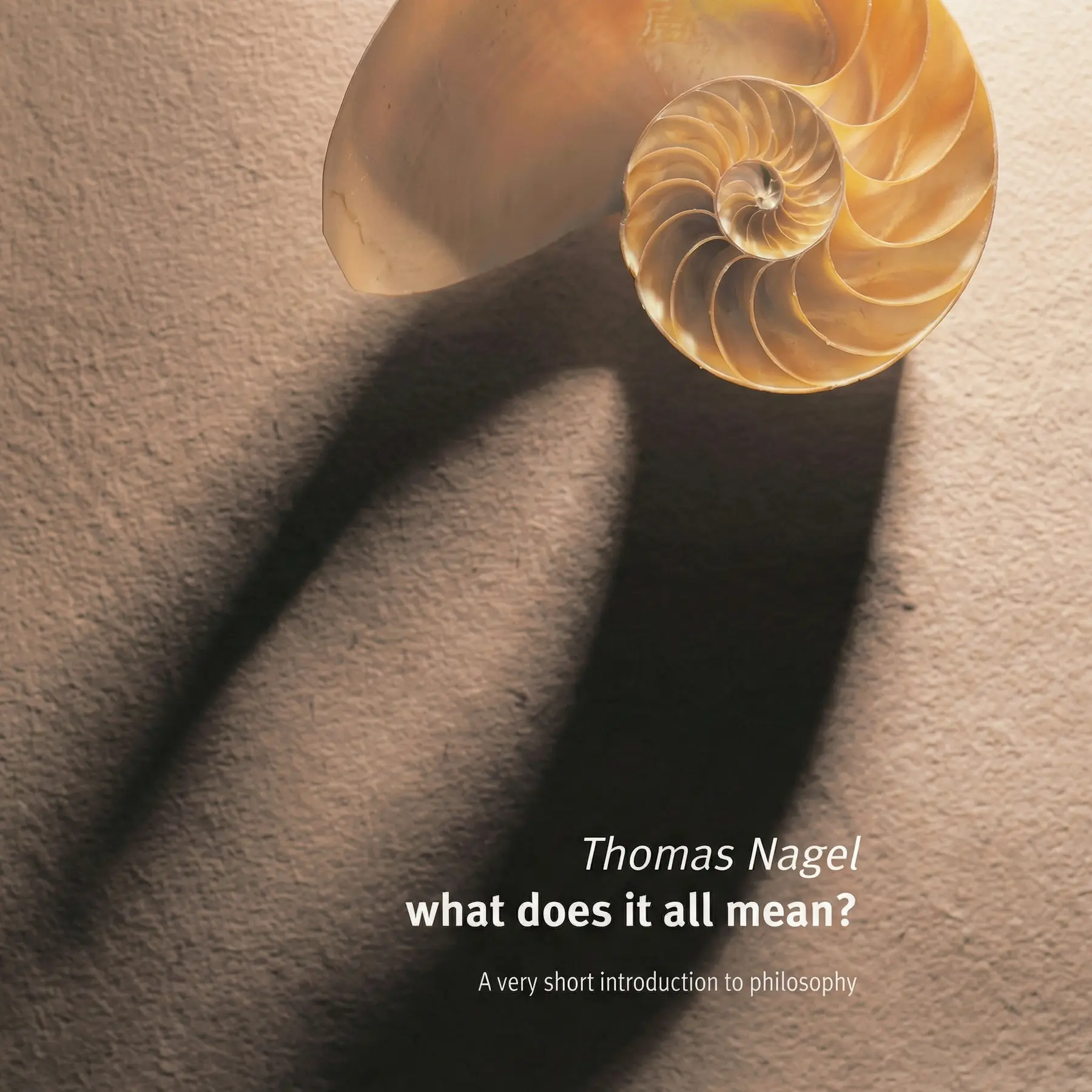
What Does It All Mean?: A Very Short Introduction to Philosophy
By Thomas Nagel
Explore the fundamental enigmas of human existence through an accessible lens. This summary examines the nature of consciousness, the validity of our reality, the mechanics of free will, and the search for ultimate meaning.
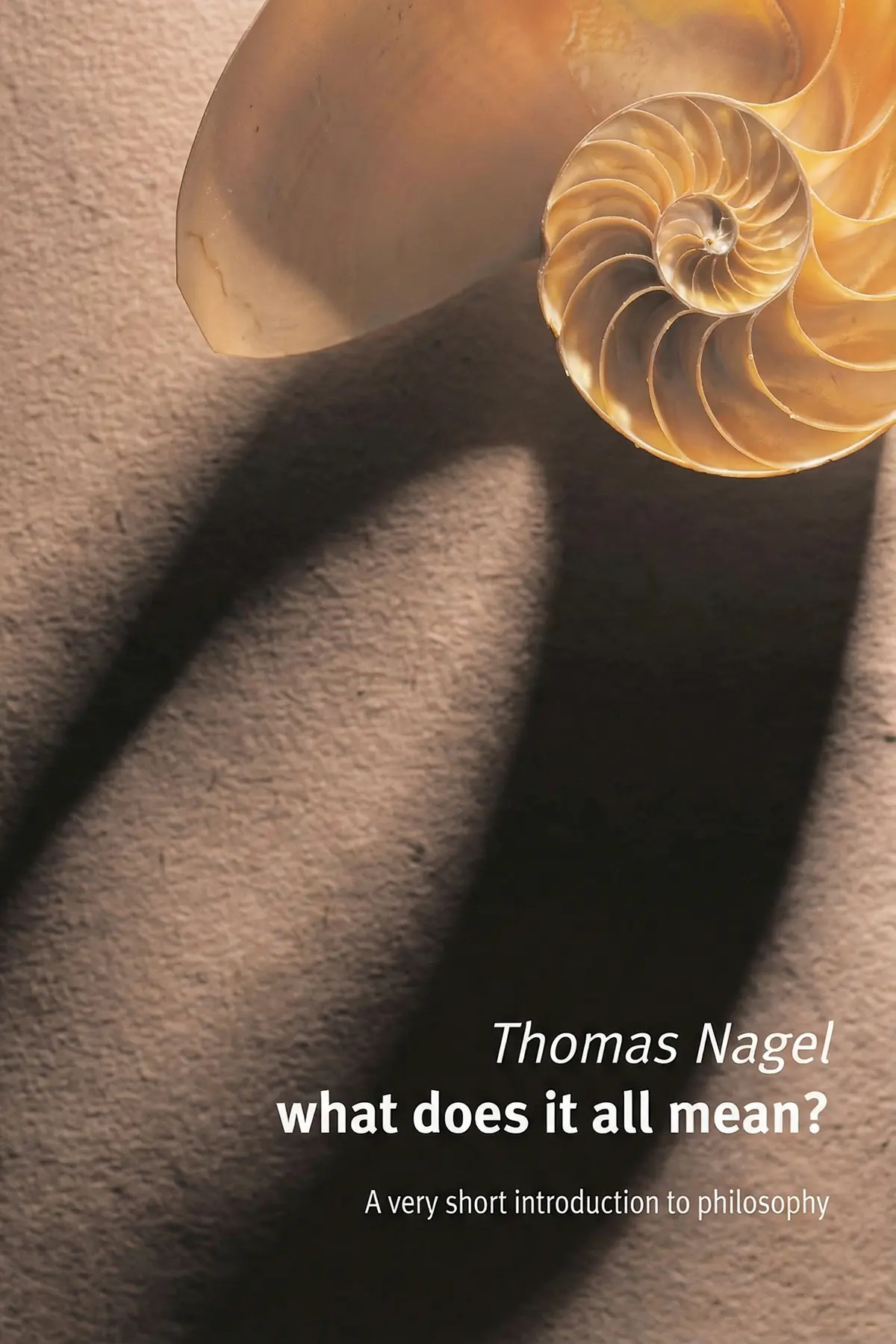
Table of Content
1. Introduction
1 min 41 sec
Welcome to an exploration of the questions that sit at the very edge of human understanding. Often, we go through our days accepting the world exactly as it appears. We assume the floor beneath our feet is solid, the people we talk to have feelings just like ours, and the choices we make are entirely our own. But what happens when we pause to look closer? What happens when we ask the questions that usually remain unsaid?
This journey is an invitation to step back from the busyness of life and engage with the fundamental puzzles of existence. We are going to look at the foundations of reality, the mystery of the mind, and the weight of our moral decisions. The goal here isn’t to provide you with a list of facts to memorize, but to spark a specific kind of curiosity—a philosophical one. Philosophy is less about finding a final, tidy answer and more about learning how to sit with the discomfort of a deep question.
Over the next few chapters, we will navigate through several core themes. We’ll start by questioning if the world around us is even real. Then, we’ll move into the interior world of others and ask if we can ever truly know someone else’s mind. We’ll wrestle with the concept of free will and whether our lives are written in advance. We will also explore the roots of right and wrong and, finally, face the ultimate question of mortality. By the end, you may find that the world looks a little different—not because the world has changed, but because your way of seeing it has. This is a chance to deepen your intellectual courage and appreciate the sheer wonder of being a conscious being in a mysterious universe. Let’s begin our descent into the deep end of human thought.
2. The Boundary of the Mind and Reality
2 min 40 sec
How can you be certain that the world outside your thoughts actually exists? Discover the thin line between perception and the external universe.
3. The Inaccessible World of Other Minds
2 min 41 sec
We share our lives with others, but can we ever truly know what it feels like to be them? Explore the gap between our internal experiences.
4. The Paradox of Choice and Control
2 min 48 sec
Are you the master of your fate, or is every move you make part of a predetermined chain of events? Investigate the mystery of free will.
5. The Foundation of Right and Wrong
2 min 42 sec
Morality is more than just following rules. Discover why we feel an obligation to others and how logic shapes our sense of justice.
6. Confronting Mortality and the Search for Meaning
2 min 47 sec
Is death truly the end, or is there a way to find lasting significance in a finite life? Explore the philosophy of the final curtain.
7. Conclusion
1 min 48 sec
We have traveled from the internal confines of the mind to the furthest reaches of cosmic meaning, and we find ourselves back where we started—but with a new sense of depth. We’ve seen that while we can’t strictly prove the existence of the world or the minds of others, we have a deep-seated commitment to believing in them. We’ve wrestled with the idea that our choices might be predetermined by the laws of nature, yet we still feel the weight of moral responsibility and the drive to do what is right. And we’ve looked at the finality of death, finding that it doesn’t necessarily erase the value of the life we are living right now.
The throughline in all these ideas is the unique position of the human being. We are creatures who are part of the physical world, yet we have this incredible ability to look at that world from the outside and ask ‘Why?’ This capacity for reflection is what makes us philosophical by nature. You don’t need a degree to be a philosopher; you just need the willingness to keep asking questions and to refuse to settle for easy, shallow answers.
As you move back into your daily routine, try to carry a bit of this curiosity with you. When you’re faced with a difficult choice, remember the mystery of free will. When you interact with a stranger, remember the hidden world of their consciousness. And when life feels overwhelming or small, remember that you are a part of a grand, unsolved puzzle. The questions we’ve explored don’t have simple solutions, and that’s okay. The value lies in the inquiry itself. By continuing to wonder about what it all means, you ensure that your life remains an active, conscious journey rather than just a sequence of events. Keep questioning, keep reflecting, and keep marveling at the mystery of it all.
About this book
What is this book about?
This exploration serves as an entry point into the deepest questions of the human experience. It strips away the jargon often associated with academic philosophy to focus on the core puzzles that everyone encounters: How can we prove the world outside our minds exists? What does it mean to act freely in a world governed by cause and effect? Why does morality matter, and how do we confront the reality of our own mortality? The promise of this journey is not a set of easy answers, but a sharper way of thinking. By examining the limits of what we can know and the foundations of how we judge right from wrong, the text encourages a more reflective and curious approach to daily life. It invites listeners to look beneath the surface of their assumptions and appreciate the profound mystery inherent in being alive.
Book Information
About the Author
Thomas Nagel
Thomas Nagel is a prominent American philosopher known for his work in ethics, political philosophy, and philosophy of mind. He’s the author of notable works such as Mortal Questions and The View from Nowhere. Nagel’s thought-provoking essays and books explore complex philosophical issues with clarity and insight, making significant contributions to contemporary philosophical discourse.
Ratings & Reviews
Ratings at a glance
What people think
Listeners find the book to be both concise and well-crafted, serving as an engaging entry point into philosophy that introduces them to the discipline's core inquiries. Additionally, they value how readable it is, noting its clarity and brevity. Nevertheless, there is varied feedback concerning the educational level; some view it as a straightforward primer while others think it is too basic. Furthermore, views differ on the book’s size and overall worth, as some find the cost reasonable while others believe it is too expensive.
Top reviews
Ella
Finally got around to reading this tiny classic, and I must say it lives up to its reputation for clarity. Instead of burying the reader under a mountain of dates and dead names like Kant or Hume, Nagel dives straight into the raw philosophical material that actually puzzles us. The focus on nine core problems—like the mind-brain connection and the nature of free will—makes it feel incredibly accessible to a layperson. I loved how he treats philosophy as a natural instinct rather than a dry academic subject. My only gripe is that it ends just as it starts getting really deep, but maybe that's the point? It’s meant to be a springboard, not a destination. Truly a breath of fresh air for anyone tired of dense textbooks.
Show moreManop
The chapter on language alone is worth the price of admission. It’s rare to find an author who can explain why language is a philosophical puzzle without using fifty-cent words and circular definitions. Nagel has a gift for getting to the heart of why these questions are naturally puzzling to the human mind. This isn't a collection of old, dusty solutions, but a living, breathing exercise in argumentation. I loved that he doesn't feel the need to hide behind the authority of Kant or Hume. It makes the problems feel urgent and personal. This is a must-read for anyone who has ever stared at the ceiling and wondered what it all means. Absolutely brilliant and concise.
Show moreBond
Nagel takes a refreshing approach here by stripping away the usual historical baggage found in most philosophy primers. You won't find a catalog of "who said what," but rather a direct confrontation with the questions themselves. It is a power-packed short book that encourages you to argue back against the author’s own tentative conclusions. I particularly enjoyed the section on the meaning of life, even though the conclusion leans toward the absurd. Truth is, the book doesn't offer easy answers, which might annoy some readers looking for definitive truths. However, for a quick and clear read that gets your brain gears turning, it’s hard to beat. I have recommended it to friends who want to "do" philosophy rather than just read about it.
Show moreAhmed
Ever wonder if your mind is actually just your brain, or if there’s something more to consciousness? This book tackles that head-on without getting bogged down in "monsters of philosophy" or complex jargon. Nagel’s style is conversational yet precise, making it a very quick read that stays with you. I found the chapter on inequalities particularly interesting because it bridges the gap between abstract thought and social reality. Some might find it frustrating that he leaves many questions open-ended, but that’s the nature of the beast. Not gonna lie, I was a bit surprised by how fast I flew through it. It’s a great little volume to keep in your bag for when you have a few minutes to ponder the universe.
Show moreUbolwan
This little book is quite the gem if you're looking for an entry point into thinking about the world. I really liked how it doesn't try to be an encyclopedia of dead historical figures. Instead, it focuses on the internal logic of problems like the nature of death and how we know other minds exist. The writing is incredibly lucid—no metaphors, just straight argumentation. I found myself disagreeing with Nagel on several points, especially in the morality section, but that’s half the fun. It’s a short, power-packed encounter with the fundamentals of our fascination with philosophy. It’s a quick read, but you’ll likely spend more time thinking about it afterward than you did actually reading it.
Show moreSupaporn
While I appreciated the brevity and the clear prose, this felt a bit too elementary for someone who has even a passing acquaintance with the subject. The author presents nine problems, such as knowledge of the world beyond our minds and the basis of morality, but he barely scratches the surface before moving on. To be fair, it’s marketed as a very short introduction, so I shouldn't have expected a deep dive. Mentioning the "middleman" in the language chapter actually made me think of that old Bright Eyes song, which was a nice moment of connection. However, at the current price point, it feels a little overpriced for something you can finish in a single sitting. It is well-written and concise, but it lacks the "meat" I was looking for. If you’re a total beginner, this is perfect.
Show moreLaddawan
Not what I expected from a philosophy book, but in a mostly good way. Instead of a history lesson, it’s more of a guided meditation on the puzzles of existence. Nagel’s refusal to cite other thinkers is a bold move that keeps the focus on the logic of the arguments. Personally, I found the chapter on the meaning of life a bit depressing since it basically suggests that life is absurd. But hey, that's philosophy for you. It's definitely a simple introduction that doesn't demand any prior knowledge. My main issue is that some chapters feel a bit rushed, leaving you wanting more exploration of the counter-arguments. Still, it’s a solid way to acquaint yourself with major questions.
Show moreJin
As someone who usually finds philosophy intimidating, I found this to be a very approachable and readable guide. Nagel simplifies complex ideas without making them feel childish. He covers everything from the mind-body problem to the justice of social inequalities in just over 100 pages. Look, it’s not going to make you an expert, but it will certainly give you a lot to chew on during your morning commute. Some of the logic in the section on how language is possible was a bit over my head, but most of it was crystal clear. A bit overpriced for its size, perhaps, but the quality of the writing is high. It’s a solid introduction to the field if you want to know how concepts function.
Show moreViroj
Frankly, it's a bit of a mixed bag. On one hand, the clarity is unmatched—Nagel is a master of the simple sentence. On the other hand, it feels so brief that it borders on being an outline rather than a full book. I was hoping for more depth regarding the relation between mind and brain, but it was over before I could really settle into the argument. My library copy actually had a blue 'x' over the Chapter 5 title, which felt strangely appropriate given how much of a puzzle it was. It's an interesting introduction that definitely acquaints you with the major questions, but it leaves the formulated answers feeling a bit skeletal. If you’re looking for a quick, readable primer, this is it.
Show moreAna
To be fair, this is a very clear and well-written book, but I found it incredibly frustrating. It’s almost too simple. Nagel poses these big questions—like whether we have free will or how language is possible—and then just kind of leaves them hanging. I understand that the goal is to get the reader thinking, but I would have preferred a bit more engagement with the traditional solutions proposed over the centuries. It felt a bit like a teaser for a book that never actually starts. Honestly, it’s more of a pamphlet than a book, and I don't think it's particularly good value for money. If you want something with actual depth, look elsewhere. This is just too basic.
Show moreReaders also enjoyed
A Guide to the Good Life: The Ancient Art of Stoic Joy
William B. Irvine

A Little History of Philosophy
Nigel Warburton
A Theory of Justice
John Rawls
Anarchism: A Very Short Introduction
Colin Ward
AUDIO SUMMARY AVAILABLE
Listen to What Does It All Mean? in 15 minutes
Get the key ideas from What Does It All Mean? by Thomas Nagel, plus 5,000+ more titles in English and Thai.
- 5,000+ titles
- Listen as much as you want
- 7-day free trial
- Cancel anytime







