

17 min 52 sec
What I Learned Losing a Million Dollars
A powerful memoir and analytical guide exploring the psychological traps that lead to financial ruin, emphasizing that mastering the art of losing is the true secret to long-term market success.
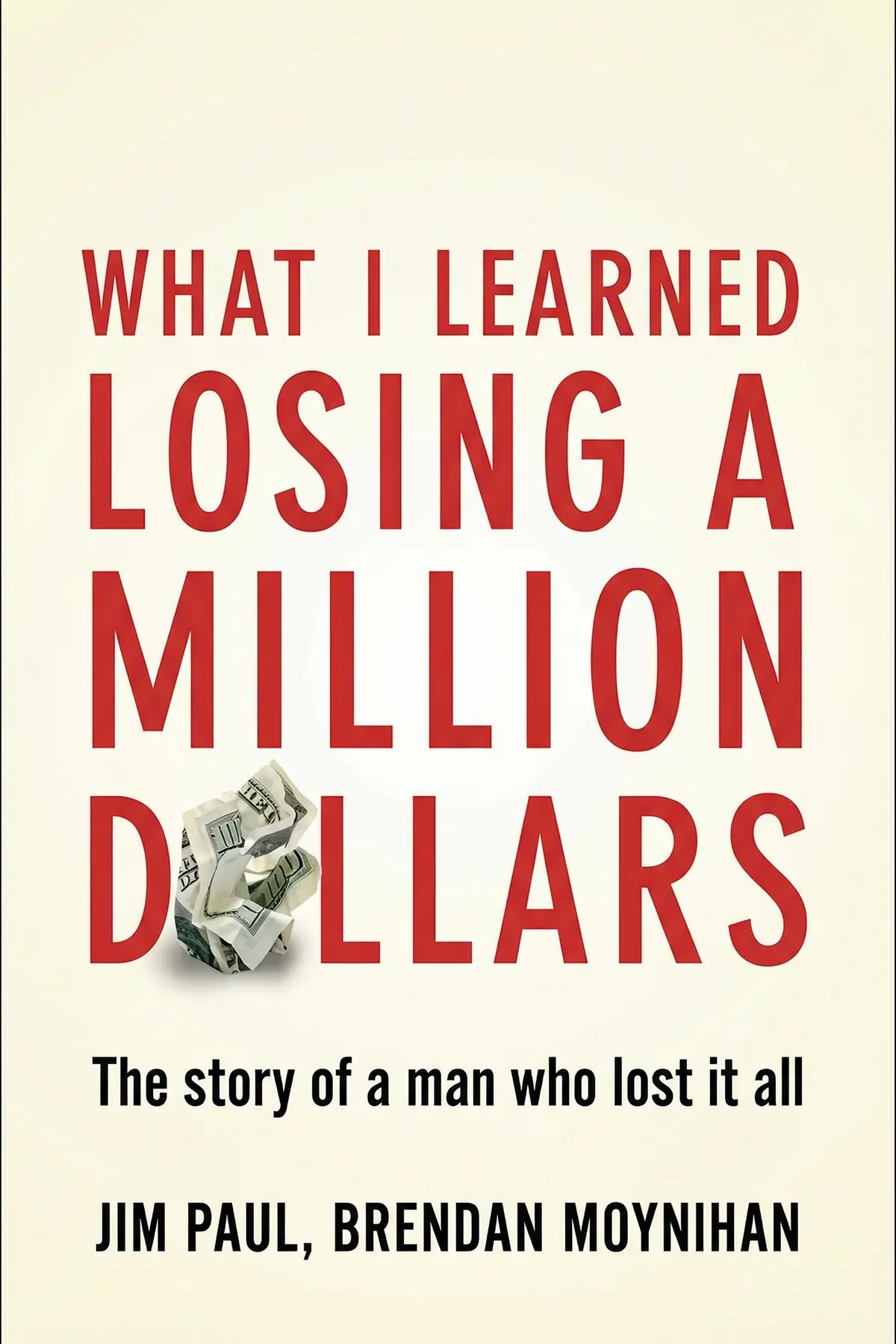
Table of Content
1. Introduction
1 min 45 sec
Why is it that markets crash, bubbles burst, and seemingly brilliant individuals lose everything in the blink of an eye? This is a question that has haunted the financial world for generations, particularly in the wake of major global economic shifts. To find a truly satisfying answer, we often look to the winners, hoping to copy their blueprints for success. But perhaps we should be looking in the opposite direction. Perhaps the most profound insights don’t come from those who simply made a fortune, but from those who made it and then watched it all vanish.
Enter Jim Paul. At one point, he was a giant in the world of futures trading, a man who seemed to have the midas touch. He rose from humble beginnings to a position where he was making hundreds of thousands of dollars in a single afternoon. He was confident, successful, and by all accounts, a master of his domain. And then, it all fell apart. He didn’t just lose his money; he lost his career, his reputation, and his sense of self.
What followed was a period of intense reflection. Paul didn’t just lick his wounds; he performed a psychological autopsy on his own failure. He realized that while everyone was obsessed with the mechanics of making money, almost no one was studying the mechanics of losing it. He discovered that the reasons for success are often varied and contradictory, but the reasons for failure are remarkably consistent. This summary explores those consistent patterns of human error. We will dive into the psychological factors that cloud our judgment, the logical fallacies that lead us into traps, and the crowd behaviors that make us act against our own best interests. By the end of this journey, you’ll understand that the key to long-term wealth isn’t finding a secret strategy for winning, but rather building a robust defense against the universal habits of losing.
2. The Peril of Early Success and Unchecked Confidence
2 min 19 sec
Explore how a string of victories can blind even the most seasoned trader to the reality of mounting risks and the danger of personalizing market movements.
3. The Paradox of Winning and the Universal Truth of Losing
2 min 12 sec
Discover why the experts can never agree on how to make money, yet are remarkably united on the one thing you must avoid at all costs.
4. Emotional Attachment and the Problem of Personalizing Loss
2 min 13 sec
Understand the psychological difference between a business expense and a personal failure, and why mistaking one for the other leads to ruin.
5. The Illusions of Logic and the Nature of Infinite Markets
2 min 09 sec
Learn how the human brain’s desire for patterns creates dangerous fallacies in environments that have no beginning or end.
6. The Contagion of the Crowd and the Erosion of Individual Logic
2 min 02 sec
Explore why being part of a group—even a virtual one—can override your rational mind and lead to collective financial madness.
7. Strategic Planning as an Antidote to Emotional Volatility
1 min 54 sec
Discover how the rigorous methods of top-tier firms use forensic detail to prevent human feelings from sabotaging financial outcomes.
8. The Essential Requirement of a Pre-Determined Exit Strategy
1 min 58 sec
Learn why the most important part of any market entry is knowing exactly where the exit door is located, before you even step inside.
9. Conclusion
1 min 20 sec
In the final analysis, the story of Jim Paul is not just a tale of financial ruin, but a profound lesson in human psychology. It reminds us that our greatest enemy in the pursuit of wealth is not a lack of information or a bad market, but our own internal architecture. We are wired to seek patterns, to crave social affirmation, and to protect our egos at all costs. In the high-stakes world of investing, these natural instincts are precisely what lead to disaster.
The throughline of this journey is simple but difficult to execute: you must master the art of losing. You must learn to separate your identity from your portfolio, view losses as a routine cost of doing business, and replace emotional reactions with rigorous, pre-determined plans. While there may be a thousand ways to get rich, there is only one way to stay that way, and that is to systematically avoid the pitfalls that lead to a total wipeout.
As you move forward, take a moment to look back at your own decision-making process. Are you building a structure that can survive your own emotions? Do you have a plan that accounts for the possibility that you might be wrong? Remember, to make a mistake is human, but to let a mistake turn into a catastrophe is a choice. By internalizing the lessons of those who have lost it all, you can build a financial future that is not just prosperous, but truly resilient.
About this book
What is this book about?
This book tells the dramatic story of Jim Paul’s spectacular rise and even more spectacular fall in the high-stakes world of futures trading. After finding early success and believing himself invincible, Paul saw a single trade in soybean oil wipe out his entire fortune and leave him deeply in debt. By analyzing exactly where he went wrong, Paul and co-author Brendan Moynihan provide a masterclass in market psychology and risk management. The book promises to shift the reader’s focus away from the various get-rich-quick schemes that clutter the business world and toward a more sustainable philosophy of wealth preservation. It explores how cognitive biases, emotional attachment to opinions, and the dangerous pull of the crowd lead to irrational decision-making. Through cautionary tales and practical frameworks, the authors explain how to detach one’s ego from market fluctuations, create rigorous plans that account for worst-case scenarios, and always establish an exit strategy before the first dollar is ever committed. Ultimately, it serves as a essential guide for surviving the turbulence of any financial market.
Book Information
About the Author
Jim Paul
Jim Paul came from a humble background in Kentucky before ascending to the heights of the Chicago Mercantile Exchange. His career saw both the thrill of massive daily profits and the devastation of total loss, eventually leading him to a vice presidency at Morgan Stanley. Brendan Moynihan is a seasoned financial expert, serving as managing director at Marketfield Asset Management and teaching finance as a professor at Vanderbilt University. He is also the author of Financial Origami, a book examining the fragility of Wall Street models.
Ratings & Reviews
Ratings at a glance
What people think
Listeners find this work highly educational, as one review points out its technical analysis of psychological frameworks. Furthermore, it is especially useful for those in trading, with one listener suggesting it warrants several readings to fully absorb the core lessons. In addition, listeners value the author’s detailed examination of the psychology behind financial failures, and one review emphasizes the significance of depersonalizing wins and losses. Described as simple to follow and apply, the book is considered practical by listeners who say it assists them in handling capital and investments more efficiently.
Top reviews
Anong
Finally got around to reading this classic after years of seeing it on every trader’s must-read list. Truth is, most investment books are just lists of patterns that don't work in the real world. This one is different because it focuses entirely on how you lose money through your own ego and psychological blind spots. Jim Paul’s story of his rise and fall is both a warning and a masterclass in human nature. The core message of depersonalizing losses—treating them as business expenses rather than personal failures—is something every person managing money needs to internalize. I found the section on the Five Stages of Loss particularly insightful because it maps perfectly onto how I felt during my last major drawdown. It is a practical, easy-to-digest guide that I plan on revisiting every year to keep my hubris in check. Highly recommended for anyone serious about the markets.
Show morePornthip
As someone who has blown up an account before, this book hit me like a ton of bricks. Most authors want to tell you how smart they are, but Paul is brave enough to show you exactly how stupid he was. The distinction he makes between discrete and continuous events is a total game-changer for how I view risk management. If you don't have a defined exit point before you enter a trade, you are essentially gambling with your emotions rather than speculating with a plan. I love that this isn't another get rich quick manual; it’s a how to stay in the game survival guide. The advice is easy to implement and the technical evaluation of the losing mindset is spot on. I’ve started applying his five steps to my own workflow and the mental clarity it provides is worth every penny of the investment.
Show moreLook
Technical analysis and charts mean nothing if your head isn't right, and that is exactly what this book addresses. I’ve read dozens of investing guides, but this is the first one that forced me to look in the mirror and acknowledge my own biases. The way Paul describes personalizing a position—where your ego won't let you admit you're wrong—is the single most important lesson any trader can learn. Not gonna lie, I’ve made every mistake mentioned in these pages, especially the one about converting a short-term trade into a long-term investment just to avoid booking a loss. The practical steps for formulating a plan and establishing controls are clear and easy to follow. It is a technical evaluation of the human mindset that is absolutely essential for anyone who wants to manage their own money effectively.
Show moreJom
The first half is a wild ride through the trading pits of Chicago, and I found Jim Paul’s autobiography surprisingly candid. It’s rare to find an author willing to admit that their success was largely a mix of luck and gaming the system rather than pure genius. However, the transition into the second half—the more analytical business book portion—is a bit clunky and repetitive in places. While the advice on creating a plan and establishing controls is solid, the writing style becomes much more stilted compared to the lively storytelling of the opening chapters. I also chuckled at the dated reference to Steve Jobs being "done for" at NeXT, which shows how much the world has changed since this was written. Still, the fundamental lesson about separating your self-worth from your net worth is timeless and worth the cover price for the psychological shift it provides.
Show moreGung
Ever wonder why you hold onto a losing trade for too long even when you know it's a dog? This book explains the why better than almost anything else I've read on the subject. Jim Paul explores how we internalize losses and view being wrong as a character flaw rather than a market reality. To be fair, the storytelling by Moynihan can feel a bit child-like at times, but there is a certain charm to the unpretentious way he describes these complex psychological traps. The chapter on crowd-like behavior was particularly illuminating, showing how easily an individual can get swept up in the groupthink of a bubble. My only real complaint is that it gets a little redundant toward the end. You could probably get most of the value by reading the first 100 pages and the summary chapter.
Show moreLucas
Nassim Taleb wasn't kidding when he recommended this as one of the best books on finance. Most books focus on winning, but this one realizes that avoiding ruin is the actual secret to long-term success. The narrative of Jim Paul’s life provides a visceral context for the rules that follow in the later sections. It’s fascinating to see how his parents pulling him off a baseball team to work as a caddy might have fueled his lifelong obsession with proving himself through money. Personally, I found the analysis of psychological disorders versus normal emotions very helpful for distinguishing between when I’m just nervous and when I’m actually self-sabotaging. It is a short, punchy read that doesn't waste time with complex formulas, focusing instead on the only thing that really matters: the person behind the keyboard.
Show moreMoon
Picked this up on a whim after hearing about the caddy story and how it shaped the author's view of success. It is a remarkable look at candor; you don't often see successful people admit to being such a gambler in their early years. The book does a great job of identifying the warning signs of a slide into biased positions. While the examples from the nineties are a bit hilariously out-of-date now, the underlying psychological truths haven't aged a day. I particularly liked the section on external versus internal losses and how we should strive for the former. My main gripe is the price tag—it is a very slim volume for the cost. However, if it prevents you from making even one emotional mistake in the market, it pays for itself a thousand times over.
Show moreRafael
It’s an okay read, but maybe a bit dated for the modern market environment. Frankly, the entire thesis could have been summed up in a long-form essay or a single lecture rather than stretching it out over 160 pages. I struggled with the structure because the lessons learned feel scattered across various chapters, making it hard to find specific points later for reference. For example, the distinction between investors, traders, and speculators is a great framework, but it is buried in a lot of repetitive fluff about human endeavor. If you are a complete beginner, there is definitely value here in learning about the dangers of FOMO and crowd-following. However, if you've already read a lot of trading psychology books, you likely won't find much new information here that hasn't been covered better elsewhere by more contemporary authors.
Show moreNiramai
Part 1 is definitely more engaging than Part 2, though I know many people suggest skipping the biography. I actually think the story of the fancy business guy is essential for seeing the ego in action before you read the theory. However, once Moynihan switches to the fact-based view, the book loses its momentum. The information is spread thin, and I found myself wishing for a simple list of bullet points rather than the meandering chapters on mental processes. The model of different market participants—bettors versus gamblers—is excellent, but it is hard to stay motivated when the prose becomes so dry. It’s a decent book for someone looking to understand the psychology of failure, but the structure is definitely a bit of a mess. I would recommend it to beginners, but experienced traders might find it repetitive.
Show moreSamroeng
This didn't live up to the hype for me, despite the glowing recommendations from some big names in finance. Look, the first half is just an autobiography of a guy who seems quite unlikable, obsessed with money and status to an unhealthy degree. While it is intended to demonstrate hubris, I just found it tedious to read about him cheating on aptitude tests and schmoozing his way up the ladder. By the time he lost the million, I was actually feeling a bit of schadenfreude. Then the second half shifts into a disorganized mess of psychological theories that feel like a poorly structured speech. The writing is stilted and the Big Ideas are mostly common sense wrapped in fancy jargon. For a thirty dollar book, I expected a much more polished and professional approach to the subject matter.
Show moreReaders also enjoyed
AUDIO SUMMARY AVAILABLE
Listen to What I Learned Losing a Million Dollars in 15 minutes
Get the key ideas from What I Learned Losing a Million Dollars by Jim Paul, plus 5,000+ more titles in English and Thai.
- 5,000+ titles
- Listen as much as you want
- 7-day free trial
- Cancel anytime







