
11 min 35 sec
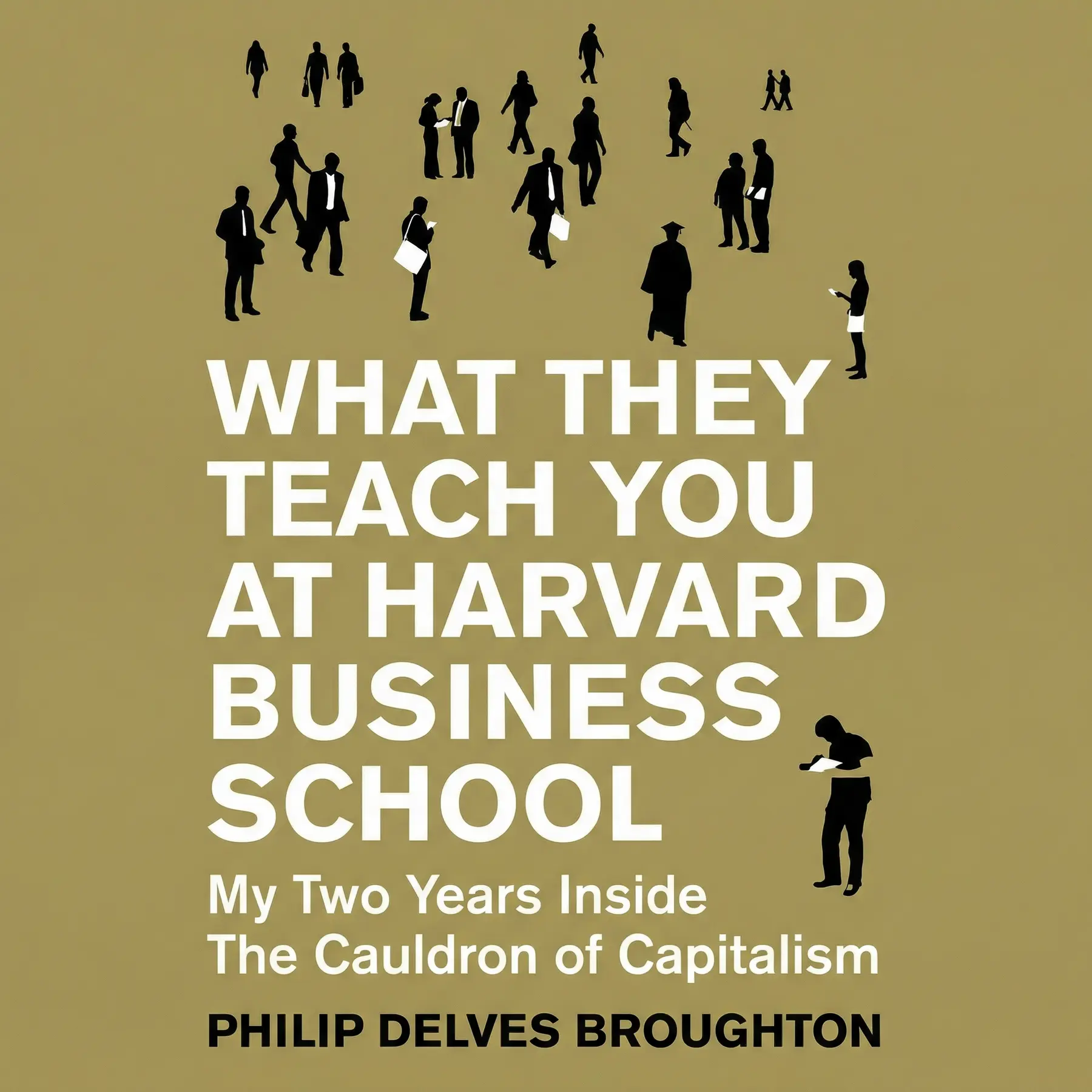
What They Teach You at Harvard Business School: My Two Years Inside The Cauldron of Capitalism
Journalist Philip Delves Broughton provides a candid, behind-the-scenes account of his two years at Harvard Business School, detailing the rigorous curriculum, the competitive environment, and the ethical challenges inherent in elite business education.
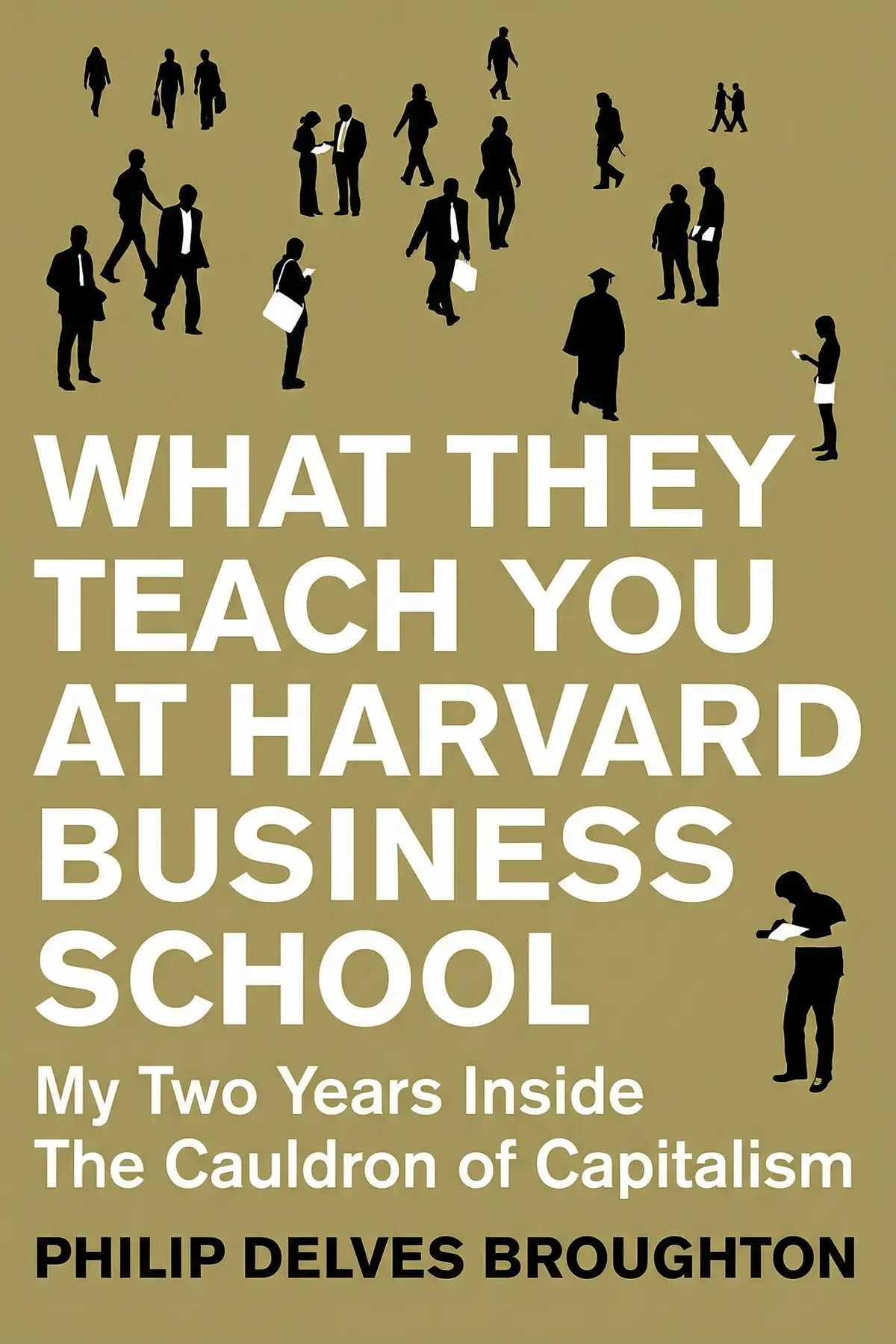
Table of Content
1. Introduction
1 min 12 sec
Imagine stepping away from a successful career in journalism to enter what many consider the ‘cauldron of capitalism.’ That is exactly what Philip Delves Broughton did in 2004 when he arrived at Harvard Business School. For two years, he traded his reporter’s notebook for financial spreadsheets and deep-dive case studies, immersing himself in an environment where ambition is the primary currency. He entered with a sense of curiosity, wanting to understand the mechanics of the business world and perhaps find a more lucrative path forward.
However, the experience was about more than just numbers and management theories. It was a total immersion into a culture of high stakes, where the pressure to succeed is constant and the competition is fierce. As we walk through his journey, we will see how Harvard shapes the leaders of tomorrow, the specific technical skills they master, and the often-overlooked psychological and ethical shifts that occur along the way. This isn’t just a guide to business school; it’s a reflection on what we value in our leaders and what it truly means to be ‘good at business’ in a world that is constantly changing. Through Broughton’s eyes, we get an unvarnished look at the throughline of elite education: the relentless pursuit of growth, the management of risk, and the search for one’s own identity within a massive corporate machine.
2. Life Inside the Institutional Bubble
1 min 32 sec
Discover how a world-class business school creates an isolated environment designed to reshape the perspectives and priorities of its elite students.
3. Learning Through the Case Study Method
1 min 41 sec
Explore the unique pedagogical approach that forces students to make high-stakes decisions based on complex, real-world scenarios.
4. The Subjective Art of Financial Logic
1 min 38 sec
Delve into the complexities of risk and accounting, where numbers are often more of a story than an objective reality.
5. Mastering Strategy and Negotiation
1 min 25 sec
Learn the essential frameworks that Harvard students use to gain a competitive edge in any professional interaction.
6. The Brutal Reality of Entrepreneurship
1 min 29 sec
Follow the author’s personal attempt at a startup and the humbling lessons learned about the value of execution over ideas.
7. The Corporate Cult and the Cost of Success
1 min 31 sec
Examine the psychological pressure of the MBA job hunt and the ethical questions raised by the 2008 financial crisis.
8. Conclusion
1 min 07 sec
Philip Delves Broughton’s journey through Harvard Business School is a story of transformation, but perhaps not the one he originally expected. He entered the ‘cauldron of capitalism’ looking for a new career and left with a deep understanding of the mechanics that drive our global economy. He mastered the case study method, learned the intricacies of finance, and practiced the art of negotiation. Yet, his most significant takeaway was a cautionary one. He witnessed firsthand how the intense pressure for status and wealth can distort one’s values and create a sense of isolation from the rest of society.
In the end, Broughton chose a path of personal fulfillment over corporate prestige, proving that a Harvard MBA doesn’t have to result in a conventional life. The true lesson of the book is that business skills are a means to an end, not an end in themselves. As we look at the leaders who shape our world, we must ask if they are being taught not just how to manage assets, but how to lead with a sense of social responsibility. Broughton’s experience encourages us to define success for ourselves, balancing professional ambition with the things that truly matter: family, integrity, and the courage to chart our own course.
About this book
What is this book about?
This summary takes you inside the most prestigious business program in the world through the eyes of a professional journalist. Philip Delves Broughton entered Harvard Business School hoping to transform his career, but what he found was a unique and often isolating environment known as the 'HBS bubble.' The narrative follows his journey from learning the technical basics of accounting and marketing to grappling with the intense social and professional pressures of elite capitalism. You will explore the famous case study method, where students learn by deconstructing real-world business scenarios, and discover the specific lessons taught about leadership, risk management, and negotiation. The story also delves into the ethical side of the MBA experience, examining how the drive for profit can sometimes clash with personal values. Ultimately, it offers a promise of clarity for anyone wondering what truly goes on behind the ivy-covered walls of a premier institution and what it really costs to become a corporate leader in the modern age.
Book Information
About the Author
Philip Delves Broughton
Philip Delves Broughton was born in Bangladesh and raised in the United Kingdom. His career began in the world of journalism, where he spent more than ten years as a reporter for the Daily Telegraph, covering significant global events from various major cities across Europe and America. A graduate of Oxford University, Broughton decided to pursue an MBA at Harvard Business School to pivot his professional path. Since completing his business education, he has held influential positions at several high-profile organizations, including Apple, the Financial Times, and the Kauffman Foundation, and has also worked with the American Academy in Rome.
Ratings & Reviews
Ratings at a glance
What people think
Listeners find this memoir to be a compelling and stimulating account that provides an exhaustive, step-by-step report on the Harvard Business School experience. While opinions vary on the author’s skeptical tone, listeners value the inclusion of concrete business concepts, and one listener specifically noted how useful the segments on valuation and cash flow forecasting were. Furthermore, they find the examination of work-life balance and the moral challenges within high-level corporate environments to be deeply thought-provoking. Listeners also mention that the book offers an exceptional perspective on the program's intensity, serving as an uncommon and perceptive glimpse into "the lives of the few and the privileged."
Top reviews
Prae
Finally got around to reading this, and I found the exploration of elite corporate culture absolutely fascinating. Broughton provides a rare, insightful look at 'the lives of the few and the privileged' that most of us will never see firsthand. The anecdotes about students buying cars to hide their assets for hardship funds are just mind-blowing. It really makes you wonder about the moral compass of the people running our financial institutions. Despite the heavy themes, the prose is engaging and moves quickly through the two-year program. I especially liked the focus on the alumni network as the ultimate asset. If you want to understand the hubris and the drive behind the world's most famous business school, this is the book to read.
Show moreSamart
The way Broughton breaks down complex financial concepts like 'juicing the returns' is worth the price of admission alone. Most memoirs about graduate school are just navel-gazing, but this one actually takes the time to explain the curriculum. I found the chapters on decision trees and the root of valuation to be genuinely educational for a layperson. Beyond the academics, the book serves as an ominous warning about the exclusivity of success. He doesn't hold back on the social dynamics, from the intense study groups to the weirdly Maoist public apologies. It’s an authentic, blow-by-blow account that doesn't try to sugarcoat the experience. This is a must-read for anyone who thinks an MBA is a magic ticket to happiness.
Show moreWaree
Picked this up because I was curious about the actual curriculum at HBS, and it delivers on that front. I appreciated how Broughton breaks down concrete business concepts like valuation and cash flow forecasting. It isn't just a dry textbook, though; it’s a provocative window into the competitive nature of the program. Look, the ethical pressures of elite corporate culture are real, and this book does a great job of highlighting that tension. One of the most interesting parts was the joint course with the Kennedy School, which forced students to weigh profit against social consequences. Even if the author is a bit of a skeptic, his detailed account of the case study method is incredibly helpful for any prospective student.
Show moreMontri
After hearing so much about the prestige of an MBA, this memoir served as a necessary reality check. The author enters as a bit of an outsider—older than his peers and already a father—which gives him a unique perspective on the 'gilded gates' of the Harvard network. He paints a picture of a factory for unhappy people who are constantly measuring themselves against the curve. I found the section on 'juicing the returns' and the mechanics of debt to be surprisingly clear and well-explained. It’s not just a business book; it’s a morality play about what we sacrifice for success. Some might find him too cynical, but I think his skepticism regarding the monoculture of consulting and finance is refreshing and honest.
Show moreTan
As someone considering a career pivot, Broughton's struggle with his own identity was surprisingly relatable. He captures that feeling of being adrift while everyone else seems to have a clear five-year plan for making bank. The way he describes the 'three Ms' dominating the classroom culture gave me a good laugh, but it also highlighted the lack of diversity in thought. I loved the quotes from his various classmates, like the Russian entrepreneur Oleg, who provided a grounded contrast to the arrogance of the younger students. It’s a thoughtful meditation on whether a degree can actually provide a 'more interesting life' or if it just adds more anxiety. Definitely worth a read for the perspective on work-life balance alone.
Show moreArnav
Not what I expected from a business book, but in a good way. Instead of a 'how-to' guide, it’s an engaging memoir about the disconnect between academic theory and real-world ethics. Broughton’s skepticism about capitalism might rub some the wrong way, but it provides a necessary foil to the hyper-ambitious atmosphere of HBS. I was particularly struck by the discussions on the 'discipline of debt' and how it shapes corporate behavior. To be fair, he does come across as a bit of a hero in his own story for choosing family over a high-paying internship. However, his writing style is so polished that even the more judgmental parts are a pleasure to read. It’s a deeply thought-provoking look at the cost of entry into the global elite.
Show moreZoey
Ever wonder what goes on behind the ivy-covered walls of the world's most famous business school? This book gives you the answer, and it’s not always pretty. Broughton details the crushing pressure of the grading curve and the constant performance required in class discussions. In my experience, most people talk about Harvard as a dream, but he shows the reality of the six-figure debt and the uncertainty of the job hunt. The inclusion of actual interview questions and case study themes makes it feel concrete rather than just abstract complaining. While I didn't always agree with his pessimistic take on his classmates, the book succeeded in making me think about my own career goals. It’s a solid 4-star read for anyone interested in the machinery of prestige.
Show morePraepimon
Is it just me, or does the author seem incredibly bitter about his experience? Philip Delves Broughton writes well, but the tone is so judgmental and pessimistic that it’s hard to stay engaged. He enters HBS wanting a career change and then acts shocked when the industry doesn't bow down to his 'varied background.' The truth is, he spends more time critiquing his classmates—those 'over-optimistic buffoons'—than reflecting on his own lack of drive. While the exploration of work-life balance is a valid theme, it feels like a case of sour grapes. It’s an interesting look at the 'three Ms' (Mormons, military, and McKinsey), but the author's ego gets in the way of the narrative.
Show moreCameron
Reading this in the current economic climate feels like looking into a time capsule of the pre-2008 financial world. The author captures a specific moment when hedge fund managers were the kings of the universe. However, I found myself losing sympathy for a British journalist who chooses an expensive MBA and then complains about the financial pressure. It is a classic first-world problem. The sections on the Harvard grading curve and the pressure to be 'brash and loud' are enlightening, but the book’s relevance has faded significantly since its publication. It’s a decent memoir if you want to see the hubris of elite circles, yet it lacks the timelessness of a great business text.
Show morePrapaiwan
This book was a massive disappointment for me. Everything is so descriptive but there are zero actual insights to be found in the entire first half. Frankly, I realized after reading just thirty pages that I was wasting my time on a redundant narrative. I skipped around to see if the pattern changed, but it remained a tedious blow-by-blow of his daily schedule without any real substance. To be fair, the writing isn't terrible, but the content is just fluff for anyone looking to actually learn business. I strongly recommend anyone with common sense to skip this one and find a book that actually teaches you something useful.
Show moreReaders also enjoyed

Agent Sonya: The Spy Next Door
Ben Macintyre

A Different Kind of Power: A Memoir
Jacinda Ardern

Alexander Hamilton
Ron Chernow
A Higher Loyalty: Truth, Lies and Leadership
James Comey

Alexander the Great
Philip Freeman


Ali: A Life
Jonathan Eig
A Life Decoded: My Genome: My Life
J. Craig Venter
AUDIO SUMMARY AVAILABLE
Listen to What They Teach You at Harvard Business School in 15 minutes
Get the key ideas from What They Teach You at Harvard Business School by Philip Delves Broughton, plus 5,000+ more titles in English and Thai.
- 5,000+ titles
- Listen as much as you want
- 7-day free trial
- Cancel anytime







