
18 min 38 sec
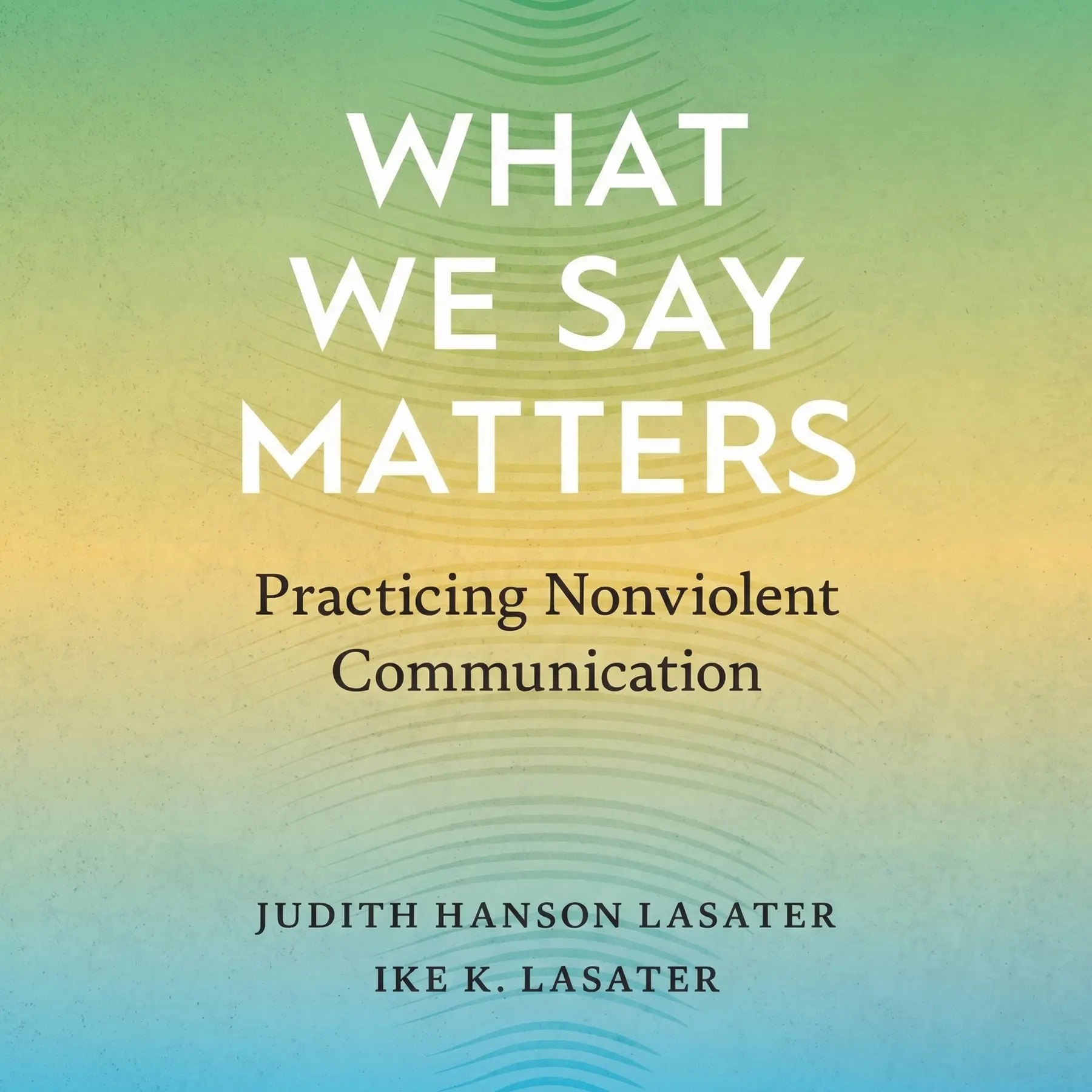
What We Say Matters: Practicing Nonviolent Communication
Discover how the principles of Nonviolent Communication can transform your daily interactions. This guide offers a compassionate framework for expressing needs, resolving conflicts, and building deeper connections through mindful, honest language.
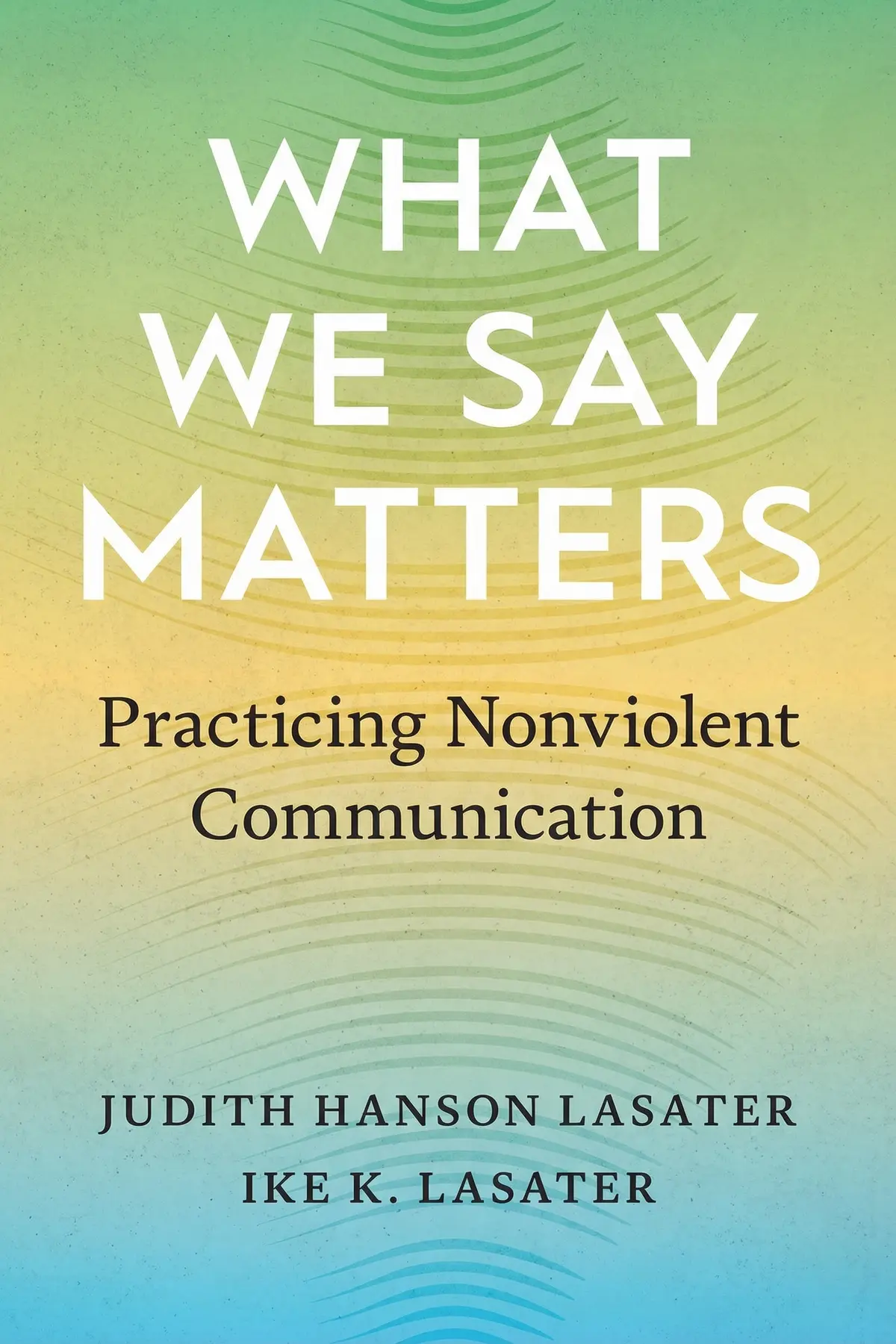
Table of Content
1. Introduction
1 min 41 sec
Have you ever walked away from a conversation feeling a lingering sense of regret? Perhaps a simple discussion about household chores spiraled into a heated argument, or a misunderstanding at work left you feeling defensive and unheard. It is a common human experience: we often use language that, however unintentionally, creates distance rather than connection. The words we choose act as the scaffolding for our entire lives, shaping our relationships with partners, children, coworkers, and even our own sense of self. When those words are infused with judgment or blame, the scaffolding begins to crumble.
In What We Say Matters, authors Judith Hanson Lasater and Ike K. Lasater invite us to reconsider the very nature of human interaction. They propose that communication isn’t just about exchanging information; it’s a practice of mindfulness and compassion. By drawing on the powerful framework of Nonviolent Communication, or NVC, they provide a roadmap for moving beyond reactive speech. This isn’t just about being ‘nice’ or avoiding conflict. Rather, it is about finding a way to be radically honest and deeply empathetic at the same time.
Throughout this exploration, we will look at how to strip away the evaluations that cloud our perception and how to identify the deep-seated needs that drive our behavior. We will discover how to make requests that invite cooperation rather than resistance. By the end of this journey, the goal is to see every interaction—even the difficult ones—as an opportunity to contribute to the well-being of everyone involved. Whether you are navigating a tricky professional dynamic or seeking more intimacy at home, these principles offer a transformative path toward a more connected and peaceful life.
2. The Foundation of Right Speech
2 min 24 sec
Explore how the ancient principles of truth and non-harming can serve as a guide for modern communication and improve your overall well-being.
3. Separating Facts from Evaluations
2 min 44 sec
Learn the vital distinction between objective observations and subjective judgments to keep conversations grounded and productive.
4. Identifying Needs and Making Clear Requests
2 min 31 sec
Discover how to uncover the universal human needs behind your emotions and how to ask for what you want without making demands.
5. The Power of Empathy for Self and Others
2 min 29 sec
Understand how self-empathy can prevent resentment and how empathizing with others can de-escalate even the most tense situations.
6. Transforming Family and Close Relationships
2 min 30 sec
Apply the principles of NVC to your most intimate bonds, turning honest requests into gifts that strengthen your connection.
7. Applying NVC in the Professional World and Beyond
2 min 28 sec
Learn how to use nonviolent communication to foster a collaborative work environment and how to practice self-forgiveness.
8. Conclusion
1 min 51 sec
As we conclude this journey through What We Say Matters, it becomes clear that nonviolent communication is more than just a set of techniques for better talking. It is a fundamental shift in how we relate to the world and to ourselves. By committing to the four components—observation, feeling, need, and request—we move away from the destructive patterns of judgment, blame, and demand that so often characterize our interactions. We learn that ‘right speech’ isn’t a destination but a continuous practice of mindfulness.
This practice begins with the radical act of self-empathy. By understanding our own internal landscape, we gain the stability needed to listen deeply to others. We start to see that even the most difficult people are simply trying to meet their own human needs, however clumsily. When we address those needs directly, we cut through the noise of conflict and find the signal of connection. Whether you are seeking to heal a strained relationship, improve your professional life, or simply find more peace within yourself, the path starts with a single, mindful word.
The throughline of this work is the belief that every person’s needs matter. To put this into practice today, try this: the next time you are in a tense situation, resist the urge to react immediately. Instead, take a breath and silently identify one observation, one feeling, and one need that you are experiencing in that moment. You don’t even have to say it out loud yet. Just the act of noticing will create a shift in your perspective. By choosing words that honor the truth of your experience without harming others, you begin the powerful work of building a more compassionate world, one conversation at a time.
About this book
What is this book about?
What We Say Matters explores the profound impact our language has on our relationships and inner peace. By drawing on the framework of Nonviolent Communication, authors Judith Hanson Lasater and Ike K. Lasater demonstrate how to move away from judgmental, reactive speech and toward a style of communication rooted in empathy and clarity. The book focuses on the intersection of ancient wisdom and modern psychology to help readers navigate difficult conversations with colleagues, family members, and themselves. The promise of this work is a total shift in how we perceive conflict. Instead of seeing disagreements as battles to be won, readers learn to view them as opportunities to identify unmet needs. Through a structured four-step process involving observation, feeling, need identification, and request-making, the book provides a practical roadmap for anyone looking to foster harmony and mutual respect in every area of their life.
Book Information
About the Author
Judith Hanson Lasater
Judith Hanson Lasater has been a dedicated yoga teacher since 1971 and serves as the president of the California Yoga Teachers Association. She holds a doctorate in East-West psychology. Ike K. Lasater is a cofounder of Mediate Your Life, an organization specializing in conflict resolution. He has a background as a trial attorney and previously served on the mediation panel for the United States District Court for the Northern District of California.
Ratings & Reviews
Ratings at a glance
What people think
Listeners find the guide practical and straightforward to grasp, noting the inclusion of excellent exercises. They also value the communication techniques presented, with one listener highlighting how the content integrates Yoga Philosophy. Additionally, the work receives praise for its overall worth and the durability of the physical book.
Top reviews
Sebastian
Finally got around to reading the updated 2022 edition and the new content regarding workplace communication is a total game-changer. Dealing with performance evaluations and tense emails used to give me so much anxiety, but the steps outlined here provide a clear roadmap for staying centered. The Lasaters explain that all criticism is just a tragic expression of an unmet need, which shifted my entire perspective on my difficult boss. I’ve written nearly twenty pages of notes and started practicing the 'four components' with my partner at home. It’s rare to find a book that offers both deep philosophical insight and such concrete, tactical advice for modern life. Highly recommended for anyone looking to reduce the angst in their daily interactions.
Show moreArm
Wow, I didn't expect a book on communication to hit me this hard emotionally. The focus on self-empathy was exactly what I needed at this point in my life. It turns out that I’ve been incredibly violent in the way I talk to myself, which naturally spills over into how I treat others. The Lasaters’ writing is warm and inviting, making complex psychological shifts feel doable. I particularly appreciated the examples of communicating with children; they were eye-opening and immediately applicable in my own household. This book is a beautiful blend of yoga philosophy and practical psychology. It has genuinely changed how I approach every single conversation I have. It’s a must-read for anyone seeking more peace.
Show moreJun
This isn't just a book about talking; it's a manual for living with integrity. Linking NVC with the yogic concepts of ahimsa and satya makes perfect sense, and the Lasaters articulate this connection brilliantly. Every chapter is peppered with memorable gems that challenge your existing worldview. I was especially struck by the idea that unless we are connected with ourselves, our speech cannot be true. The exercises provided me with a way to interact with the information rather than just passively consuming it. Not gonna lie, I was skeptical about the 'nonviolent' label at first, but now I see how much hidden aggression was in my 'normal' speech. This book is an essential tool for personal growth.
Show moreJonathan
Integrating yoga philosophy into daily conversation is something I’ve struggled with, but the Lasaters make it feel attainable. The way they weave the concepts of ahimsa and satya into the mechanics of NVC provided me with a spiritual framework I hadn’t considered before. I found the exercises at the end of each chapter incredibly helpful for anchoring the lessons, especially the sections on self-empathy. Truth is, I used to think I was a good listener, but this book highlighted how often I’m actually just waiting for my turn to speak. The tone is gentle yet firm in its call for personal responsibility. My only minor gripe is that it can feel a bit repetitive towards the end. It’s definitely a resource I’ll keep on my nightstand for a long time.
Show moreFort
Ever wonder why certain conversations always end in a blow-up even when you mean well? This book dives deep into the 'why' behind our communication failures and offers a way out through mindfulness. I loved the connection to Buddhist right speech, as it made the NVC process feel less like a mechanical technique and more like a spiritual practice. The exercises are where the real work happens; they forced me to look at my own habits of judgment. Look, it’s not a magic wand, and some of the scripts provided feel a bit stiff for casual use. However, the underlying principles of identifying feelings and needs are absolutely vital for healthy relationships. I feel more equipped to handle conflict now.
Show morePraepimon
As someone who struggled through Marshall Rosenberg’s original text, I found this version much easier to digest. The Lasaters address many of the common pitfalls that people run into when first trying out NVC, like the tendency to sound like a robot. Frankly, the phrasing still feels a bit weird at times, but the authors are honest about that struggle. The 'four communication choices' section is something I’ve already reread three times because it’s so foundational. It helps you see that you always have a choice in how you receive a message, even a critical one. I gave it four stars instead of five because the 2022 updates, while good, felt a bit tacked on in places. Still, it’s a very solid manual.
Show moreClaire
Picked this up specifically for the chapters on professional environments and found the advice on meetings and emails to be quite helpful. We often forget that our coworkers have needs too, and this book serves as a persistent reminder of our shared humanity. The authors do a great job of explaining how to stay connected to your own feelings without oversharing in an inappropriate way. To be fair, I think I’ll need a few more passes through the text to really filter out the awkwardness of the NVC scripts. It takes a lot of practice to make this sound natural. The sturdy construction of the physical book is a nice bonus too, since I’m constantly flipping through it.
Show moreSom
Not what I expected, but exactly what I needed. I thought this would be a dry textbook on linguistics, but it’s actually a very practical guide to human connection. The Lasaters use plenty of real-world examples that make it easy to see where we usually go wrong in our interactions. I did find some of the phrasing, like 'seduce me with your needs,' to be a bit much for my taste. Regardless, the core message of identifying needs instead of hurling judgments is incredibly powerful. It’s a rewarding read that requires you to actually do the work, not just read the words. I’ve already recommended it to several friends who are interested in yoga and mindfulness.
Show moreOak
While I truly appreciate the intent behind this guide, some of the suggested dialogue felt incredibly unnatural to me. Phrases like 'seduce me with your needs' or the 'duck index' had me rolling my eyes, and I frankly couldn't imagine saying them to a coworker without an awkward silence following. The book provides a decent introduction to NVC, yet I found it lacked the depth of Marshall Rosenberg’s foundational work. It’s a bit lighter and perhaps more accessible for some, but I wanted more nuance. The exercises are a highlight, offering a practical way to engage with the material. If you can get past the occasionally cringey language, there is real value here regarding how we express unmet needs.
Show moreZanya
The core concepts of nonviolent communication presented here are solid, but the book gets bogged down in way too much detail toward the second half. I started with a lot of enthusiasm, specifically enjoying the chapters on parenting and romantic partners. Then, the pacing slowed down significantly, and I found my mind wandering through the more technical explanations. Personally, I think it works better as a reference guide you dip into rather than a cover-to-cover read. It’s a good overview, but it doesn't quite reach the thoroughness of the original NVC texts. If you are new to the subject, this is a friendly entry point, just be prepared for some sections to drag.
Show moreReaders also enjoyed

AUDIO SUMMARY AVAILABLE
Listen to What We Say Matters in 15 minutes
Get the key ideas from What We Say Matters by Judith Hanson Lasater, plus 5,000+ more titles in English and Thai.
- 5,000+ titles
- Listen as much as you want
- 7-day free trial
- Cancel anytime







