
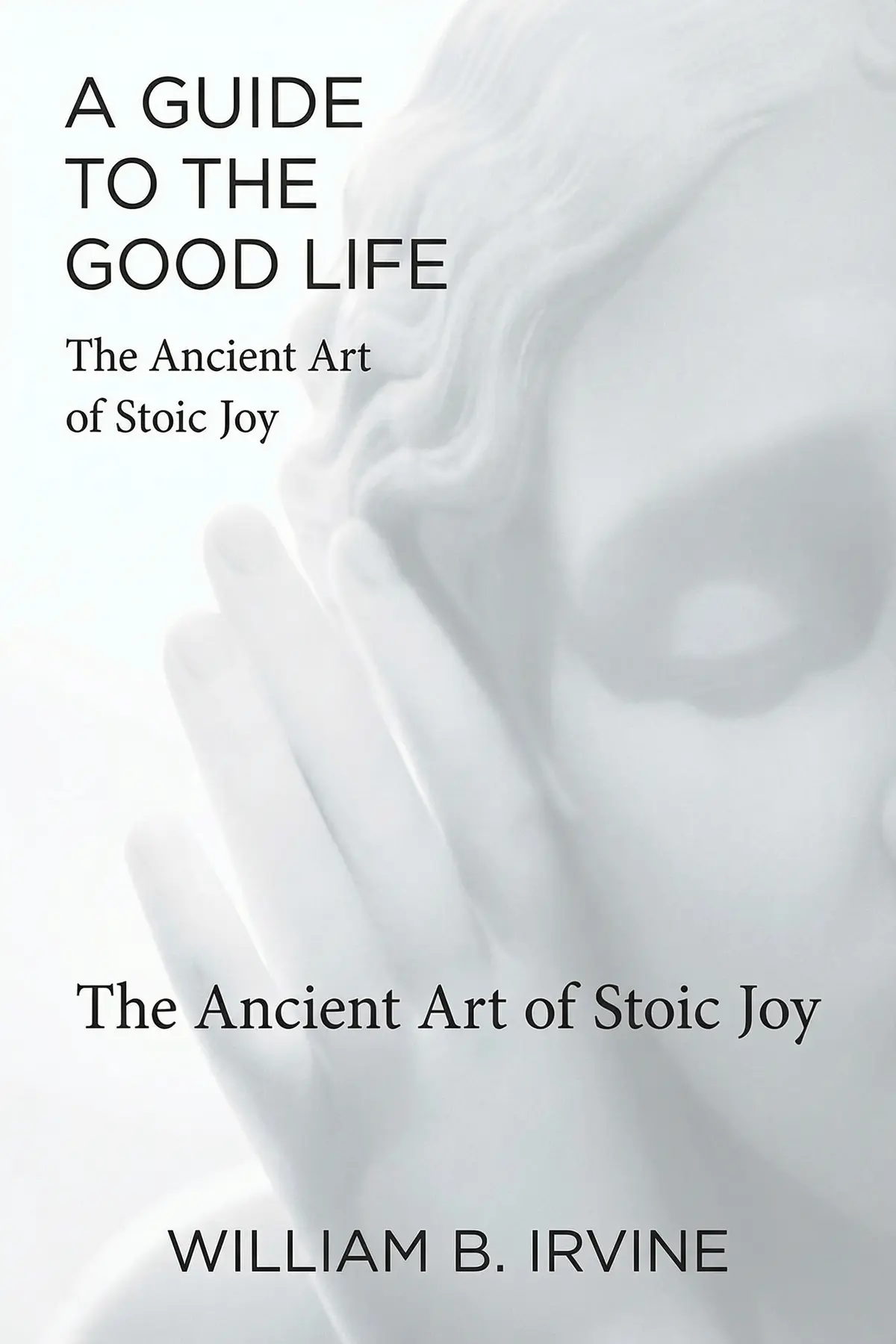
A Guide to the Good Life: The Ancient Art of Stoic Joy
William B. Irvine
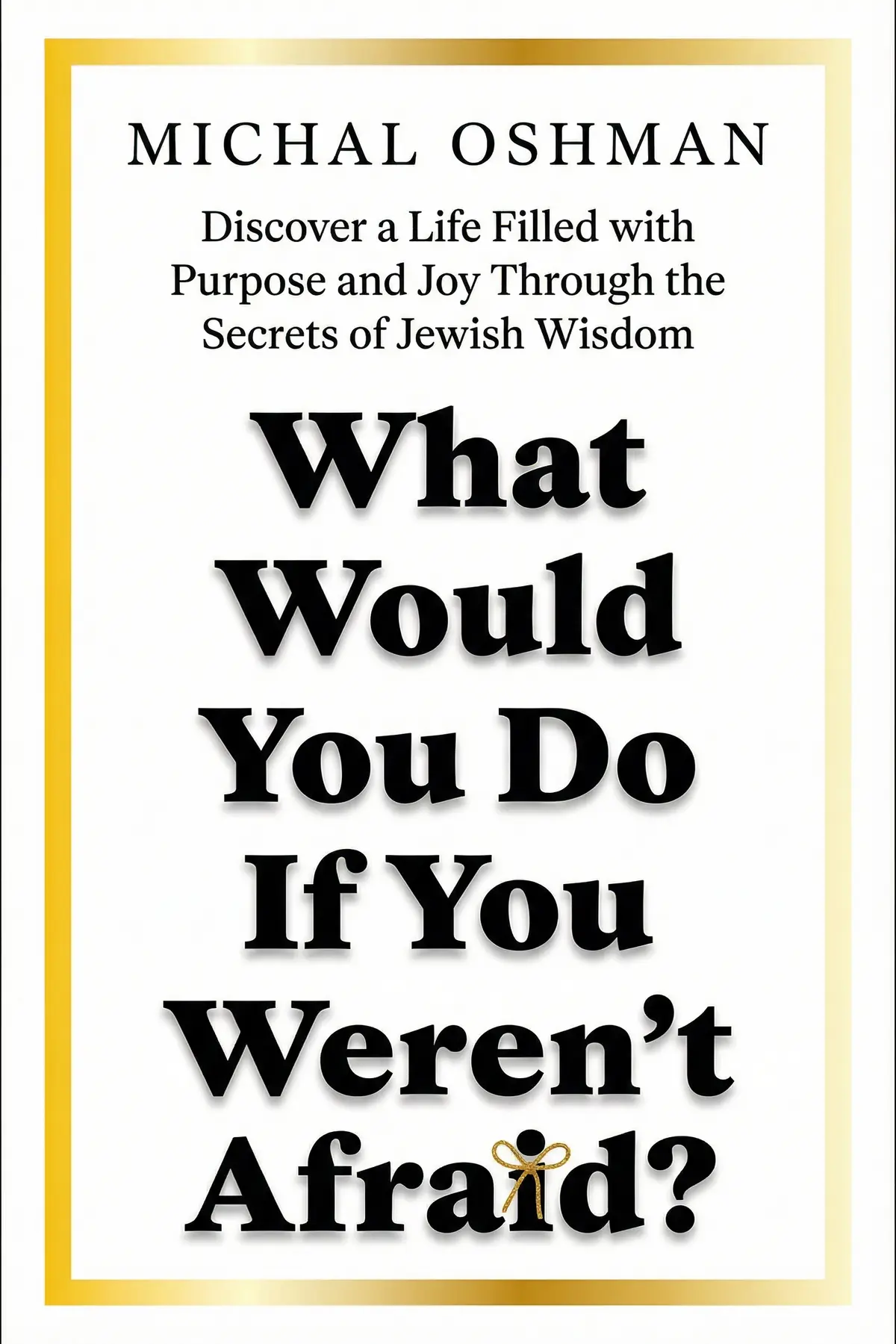
Discover how ancient Jewish wisdom offers practical tools for overcoming modern anxiety, finding professional purpose, and leading a life defined by courage, integrity, and deep connection to your inner self.
1 min 39 sec
Imagine walking into one of the most innovative workplaces in the world—the London offices of Facebook—and being greeted by a question painted in bold letters on the wall: ‘What would you do if you weren’t afraid?’ For many, this might seem like just another motivational poster designed to spark productivity. But for Michal Oshman, those seven words felt like a direct confrontation with her deepest self. Despite her outward success as a high-level executive and consultant, Oshman lived a life shadowed by persistent, often paralyzing, anxiety. She worried about her children’s safety on simple trips and lived in a state of constant ‘what-ifs.’
This summary explores how Oshman found the answers to that haunting question not in modern corporate strategy, but in the ancient, time-tested spiritual traditions of her Jewish heritage. We are going to look at a throughline that connects our modern struggles with identity and fear to profound concepts like the ‘neshama,’ or the soul, and the idea of ‘shvira,’ or brokenness. This isn’t just a story about religious discovery; it’s a practical toolkit for anyone—secular or spiritual—who feels stuck behind a wall of fear. We will explore how to stop looking solely at our past trauma for answers and start looking toward our purpose. By the end of this journey, we will understand how leading with humility, parenting with wisdom, and embracing our mistakes can turn a life of anxiety into a life of profound meaning. It’s about learning that the bridge of life is narrow, but we don’t have to cross it alone or in fear.
2 min 04 sec
Traditional therapy often tethers us to our childhood wounds, but discovering a sense of purpose might be the real key to unlocking a future free from anxiety.
2 min 06 sec
Underneath the layers of societal pressure and ego lies a persistent spark of potential that defines who we truly are meant to be.
2 min 06 sec
Life is a narrow bridge that we must cross, and the cracks we acquire along the way are not signs of failure, but sources of strength.
1 min 57 sec
True influence doesn’t come from dominating a room, but from creating the space where others can flourish and grow.
2 min 08 sec
Rather than molding children into our own image, we are called to be facilitators of their unique journey toward becoming decent human beings.
1 min 42 sec
As we reach the end of this exploration, we return to the question that started it all: ‘What would you do if you weren’t afraid?’ Michal Oshman’s journey shows us that the answer isn’t to wait for the fear to disappear. Fear is a natural part of the human experience, especially when we are walking that ‘narrow bridge’ of life. Instead, the answer is to find something more important than your fear. That ‘something’ is your meaning—your ‘neshama.’
We have seen how ancient wisdom provides a modern roadmap. By peeling back the ‘kelipa’ of our egos and the distractions of the material world, we can find the purpose that makes the struggle worthwhile. We’ve learned that being broken isn’t the end of the story; it’s the beginning of a deeper kind of strength. We’ve seen that true leadership and parenting aren’t about dominance, but about creating space for others to shine through ‘tzimtzum.’
If you take one thing away from this, let it be the power of ‘teshuva’—the ability to return. No matter how anxious you have felt or how many times you’ve let ego drive your decisions, you can always choose to turn back toward your flame.
Here is an actionable step to take today: think of one small ‘leap of faith’ you have been avoiding because of fear. It doesn’t have to be a career change; it could be a difficult conversation or a new hobby. Remind yourself of the ‘fail harder’ philosophy and the ‘shvira’ concept. Even if it doesn’t go perfectly, you will learn, you will grow, and you will be one step closer to your essence. The bridge is narrow, yes, but you are more than capable of crossing it. Move forward, act with integrity, and let your internal flame guide the way.
This guide explores the intersection of high-pressure corporate culture and age-old spiritual principles. It follows the personal journey of a tech executive who transformed her struggle with chronic anxiety and professional burnout by looking toward her heritage. By integrating concepts from the Torah into modern life, the narrative provides a framework for finding meaning in a chaotic world. You will learn how to navigate the 'narrow bridge' of life without being paralyzed by fear. The book promises a shift in perspective, moving from ego-driven success to a life of contribution. Through lessons on leadership, parenting, and self-reflection, it reveals how to peel back the layers of societal expectation to find the internal 'flame' that defines your true potential and purpose.
Michal Oshman holds university degrees in sociology, anthropology, and psychodynamic and systemic thinking. She spent years as an HR expert and management consultant before joining Facebook’s London office, where she was put in charge of international leadership and team development. She is now Head of Company Culture, Diversity and Inclusion at TikTok Europe.
Listeners find this book delivers valuable wisdom for enhancing their daily existence and is a transformative read that helps boost their quality of life. They value its actionable style and straightforwardness, with one listener pointing out how it explains concepts in a very clear way.
This book caught my eye because I've been feeling stuck in a loop of fear and indecision lately. Michal Oshman doesn’t claim to have a magic wand, but she shares her own vulnerability as a high-level executive who still battles anxiety. The way she breaks down Hebrew concepts like being a 'Mensch' makes ancient wisdom feel very accessible and practical for anyone, regardless of their faith. I appreciated the conversational tone; it felt like getting advice from a wise mentor over coffee rather than reading a textbook. Some parts are a bit simplified, but the core message about living with purpose really hit home for me. It’s definitely a book I’ll keep on my nightstand to revisit when I feel my ego getting in the way of my happiness. It really does help you reassess your primary goals.
Show moreWow, I didn't realize how much my soul needed to hear the message that 'the day you were born is the day God decided he was missing you.' Michal Oshman writes with such warmth and humility that you forget she’s a heavy hitter in the tech world. She uses her Jewish heritage to explore universal themes of healing, parenting, and overcoming the internal chains that hold us back from our potential. The 'compliment game' she mentions is such a small, practical thing, but it has already started changing the atmosphere in my own home. This isn’t just a book about religion; it’s a book about being human and finding light in the middle of chaos. I’ve already recommended it to several friends who are struggling with their own transitions. It provides a richness of heart that is rare in the self-help genre.
Show moreFinally got around to reading this, and I'm struck by how much Oshman's transparency about her upbringing influenced her outlook on life. Growing up in a household where death was a constant presence shaped her into someone who values every moment, and that perspective shines through every page. She explains Jewish terms with such clarity that I never felt lost, even though I don't have a background in the faith. The way she connects leadership skills with spiritual principles is unique and far more engaging than your typical, stuffy business leadership book. It’s rare to find an author who can balance high-level corporate experience with such a deep sense of humility and heart. This is a beautiful resource for anyone trying to navigate a major life shift or career change. It’s honestly the book I didn’t realize I needed until I finished it.
Show moreThe chapter on Mitzrayim alone was worth the price of the book for me. It gave me a whole new vocabulary to describe the mental boundaries and self-doubts that have been keeping me from taking risks. Michal Oshman has a way of making you feel like she’s standing right next to you, cheering you on as you face your fears. I loved the blend of corporate anecdotes and ancient wisdom; it felt very relevant to the modern struggle of balancing a career with a meaningful personal life. The illustrations are lovely and the overall tone is one of unwavering optimism without being 'toxic' or unrealistic. This is a book I will definitely be coming back to whenever I feel myself slipping back into a state of anxiety. Truly a gem for anyone seeking meaning and purpose.
Show moreEver wonder how ancient teachings can actually fit into a high-pressure corporate world like TikTok or Facebook? Michal Oshman manages to bridge that gap beautifully, offering Jewish wisdom as a lens for modern-day struggles with anxiety. I found the concept of 'Mitzrayim'—those internal boundaries we set for ourselves—to be incredibly eye-opening for my own career growth. While it isn’t a rigid, step-by-step manual, the reflection questions at the end of each chapter forced me to stop and think deeply. To be fair, some sections felt a little brief, but the overall message about finding your unique soul-purpose is powerful. It’s a refreshing change from the usual 'hustle culture' books that dominate the self-help shelves today. Oshman writes with a level of vulnerability that makes her advice feel earned rather than preached.
Show morePicked this up on a whim and was pleasantly surprised by how much the parenting chapter resonated with my current life stage. Michal Oshman does a great job of taking complex Chassidut concepts and translating them into language that fits into a busy, modern schedule. The truth is, we often get so caught up in the material world that we lose sight of our deeper purpose and our 'soul-light.' I liked that she didn't try to hide her own insecurities or pretend that her success made her immune to the human experience of worry. Each chapter ends with contemplation points that are actually useful, helping you apply the wisdom to your own specific hurdles. It’s a gentle, encouraging read that reminds us that we already have the ingredients for a joyful life. A solid four-star read for anyone needing a perspective shift.
Show moreAfter hearing about Michal's role at TikTok, I was curious to see how she manages the stress of such a high-profile job. Her secret seems to be a deep grounding in her heritage, and she shares those lessons with a vulnerability that is quite refreshing to see. The book covers everything from broken hearts to professional setbacks, always circling back to the idea that we have a purpose. I found the section on 'Mensch' particularly moving, as it refocuses the goal of life on helping others rather than just serving the ego. Some of the concepts are a little simplified, but that also makes them much easier to implement in a daily routine. It’s a thoughtful, compassionate book that serves as a great reminder to slow down and breathe. Definitely worth a read if you're feeling overwhelmed by the material world.
Show morePersonally, I went into this expecting a deep dive into clinical anxiety management, but it’s much more of a spiritual reflection. The author provides a collection of personal stories and Jewish teachings that are certainly interesting, though they felt a little superficial at times. If you are looking for a rigorous 'how-to' guide, you might be disappointed because it functions more as an input of ideas rather than a specific method. However, the short chapters make it an easy read, and the illustrations add a nice touch to the overall presentation. It’s a decent introductory book for self-discovery, but seasoned self-help readers might find the advice a bit familiar. Not a bad read, just wasn't exactly what I was searching for at this moment in my life. I gave it three stars because the writing is quite clear and respectful.
Show moreLook, this is a perfectly fine book if you are looking for some inspiration, but don't expect it to solve your problems overnight. It offers a lot of 'ideas' to look at, but as the author notes, it requires time and personal effort to actually see any change. I enjoyed the Hebrew word origins and the cultural context, but the core advice felt very similar to what you'd find in a standard life coaching session. To be fair, the short chapters are great for people with short attention spans, and the reflection questions are a nice added bonus. It’s an enjoyable read that provides a lot of food for thought, even if it doesn't offer a revolutionary new method. I'd give it a solid three stars for the effort and the clear, conversational writing style.
Show moreNot what I expected at all, and unfortunately, it didn't really resonate with my specific needs. The title suggests a focus on overcoming fear, yet the actual content spends more time on general Jewish philosophy than on actionable strategies for anxiety. I found the treatment of deep-seated psychological struggles to be a bit too light and simplified for my liking. It feels a bit like a collection of blog posts rather than a cohesive guide to personal transformation. While the author’s career path is impressive, the advice felt somewhat repetitive if you have already read other books on mindfulness or spirituality. If you’re just starting your self-growth journey, you might find some value here, but I was looking for something with much more substance and grit. It’s generally talking about an input rather than a concrete method for change.
Show moreWilliam B. Irvine
Andrew D. Thompson
Deepak Chopra
Daniel Goleman
Eckhart Tolle
Marianne Williamson
AUDIO SUMMARY AVAILABLE
Get the key ideas from What Would You Do If You Weren’t Afraid? by Michal Oshman, plus 5,000+ more titles in English and Thai.







