

A Life Decoded: My Genome: My Life
J. Craig Venter
Jim Holt explores the profound intersections of mathematics, physics, and philosophy, revealing the human stories behind the century’s most groundbreaking ideas through the lens of history’s most brilliant and eccentric thinkers.
1 min 37 sec
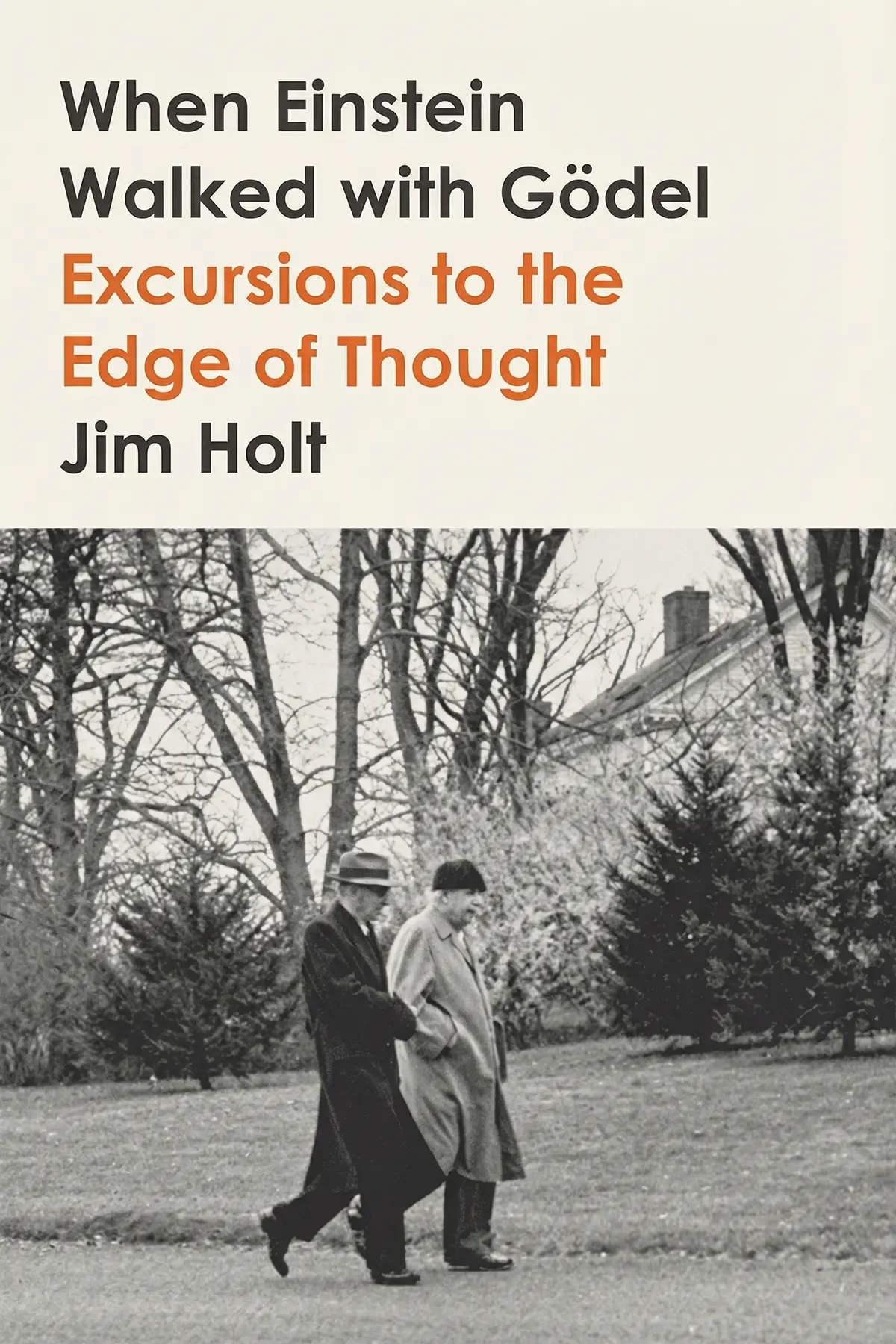
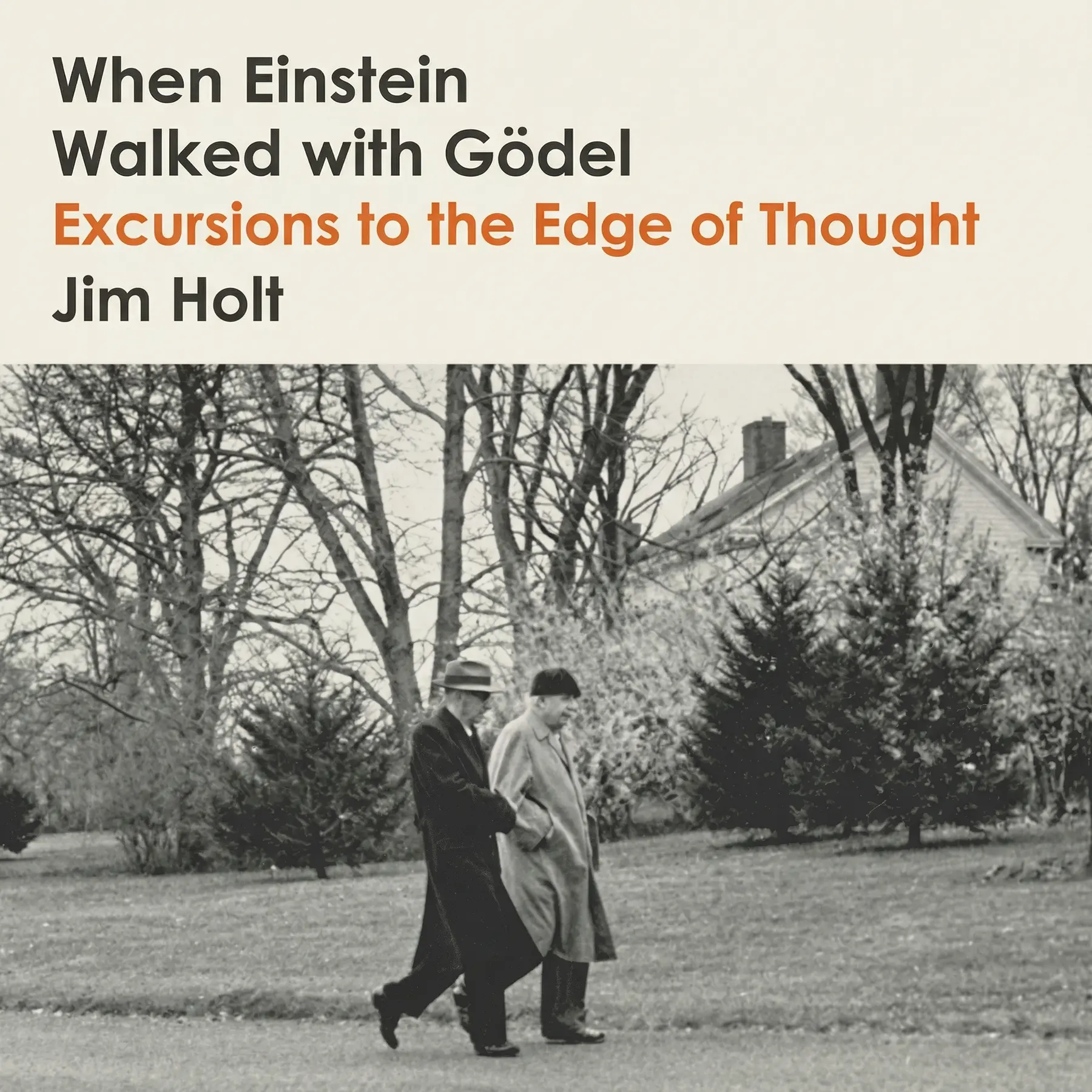
Imagine walking through the quiet, leafy streets of Princeton in the middle of the twentieth century. You might see two elderly men deep in conversation. One is recognizable by his iconic halo of wild hair—Albert Einstein. The other is a younger, thinner, more reserved man who looks almost like a shadow beside the world’s most famous scientist. This was Kurt Gödel, perhaps the greatest logician since Aristotle.
What brought these two together wasn’t just their shared language or their status as refugees from war-torn Europe. It was their shared sense of intellectual isolation. They were both outsiders in a scientific world that was moving toward a version of reality they found difficult to stomach.
In this journey, we’re going to step into their shoes and the shoes of many other legendary thinkers. We’ll look at why the universe doesn’t work the way our common sense tells us it should. We will explore the strange behavior of light, the hidden patterns of prime numbers, and the tragic irony of the man who invented modern computers only to be destroyed by the very society he helped save.
This isn’t just a summary of equations or dates; it’s a throughline connecting the abstract beauty of mathematics to the messy reality of human life. We’ll see how a single idea—whether it’s about the curve of space or the nature of infinity—can completely rewrite the history of thought. By the end, you’ll see the world not as a collection of random events, but as a structure of deep, albeit sometimes elusive, logic.
2 min 23 sec
Discover how two of the world’s most brilliant minds found solace in each other’s company while the scientific community began to move in a direction they both questioned.
2 min 41 sec
Einstein’s relativity changed everything we knew about the clock, but it was his friend Gödel who took those ideas to a shocking and paradoxical conclusion.
2 min 49 sec
Is our ability to understand math a learned skill, or is it hardwired into our biology? Explore the ‘number sense’ that guides our brains.
2 min 36 sec
For the world’s greatest mathematicians, logic is only half the battle. Discover why the ‘beauty’ of a theory is often the truest sign of its validity.
2 min 33 sec
Infinity is more than just a number that never ends. It is a concept that has haunted and inspired thinkers from ancient Greece to modern times.
2 min 22 sec
Alan Turing didn’t just break codes; he envisioned the future of human thought. Learn about the life and mysterious end of the father of computer science.
2 min 26 sec
Physicists are on a quest for a ‘Theory of Everything,’ but the current front-runner is as controversial as it is elegant.
2 min 51 sec
Science can tell us how the world began, but what does it say about how it will end? Explore the three most likely scenarios for the death of our universe.
1 min 38 sec
We began our journey on the quiet streets of Princeton, walking alongside Einstein and Gödel as they grappled with the foundations of reality. From those walks, we’ve traveled to the edge of the known universe, looked into the infinite depths of a single point, and witnessed the birth and potential death of everything we know.
What links these ideas is the human spirit’s refusal to accept the world as a mystery. Whether it’s the search for a beautiful mathematical proof, the breaking of an unbreakable code, or the attempt to unify the forces of nature, these thinkers show us that the universe is a puzzle designed for us to solve. We’ve seen that time might be an illusion, that numbers have an innate music, and that the laws of physics might be as elegant as a symphony.
But we’ve also seen the human cost of these discoveries. The tragedy of Alan Turing and the isolation of Kurt Gödel remind us that the people who push the boundaries of thought often do so at great personal risk. Their lives are as much a part of the story as their theories.
As you step back into your daily life, carry this perspective with you. The world around you isn’t just a collection of objects; it’s a manifestation of deep, underlying laws that we are only beginning to understand. The next time you look at a cloud, think of the fractal patterns Mandelbrot discovered. The next time you check your watch, remember Einstein and Gödel’s debate about the reality of time. We live in a universe of profound logic and staggering beauty. Our job is to keep walking, keep questioning, and keep looking for the hidden harmonies that connect us to the stars.
When Einstein Walked with Gödel is an intellectual journey into the deep mysteries of the cosmos and the logical structures that define it. The book bridges the gap between abstract academic theories and the vivid, often turbulent lives of the men and women who conceived them. By examining the friendship between Albert Einstein and Kurt Gödel, the computing breakthroughs of Alan Turing, and the dizzying complexities of string theory, Jim Holt offers a comprehensive look at how we understand time, space, and existence. The promise of this work is to make the most formidable concepts in modern science—from quantum mechanics to the nature of infinity—accessible and deeply human. It transforms cold equations into a narrative about beauty, tragedy, and the relentless pursuit of truth. Readers will walk away with a richer understanding of not just the laws of physics, but the philosophical questions that continue to challenge our perception of reality and the future of the universe itself.
Jim Holt is an American journalist and essayist whose work focuses on popular science. His writings have appeared in the New York Times, the New York Times Magazine, the New Yorker, and Slate. He has published several books, including Stop Me If You've Heard This: A History and Philosophy of Jokes and the New York Times best seller Why Does the World Exist?
Listeners find this work highly accessible and well-crafted, containing numerous thought-provoking essays that examine fundamental topics in philosophy and mathematics. They value the broad collection of pieces regarding time, while one listener points out that it delivers an extensive historical overview. Listeners describe the text as intellectually invigorating, with one review highlighting the unique glimpse into the minds of two exceptional men.
This book is essentially a masterclass in making the most intimidating corners of human thought feel like a casual conversation at a cocktail party. Jim Holt has this incredible gift for taking concepts like string theory or the Riemann zeta conjecture and stripping them down to their absolute essence without losing the inherent wonder. I’ve always been intimidated by the philosophy of science, but these essays are so stimulating and readable that I found myself finishing three or four in a single sitting. While the title suggests a narrow focus on Einstein and Gödel, the book is actually a much wider-ranging exploration of the 20th century's greatest intellectual leaps. From the nature of time to the paradoxes of infinity, Holt provides a comprehensive historical recount that feels both deeply researched and remarkably accessible to a layperson. It’s the kind of writing that makes you want to immediately go out and buy five more books on the same topics.
Show moreWow, I didn't expect a collection of math and physics essays to be this juicy. Holt doesn't just explain the theories; he dives into the scandals and the personal quirks that shaped the history of science. The anecdote about John Wheeler getting thrown out of Gödel’s office while asking about Heisenberg's uncertainty principle was a highlight for me. It really brings these 'exceptional men' down to earth. The book serves as a perfect sample platter of the most interesting ideas known to man, ranging from the philosophy of BS to the heat death of the universe. Some people might find the lack of dense equations a drawback, but for a science journalist, Holt does a great service by keeping things focused on the conceptual beauty rather than the technical weeds. It’s an intellectual stimulant that leaves you questioning the very nature of reality and time.
Show moreA comprehensive historical recount that feels less like a dry lecture and more like a guided tour through the 20th century’s greatest minds. I loved the way Holt weaves together the personal lives of these mathematicians with their abstract discoveries. Learning about Cantor’s obsession with infinity and his subsequent stay in an asylum adds a layer of human drama to the math that you just don't get in a classroom. The book is remarkably well-written, with a brisk pace that prevents the denser philosophical arguments from becoming tedious. I particularly enjoyed the essays on the 'anthropic' reasoning and why we live in a three-dimensional world. It’s a stimulating read that manages to be both funny and profound. For anyone who enjoys thinking about the big questions of existence, this collection is an absolute must-read.
Show moreI honestly feel like my brain grew three sizes after reading the section on the 'four-color problem' and the nature of infinity. Jim Holt is such an accomplished writer; he knows exactly how to pitch these ideas so they are challenging but never impossible to grasp. The book is a treasure trove of thought-provoking essays that span everything from the philosophy of naming to the dynamics of academic life. I found the ending piece on Kripke especially interesting, as it touched on the more human side of the philosophy world that we rarely see. Even when the topics got incredibly abstract, Holt’s wit and humor kept me engaged. This is the kind of nonfiction that reminds you how beautiful and strange our universe really is. Highly recommended for anyone who wants a serious but accessible look into the minds of geniuses.
Show morePicked this up because I wanted to brush up on my understanding of Gödel’s Incompleteness Theorem without drowning in a textbook. Holt is a fantastic guide through these 'excursions to the edge of thought,' and his writing style is brisk and engaging. He manages to humanize these legendary figures, like the eccentric von Neumann or the tragic Alan Turing, by mixing juicy biographical details with serious philosophical inquiry. I particularly enjoyed the section on the four-color map problem—it was a fascinating look at how mathematical proofs have evolved with the advent of computers. To be fair, some of the shorter essays at the end feel like filler and don't have the same depth as the core chapters. However, as a general overview of the central concepts in mathematics and philosophy, it’s a highly readable and thought-provoking collection that I’d recommend to any curious mind.
Show moreAs a casual fan of science writing, I appreciated how Jim Holt manages to strip these profound ideas down to their absolute essence. He tackles the philosophy of language, the mystery of prime numbers, and the weirdness of quantum entanglement with equal flair. The truth is, many of these topics are usually buried in academic jargon, but here they are presented with a wit that keeps you turning pages. I did find the transition from physics to analytic philosophy a bit jarring at times, and the book lacks a strong through-line because it’s a collection of previously published pieces. That said, the individual essays are so well-written that it hardly matters. It’s a wide-ranging set of reflections that provides a great starting point for anyone who wants to understand why people get so obsessed with the 'unimaginable' parts of our universe.
Show moreFrankly, some of these essays are much better than others, which is the inevitable curse of any collection like this. The core pieces on Einstein, Gödel, and the limits of logic are five-star material—stimulating, clear, and genuinely mind-blowing. Holt has a way of making you feel like you’re finally 'getting' relativity before he pivots to the next big idea. However, the shorter reviews tucked into the back half feel less essential and sometimes a bit dated. I also noticed the biting tone he uses when discussing certain figures, which felt a little unnecessary at times. Despite those minor quips, the book is a wealth of human knowledge packed into a very accessible format. It’s a great 'choose your own adventure' type of nonfiction where you can skip around to the topics that interest you most, from the end of the universe to the nature of truth.
Show moreThe chapter on Alan Turing and his tragic end was moving, but I found myself frustrated by the author’s tone elsewhere. Not gonna lie, the title is very misleading—only the very beginning touches on the walks Einstein and Gödel took at Princeton. The rest is a mixed bag of essays where Holt explains his own understanding of relativity and logic. Some of it is brilliant, like his take on the 'Four Color Problem,' but other parts feel shallow. He asserts that Gödel believed time doesn't exist but fails to explain the notion well enough for it to make sense in a practical context. There are also some minor factual errors, like misidentifying the subject of the Bogdanov scandal. It’s a decent enough read if you want a light introduction to these themes, but serious science buffs might find it a bit too 'pop' and occasionally repetitive.
Show moreNot quite the mind-blower I was hoping for, mostly because Holt covers a lot of ground that feels a bit repetitive if you’ve read any pop-science before. The essays are entertaining and readable, but they rarely go deep enough into the 'mechanism' of how these theories actually work. He uses the 'cocktail-party' approach, which is fine for a quick overview, but I often felt like I was getting the sparknotes version of much more interesting books. Also, as others have mentioned, the title is a bit of a marketing gimmick. If you’re looking for a detailed account of the relationship between Einstein and Gödel, you’ll be disappointed after the first twenty pages. It’s a fine guide for newcomers, but if you’ve already read your share of Hawking or Penrose, you might find this a bit too shallow for your liking.
Show moreWhy title a book after one specific friendship if you're only going to devote the introduction to it? It felt like a bait-and-switch. Most of this volume consists of Holt’s simplified explanations of complex math, and frankly, his tone can be incredibly condescending. The most glaring issue for me was the chapter on Ada Lovelace. In a book that almost entirely ignores female contributors to science and philosophy, Holt chooses to include one essay about a woman just to spend the entire time undermining her achievements. It felt mean-spirited and unnecessary. Beyond that, the quality of the essays drops off significantly in the second half. By the time he started explaining the Copernican principle for the second time, I was ready to put it down. If you want a deep dive into Einstein and Gödel, look elsewhere; this is just a collection of uneven columns with a misleading cover.
Show moreJ. Craig Venter

Carl Zimmer
Nigel Warburton
Bill Bryson
John Rawls
Jeff Hawkins

AUDIO SUMMARY AVAILABLE
Get the key ideas from When Einstein Walked with Gödel by Jim Holt, plus 5,000+ more titles in English and Thai.







