
20 min 31 sec
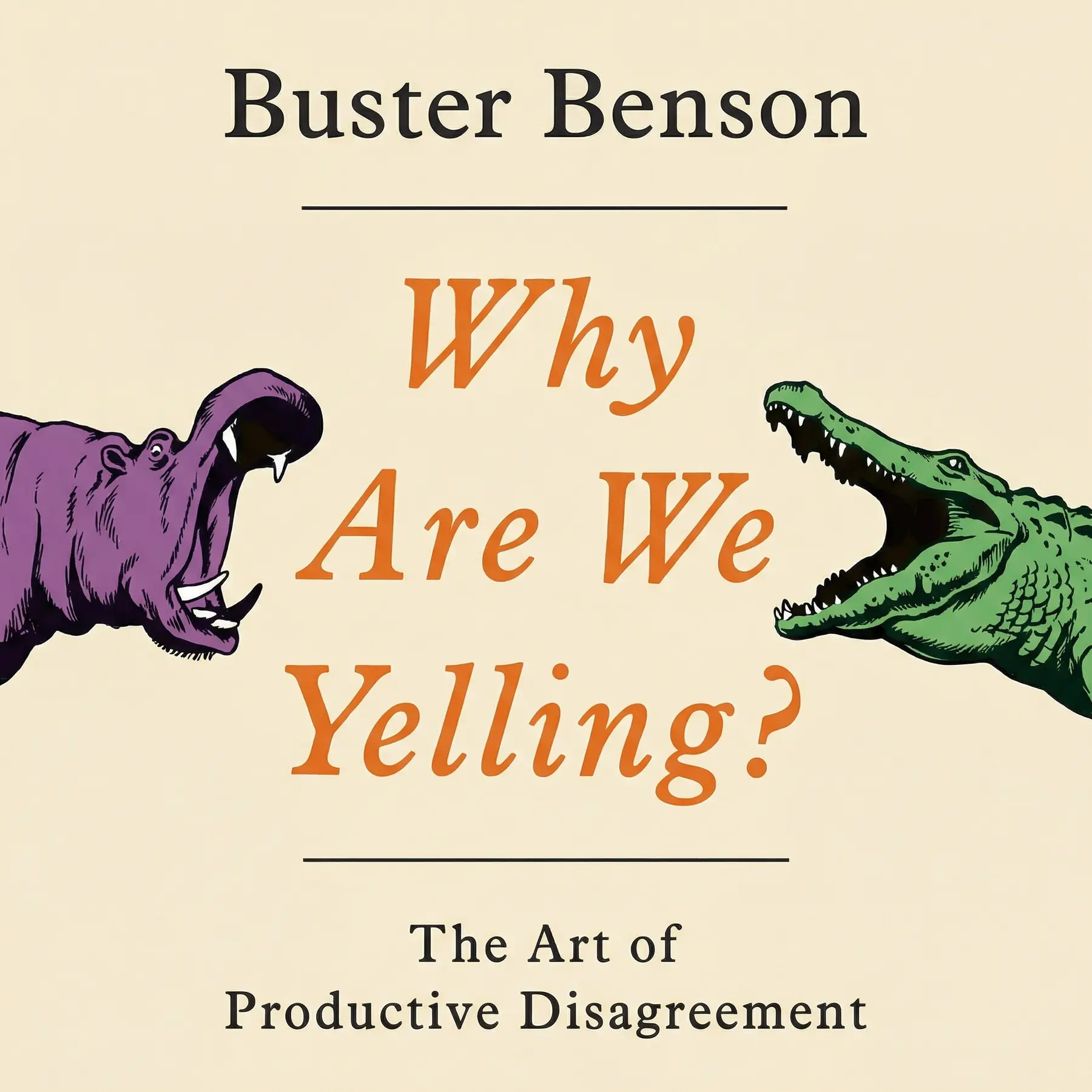
Why Are We Yelling?: The Art of Productive Disagreement
Discover how to transform heated conflicts into meaningful dialogue. This summary explores the psychological roots of disagreement and provides practical tools for navigating difficult conversations with empathy and curiosity.
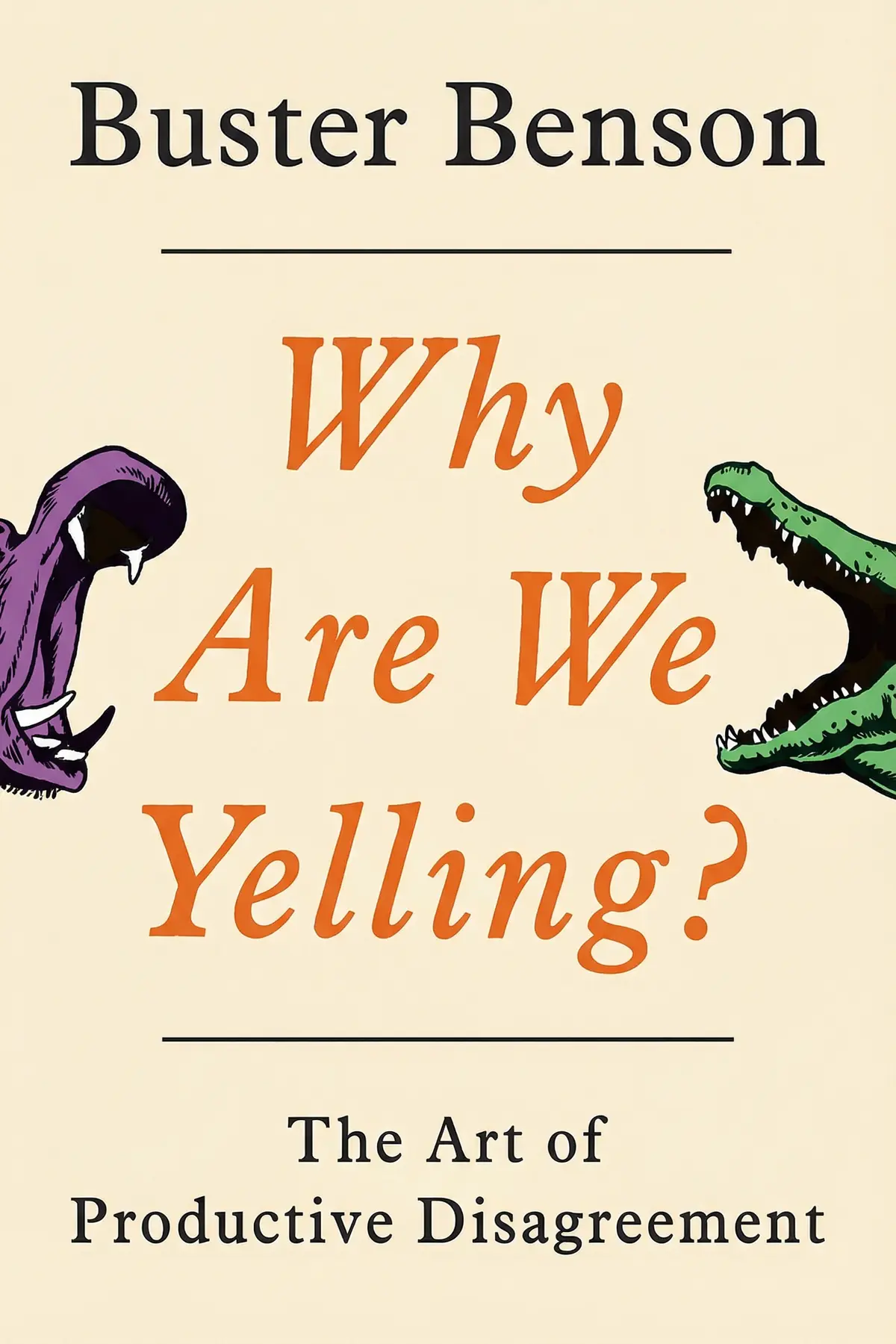
Table of Content
1. Introduction
1 min 29 sec
Most of us have been taught from a very young age that arguing is a negative behavior. We are encouraged to keep the peace, avoid controversial topics at the dinner table, and steer clear of conflict in the workplace. We treat disagreement like a fire that needs to be extinguished as quickly as possible. But what if we have been looking at conflict all wrong? What if the yelling, the frustration, and the tension are actually markers of value?
In this summary of Why Are We Yelling? by Buster Benson, we explore the idea that arguments are actually red flags signaling that something we care about is on the line. They aren’t obstacles to a good relationship; they are the pathways to a deeper one. When we shut down a disagreement, we aren’t just ending the noise—we are closing off a vital channel of communication.
The problem isn’t that we are disagreeing; it’s that we don’t know how to do it productively. Most of our arguments are ‘unproductive’ because they are driven by a desire to win, a need to be right, or a reflex to protect our egos. This summary will guide you through a different approach. We will look at how to embrace the anxiety that comes with conflict, how to recognize the internal voices that try to sabotage our conversations, and how to create the kind of ‘productive disagreement’ that leads to growth, innovation, and lasting connection. By the end, you’ll see that a world without yelling isn’t a world where everyone agrees—it’s a world where we finally understand what everyone is actually saying.
2. The Anxiety Connection
2 min 18 sec
Disagreements often feel intense because they trigger a deep-seated sense of unease. Learn why even a simple photo of a bagel can spark an internet firestorm.
3. Navigating the Internal Dialogue
2 min 21 sec
Your mind has several ways of responding to conflict, and most of them are designed to end the conversation rather than explore it.
4. The Invisible Weight of Bias
2 min 21 sec
Our brains are wired to take shortcuts, which often leads us to favor our own ‘group’ and dismiss valid points from others.
5. Stop Mind-Reading and Start Speaking
2 min 11 sec
We often think we know exactly why our opponents believe what they do, but these assumptions are usually wrong and destructive.
6. The Power of the Right Question
2 min 12 sec
Not all questions are created equal. Some are designed to sink an opponent’s ship, while others are meant to discover new territory.
7. Seeking Out the Strongest Opponents
2 min 03 sec
Winning an argument against a weak opponent is easy but useless. Real growth happens when you challenge the best ideas.
8. The Architecture of Conflict
2 min 11 sec
Where and how we argue matters as much as what we say. Discover how to create neutral spaces for better dialogue.
9. Engaging with the 'Unacceptable'
2 min 10 sec
How do we talk about ideas that we find truly repellent? Ignoring them doesn’t work, but there is a way to engage without endorsing.
10. Conclusion
1 min 15 sec
The ultimate lesson of Why Are We Yelling? is that disagreement is not a bug in the human system; it is a feature. It is the friction that allows us to create fire. When we stop trying to avoid conflict and start trying to master it, we unlock a superpower that can improve every area of our lives.
We’ve seen that productive disagreement starts with managing our own internal anxieties and recognizing the voices in our heads that try to shut down dialogue. It requires us to be honest about our biases and to stop assuming we know what others are thinking. By asking better questions, seeking out strong opponents, and creating neutral spaces, we can transform an argument from a stressful battle into a collaborative discovery.
As an actionable step, the next time you find yourself in a heated digital debate, try a ‘pattern interrupt.’ Suggest moving the conversation to a more human environment—perhaps over a meal or a coffee. There is something about breaking bread together that makes it much harder to ‘yell’ and much easier to ‘hear.’ Remember, the goal of a great argument isn’t to walk away with a trophy; it’s to walk away with a larger, more nuanced view of the world. When you learn to disagree well, you don’t just win the argument—you win the relationship.
About this book
What is this book about?
Arguments are often viewed as signs of failure in a relationship or a project, but this summary suggests they are actually vital signals that something important is at stake. By moving away from the goal of 'winning' and toward the goal of 'learning,' individuals can unlock deeper connections and more innovative solutions. The summary covers the emotional triggers that make us yell, the internal voices that shut down productive debate, and the cognitive biases that blind us to alternative perspectives. It offers a framework for asking better questions, choosing the right people to argue with, and creating environments where diverse ideas can flourish without causing damage. Whether in the workplace or at home, these insights help turn the friction of disagreement into a fuel for growth and understanding.
Book Information
About the Author
Buster Benson
Buster Benson has over 20 years experience as a product leader at some of Silicon Valley’s most established companies. He has seen firsthand how unproductive disagreement can derail projects and how productive disagreement can boost performance. Now Buster specializes in teaching some of the world’s leading firms how to argue constructively. He’s collaborated with Amazon, Slack, and Twitter, among others.
Ratings & Reviews
Ratings at a glance
What people think
Listeners find the work insightful, with one person pointing out how conflict can actually be beneficial. Additionally, the book earns positive feedback for being readable and practical, as one listener mentioned it delivers a helpful set of instruments for disagreeing productively.
Top reviews
Yothaka
Picked this up during a particularly heated election cycle, and it was exactly the mental reset I needed. Buster Benson manages to turn the anxiety of conflict into a roadmap for curiosity rather than just another lecture on being polite. Personally, I found the concept of 'productive disagreement' to be a game-changer for my professional life. Instead of seeing friction as a sign of failure, the book teaches you how to see it as an opportunity for growth and connection. The tools provided are highly actionable, moving past simple theories into real-world applications. While some might find the infographics a bit quirky with their emoji-based data points, I thought they made the complex psychological concepts much more digestible. It’s a readable, insightful guide that doesn't just tell you to stop yelling, but explains why we do it in the first place.
Show moreSamira
Buster Benson has written one of the more important books I’ve come across for managing difficult conversations in the modern age. The core premise—that we should aim for understanding rather than winning—is a refreshing departure from the usual debate-tactic manuals. I particularly enjoyed the anecdote about his son’s favorite pink train; it was a rare moment of familial warmth in a book that otherwise feels quite analytical. The infographics are cute and help illustrate the data points without getting bogged down in dense academic jargon. Frankly, we are all conditioned to see arguments as negative, but this book proves that they are essential to healthy communication if handled with the right mindset. It’s a well-researched, original piece of work that offers real hope for dealing with seemingly intractable arguments. I've already started applying the 'voice of power' concept to my own internal biases.
Show moreCarter
Ever wonder why every internet comment section feels like a total dumpster fire lately? This book tackles that head-on by suggesting we move our heated Slack or social media debates into the real world. I loved the suggestion of a potluck supper to hash out issues, as there is something about sharing a meal that humanizes our 'opponents.' To be fair, the second half of the book gets a little bit tangential with mentions of the paranormal and Ouija boards. It felt like a bit of a detour from the core psychology of the first few chapters. However, the overall message about inviting discomfort instead of suppressing it is incredibly powerful for anyone working in collaborative environments. The writing style is casual and easy to breeze through, even when the topics get heavy. It’s a solid set of tools for anyone tired of unproductive arguing.
Show moreRodrigo
After hearing this recommended as a business book of the week, I decided to give it a shot to help with my team's dynamics. It’s a very readable text that provides a helpful set of tools for disagreeing productively, especially in a corporate or Silicon Valley-style environment. The infographics throughout are clever, even if they lack the hard numbers and quantification that I usually prefer in my non-fiction. I did have to roll my eyes a bit when the author compared deplatforming internet trolls to the martyrdom of Giordano Bruno. That felt like a massive stretch that didn't serve the larger point well. Still, the underlying message about accepting the anxiety of our beliefs instead of suppressing it is a vital one. It is a good-faith plea for a more tolerant society that actually confronts privilege and racism instead of just ignoring them. Definitely worth a read for managers.
Show moreRuangrat
Wow, I didn't think a book about arguing could actually be this readable and even fun at times. The infographics use emojis to map out data points, which sounds silly, but it actually makes the points stick in your brain. Benson does a great job of explaining how our internal 'voice of power' tries to shut down disagreements before they can become productive. I appreciate that he unflinchingly addresses heavy topics like Islamophobia and racism, which is rare for this type of organizational psych book. While I agree with other reviewers that it can feel a bit 'tech-bro' at times, the actionable advice is solid. Moving discussions from Slack to real-life potlucks is a simple but profound suggestion. It’s not a perfect book, and some of the political comparisons are a bit much, but it’s an insightful look at how we can all be a little less terrible to each other.
Show moreSomporn
As someone who has always been conflict-avoidant, this book gave me a much-needed set of tools to change my perspective. The truth is, we need to recalibrate our approach to arguments so that growth becomes the end goal rather than just 'winning' or being right. I found the author's emphasis on curiosity over certainty to be a very helpful mental shift for my daily interactions. The book is well-researched with a great bibliography, though I will admit the three-panel stick figure comics were a bit corny. Some of the later chapters on the paranormal felt out of place and could have been edited down significantly. However, the overall message is important and very timely. It’s a brave attempt to engage with an imperfect world, and it successfully teaches you how to invite discomfort into your life in a way that is actually beneficial. I’d recommend it to anyone interested in decision-making and rhetoric.
Show moreGrace
The first couple of chapters were great and I truly thought this was the manual for communication I’d been searching for. Unfortunately, the momentum stalled around Chapter 4 when the author shifted into a heavy political focus. Truth is, it felt like he went into full avoidance mode regarding the very disagreements he was supposed to be teaching us to navigate. He writes about the importance of staying engaged, but then admits he can't handle certain political discussions himself, which felt slightly hypocritical. I also found the stick-figure comics and infographics a bit hit-or-miss—some were clever, while others felt like they were just taking up space. It’s a decent enough read for the psychological insights, but don’t expect a masterclass in solving familial or one-on-one arguments. It’s much more focused on broad, societal, and organizational conflict.
Show moreEleanor
Found some of the concepts to be thought-provoking, but the execution was incredibly uneven across the ten chapters. While the early sections on the psychology behind why we yell are brilliant, the later chapters devolve into strange tangents about the paranormal and Ouija boards. It felt like the author lost the thread of his own argument halfway through. I also struggled with the fact that this is clearly born from Facebook flame wars rather than real-world, interpersonal conflict resolution skills. To be fair, Benson is a clear stylist and his plea for curiosity over certainty is persuasive. However, the utopian tone of the book is a tough pill to swallow when the world feels like it’s on fire. It is a decent introduction to cognitive biases, but it often feels like it should have been a TED Talk rather than a full-length book. Not bad, just not the life-changing manual I wanted.
Show moreRohan
Not what I expected given how it was marketed as a guide for better communication. I went into this thinking it would help with the hissed arguments spouses have behind closed doors, but it’s actually a very 'tech-bro' look at organizational psychology. The author spends way too much time rambling about gun violence, ghosts, and Socrates in a way that felt totally disconnected from my daily life. Look, some of the concepts about curiosity are thought-provoking, but they aren't exactly groundbreaking if you've read any other social science pop-books. I found the author’s tendency to downplay truth in favor of 'perspective' to be deeply frustrating and honestly a bit dangerous in today's climate. If you want a deep dive into cognitive biases, there are better, more focused books out there. This one felt like a collection of blog posts that didn't quite gel into a cohesive argument.
Show moreSofia
Gotta say, I was pretty disappointed with where this book went after a promising start. The first half provides some good tips about trying to understand why others feel the way they do, but then it takes a sharp turn. In Chapter 4, the author basically admits he can’t handle political discussion and retreats into a weird avoidance mode that contradicts the book's entire premise. It’s hard to take advice on 'productive disagreement' from someone who seems to struggle with it so much himself. The rambling about gun violence and ghosts in the second half felt like filler added to meet a word count. There are some extreme efforts to downplay the importance of objective truth that I just couldn't get my head around. If you’re looking for practical, one-on-one conflict resolution for your personal life, you might want to look elsewhere.
Show moreFeatured in
Readers also enjoyed
AUDIO SUMMARY AVAILABLE
Listen to Why Are We Yelling? in 15 minutes
Get the key ideas from Why Are We Yelling? by Buster Benson, plus 5,000+ more titles in English and Thai.
- 5,000+ titles
- Listen as much as you want
- 7-day free trial
- Cancel anytime







